science
The Science Behind Relationships; Humans Media explores the basis of our attraction, contempt, why we do what we do and to whom we do it.
Domain Authority (DA) manipulation
Domain Authority (DA) is a commonly used metric by advertising agencies and marketers to assess a website’s potential in Google rankings. However, this score, calculated by platforms like Moz, can be manipulated using various techniques, creating a false sense of credibility. As a result, advertisers may invest in high-DA websites without analyzing real traffic or content quality. This raises serious concerns about the effectiveness of DA as a primary metric for selecting websites for advertising campaigns.
By Daniel Lacatus2 years ago in Humans
When Jokes Cut Deeper Than Expected
We’ve all been there. Sitting in a room, sharing a moment with others, when suddenly—someone makes a comment. A joke, a little jab, something meant to be lighthearted. The room laughs, but inside, something tightens. The air shifts. And before we know it, we’re retreating inward, arms crossed, heart racing, mind replaying that one sentence over and over. Why does this happen? Why do some words slip past us like a breeze while others cling to us like heavy chains? And why, when faced with a simple joke, do we sometimes feel the need to put up walls and prove just how much we didn’t appreciate it? The Armor We Wear Let’s start with something fundamental: people are not just flesh and bone. They are stories, memories, wounds, and victories. Every comment, every joke, lands on a foundation built over years of experiences. And for some, that foundation holds cracks—cracks from childhood teasing, from being misunderstood, from moments when their voice was silenced or dismissed. So when someone makes a remark, even in jest, it doesn’t land on an empty space. It lands on history. And history has weight. For many, humor is harmless. A passing comment rolls right off, forgotten before the next breath. But for others, that same comment presses on an old wound, a hidden insecurity, a moment they thought they had long buried. And suddenly, the laughter in the room feels like it’s aimed at them, not with them. The Fear of Being Misunderstood Few things cut deeper than the feeling of being misunderstood. When a joke touches a nerve, it’s often because, in that split second, there’s a fear that others don’t see the full picture of who we are. That they’re reducing us to something small, something untrue, something that doesn’t honor the depth of our experiences. And that’s when the instinct kicks in. The need to defend. To push back. To show that we are more than the joke suggests. This reaction isn’t about weakness—it’s about wanting to be seen for who we truly are. When Vulnerability Meets The Unexpected No one likes to feel exposed. And humor—especially the kind that catches us off guard—can make us feel just that. Unprotected. Vulnerable. And what do humans do when they feel vulnerable? They protect themselves. Some do it with silence, shutting down, turning away. Others do it with sharpness, snapping back, making sure no one mistakes them for someone who can be laughed at. And others still carry that moment long after it has passed, replaying it in their minds, wondering what they could have said, should have said, to shift the moment in their favor. But here’s the thing—feeling this way doesn’t mean someone is weak. It means they care. It means they have depth, layers, and emotions that run deep. Breaking Free From The Reflex So what can we do? How do we move through these moments without carrying them as burdens? It starts with recognition. With stepping back and asking ourselves—what did that comment really mean? Was it meant to harm, or was it simply a moment of casual humor? And more importantly, what does our reaction tell us? What wound, what insecurity, did that moment touch? Because if we can name it, if we can see it clearly, then we can choose how to respond—not from a place of pain, but from a place of understanding. This doesn’t mean swallowing our feelings. It doesn’t mean forcing a laugh when we don’t feel like laughing. It means knowing ourselves well enough to recognize when a joke is just a joke—and when it’s something more. The Power of Self-Compassion Here’s the truth: the world will keep spinning, and people will keep making jokes. Some will land gently, some will sting. But we are not powerless in how we receive them. The strongest thing we can do is give ourselves grace. To remind ourselves that we are not defined by a single comment, a single moment, a single laugh. We are defined by the fullness of who we are, and that fullness cannot be captured in a passing joke. So the next time words hit harder than expected, take a breath. Pause. Remember the weight of your own story. And then decide—not from instinct, not from hurt, but from the deep knowing that who you are is not up for debate. Because who you are is enough. Always has been. Always will be.
By Seymour Soza2 years ago in Humans
Pedicle Screw Fixation: A Comprehensive Solution for Spinal Stability and Deformity Correction
Pedicle screw fixation is a surgical technique used to stabilize the spine. By placing screws into the pedicles, the portion of the vertebrae that connects to the spinal column, surgeons can secure the vertebrae in a desired position. This stabilization is crucial for patients with spinal deformities such as scoliosis, fractures, or degenerative disc diseases. Pedicle screw fixation provides a solid framework that allows the spine to heal and reduces the risk of further damage.
By Vipin Morya2 years ago in Humans
The Chilling Science of Premonitions: Can We Really See the Future?
Premonitions, often described as a feeling or intuition about a future event, have fascinated humanity for centuries. From ancient prophecies to modern-day anecdotes, the idea that we can glimpse the future raises profound questions about the nature of time, consciousness, and the human experience. But what does science say about these eerie experiences?
By hiteshsinh solanki2 years ago in Humans
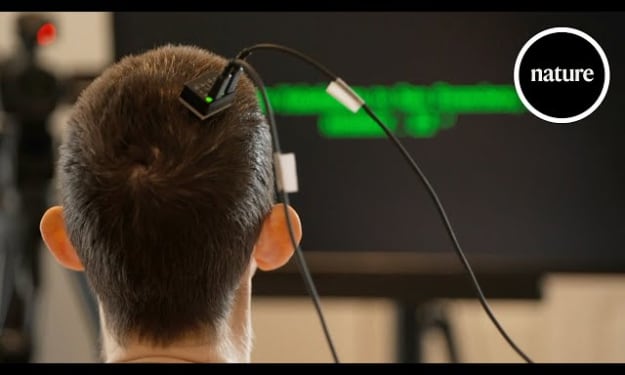
A device that lets people read thoughts.
The concept of a "thought-reading" device has been popularized in science fiction for years, but with recent advancements in brain-computer interface (BCI) technology, the dream of reading thoughts may not be as far-fetched as it once seemed.
By Badhan Sen2 years ago in Humans
Marianne Faithfull
Marianne Faithfull: A Life of Music and Resilience Marianne Faithfull is a famous British singer, songwriter, and actress. She became popular in the 1960s and is known for her unique voice, emotional songs, and dramatic life story. Over the years, she has faced many challenges, including health problems and personal struggles, but she always found a way to continue making music.
By Farhan Sayed2 years ago in Humans
Bernie Sanders
Bernie Sanders is a well-known American politician who has been active in U.S. politics for many years. He is famous for his progressive ideas and his fight for social justice. Sanders has served as a U.S. Senator from Vermont and has run for President of the United States twice.
By Farhan Sayed2 years ago in Humans
Kash Patel
Kash Patel is an American lawyer, national security official, and political advisor. He is best known for his work in the Trump administration, where he played an important role in intelligence, defense, and national security. Over the years, he has become a well-known figure in U.S. politics, especially for his involvement in government investigations and policies.
By Farhan Sayed2 years ago in Humans
Will AI Replace Humans?
The rise of artificial intelligence (AI) has sparked intense debates across various industries. Some view AI as a revolutionary tool that enhances human capabilities, while others fear it might lead to widespread job losses and ultimately replace human workers. The reality, however, is far more complex. While AI is becoming increasingly sophisticated, it is unlikely to fully replace humans, at least in the foreseeable future. Instead, it is more likely to complement human efforts, transforming the way we work and live.
By Kuldeep Singh Shekhawat2 years ago in Humans
Princess Beatrice
Princess Beatrice is a member of the British Royal Family. She is the daughter of Prince Andrew and Sarah Ferguson and the granddaughter of Queen Elizabeth II. Even though she is not as famous as Prince William or Prince Harry, Beatrice has played an important role in royal life.
By Farhan Sayed2 years ago in Humans