science
The Science Behind Relationships; Humans Media explores the basis of our attraction, contempt, why we do what we do and to whom we do it.
What It Means for Us and How Technology Is Changing Human Relationships
What It Means for Us and How Technology Is Changing Human Relationships Introduction Nearly every aspect of our lives has been altered by technology, including how we communicate, build relationships, and keep those connections. From artificial intelligence to social media, technology has fundamentally altered human interaction. But what does this mean for human relationships in the future? Is technology making us closer together or making us further apart? This article examines the advantages and disadvantages of technology's impact on interpersonal relationships. We will investigate how relationships are being affected by digital communication, artificial intelligence, and emerging technologies, as well as the implications for individuals, families, and society as a whole. From face-to-face interactions to digital ones: the evolution of communication Over the past few decades, human communication has undergone a significant transformation.
By Afia Sikderabout a year ago in Humans
Why Human Creativity Is Our Superpower in Innovation
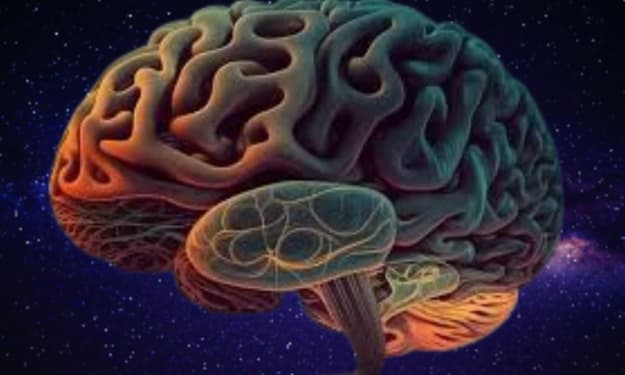
Why Human Creativity Is Our Superpower in Innovation Introduction The intangible force that has shaped our civilization, from primitive tools to artificial intelligence, is creativity, which is the essence of human evolution. It drives innovation, promotes problem-solving, and serves as the basis for every breakthrough in history. But what exactly makes creativity so potent? Why is creativity our greatest strength? We'll look at the science of creativity, its historical significance, and how we can use it to shape the future in this article. The Art of Creativity Science Creativity is more than just an abstract idea; it is ingrained in the way the brain works. Key brain regions that are connected to creative thinking have been pinpointed by neuroscientists: The Prefrontal Cortex is in charge of abstract thinking and solving problems. The Default Mode Network, also known as the DMN, is associated with idea generation and daydreaming. The dopaminergic system is important for motivation and rewards, and it encourages exploration and taking risks. Additionally, psychologists divide creativity into two categories: The capacity to generate multiple solutions to a problem is known as divergent thinking. Convergent Thinking is the process of choosing the best option from the available ones. The Brain Behind Innovation Brain imaging research has demonstrated that highly creative people have a distinct pattern of connectivity between various brain regions. The executive control network's balance between focused attention and spontaneous idea generation in the default mode network is crucial to creative output. People can also develop creativity over time thanks to neuroplasticity, which is the brain's capacity to reorganize itself by forming new neural connections. The brain can be rewired to be more creative by having novel experiences, learning new skills, and challenging conventional thinking. The Mentality That Drives Innovation Psychological factors like curiosity, resilience, and intrinsic motivation frequently drive innovation. Dopamine, a neurotransmitter linked to pleasure and reward, is frequently elevated in people who engage in creative activities, according to studies. This explains why creative people are frequently driven to investigate novel concepts and passionate about their work. In addition, creativity is linked to a state known as flow, in which people lose track of time and become completely absorbed in their work. This state encourages creative thinking and increases productivity. How Being Curious Inspiring Creativity Innovation is founded on curiosity. People who ask questions like "why" and "what if" frequently challenge established norms and push boundaries. The greatest inventors in history, like Thomas Edison and Nikola Tesla, were always trying new things and perfecting their ideas. Creativity as a Force for Change: A Journey Through Time Some of history's most remarkable innovations are the result of human creativity: The Stone Age: Early humans revolutionized survival by making tools out of stones. The agricultural revolution saw the end of nomadic lifestyles and the rise of civilizations. Michelangelo and Leonardo da Vinci were visionaries during the Renaissance, a golden age of art and science. The Industrial Revolution saw the replacement of manual labor by machines, which impacted societies and economies.
By Afia Sikderabout a year ago in Humans
Marilyn Monroe’s Greatest Love
Marilyn Monroe’s Greatest Love Marilyn Monroe the ultimate Hollywood icon captivated millions with her beauty charm and talent. Yet behind the glamorous facade lay a woman in search of love a love she never truly found. Over the years Monroe had numerous affairs and three failed marriages but one man remained devoted to her until his final days: Joe DiMaggio. While her relationships with famous figures like John F. Kennedy Arthur Miller and Frank Sinatra added to her mystique it was DiMaggio who ultimately stood out as her greatest love.
By Adnan Rasheedabout a year ago in Humans
The Importance of Mental Health: Breaking the Stigma in Human Society
The Importance of Mental Health: Breaking the Stigma in Human Society Introduction Mental health is a crucial component of overall well-being, yet it remains one of the most stigmatized aspects of human health. Despite increasing awareness, misconceptions and societal biases prevent many from seeking the help they need. In this article, we will explore the significance of mental health, the stigma surrounding it, and how we can work together to foster a more accepting and supportive society.
By Afia Sikderabout a year ago in Humans
A Human Approach to Building Resilience in Your Daily Life
A Human Approach to Building Resilience in Your Daily Life Introduction Resilience is the ability to adapt, recover, and thrive in the face of adversity. Resilience is essential for personal and professional development in today's fast-paced world, where challenges are inevitable. But resilience isn’t just about enduring hardships; it’s about learning, evolving, and maintaining mental and emotional well-being. Based on psychological research, real-world examples, and steps that can be taken, this comprehensive guide will look at practical ways to build resilience.
By Afia Sikderabout a year ago in Humans
When You Wave at Someone Who Wasn’t Waving at You: A Post-Mortem
Let’s set the scene: You’re walking down the street, minding your own business, when suddenly—OH!—a familiar face in the distance lifts their hand in what can only be described as a wave meant for you. Your brain, ever the optimist, bypasses all logic and sends an immediate command to your arm: Wave back. Wave back like your social life depends on it.
By Just One of Those Thingsabout a year ago in Humans
Unearthly Secrets Beneath Antarctica’s Ice
Antarctica, the frozen continent at the edge of the world, has long captivated the imagination. It’s a land of extremes-unclaimed by any nation, governed by international treaties, and shrouded in secrecy. Most people picture it as a barren wasteland of ice and snow, home to penguins and little else. But beneath its surface, stories whisper of something far more sinister. In recent years, tales of strange creatures, classified missions, and unexplained phenomena have emerged, painting a chilling picture of a place where science, secrecy, and the unknown collide.
By KWAO LEARNER WINFREDabout a year ago in Humans
"The Glimmer of Hope"
"The Glimmer of Hope" A little research facility was hidden away from the colorful turmoil of everyday life in the busy city of New Horizons. Inside, a scientist with a reputation for quiet genius, Dr. Leo Harris, toiled diligently on what he thought would be the greatest invention ever made by humans. The world had been dealing with an energy crisis for years; fossil fuels were running out, and there did not seem to be many other energy sources available, most of which were reliant on costly technologies or unpredictable weather patterns.
By Rajoan Islamabout a year ago in Humans
"The Key to Quantum"
"The Key to Quantum" Dr. Evelyn Carter gazed at her computer screen in a high-tech, silent lab on the outskirts of the city. She had worked for years on a discovery that had the potential to revolutionize the world: a tool that could unleash the potential of quantum computing in ways that had never been thought of before. Evelyn was at the forefront of a new technological revolution that was about to take place in the world.
By Rajoan Islamabout a year ago in Humans