science
The Science Behind Relationships; Humans Media explores the basis of our attraction, contempt, why we do what we do and to whom we do it.
When AI Becomes a Caregiver
In a sunlit room filled with quiet hums and calm faces, a robot cradles an elderly man in its arms—not with cold calculation, but with startling gentleness. This scene, which once belonged in a sci-fi movie, is quickly becoming a potential reality as artificial intelligence (AI) and robotics evolve beyond tasks of convenience into realms of empathy and care.
By Sultan Khan2 years ago in Humans
Vaccines Delivery Devices: The evolving landscape
History of Vaccines Delivery Vaccination is one of the most effective ways to prevent infectious diseases and has saved millions of lives over the years. Traditionally, vaccines were administered via injections using syringes and needles. However, alternative delivery methods started emerging in the late 20th century as scientists tried improving thermo stability, safety, and painless delivery. Some of the early alternative devices included jet injectors and mucosal delivery techniques.
By carollakra2 years ago in Humans
Unveiling the Hidden You: What Your Color Choices Say About Your Personality
Imagine walking into a room filled with vibrant colors, each one vying for your attention. Which one catches your eye first? Believe it or not, your immediate color choice can reveal profound insights into your personality. From the calming blues to the fiery reds, every hue carries a psychological weight that shapes our perceptions and behaviors. Welcome to the intriguing intersection of color and personality, where science meets self-discovery.
By Alain SUPPINI2 years ago in Humans
Characteristics that influence the risk of Dementia, Stroke & Depression
Around 55 million people worldwide suffer from dementia, and it is anticipated that this number will nearly quadruple by 2050. Stroke deaths can increase in the same year, and depression affects 10% to 20% of persons in their senior years. In spite of the startling numbers, there is growing evidence to suggest that many of these cases may not be caused by genetics but rather can be postponed or avoided by addressing health factors that are typically within our control. The risk factors for dementia stroke and depression in later life have been determined by numerous studies.
By FARZANA ASHRAF2 years ago in Humans
Who Owns You? Social Media Platforms or Yourself?
In the digital age, your online identity is arguably as important as your physical one. Social media platforms like Facebook, Instagram, TikTok, and X (formerly Twitter) have become the gatekeepers of our virtual selves. They store our data, influence what we see, shape our opinions, and monetize our presence—often without our informed consent. The question is no longer whether our data is being collected, but rather: Who owns it, and what rights do we have over it? Utah may be the first U.S. state to answer this question in a groundbreaking way. With the Digital Choice Act set to take effect on July 1, 2026, the state is proposing something revolutionary: giving individuals the right to truly own and transfer their online identity and data across digital platforms. This legislation is not just a policy change; it’s a paradigm shift in how we view data ownership, privacy, and the architecture of the internet itself. The Current Landscape: Locked in Digital Walled Gardens Right now, when you create an account on a social media platform, you are essentially handing over your personal data—your photos, posts, preferences, and behavioral patterns—in exchange for access to their service. In return, these companies build detailed profiles of you, which they use to serve targeted ads and, in many cases, sell insights to third parties. Even if you choose to leave a platform, your data doesn’t leave with you. Try switching from Facebook to a smaller, privacy-focused network and you’ll find there’s no easy way to carry your connections, posts, or digital persona with you. You start over from scratch. This model discourages competition and traps users in what are often referred to as "walled gardens." The Utah Solution: A Digital Bill of Rights Utah's Digital Choice Act is a potential breakthrough. It proposes that platforms must support open-source identity protocols that allow users to carry their social graph and data with them wherever they go on the internet. Think of it like having a passport for your online identity that works on any platform you choose to visit. The bill requires large social media companies to build systems that allow users to: Export their data in usable formats Port their digital identity to other platforms Retain control over how their data is used and shared Use third-party tools to interact with multiple platforms from one interface These principles align with what some technologists and ethicists call "self-sovereign identity" — the idea that individuals should have full control over their digital presence, just as they do their physical identity. Why This Matters for the Human Community The implications of such a law go beyond privacy. Data is power, and reclaiming that power can shift the balance back in favor of individuals and communities. Here’s why this matters: 1. Privacy as a Human Right When you control your data, you reduce the risk of it being misused. From targeted disinformation campaigns to identity theft and surveillance, centralized control of personal data makes us all vulnerable. Giving people the ability to manage and move their data can mitigate these risks. 2. Mental Health and Digital Wellbeing Social media platforms are engineered for engagement, often at the cost of mental health. Algorithms optimize for outrage and addiction, keeping users scrolling endlessly. With more control over how and where their data is used, users can choose platforms that prioritize healthy interaction. 3. Economic Empowerment Your data has value. Right now, it's the platforms that reap the profits. If individuals can control and even monetize their own data, it could open up new economic models where users are compensated for their participation. 4. Democratizing the Internet Interoperable digital identities mean smaller platforms can compete more fairly with tech giants. Users wouldn’t be penalized for trying out new communities because they could take their data and friends with them. This fosters innovation and diversity in the digital ecosystem. Potential Challenges and Criticism As promising as Utah’s legislation sounds, it is not without its challenges. 1. Technical Feasibility Building open protocols that support interoperability is complex. Platforms have invested billions in proprietary systems, and retrofitting them for openness will not be easy or cheap. 2. Corporate Pushback Tech giants are likely to resist any change that threatens their monopolies. Lobbying efforts may attempt to water down or delay the implementation of such laws. 3. Security Risks Opening up systems can introduce new vulnerabilities. Ensuring that portable identities are secure and not susceptible to fraud or misuse will be critical. 4. User Awareness Many users are unaware of how their data is used or why this issue matters. Public education will be essential to drive adoption and demand for digital autonomy. A First Step Toward Digital Freedom Despite these challenges, the Digital Choice Act represents a meaningful first step toward a freer, fairer internet. If successful, it could set a precedent for other states—and even countries—to follow. The internet was born as a decentralized, open system. Over time, it has become dominated by a few mega-corporations that profit off our attention and data. Reclaiming ownership of our digital selves is not just a matter of privacy—it’s a matter of freedom, dignity, and democracy. Utah's bold move may just be the spark needed to ignite a global conversation about digital rights and responsibilities. As we move deeper into the 21st century, it's time we ask not just what technology can do, but what it should do for the people it serves.
By Qismat ullah wazir 2 years ago in Humans
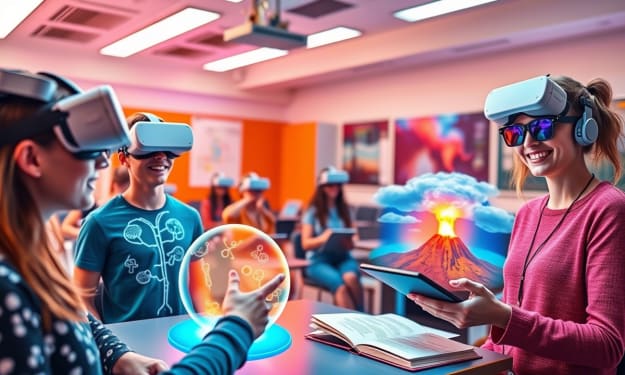
the Lesson: When AR and VR Come to the Rescue in Education
Can you still recall how you dozed off in history class, struggling to pull together an image of Julius Caesar crossing the Rubicon from an unattractive picture in a textbook? Or maybe staring at a plant cell diagram and wishing to figure out what all those squiggly lines did? That question is now irrelevant. With traditional learning, the emphasis is on memory through passive absorption—reading, listening, and memorizing. In other words, what if you could experience it firsthand? What if learning would feel like an adventure instead of an assignment?
By zobairuddin Zobair2 years ago in Humans
Title: Why Personal Narratives Matter: The Power of Human Stories
Title: Why Personal Narratives Matter: The Power of Human Stories Introduction: Humanity's Lifeblood We told stories before we could write, tweet, or even carve symbols into stone. Around ancient fires, under starlit skies, humans shared their lives through words—simple, raw, and powerful. These stories weren’t just entertainment; they were bridges—connecting generations, preserving culture, and giving meaning to life. Despite all the data and distractions of the digital age, one thing is still true: stories continue to move us. In ways that facts alone cannot, personal narratives—which are intimate, honest, and deeply human—can change minds, motivate action, and cultivate empathy. Why, then? What is it about personal storytelling that matters so much?
By Afia Sikder2 years ago in Humans