science
The Science Behind Relationships; Humans Media explores the basis of our attraction, contempt, why we do what we do and to whom we do it.
Paws for Thought: How Animal Therapy is Revolutionizing Mental Health
The Role of Different Animals in Therapy While dogs and horses are the most common animals used in therapy, other species also offer unique benefits. Cats, with their independent nature, can teach patients about boundaries and self-care. Rabbits and guinea pigs, often used in classroom settings, help children develop empathy and responsibility. Even farm animals, like goats and chickens, contribute to therapeutic environments, providing a sense of purpose and routine.
By Alain SUPPINI2 years ago in Humans
The Broken Vase
The vase had been in Emma’s family for generations. Hand-painted with delicate blue flowers, it was the one thing she had left of her grandmother. Every time she looked at it, she could almost hear the old woman’s laughter, smell the lavender-scented handkerchiefs she always carried.
By yousaf shah2 years ago in Humans
In the United States, CT scans are expected to cause 100,000 new cancers.
More Americans are receiving computed tomography (CT) scans than ever before, and while this technology can save lives, some scientists are concerned about the potential for low doses of ionizing radiation to increase cancer risks.
By Tamanna Lima2 years ago in Humans
Beyond Bitcoin: Revolutionizing the World's Industries by Transparent and Trust Less Technology
It is possible that you might have heard about the new buzzword "blockchain." Most likely, it comes in tandem with Bitcoin or something that is either soaring in value (or crashing in it) in other cryptocurrencies. Although Bitcoin was the major pioneer—the first one to kick the doors open for others to enter—the discussion of blockchain and only looking at it through the prism of cryptocurrency is like talking about looking at email when talking about internet technology: only a small part of what it actually is.
By zobairuddin Zobair2 years ago in Humans
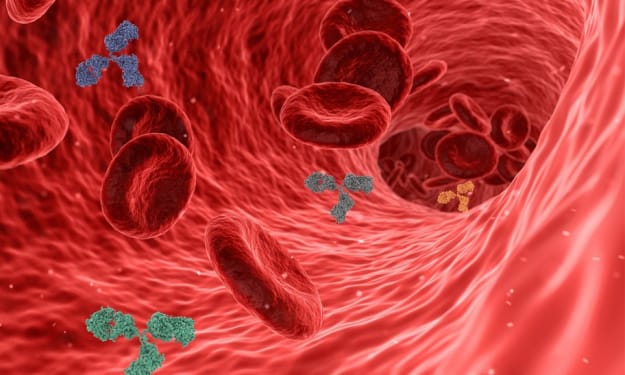
Researchers Identify New Blood Group After 50 Year Mystery
When a pregnant woman had her blood sampled back in 1972, doctors discovered it was mysteriously missing a surface molecule found on all other known red blood cells at the time. After 50 years, this strange molecular absence finally led to researchers from the UK and Israel describing a new blood group system in humans. The team published their paper about the discovery in 2024. "It represents a huge achievement, and the culmination of a long team effort, to finally establish this new blood group system and be able to offer the best care to rare, but important, patients," UK National Health Service hematologist Louise Tilley said last September, after nearly 20 years of personally researching this bloody quirk.
By Sajib Mridha2 years ago in Humans
article World must act with urgency to save Palestinians in Gaza
To save Palestinians in Gaza, the world must act immediately. Gaza is swollen. Everybody is watching. Not only is the situation in the Gaza Strip a humanitarian emergency, but it is also a full-blown catastrophe brought on by unrelenting violence, political stagnation, and neglect from the international community. As civilian casualties mount and critical infrastructure collapses under the weight of relentless bombardment and blockade, it has become clear that platitudes and passive diplomacy are no longer acceptable. The time for urgent, coordinated global action is now.
By Samudra Nandan2 years ago in Humans
Title: The Power of Observation: How Your Consciousness Shapes Reality . AI-Generated.
Have you ever noticed how just watching something changes the way you experience it? Like when you’re being watched — suddenly you become aware of your every move. Or when you observe your own thoughts — and they start to shift, almost like they know you're paying attention.
By Sohel Zain2 years ago in Humans
The Lost Art of Boredom:
In a world addicted to productivity and stimulation, boredom has become almost taboo. We’ve developed an allergic reaction to empty moments. Stuck in line at the coffee shop? Check Instagram. Commercial break? Scroll through TikTok. Waiting for a friend to arrive? Fire off a couple of emails. There’s an unspoken rule in modern life: never be idle. But what if we’ve gotten it all wrong? What if boredom — that uncomfortable, restless state we try so hard to avoid — is exactly what we need? The Productivity Trap We live in a culture that glorifies hustle. The badge of honor isn’t a good night’s sleep or a quiet afternoon spent people-watching at a park. It’s how many projects you’re juggling, how late you stayed up working, how full your calendar is. Doing nothing feels wasteful, almost shameful. Yet, paradoxically, this obsession with productivity often leads to burnout and stagnation. When our minds are constantly occupied, we don’t give ourselves space to think deeply, to reflect, or to stumble upon the unexpected. Ideas need room to stretch their legs. Creativity blooms in wide open, unstructured spaces. This isn’t just speculation. Research backs it up. A 2014 study from the University of Central Lancashire found that people who engaged in boring tasks (like copying numbers from a phone book) later performed better on creative problem-solving tests than those who stayed engaged in stimulating activities. Boredom, it turns out, might be the precursor to some of our best thinking. The Case for Mind-Wandering When was the last time you allowed your mind to wander? Not directed thinking — not mentally working through your to-do list or rehashing last night’s conversation — but true, aimless wandering. Psychologists call this the “default mode network,” a state our brains enter when we’re not focused on anything in particular. It’s during these times that we’re most likely to have flashes of insight, connect unrelated ideas, and daydream in ways that lead to creative breakthroughs. Consider the famous examples: Isaac Newton contemplating gravity while sitting under an apple tree, or J.K. Rowling dreaming up Harry Potter during a delayed train ride. These weren’t moments of frantic multitasking. They were unstructured, idle intervals. Boredom as a Compass Beyond sparking creativity, boredom serves another important function: it’s a signal. When we’re bored, our brains are telling us that what we’re doing isn’t satisfying, meaningful, or engaging. And that’s valuable information. Instead of numbing that discomfort with a scroll through social media, what if we leaned into it? What if we asked ourselves, Why am I bored right now? What would I rather be doing? Boredom can prompt us to reassess our priorities, discover new interests, or reconnect with neglected passions. It’s a tool for self-awareness — if we’re willing to listen. How to Reclaim Boredom Of course, it’s easier said than done. In a society designed to keep us perpetually entertained, embracing boredom takes intention. Here are a few simple ways to start: 1. Put your phone away. Seriously. Leave it in another room while you eat lunch, or take a walk without it. 2. Schedule unstructured time. Block out an hour on your calendar with no plans, tasks, or entertainment. See what your mind drifts toward. 3. Do one thing at a time. Resist the urge to check your phone while watching a movie or cooking dinner. 4. Observe your surroundings. Watch people at a café. Notice the shifting light in your room as afternoon turns to evening. Conclusion Boredom isn’t something to be feared or avoided. It’s a natural, necessary part of the human experience — a quiet space where ideas can unfurl and insights can take shape. In our hyper-connected world, reclaiming boredom might be the most radical, restorative thing you can do. So the next time you find yourself with nothing to do, resist the impulse to fill the void. Sit with it. See where your mind wanders. You might be surprised by what you find.
By SHADOW-WRITES2 years ago in Humans
5 Takeaways From New Research About A.D.H.D.
The term "attention deficit hyperactivity disorder" (A.D.H.D.) has long been misunderstood and frequently oversimplified to mean only that it affects children who are hyperactive and unable to focus. However, recent research is shedding new light on the complexity of A.D.H.D., revealing that it’s a far more nuanced neurodevelopmental disorder that can affect people of all ages in varied and sometimes subtle ways.
By Nahian ebne2 years ago in Humans