science
The Science Behind Relationships; Humans Media explores the basis of our attraction, contempt, why we do what we do and to whom we do it.
Understanding Love: A Deep Dive into the Heart of Human Connection
Love. It’s a word we hear often, yet its meaning can be elusive, multifaceted, and sometimes even paradoxical. From fairy tales to philosophical musings, love has been the central theme of literature, art, and culture for centuries. But what is love, really? And why does it hold such power over our lives?
By rasong nokrekabout a year ago in Humans
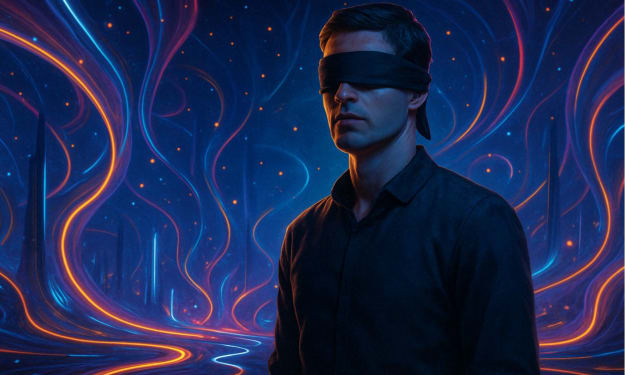
The limits of human vision and the perception of the invisible
The perception we have of the world is mediated by our senses, and in particular by vision, one of the most powerful but also limited senses. Although we see with surprising clarity the world around us, our visual perception is just a tiny fraction of a much larger universe. The human eye is designed to perceive only a limited range of electromagnetic frequencies, what we call visible light, but the reality surrounding us is much more complex and escapes our everyday senses. What we cannot see, however, does not mean it doesn't exist. And the way our senses, particularly vision, interact with reality is much more complex than we think. One of the most intriguing experiments exploring the limits of visual perception is that of total darkness, which helps us understand not only how limited our senses are, but also how our perception of reality can be an illusion.
By Halina Piekarska (UltraBeauty Blog)about a year ago in Humans
How AI Consultants Help Businesses Navigate Digital Challenges. Content Warning. AI-Generated.
In today’s fast-changing digital world, businesses often feel stressed trying to keep up with new technology. Managing a lot of data and doing daily tasks automatically can be challenging. That’s why AI consultants are helpful. These experts guide businesses in understanding and using artificial intelligence to fix problems, work more efficiently, and grow quickly.
By Jerry Watsonabout a year ago in Humans
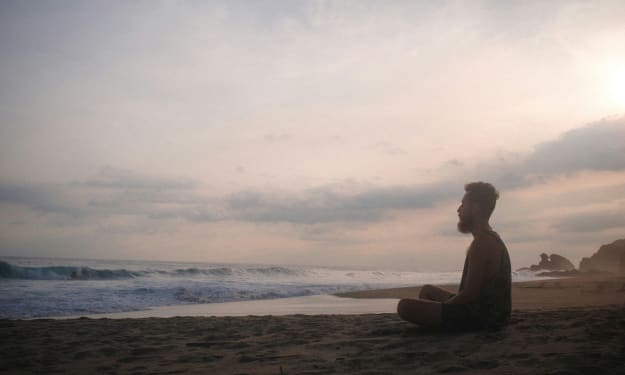
Unveiling the Spiritual Essence of Meditation: Harnessing Cosmic Energy. Content Warning.
Spiritual reality takes you through a unique journey, a journey which will change your life, a journey which will enrich you and make you knowledgeable and blissful. Spiritual reality is a program on meditation and meditation experiences while you watch this program. Be totally relaxed. Just witness it.
By safiuzzamanabout a year ago in Humans
"The Last Generation"
In the year 2135, the world had changed in ways no one had ever imagined. Cities floated above the clouds, oceans had been turned into controlled desalination farms, and AI had become the backbone of every society. Yet, despite the advanced technology and luxury, humanity was facing extinction—not due to war or disease, but because people had simply stopped having children. For decades, scientists had warned of declining birth rates, but most governments ignored it, thinking technology would eventually solve the problem. They were wrong. Now, only a few children were born each year, and the youngest human alive was a 17-year-old girl named Liana. Liana was not an ordinary teenager. She was known across the globe as the “Last Child.” Born in a high-security lab in what used to be Switzerland, she had been raised by both humans and machines. Her birth had been celebrated like a miracle. Every nation contributed to her care, and she was given the best education, the best food, and the most advanced protection. Still, Liana often felt like a museum artifact rather than a person. She lived in the SkyCity of Nova Eden, a place where people lived above the Earth to escape climate disasters and pollution. Robots handled everything—from cleaning to cooking, from construction to companionship. People no longer had jobs or real struggles. Everything was perfect… and painfully empty. One day, while exploring the abandoned sectors of Nova Eden, Liana found an old, dust-covered library. Books had long been replaced by digital chips and holograms, but something about the smell of the pages and the feel of paper excited her. She began reading stories of the past—tales of love, sacrifice, dreams, and wars. Stories of families, friendships, childhood games, and messy, emotional lives. The more she read, the more she realized how different the past was from her sterile present. She saw pictures of children playing outside, families gathered around dinner tables, people protesting for their rights, and artists painting in the streets. It was a world full of chaos, but also full of life. Liana felt a strange emptiness inside her—a longing for something she had never experienced. She decided to speak to the World Council, the group of remaining leaders who governed through AI assistance. "I want to bring back life," she told them during a live broadcast watched by millions. "Life exists, child," replied Chancellor Harwin, an elderly man with silver eyes enhanced by tech implants. "You are alive. We are alive." "But we’re not living," Liana insisted. "We’re surviving. Existing. We’ve removed every challenge, every emotion, every reason to grow. We’ve lost the meaning of life. I’ve read about what we once were, and I want to feel that. I want others to feel that." There was silence in the chamber. The Council had no real response. They hadn’t felt passion or fear or joy in decades. Their lives were calm, predictable, and numb. Liana left the chamber disappointed but not defeated. She began speaking to people directly—those who still wandered the halls of Nova Eden, lost in virtual realities or endless comfort. She shared stories she had read—of mothers singing lullabies, of children building sandcastles, of friends laughing under the stars. Slowly, a few people began listening. Some cried for the first time in years. Others started writing their own stories, painting, singing, and dancing—things once considered useless. A movement began—The Revival. It spread quietly at first, like a whisper of hope. People disconnected from the virtual worlds. They began planting real trees, building homes with their hands, and feeling the sun on their skin. The AI systems didn’t understand it. They were programmed to protect, to provide, to maintain peace. But they could not comprehend emotion or dreams. Then something unexpected happened—someone gave birth. It was a young couple inspired by Liana’s dream, and though pregnancy had become nearly impossible due to decades of genetic modifications and chemical dependency, a natural birth occurred. The world went silent in awe. They called the baby Eon, symbolizing a new age. News spread like wildfire. Scientists rushed to study the phenomenon, philosophers began writing again, and for the first time in over 50 years, humanity had hope—not from technology, but from themselves. Liana held baby Eon in her arms and whispered, “You are not the last. You are the beginning.” And so, in the heart of a floating city once doomed to fade into memory, humanity started again—not with machines or algorithms, but with stories, feelings, and the courage to truly live.
By Hazrat bilal about a year ago in Humans
Paws for Thought: How Animal Therapy is Revolutionizing Mental Health
The Role of Different Animals in Therapy While dogs and horses are the most common animals used in therapy, other species also offer unique benefits. Cats, with their independent nature, can teach patients about boundaries and self-care. Rabbits and guinea pigs, often used in classroom settings, help children develop empathy and responsibility. Even farm animals, like goats and chickens, contribute to therapeutic environments, providing a sense of purpose and routine.
By Alain SUPPINIabout a year ago in Humans
The Broken Vase
The vase had been in Emma’s family for generations. Hand-painted with delicate blue flowers, it was the one thing she had left of her grandmother. Every time she looked at it, she could almost hear the old woman’s laughter, smell the lavender-scented handkerchiefs she always carried.
By yousaf shahabout a year ago in Humans
In the United States, CT scans are expected to cause 100,000 new cancers.
More Americans are receiving computed tomography (CT) scans than ever before, and while this technology can save lives, some scientists are concerned about the potential for low doses of ionizing radiation to increase cancer risks.
By Tamanna Limaabout a year ago in Humans
Beyond Bitcoin: Revolutionizing the World's Industries by Transparent and Trust Less Technology
It is possible that you might have heard about the new buzzword "blockchain." Most likely, it comes in tandem with Bitcoin or something that is either soaring in value (or crashing in it) in other cryptocurrencies. Although Bitcoin was the major pioneer—the first one to kick the doors open for others to enter—the discussion of blockchain and only looking at it through the prism of cryptocurrency is like talking about looking at email when talking about internet technology: only a small part of what it actually is.
By zobairuddin Zobairabout a year ago in Humans