science
The Science Behind Relationships; Humans Media explores the basis of our attraction, contempt, why we do what we do and to whom we do it.
Sixteen Years of Blood and Silence. Content Warning.
Trigger Warning: graphic descriptions of menstrual and medical experiences. I still remember the Virginia Beach trip. It was supposed to be a working vacation; a month at the beach, relaxation with friends, and building a podcast network from the ground up. Instead, I got to add days trapped inside, shuffling from the bed to the bathroom every fifteen minutes. At one point I stood in the shower for an hour, just watching as red fluid and tissue slid down my legs, only slightly slower than the water running over my body. I wondered if this was what Carrie felt like in the Stephen King novel. I wondered if I would die.
By Danielle Katsourosabout a year ago in Humans
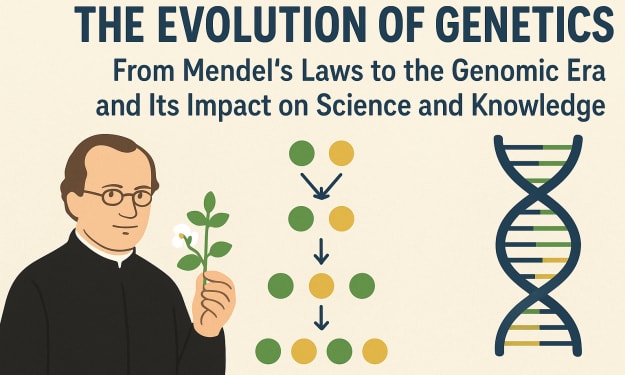
The Evolution of Genetics: From Mendel’s Laws to the Genomic Era and Its Impact on Science and Knowledge
The Development of Genetics and Its Impact on the Future Genetics is one of the most prominent sciences that has witnessed astonishing developments over the past two centuries, contributing to changing our understanding of life and opening new horizons in the fields of medicine, agriculture, and the environment. This science is concerned with the study of genes, the basic units that carry genetic information in living organisms, how they are transmitted across generations, and their role in determining biological traits. From the discovery of the laws of heredity by the Austrian monk Gregor Mendel in the nineteenth century to the sequencing of the human genome in the early twenty-first century, this field has come a long way, making it one of the most important pillars of modern science.
By PositivePulseabout a year ago in Humans
The Day the Internet Stops: What Would We Do?
It starts quietly. You wake up, rub your eyes, reach for your phone, and press the glowing screen. But instead of the usual scroll of headlines, likes, and unread messages, you see… nothing. No Wi-Fi symbol, no data connection, no blinking blue dots promising “just a moment.”
By Saqib Ullahabout a year ago in Humans
I Let AI Plan My Entire Week — Here’s What Happened
Introduction: Handing Over My Life to AI Like most people in 2025, I use AI almost daily—whether it’s asking ChatGPT for quick answers, using AI tools to edit text, or letting recommendation engines tell me what movie to watch. But one day, a crazy thought crossed my mind:
By Moqadas Kliwalabout a year ago in Humans
The Last Library of Humanity
M Mehran Eli walked slowly through the ruins of the city, the wind carrying with it the faint smell of dust and forgotten fire. His boots crunched against shards of glass that had once been windows to tall buildings. The world, he thought, had grown quieter than it ever should have been. He wasn’t alone. Humanity had not completely disappeared—though sometimes, it felt like it had. Small clusters of people still survived, scattered like seeds across barren soil. But survival had become a task of instinct: eat, drink, shelter, repeat. Few remembered what it meant to live beyond survival. Eli carried a canvas bag across his shoulder, heavy with items most people wouldn’t have bothered with. Where others hunted for canned food or spare tools, he searched for books. Pages torn, spines cracked, some nearly dissolved by rain—but to him, they were treasures. Words, he believed, were the last evidence of what humans once were. That morning, he stumbled upon something extraordinary. Behind the skeletal remains of a school, he found a basement door wedged half-open by rubble. It took him nearly an hour to pry it wider, squeezing himself through the narrow gap. Inside was darkness. He lit a match. The flame revealed rows upon rows of shelves, damp but intact. His breath caught in his throat. It was a library. The books were swollen with moisture, but thousands of them remained. Stories. Histories. Ideas. Dreams. It was as if he had stepped into the mind of humanity itself. He set the match in a metal tin and fed it bits of paper until a small flame danced. Light flickered across spines with faded titles: The Odyssey, A Brief History of Time, Collected Poems of Rumi, Medical Guides, Atlases. His fingers trembled as he touched them. For hours, Eli read. He turned brittle pages carefully, whispering words aloud just to hear them exist again. Each book was a voice of someone long gone, yet still speaking. Here was joy, here was sorrow, here was questioning. When night fell, he built a fire in a corner of the basement. He ate a small ration of dried beans and bread, then sat cross-legged with a book of poetry. He read verses about love and loss, and for the first time in months, he felt less alone. But the world outside was never patient. The next morning, as sunlight filtered through cracks in the ceiling, Eli heard footsteps above. Heavy, deliberate. He froze. Voices followed. A group—scavengers, most likely. They were dangerous not because they were evil, but because hunger made people cruel. Books meant nothing to them. If they found the library, they would burn it for warmth. Eli quickly stuffed three books into his bag: one on medicine, one on farming, and one filled with poems. Knowledge for the body, knowledge for survival, knowledge for the soul. Then he smothered the fire and pressed himself into the shadows. The footsteps grew louder. Dust fell as the intruders pried open the basement door. Torchlight cut through the darkness. “Look at this,” one of them muttered. “More junk.” Another kicked a book, laughing. “Paper doesn’t feed you.” They didn’t notice Eli, pressed silently against the far wall. For a moment, he feared they would start tearing the shelves down for firewood. But luck—or perhaps mercy—intervened. “There’s nothing here worth taking,” the leader growled. “Move on.” One by one, the scavengers left. Their footsteps faded until the silence returned. Eli didn’t move for nearly an hour, waiting, listening. Only when he was sure they were gone did he rise, his muscles aching. He looked around at the rows of books, untouched, waiting. “I’ll come back,” he whispered, as if promising the library itself. For the next several months, Eli did return. He made careful trips, each time taking a few books with him and hiding them in safer places. Sometimes he traded knowledge for food: how to treat wounds, how to plant seeds, how to build shelters. People thought he was strange, but they listened. Slowly, in small ways, communities began to grow again. What mattered most, however, were the poems. At night, when people gathered around small fires, Eli would read verses aloud. Stories of love, of courage, of mistakes, of dreams. Faces softened in the glow, eyes widened, hearts remembered. The words reminded them that being human was more than surviving—it was feeling, imagining, connecting. Years passed. The city continued to crumble, but around it, villages rose. Children grew up hearing not only instructions on how to live, but songs, myths, and poems. Eli grew older, his beard turning white, but his voice stayed steady. One evening, as the sun dipped behind the hills, a child asked him, “Why do you care so much about old books?” Eli smiled. He placed a hand on the boy’s shoulder. “Because books are people,” he said. “Every page is someone reaching out across time, saying I was here, and I felt what you feel now. Without them, we forget who we are.” The boy thought about that for a long moment, then nodded. And in that moment, Eli knew humanity still had a chance. Not because of the tools they built, or the shelters they raised, but because they remembered the voices of those who came before. The library remained hidden in its basement, untouched by fire or greed. It was no longer just a collection of books—it was a seed. And in that seed, humanity began again.
By Muhammad Mehranabout a year ago in Humans
“The Truth Between the Lines”:
There are moments in life when silence speaks louder than words, when the gaps between sentences hold heavier truths than the sentences themselves. The most important messages in life are often hidden between the lines. This is not just true for books or letters—it is true for people, for relationships, and for the world we live in. Sometimes, what is not said carries more meaning than what is said out loud. This is a story about discovering those unspoken truths, and learning to listen not only with ears but with the heart. --- The Hidden Message in a Letter Once, there was a young man named Arman. He was known in his small town as a quiet, thoughtful person who spent most of his evenings in the library. He loved reading stories, but more than the stories themselves, he loved the pauses, the gaps, the unfinished sentences. For him, those spaces whispered secrets. One day, while going through the library’s archives, Arman found an old, forgotten letter tucked inside a dusty novel. The paper was yellow and fragile, written in elegant handwriting. The words seemed ordinary: "I hope you are well. The days here are fine. The house feels empty sometimes, but I am managing. Take care." At first glance, it looked like a simple letter, nothing special. But Arman stared at it for a long time. Then he smiled gently. “This is not just a letter,” he whispered, “this is a cry hidden in silence.” The writer had not written the pain directly, but Arman could feel it. The emptiness of the house, the simple words “I am managing,” carried more weight than a hundred sentences of description. Sometimes, the truth does not sit in the ink—it breathes in the spaces left blank. --- The Power of Silence Arman kept that letter with him, and it changed the way he saw people. He started noticing how often people say the opposite of what they feel. A neighbor who always said, “I’m fine,” even when her eyes were red from crying. A shopkeeper who laughed loudly but carried worry lines on his forehead. “The loudest pain is often silent,” Arman thought. “The deepest truth is rarely spoken.” One evening, his friend Sana came to him. She had been cheerful all day, but Arman noticed her hands trembling as she spoke. She laughed and said, “Oh, I’m just tired.” Arman did not answer her words. Instead, he gently said, “It’s okay, you don’t need to hide it. Tell me what is between your lines.” Tears filled Sana’s eyes. She admitted she was struggling at home, but she didn’t want to burden anyone. That night, she cried freely, and for the first time in months, she felt lighter. By listening between the lines, Arman gave her the space to speak her truth. --- Books That Don’t Speak, But Teach Arman’s love for reading grew stronger. He realized that every great story is not just about the words printed—it is about what the writer chose not to write. In a tragic story, the silence after a character’s death says more than the description of the death itself. In a love story, the unsent letter, the unfinished sentence, the glance that goes unspoken—all of these are the real heartbeats of the story. “The truth of a story is not always written—it is often left for the reader to feel.” --- Life’s Hidden Lessons As years passed, Arman became a teacher. But unlike others, he taught his students something different. He would give them short poems and ask, “What do you feel is missing here?” One day, he gave them just four lines: "The night was long, The candle burned low, She sat by the window, And the stars did not speak." The students tried to guess what it meant. Some said it was about loneliness. Some said it was about waiting. Some even said it was about hope. Arman smiled at all of them. “You are all correct,” he said, “because the truth lies not in what is written, but in what your heart reads between the lines.” That day, his students learned something powerful: literature is not just words—it is mirrors. Each person sees their own reflection in the spaces left unsaid. --- Real Life Example: Between Words and Actions In real life too, “between the lines” moments appear everywhere. Think about a mother who tells her child, “Eat well, you’ll need strength.” The words are about food, but the truth is about love and care. Or a father who simply pats his child’s shoulder before an exam. No words, no long lecture, just a pat. That silent pat says: “I trust you. I believe in you.” Or when friends sit quietly after an argument. They don’t say sorry right away, but the silence carries the apology. The truth is there, between the silence and the unsaid. --- Arman’s Last Lesson When Arman grew old, he was known not just as a teacher, but as a wise soul who understood people without them needing to explain. One day, his students asked him, “Master, what is the greatest truth you have learned?” He closed his eyes and replied softly: “Words are easy. Lies can hide in them. But the spaces between words, the pauses, the silences—those rarely lie. If you want to know the truth, don’t just listen to what people say. Listen to what they cannot say.” That became his final lesson, the one that lived in the hearts of his students forever. --- The Moral At the end of this story, the message is clear: “Life’s deepest truths are not always written or spoken. They live in silences, in glances, in half-finished sentences, and in spaces between the lines.” If we learn to read between the lines, we will understand not only books better, but also people, love, and life itself. --- : The unspoken truth is often the real truth. Learn to listen beyond words, and you will see the world with deeper eyes.
By Ihtisham Ulhaqabout a year ago in Humans
"Rest to Rise: The Power of a Healthy Sleep Routine"
Rest to Rise: The Power of a Healthy Sleep Routine A Short Story For as long as Maya could remember, sleep had always felt like an inconvenience. In college, she’d pulled all-nighters like badges of honor. In her twenties, her job in marketing demanded long hours, endless caffeine, and social media scrolling that often stretched past midnight. She told herself she was doing what she had to do—hustling, grinding, chasing the dream. But by the time she hit thirty, Maya was running on empty. Each morning started with a groggy head, puffy eyes, and a silent prayer that the coffee would kick in before her first Zoom call. She forgot things constantly—names, dates, even passwords she'd just reset. Her moods swung like a pendulum, and even the smallest inconveniences felt like mountains. Still, she never connected the dots. She blamed stress, the economy, hormones, anything but sleep. One evening, after snapping at her best friend for canceling dinner last-minute, Maya sank into the couch, exhausted and ashamed. She turned on a podcast she usually used as background noise while scrolling, but one sentence grabbed her attention: "The way you sleep determines the way you live. Rest isn't a reward; it's the foundation." She paused. Rewound. Listened again. The guest, a sleep scientist, explained how chronic sleep deprivation doesn’t just lead to tiredness—it rewires your brain, fogs your focus, dulls your mood, and even affects how your body heals and ages. Maya sat in silence long after the podcast ended. Something inside her shifted. That night, she made a decision—not to overhaul her life overnight, but to start with sleep. --- The first week was clumsy. She tried going to bed at 10:30 PM but ended up tossing and turning until past midnight. Her brain, used to stimulation, begged for screens. Her fingers itched to check email or scroll Instagram. So she created a routine. At 9:30, she’d shut down her laptop. She swapped scrolling for reading—a novel, not a business book. She sipped chamomile tea. She placed her phone across the room and turned her alarm clock to face the wall. Slowly, her mind started to quiet. By the end of the second week, she was falling asleep faster. Her body began waking on its own before her alarm. The difference was subtle, but it was there. She noticed it in the mornings. She didn’t feel like a zombie anymore. Her eyes weren’t bloodshot in video meetings. She didn’t need a third coffee to push through the afternoon. One morning, walking to her favorite café, she caught herself humming—a small thing, but it startled her. She couldn’t remember the last time she felt light without forcing it. --- A month into her new routine, Maya had a conversation with her manager that surprised them both. "You've been sharper lately," he said. "Clearer. And happier, I think?" Maya laughed. "Honestly? I started sleeping like an adult." He smiled. "Whatever you're doing, keep doing it." --- That night, Maya journaled under soft lamplight: "I used to think sleep was something I’d earn after everything else. Now I see it's the first thing I have to give myself. Rest isn't weakness. It's my reset button. And for the first time in a long time, I feel like I'm rising again." --- Six months later, Maya still has late nights. She still has deadlines and bad days and stressful emails. But she doesn’t face them depleted. She faces them grounded. When her friends ask her what changed, she tells them the truth: not a new job, not a new diet, not a fancy morning routine. Just sleep. Real, intentional, consistent sleep. It didn’t solve all her problems. But it gave her the strength to solve them herself. --- Moral of the Story: We live in a culture that celebrates hustle and ignores exhaustion. But real energy doesn’t come from coffee, motivation, or sheer willpower—it comes from rest. Sleep isn’t the end of the day; it’s the beginning of tomorrow. When you treat it like a priority, you give yourself the clarity, stability, and strength to rise into your best self.
By Muhammad Saad about a year ago in Humans
When the World Fell Silent, I Found My Voice
Excerpt (Short Intro): For years, I carried a silence that no one else could hear. Behind every smile was a storm I never let escape. This is the story of the night everything changed—the night I learned that speaking up can save a life, even your own.
By Roohullah Roohani about a year ago in Humans
Awakened Potential. Top Story - September 2025.
We are living in a time, where spiritual awakenings are becoming more commonplace, and with these awakenings taking place within individuals, and collectives, it is something that I don't believe there is much navigation in regards to.
By Kaylon Forsythabout a year ago in Humans
Are You Nervous About Shaking Hands?
I had to visit my bank manager today. I was sitting and waiting when I saw him come out of his office and move toward me. “Hello, Calvin?” more of a question than a greeting. He then nervously extended his hand for me to shake. Eyes fixed on mine to see if I would respond or withdraw.
By Calvin Londonabout a year ago in Humans