science
The Science Behind Relationships; Humans Media explores the basis of our attraction, contempt, why we do what we do and to whom we do it.
Retro Tech 100
Retro Tech 100 The Sound Era: 10 Devices That Changed How We Heard the World. Before streaming became invisible, music was something you touched. It had texture, temperature, and ritual. You flipped switches, pressed clunky buttons, wound tape with a pencil, and carried sound like a secret. Every beat took effort; every song, a bit of patience.
By Sayed Zewayed12 months ago in Humans
How Navigation Changed More Than Just Travel. AI-Generated.
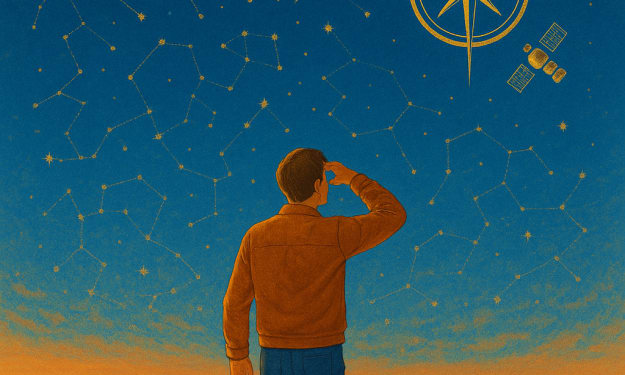
1. The Day We Stopped Being Lost There was a time when getting lost was a daily part of human life — a farmer missing a familiar trail, a sailor misreading the stars, a traveler relying on strangers for direction. The invention of navigation systems didn’t just solve a logistical problem. It redefined what it means to know where you are.
By Ahmet Kıvanç Demirkıran12 months ago in Humans
Journey Within: Navigating the Meaning of Living Day by Day
In the hustle and bustle of everyday life, it's easy to get caught up in the whirlwind of responsibilities, expectations, and worries about the future. We often find ourselves consumed by thoughts of what's to come, forgetting to appreciate the beauty and simplicity of the present moment. But what does it truly mean to live day by day?
By Samuel Harrington12 months ago in Humans
The Hard Truth of Being Disbelieved
There's a pain that cuts deeper than most: the sting of speaking your truth only to have your words met with silence, skepticism, or outright rejection. You stand there, heart open, offering a clean, unvarnished piece of your reality, and yet, they simply don't believe you. It makes you question everything—not just their judgment, but the very foundation of your own integrity. We have all been there. We have felt that wrenching disconnection. This isn't about the grand deceptions of the world; this is about those quiet, personal moments where honesty should be enough, but somehow, it falls short. It’s a moment that demands a look inward, a moment to understand not what they’re doing, but what’s happening in the delicate dance of communication. 1. The Shadow of Your Past Reputation
By Aymes Humprey12 months ago in Humans
When the Heart Becomes Mightier than the Mind
In every stage of human life, two forces guide our decisions: the mind and the heart. The mind represents logic, calculation, and reason, while the heart symbolizes feelings, passion, and emotion. Often, we are told to follow the mind because it is rational and safe. Yet, history, stories, and real-life experiences reveal that many of the greatest achievements of humanity were born not from pure logic, but from the powerful fire of emotion. When the heart becomes mightier than the mind, it awakens a strength that nothing else can create.
By Muhammad yar12 months ago in Humans
Change your brain in 15 minute
The Transformative Power of Exercise on the Brain What if I told you there was something that you can do right now that would have an immediate positive benefit for your brain—including your mood and your focus? And what if I told you that same thing could actually last a long time and protect your brain from different conditions like depression, Alzheimer's disease, or dementia. Would you do it?
By Mahboubeh Fallahi12 months ago in Humans
Elite Style Homecare: The Vital Role of Nurses in Post-Surgical Recovery in Dubai
Post-surgical recovery is one of the most important phases of the healing journey. Our DHA-licensed nurses at Elite Style Homecare deliver top-quality hospital care in the comfort of your home, making recovery safer and more convenient. From individualized physiotherapy to home nursing services in Dubai, our team guarantees safe and compassionate recovery.
By Elite Style Homecare12 months ago in Humans
Into the Uncanny Valley: Why Robots Almost Human Make Us Nervous
A humanoid robot smiles at you. It has almost perfect skin, eyes that glint with knowledge, and movements that mimic the subtleties of human gesture. You would like to respond, to meet its gaze, but you are restrained. There is a wrongness—an offness, a moment of dissonance in its smile, a stumble in its movement—that makes you tense. You glance away, your heart racing, sensing a discomfiture you cannot quite explain. You are going through the uncanny valley: the strange, often creepy reaction humans experience to being in the presence of machines or virtual entities that are almost—but not quite—human.
By The Chaos Cabinet12 months ago in Humans
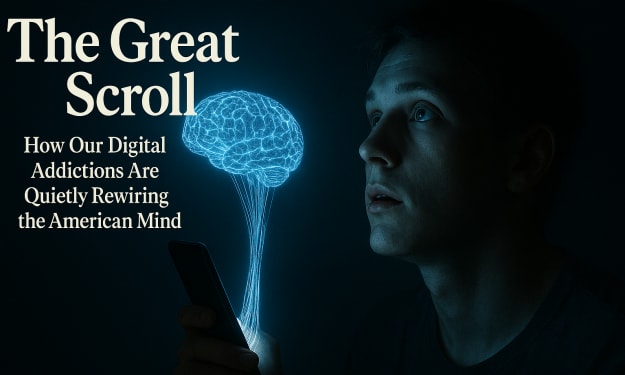
How Our Digital Addictions Are Quietly Rewiring the American Mind. AI-Generated.
I wake up not to an alarm, but to a reflex. My hand fumbles in the dark, finding the cool, flat rectangle on my nightstand. The screen flares to life, a portal to a world of notifications, updates, and a silent, screaming demand for my attention. Before my feet have even hit the floor, I have scrolled through a global news cycle, liked a vacation photo from a college acquaintance, and felt a pang of anxiety about a political headline I can barely process.
By kashif khan12 months ago in Humans
Letters from the Hospital Roof
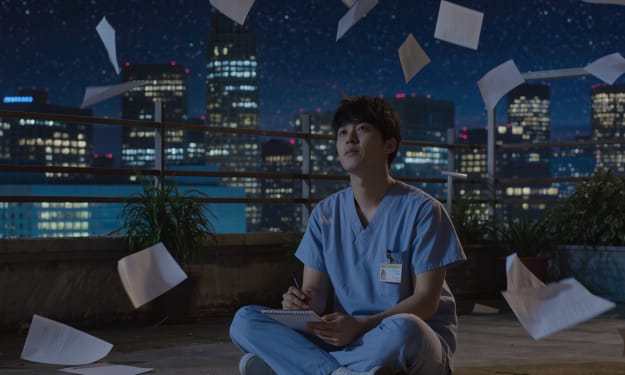
Letters from the Hospital Roof By Abdul Muhammad The hospital roof became my secret sanctuary. It wasn’t supposed to — it was just a square of concrete with a rusty railing and a blinking red light that kept planes away. But every night after my shift ended, I climbed the narrow metal stairs, pushed open the heavy door, and stepped into the quiet. The city stretched beneath me, glowing like a patient’s monitor. The smell of disinfectant was replaced by cool night air, and for a few minutes, I could breathe again. That’s where I started writing the letters. At first, I didn’t know who I was writing to. My hand moved faster than my mind, spilling words onto the cheap notepad I kept in my coat pocket. The first one started simply: > Dear Mrs. Hanley, I’m sorry we couldn’t save you. I wrote about how her son stood by her bed whispering prayers until dawn, about how I held her hand even though my gloves were damp with sweat, about how she was the first patient I lost during my internship. When I finished, I tore the page out, folded it once, and let it sit on my lap. The wind didn’t take it. I didn’t throw it away. I just wrote another one. --- Some nights, I wrote to my younger self. > Dear Me at Seventeen, You think you’re strong because you got into medical school. But strength isn’t about grades. Strength is telling a family that their father didn’t make it through the night, even when your voice shakes. I wrote about the coffee that never tasted strong enough, the laughter that broke out in the residents’ lounge at three a.m., the way we all pretended we were fine. > Dear Me at Seventeen, You’ll cry in the supply closet. More than once. That doesn’t mean you’re weak. It means you’re still human. --- There were nights when I didn’t write at all. I just sat there with my legs dangling over the edge, my pager silent for once, listening to the sounds of the city. Those nights felt like a stolen miracle. But then there were the nights after bad shifts. The worst was a little boy named Omar. Seven years old, pneumonia. We tried everything — oxygen, antibiotics, prayers whispered under our breath like medicine. His mother clutched his small hands and begged me to tell her he’d get better. When the monitors went flat, I felt something inside me go flat too. That night on the roof, my hands shook so hard I almost dropped the pen. > Dear Omar, I wanted to tell you that you were the bravest kid I ever met. That the way you smiled at me when I put the IV in made me believe, just for a second, that maybe I was good at this job. I wrote until the words blurred with tears. --- Weeks passed. The letters piled up in my locker, folded and creased, some smeared with coffee rings, some with tear stains. No one ever saw them. One morning, after a 36-hour shift, I left the hospital and found the city waking up — shopkeepers sweeping sidewalks, buses rumbling by. And I realized that I felt… lighter. It wasn’t because the grief had gone away. It hadn’t. But the letters had taken some of the weight. That night, instead of writing to the dead, I wrote to the living. > Dear Future Me, One day, you’ll be the doctor who teaches the new interns. Please tell them it’s okay to grieve. Tell them to go to the roof and breathe. Tell them to write letters, even if they never send them. --- On my last night of internship, I carried the entire stack of letters to the roof. I sat cross-legged and read each one aloud under the stars. Mrs. Hanley. Omar. The others. My seventeen-year-old self. My future self. When I finished, I tore the letters into small pieces and let the wind take them. White paper floated into the night like snow. I walked back down the metal stairs with empty hands and a steady heartbeat. Tomorrow, there would be new patients, new shifts, new heartbreaks. But there would also be new letters — and maybe, one day, I would teach someone else to write theirs. Because sometimes, healing doesn’t come from saving everyone. Sometimes, healing comes from letting yourself be human.
By Abdul Muhammad 12 months ago in Humans
Digital Semiotics and Symbols
Semiotics is the study of symbols, and in this article we’re going to talk about some common symbols that mankind uses today, using icons commonly used in user interface design, infographics, logos, favicons, and sometimes advertisements. These symbols are used to communicate ideas of action, or to communicate ideas in writing. Copywriters who work with companies that use technology should become familiar with the technological symbology both for understanding and for proper placement of visuals, or within visuals.
By J. Chauncey12 months ago in Humans