science
The Science Behind Relationships; Humans Media explores the basis of our attraction, contempt, why we do what we do and to whom we do it.
The Future of Artificial Intelligence: Transforming Industries and Reshaping Society
In recent years, artificial intelligence (AI) has emerged as a revolutionary technology, transforming industries and reshaping societies across the globe. With advancements in machine learning, natural language processing, and robotics, AI has become an indispensable tool that is revolutionizing everything from healthcare and transportation to finance and entertainment. This article explores the current state of AI, its impact on various sectors, and the potential it holds for the future.
By Edmund Chi3 years ago in Humans
Why Do Bees Die After Stinging?
Have you ever been stung by a honeybee? Man, it's the worst! It burns for hours and then swells up, leaving a big red welt for days. But as bad as it feels, it's actually the bee that gets the raw end of this deal, because a few minutes after it stung you, it dies. Wait, why would an animal have a self-defense mechanism that's more deadly to it than the thing it's attacking? That doesn't make sense! Well, there's actually a lot more to this kamikaze defense mechanism than meets the eye. So put on some thick gloves and get ice ready, because we're about to take a pretty painful look into the secrets of bee stings. Step-By-Step Sting. You might not want to admit it, but if you've ever been stung by a bee, it was probably your fault. Sorry to be the bearer of bad news, but, in general, bees only sting humans if we approach their hives or threaten them with aggressive or reckless behavior. If a bee is hunting for pollen, they'll leave us alone unless we handle them roughly or step on them. Now, you may have heard that all bees die after stinging. Well, actually, only the honeybee does.
By Onah Victor Obinna3 years ago in Humans
LIFE AFTER DEATH. Content Warning.
What Happens to Us When We Die The question of what happens to us when we die has fascinated humanity for millennia. It is a topic that stirs deep emotions, sparks philosophical debates, and elicits a wide range of beliefs and interpretations. While the exact answer remains unknown and continues to be the subject of speculation, various perspectives offer insights into the mysteries that surround the finality of life. From a scientific standpoint, death marks the cessation of biological functions that sustain our existence. When the body ceases to function, the brain no longer receives oxygen and nutrients, leading to the irreversible loss of consciousness and bodily functions. Death, in this sense, is the end of our physical existence, where the body decomposes and returns to the elements from which it was formed. However, the question of what happens to our consciousness, our essence, after death remains a topic of great conjecture. Different cultural, religious, and spiritual beliefs offer diverse interpretations, providing solace and hope to those grappling with the concept of mortality. Many religious traditions propose the existence of an afterlife—a realm or state of being that follows death. The specifics of the afterlife vary across different faiths and cultures. Some envision a heaven or paradise, a realm of eternal bliss and reunion with loved ones. Others believe in reincarnation, where the soul is reborn in a new body to continue its journey of growth and spiritual evolution. There are also notions of hell or purgatory, where the soul faces judgment and experiences retribution or purification before moving on to a higher state. Spiritual and metaphysical beliefs also explore the possibilities of what happens after death. Some posit the existence of an astral plane, a realm of consciousness beyond the physical plane. It is considered a place where the soul may reside, learn, and heal before embarking on its next adventure. Near-death experiences, often described as encounters with a bright light or a sense of peace and transcendence, are cited as evidence of an existence beyond the physical realm. Furthermore, philosophical perspectives offer contemplative insights into the question of what happens to us when we die. Existentialist thinkers emphasize the finality of death and the need to find meaning and purpose in our finite lives. They encourage us to embrace the present, to live authentically, and to create a legacy that outlasts our physical existence. From this perspective, the meaning we assign to our lives and the impact we have on others become crucial aspects of our posthumous presence. In contemplating death, we inevitably confront questions of consciousness, identity, and the nature of the self. Does our consciousness simply cease to exist? Is it absorbed into a collective consciousness? Or does it transcend the physical realm and continue to exist in some form beyond death? The answers to these profound inquiries remain elusive, shrouded in mystery and subjectivity. Ultimately, what happens to us when we die remains a deeply personal question, intimately intertwined with our beliefs, experiences, and cultural upbringing. It is a topic that elicits diverse perspectives and emotions, from fear and uncertainty to hope and comfort. While science may shed light on the physical processes of death, the exploration of consciousness and the nature of existence transcends the boundaries of empirical observation. In the face of this existential mystery, it is perhaps the journey of life itself that holds the most significance. Regardless of what lies beyond death, the present moment is an opportunity to cherish, to live with purpose and compassion, and to cultivate a sense of connection with ourselves, others, and the world around us. It is through embracing life that we find solace and meaning, even in the face of mortality's enigma.
By Isaac Smith 3 years ago in Humans
Sewers Are Clogged Everywhere. Can Robots Help Clean Them?
In South Asia, thousands of people perform the dangerous job of diving into underground sewers to clear blockages. However, a robot called the Bandicoot has been developed to replace human divers. It has four legs, four cameras, and a carbon fiber body capable of lifting heavy loads. The Bandicoot can access areas that were previously only reachable by human hands. Sewer blockages are a global problem, affecting both South Asian countries and wealthy cities in the global North. The worsening sewer conditions can lead to serious consequences if not addressed. Early civilizations had open sewers, but things began to change during the Industrial Revolution when urban populations grew and diseases like cholera spread. Cholera claimed millions of lives in the 19th century.
By Imoka Asika Paul 3 years ago in Humans
Unveiling the Wisdom Within. Content Warning.
At the age of 25, as the world opens up to new opportunities and experiences, a woman embarks on a transformative journey of self-discovery. It is a pivotal stage of life filled with both challenges and triumphs, offering valuable lessons that shape her future. This is the story of Emily, a young woman who learns what truly matters and the wisdom she acquires along the way.
By Odey Thomas3 years ago in Humans
Can Artificial Intelligence Predict Lung Cancer in Non-Smokers
Introduction Lung cancer is a significant health concern, causing a high number of cancer-related deaths globally. Researchers have now developed an innovative approach to detect lung cancer risk in non-smokers using artificial intelligence (AI) tools and algorithms. In this article, we will explore how AI is revolutionizing lung cancer diagnosis and the potential benefits it offers to patients.
By satish Kumar3 years ago in Humans
APPLE VISION PRO
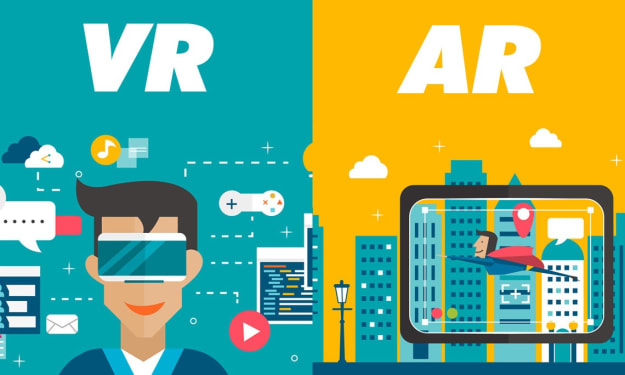
For a long time currently, I've heard the refrain that when Apple, the harbinger of the cell phone end of the world, at last makes and makes a big appearance its own VR headset, that is when VR will at long last have its large, breakout second and develop past a specialty hobby and cash pit for Meta.
By Trending Updates3 years ago in Humans
Love
Once upon a time, in a small town nestled amidst rolling green hills, there lived a man named David. He was a simple man with a heart full of love and a smile that could light up the darkest of rooms. David was a father, and his greatest joy in life was his children. Little did he know that his journey of fatherhood would become an inspiration to those around him, an embodiment of the unsung heroes who walk among us.
By MARK SOHAN3 years ago in Humans
The impact of the internet on your brain. Content Warning.
Living without the internet would be a strange and difficult experience. Some of us remember the time before everything was connected, and maps where we could find search engines ran on our fingertips. Now, however, it seems alien to us to imagine life without smartphones and maps, as well as search engines and other sources of information. Our increasingly reliant use of the internet is changing our relationships, our sources of information, and even the way we interact with each other.
By Wafaa Maria3 years ago in Humans