science
The Science Behind Relationships; Humans Media explores the basis of our attraction, contempt, why we do what we do and to whom we do it.
Exploring the Unconventional: Unique Towns Around the World
Have you ever dreamed of walking on diamonds? The quaint town of Nördlingen in Germany offers a peculiar experience – its walls and streets are studded with over 72,000 diamonds. Although invisible to the naked eye, these diamonds have a fascinating origin. The town, settled around the 9th century CE, was thought to be located in a volcanic crater. Little did the inhabitants know that the stones used for construction were embedded with millions of tiny diamonds, remnants of an asteroid impact that occurred 14.5 million years ago in Bavaria. The intense heat and pressure from the impact transformed carbon bubbles into diamonds, creating a concentration unlike anywhere else in the world. Despite this unique feature, locals, accustomed to living among diamonds, find it unremarkable.
By Rúni Svabo Egholm3 years ago in Humans
Beyond Romance In Relationship
Relationships often revolve around the excitement of romance, with the rush of new love and the joy of shared experiences creating a captivating story. However, as time passes, what happens to the relationship beyond the initial romance? How can couples navigate the ups and downs of everyday life while ensuring their connection not only endures but also grows stronger? In this exploration, we delve into the scientifically-backed keys that unlock the secrets to maintaining healthy relationships, offering a roadmap to lasting love that goes beyond the enchantment of romance.
By Chinedum John3 years ago in Humans
The Brain
I am talking about the structure and function of the brain. Remember, structure is what it is made of. And function is what it does. Sometimes we call it anatomy or structure and physiology or function. And what's so great is that we go through seventeen different brain structures, so they form the blueprint of the brain. But you use your brain to process it. And if you do a good job, when we get to the end and I go through all the parts, you should be able to tell me what their structure is and what they do. And what organisms have a brain? That and the animals.
By peace igwe3 years ago in Humans
The Lefty Riddle: Why Some People Prefer the Other Hand
In a time long ago, when humanity was still carving its destiny in the tapestry of evolution, a curious phenomenon emerged - the enigma of left-handedness. Picture a world where the majority proudly wielded tools designed for their dominant right hands, blissfully unaware of the minority that defied the norm. Yet, this minority, the lefties, held a secret weapon, a surprise advantage hidden in the intricacies of evolution.
By Tallal Jafri3 years ago in Humans
Being too logical in love
It seems odd at first to imagine that we might get angry, even maddened, by a partner because they were, in the course of a discussion, proving to be too reasonable and too logical. We are used to thinking highly of reason and logic. We are not normally enemies of evidence and rationality. How then could these ingredients become problematic in the course of love? But from close-up, considered with sufficient imagination, our suspicion can make a lot of sense.
By Pondering Frog3 years ago in Humans
What Happens when we die?
What Happens when we die? Introducing a groundbreaking study on the mysteries surrounding death, the focus is on understanding what happens to our brains when we die. The research suggests that rhythmic brain patterns near the time of death may trigger memory recall of significant life moments. The co-author, a neuroscientist and assistant professor at the University of Louisville, joins the discussion to shed light on these findings challenging our conventional understanding of the end of life.
By Genanew Mulugeta3 years ago in Humans
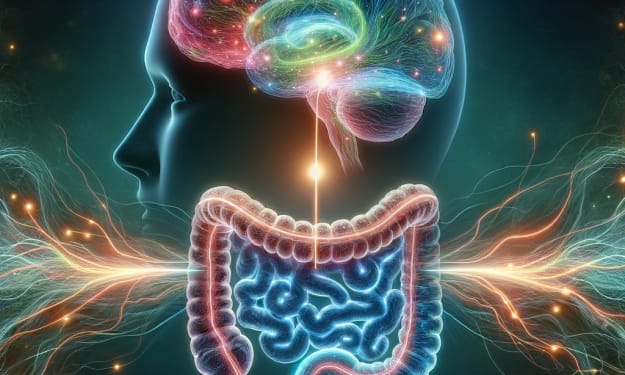
Unravelling the Mystery: How Intermittent Fasting Rewires Our Body
In an era where obesity continues to challenge global health, scientists are avidly searching for effective solutions. A ground-breaking discovery has recently shed light on how intermittent fasting might significantly alter our brain and gut, offering potential new avenues for maintaining a healthy weight. This article delves into the fascinating findings from a group of Chinese researchers who observed remarkable changes in obese individuals participating in an intermittent energy restriction (IER) program.
By Mike Challis3 years ago in Humans
Exploring the Intersection of Virtual Reality and Mental Health: A New Frontier in Therapeutic Innovations
Virtual reality (VR) with mental health is a dynamic and pioneering new field for therapeutic strategies. This article examines how VR is transforming mental health care, furnishing alternative approaches for treatment and learning.
By Rano Bofill, MD3 years ago in Humans