satire
Relationship satire can be cathartic; when love hurts too much, just laugh.
It's time to stop tolerance
In the millennial era today, it is truly frustrating. How could it not be? We are entering an era where we must be tolerant of people's beliefs and speech because if not, they will bring disaster. Do you know what I'm talking about? People tend to confuse emotions with facts. The reality of this situation is that throughout human history, every time there is chaos, only logic prevails. Last night, I was chatting with my friends, and after a few puffs of cigarettes, some heavy philosophical conversations took place. "So, does it mean gender equality or women's desire?" After almost an hour of debating, we began to shift the conversation towards religious fanaticism that has been happening recently. And how people are slowly becoming more tolerant than they should be. Tolerance is considered an important value in building a harmonious society that appreciates differences. This reminds me of the paradox of tolerance by Karl Popper. He questioned whether excessive tolerance could threaten the very principles of tolerance itself. Karl Popper was a liberal thinker known for his concept of the "open society" and he presented his views on the paradox of tolerance in his famous book, "The Open Society and Its Enemies." He argued that if we truly practice absolute and unlimited tolerance, we risk destroying the values we want to preserve. In his book, Popper explained that tolerance that does not restrict itself to ideologies that oppose tolerance will become a tool used by authoritarian groups to destroy the principles of democracy and freedom. In other words, if we provide unlimited space for intolerant thoughts, those thoughts can take control and ultimately eliminate tolerance itself. Perhaps you're a bit confused. Let's take a simple example to understand this paradox of tolerance. Imagine! You are playing a game where everyone can share their ideas and opinions. Because tolerance means you're fine with others having different ideas, even if you don't agree with them. Simply put, it's like saying, "It's okay, you can think and act differently, we accept everyone here." But what if these people start saying things like, "It's not good to accept people like this, they are too different from us, they cannot understand us, and they don't deserve to be here"? Should we tolerate this behavior? The paradox of tolerance states that if you are too tolerant and allow these players to continue spreading their intolerant ideas, in the end, they may gain power and attempt to eliminate tolerance. In other words, if we tolerate too much intolerance, it can lead to the destruction of a tolerant society. In simpler terms, the paradox of tolerance tells us that we should not allow evil or dangerous ideas to take over, even if we believe in being tolerant. We need to set some limits to protect the values of justice and goodness. There needs to be a balance between allowing differences of opinion and standing against intolerant ideas that can undermine the foundations of tolerance and freedom. So, in order to eliminate intolerant people who make your life like hell, you must be intolerant. A bit mind-boggling, isn't it? That's why it's called the paradox of tolerance. Let's simplify it further. If you closely observe people from the majority group today, you will see that they want everyone to be tolerant, but they themselves are very intolerant of ideologies and beliefs different from those of minority groups. Now, what solution does Karl Popper propose regarding this paradox of tolerance? He suggests the principle of "limited tolerance toward the intolerant." This means that when we encounter groups actively seeking to destroy the principles of tolerance, we need to oppose them and limit our tolerance towards them. This is part of what Popper calls the "paradox of tolerance." Although tolerance is considered an important value in building a harmonious society, Popper emphasizes that unlimited tolerance can become a weapon used by intolerant groups to destroy the principles of democracy and freedom. Furthermore, we also need to recognize that a society that is completely closed off to different views can also be dangerous. Healthy and constructive tolerance involves the ability to listen, engage in dialogue, and understand different perspectives without necessarily agreeing with them. This allows society to evolve through the exchange of ideas and the discovery of better solutions. In the context of Karl Popper's paradox of tolerance, we must strive to find a balance between tolerance that enables freedom of speech and the appreciation of differences, while recognizing the necessary limits to protect the values of democracy, human rights, and harmonious coexistence. And although there are boundaries that need to be applied to tolerance towards intolerant groups, we also need to be cautious not to fall into an inability to listen and understand different perspectives. In maintaining this balance, education and a deeper understanding of democratic values will be key to building an inclusive and harmonious society.
By Mohammad Arie Setyawan3 years ago in Humans
How Appreciation Can Transform Your Perspective
Practicing gratitude is a straightforward but deep act that can alter our outlook and improve our general well-being. It entails recognizing and appreciating the compassion, beauty, and benefits that are present in our life. In this post, we'll look at the importance of thankfulness, how it affects our mental and emotional health, and how we might nurture gratitude in our daily lives.
By Zenia Samson3 years ago in Humans
PURPOSE TO LIVE
Many of us find ourselves yearning for a deeper sense of fulfillment and significance in the chaos of modern life. We aspire to lead meaningful lives and awaken each morning with a feeling of direction and enthusiasm. A higher sense of meaning must be reflected in our behaviors and ideals for us to live with purpose. This essay will discuss the value of living with a purpose, how to identify our purpose, and doable methods for adding meaning to our daily activities.
By Zenia Samson3 years ago in Humans
10 ILLUSIONS ABOUT ZODIAC SIGNS. Content Warning.
1. Another fallacy is the idea that a person's compatibility with another person in a relationship is primarily based on their sun signs. Even though the sun sign can shed light on some characteristics of compatibility, relationships are intricate and varied. Compatibility is also greatly influenced by elements like communication, similar values, emotional connection, and life objectives. When determining compatibility, it's crucial to take the complete birth chart into account rather than simply the sun sign.
By Zenia Samson3 years ago in Humans
The Unspoken Pain
Ugo's heart pounded in his chest as he hid in the thick underbrush, his body trembling with fear and anticipation. The moon cast a pale light over the African landscape, accentuating the scars etched across Ugo's face—a painful reminder of the life he had endured. Ugo was a survivor, a young man who had witnessed firsthand the unspoken pain and intrinsic suffering of slavery in Africa.
By JAY ANTHONY3 years ago in Humans
The Luckiest Unlucky Man: The Extraordinary Life of Frane Selak
On a cold January morning in 1962, 32-year-old Croatian Frane Selak was minding his own business when suddenly his train derailed. Disconnected from the rest of the train, his train car plunged down a narrow canyon and into an icy river. Desperately fighting to escape the sinking train car, Selak made his way to the shore before being pulled to safety by a bystander. While 17 other people drowned in that tragic accident, Selak suffered nothing more than a broken arm and hypothermia.
By Uphill Mind3 years ago in Humans
Ebuka's Journey: Embracing Ubuntu until the "Last Breath"
Chapter 1: The Call of Ubuntu In a small village nestled in the heart of Africa, there lived a man named Ebuka. From a young age, he was captivated by the spirit of Ubuntu that permeated his community. He witnessed the power of interconnectedness and shared humanity, as people came together in times of joy and sorrow, supporting one another with unwavering compassion.
By JAY ANTHONY3 years ago in Humans
Politicians and Their Ambitions: Striving for Power, Progress, and Public Service
Introduction: Politicians, throughout history, have been driven by a myriad of ambitions that fuel their journey in the realm of governance and public service. Some aspire to create positive change and address societal issues, while others are motivated by personal power and glory. This article delves into the multifaceted nature of politicians' ambitions, exploring their motivations and showcasing specific examples of notable figures from around the world.
By Galip Yüksel3 years ago in Humans
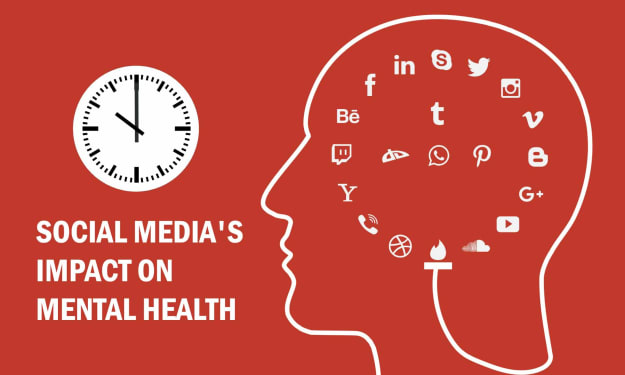
The Impact of Social Media on Mental Health
In the age of digital connectivity, social media has become an integral part of our lives. It has revolutionized the way we communicate, share information, and stay connected with others. However, the rise of social media has brought about concerns regarding its impact on mental health. This article explores the connection between social media and mental well-being, shedding light on the potential risks and benefits. By understanding the complex relationship between social media and mental health, we can make informed decisions about our online habits and promote a healthier digital environment.
By Abdul Haseeb Rizvi Attari3 years ago in Humans