love
All you need is Love, and Love is all you need.
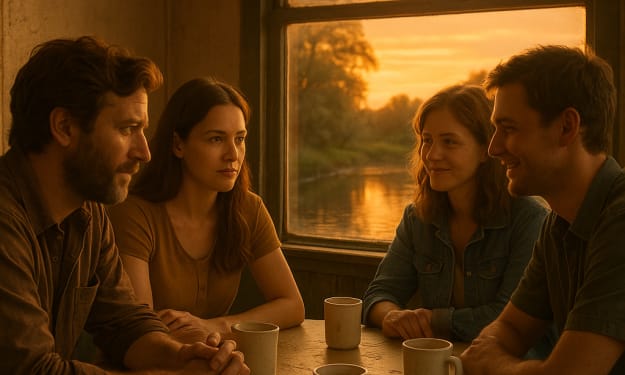
The Last Summer Before the Storm
It had been years since they had all come back to Willow Creek, the little town that shaped their childhoods, a place where summers felt like they lasted forever, and friendships seemed unbreakable. But, time was cruel, and the small town that had once been their playground had aged just as they had—faded, quiet, and somewhat forgotten.
By Solve Smartabout a year ago in Humans
10 Red Flags in a Relationship—Signs Not to Ignore
What are the red flags in a relationship? If you are puzzled by this question, most likely, your affairs are experiencing difficulties. But you are not alone. Numerous people feel their relationships have emotional imbalances or are going in the wrong direction. And these signs may be even more vivid if you have just started. So, check out 10 red flags not to ignore when dating someone new and see whether they tick all the boxes. Then, consider yellow and green signs to make sure your dating ventures have a future.
By Peter Jamesabout a year ago in Humans
50 Love Texts for Him That’ll Touch His Heart Instantly
50 Love Texts for Him That’ll Make Him Smile (Or Blush) Love is simple—until you try to put it into words. And when it comes to texting your fellow, finding the proper words? That can feel like understanding a perplexity within the dim.
By Milan Milicabout a year ago in Humans
Why Walking in Nature Is the Best Therapy
Nature as the Forgotten Healer In today’s fast-paced digital world, we often overlook one of the most effective, affordable, and accessible forms of therapy—walking in nature. From reducing anxiety and depression to boosting creativity and emotional clarity, the healing power of nature is supported by science, history, and experience.
By Muhammad Asimabout a year ago in Humans
How My Grandparents’ 50-Years Marriage Taught Me About Love
When I was a child, love seemed simple. It was the stuff of fairy tales and movies — grand gestures, whirlwind romance, happy endings written in the stars. But life, as I would come to learn, writes its stories with subtler ink. And no lesson shaped my understanding of love more than watching my grandparents’ marriage unfold over fifty years. Their names were Helen and Samuel — though to me, they were always just Grandma and Grandpa. They met in their early twenties, in the summer of 1964, at a community dance in a small Midwestern town. It wasn’t love at first sight — or so Grandma liked to tease. "He nearly stepped on my foot three times," she’d say with a smile, her eyes twinkling. But something sparked between them — something real and steady. They married the following spring, in a modest church ceremony with hand-picked wildflowers and a cake baked by Grandma’s sister. When I was born decades later, they were already seasoned partners — a unit as familiar as the rising sun. By the time I was old enough to notice the world around me, they had been married more than thirty years. Their home was a place of quiet warmth: a creaky old farmhouse where the scent of fresh bread always seemed to drift from the kitchen, and the porch swing never sat still for long. I spent many summers there, and in that house — without even realizing it — I absorbed the rhythms of their love. It wasn’t a love of grand declarations. I never once heard my grandfather deliver an impassioned speech about his devotion, nor did my grandmother write him poetry. What I saw instead were a thousand small moments — tiny stitches that, together, formed something unbreakable. Every morning, my grandfather rose early to feed the animals and tend the garden. He would brew a pot of coffee — strong, just the way Grandma liked it — and leave her favorite mug on the kitchen table. No words exchanged, just a quiet act of care. In the evenings, they would sit together on the porch, watching the sunset in comfortable silence. Sometimes they spoke, sometimes they didn’t. The space between them was never empty — it was full of understanding built over decades. Of course, it wasn’t always perfect. I remember hearing them bicker over trivial things — whose turn it was to mow the lawn, whether Grandpa should finally throw out the broken radio he insisted on fixing “one of these days.” But even their arguments held a tenderness. There was no cruelty, no sharpness. They disagreed, they worked through it, and life went on. It wasn’t until I grew older — into my awkward teenage years — that I began to truly grasp the depth of what they shared. At the time, I was caught in the whirlwind of first crushes and heartbreaks, convinced that love was supposed to be thrilling and dramatic. I confided in my grandmother one afternoon, after a boy I liked had stopped returning my texts. She listened patiently, her hands busy shelling peas at the kitchen table. When I was done pouring out my woes, she smiled gently and said, "Love isn’t always fireworks, honey. It’s knowing someone will stand beside you when the sparks die down." Those words stayed with me. As the years passed, life brought its trials. My grandfather suffered a heart attack in his late sixties. The recovery was long and difficult. Through it all, my grandmother remained by his side — steady, patient, unwavering. I remember watching her hold his hand during doctor visits, coax him to eat when his appetite waned, encourage him through painful physical therapy. It was in those moments — raw and unglamorous — that I saw the truest face of love. Not in passion, but in presence. Not in perfect joy, but in imperfect perseverance. When they celebrated their 50th wedding anniversary, the whole family gathered in the old farmhouse. There were flowers, photos, laughter — and a simple toast by my grandfather that I will never forget. He raised his glass and said, "Fifty years ago, I married the love of my life. I didn’t know what the road would hold — the good, the hard, the beautiful, the ordinary. But I knew I wanted to walk it with her. And every day since, I’ve been grateful for that choice." It wasn’t a flowery speech. It didn’t need to be. The truth was in their story — in the days lived, the years shared, the life built together. Their marriage taught me that love is a verb — a choice made again and again. It’s waking up every morning and deciding to show up, even when it’s hard. It’s the small acts of kindness that accumulate into a lifetime. It’s forgiveness. It’s patience. It’s humor. It’s respect. And above all, it’s friendship — the deep, abiding friendship that carries you through life’s inevitable storms. I carried those lessons with me when I eventually met my own partner. In the early days, when we stumbled over misunderstandings or navigated difficult seasons, I would think of my grandparents — of the way they had faced life, side by side, with grace and grit. Now, years into my own relationship, I understand even more clearly: their love was never about perfection. It was about presence. About choosing one another, day after day, year after year. My grandparents have both passed now — my grandmother first, followed by my grandfather a few years later. But their love story lives on — in the memories of those who knew them, in the lessons they taught without ever meaning to. And for me, it will always be the truest testament to love: Not grand, but grounded. Not loud, but lasting. Not perfect, but profound. ---
By Huzaifa Writerabout a year ago in Humans
How I Fell in Love With the Ocean
By [Your Name] They say some loves are slow to bloom. Others strike like lightning. For me, the ocean was neither — it was something I circled for years, unsure, almost afraid. Until one day, quietly and without warning, it pulled me in and never let me go. I didn’t grow up by the sea. My childhood was spent far inland, in a small town bordered by wheat fields and dusty roads. The closest thing to the ocean was the river that wound its lazy way through the outskirts, its muddy banks lined with willows. I loved that river, in a small and familiar way — but it never stirred my imagination the way the ocean would, years later. My first memory of the sea came from books. In those stories, the ocean was alive — vast, unknowable, wild. It swallowed ships, held ancient secrets, called to explorers and poets alike. I would trace the maps in the pages with my fingers, imagining faraway coasts and endless waves. But in real life? I didn’t see the sea until I was seventeen. It was a school trip — the kind meant more to tick off curriculum boxes than to inspire any kind of romance. We traveled by bus for hours, the landscape changing slowly from flat plains to rolling hills and finally to the first glimpses of blue between the trees. When we arrived at the coast, the sky was gray. The air tasted of salt and wind. The ocean, when I saw it, looked nothing like the glittering images from storybooks. It was cold, restless, flecked with whitecaps. The wind tugged at my hair, stung my face. I stood on the sand, unsure what to feel. The others laughed and ran toward the surf, but I hesitated — the ocean felt like a stranger. A little beautiful, a little dangerous. It wasn’t love at first sight. That might have been the end of it — another box ticked, another memory filed away. But life, as it often does, had other plans. Years later, in my early twenties, I found myself in a different city — one perched on the edge of the coast. I moved for work, for the promise of something new. My apartment was small, a third-floor walk-up with creaky floors and peeling paint — but from the balcony, if I leaned far enough, I could just see the ocean. At first, I barely noticed it. My days were filled with deadlines and meetings, my nights with exhaustion. The city felt large and impersonal. I missed my hometown, my familiar river. But one weekend, restless and needing air, I wandered toward the water. It was a clear afternoon. The sky stretched wide, the waves glittered. I kicked off my shoes and walked along the beach, the wet sand cool under my feet. That day, something shifted. It wasn’t one dramatic moment. No great epiphany or cinematic swell of music. Just the quiet realization that here, by the water, I could breathe. The weight I carried seemed lighter. The noise in my head quieted. I began returning often. Sometimes with a book, sometimes just to walk. The ocean became a kind of companion — one that didn’t ask anything of me, didn’t expect me to be anything more than what I was. Over time, I began to notice things. The way the sea changed with the sky — deep blue under the sun, silver in the fog, green and fierce in the storm. The way the waves sang different songs: sometimes soft, sometimes wild. I noticed the life it held — gulls wheeling overhead, small crabs skittering in the sand, the occasional glimmer of fish near the shore. And I noticed how the ocean made me feel — both small and infinite at once. The more time I spent there, the more I understood: the ocean wasn’t just water. It was movement, memory, possibility. It had been here long before me, would remain long after. And yet — for these moments, it welcomed me. In the years that followed, the ocean became a constant in my life. When I was happy, I went to the water. When I was lost or broken, I went there too. The sea didn’t judge joy or sorrow. It simply was — patient, enduring. I learned to read its moods. I swam in its cold embrace, floated under starlit skies. I walked its empty beaches at dawn, letting the tide wash away old hurts. One winter evening, after a particularly difficult season of my life, I stood on the shore as the sun dipped low. The sky burned with color — crimson, gold, deep violet. The waves rolled in, one after another, endless, eternal. In that moment, I realized something simple and true: I loved this ocean. Not as a tourist, not as a visitor — but as someone who had been shaped by it, healed by it. The ocean had taught me to let go — like the tide, always moving, always returning. It had taught me to endure — to bend with the storms, but not to break. And it had taught me awe — a sense of wonder I carried into every corner of my life. To this day, that love remains. Wherever I travel, wherever life takes me, I seek the water. And when I return home, the first thing I do is visit the shore — to greet an old friend. People sometimes ask why I love the ocean so much — why I need it. The truth is, I don’t always have words for it. Some loves live deeper than language. But if I had to try, I would say this: The ocean reminds me that life is vast. That we are all small — and that is a beautiful thing. It reminds me to breathe, to flow, to trust in the tides. And perhaps most of all, it reminds me that love — like the sea — comes when you least expect it, quietly, and changes you forever. ---
By Huzaifa Writerabout a year ago in Humans
Pisces Man and Virgo Woman Compatibility Score. AI-Generated.
When a Pisces man and a Virgo woman come together, their relationship is often a case of opposites attracting — and complementing — one another. Pisces, the twelfth and final sign of the zodiac, represents dreams, intuition, and emotional depth. Virgo, the sixth sign, stands for precision, logic, and practicality. While their core natures differ, these two signs can find profound love and understanding when they recognize and respect each other’s strengths.
By Inspire and Funabout a year ago in Humans