love
All you need is Love, and Love is all you need.
AI Girlfriends, Virtual Relationships, and the Future of Love
In 2025, love is no longer confined to candlelit dinners, handwritten notes, or even swipes on dating apps. Instead, it's taking a leap into the digital unknown—where relationships aren’t just mediated by technology, but fully created by it.
By Kamran Zebabout a year ago in Humans
Ed Miliband rejects £24bn plan to bring power from Morocco to UK
**Ed Miliband Rejects £24 Billion UK-Morocco Energy Link in Major Policy Shift** Energy Secretary Ed Miliband has rejected a £24 billion proposal to import renewable electricity from Morocco to the United Kingdom via a record-breaking subsea cable. The ambitious Morocco-UK Power Project, led by British energy firm Xlinks, had aimed to provide up to 8% of Britain’s electricity needs by transporting solar and wind power from the Sahara Desert to the Devon coast.
By GLOBAL NEWSabout a year ago in Humans
The Importance of a Balanced Diet for Long-Term Health
Introduction Eating healthy isn't just about losing weight—it's about feeling good, staying strong, and living a long, happy life. A balanced diet gives your body all the nutrients it needs to work properly. Without the right foods, you might feel tired, get sick often, or develop health problems like diabetes, heart disease, or weak bones.
By MUHAMMAD Abbasabout a year ago in Humans
The Letters You Left. AI-Generated.
When Anna inherited the old lake house she did not intend to stay. it had the smell of dust and pine and memories that were not hers. Old years creaked in the stove-pipes at the wooden floor, and the corners were framed with cobwebs like little ghosts telling the story. But that touch at the sight--God, that touch at the sight--made her linger on one more day.
By Md Peyel Hassanabout a year ago in Humans
Pisces Man and Sagittarius Woman Compatibility Score. AI-Generated.
When the deeply emotional Pisces man meets the spirited Sagittarius woman, the connection is instantly intriguing yet complicated. These two signs are vastly different in temperament, desires, and emotional needs, but their union can be one of immense growth — if both are willing to adapt. With Pisces being a mutable water sign and Sagittarius a mutable fire sign, change is inevitable, but whether that change unites or separates them depends on how they navigate each other’s worlds.
By Inspire and Funabout a year ago in Humans
Mother’s Advice: The Lessons That Shaped My Life
Some of the most important lessons I ever learned came not from books or classrooms, but from quiet conversations in our kitchen, my mother’s hands busy peeling potatoes or folding laundry. Her words were rarely grand or dramatic; they were simple, sometimes even casual. Yet over time, they became the foundation of who I am. Looking back now, I realize how much of my life has been guided by my mother’s advice — advice I often dismissed in my youth, only to cling to it fiercely when I needed it most. --- “Kindness Costs Nothing.” I remember the first time she said it. I was seven, upset after a boy at school called me names. I came home crying, convinced that the only way to feel better was to get even. My mother sat me down at the kitchen table and poured me a glass of milk. “Kindness costs nothing,” she said quietly, brushing a strand of hair from my face. “And sometimes, it’s the only thing that can change a heart.” At the time, I didn’t understand how kindness could help me. But as the years passed, I learned that kindness wasn’t about being weak — it was about being strong enough to rise above anger. Whether it was holding the door open for a stranger, offering a listening ear to a friend, or forgiving someone who never apologized, my mother’s words were always with me. --- “You Can’t Pour From an Empty Cup.” As a teenager, I often found myself overextending — volunteering for every project, helping everyone around me while ignoring my own needs. When I crashed from exhaustion, my mother was there. I still remember her standing in my bedroom doorway, her eyes kind but firm. “You can’t pour from an empty cup,” she said. “If you don’t take care of yourself, you’ll have nothing left to give.” I carried that advice with me into adulthood, learning that self-care isn’t selfish. It’s necessary. It’s how we refill the cup so we can continue to show up for those we love. --- “Your Words Matter — Choose Them Carefully.” My mother believed words could heal or harm, build or break. I learned this the hard way during a heated argument with my younger brother. I let my frustration boil over into cruel words I didn’t mean. The look on his face haunted me. Afterward, my mother pulled me aside. “Words are like stones,” she said softly. “Once thrown, they can’t be taken back. So choose them carefully.” Since then, I’ve tried — not always perfectly — to pause before I speak, to weigh my words, to ask myself whether what I’m about to say will help or hurt. Her advice taught me the power of language, and the responsibility that comes with it. --- “Be Honest, Even When It’s Hard.” Honesty was one of my mother’s core values. She told me often that honesty wasn’t just about telling the truth to others — it was also about being honest with myself. When I was in college, I found myself in a relationship that looked perfect on the outside but left me feeling small and unhappy. I kept telling myself it was fine, afraid of admitting that it wasn’t what I wanted. One weekend at home, my mother saw right through me. She took my hands in hers and said, “Be honest, even when it’s hard. Especially then.” Her words gave me the courage to end a relationship that wasn’t right for me. It hurt, but it freed me to find something real, something true. --- “Don’t Let Fear Make Your Choices.” As a young adult, I had many dreams — traveling the world, writing stories, starting my own business. But I also had fears: of failure, of judgment, of not being good enough. Whenever I shared these fears, my mother would remind me: “Don’t let fear make your choices. If you do, you’ll build a life around avoiding what scares you instead of chasing what you love.” When I was offered a job opportunity abroad, fear almost convinced me to stay home. My mother’s advice echoed in my mind, and I took the leap. That decision led to some of the most transformative experiences of my life. --- “It’s Okay to Start Over.” Perhaps the piece of advice that has meant the most came years later, when I felt lost after a series of personal and professional failures. I worried I had wasted time, missed my chance, ruined everything. One evening, I called my mother, ashamed and anxious. I poured out my regrets. She listened patiently, then said the words that lifted the weight off my chest: “It’s okay to start over. You’re never too old or too far gone to begin again.” That permission — to reset, to try again — was exactly what I needed. It helped me reimagine my life, rebuild my confidence, and find a new path forward. --- The Last Lesson My mother passed away two years ago. The house feels emptier without her quiet presence. Sometimes I still expect to hear her humming in the kitchen or to see her waiting by the window when I visit. But her words are with me every day. In moments of doubt, I remember her advice. In moments of joy, I thank her for the lessons that helped me find my way there. And now, when I see friends or loved ones struggling, I hear her voice in my own words — reminders to be kind, to rest, to speak with care, to face fear with courage, and to believe in new beginnings. Through all the twists and turns of life, my mother’s advice has been my compass. It didn’t shield me from pain or prevent every mistake, but it gave me the tools to navigate both. If there’s one thing I know for sure, it’s that love often looks like advice quietly given over years of shared moments — advice we don’t always appreciate until we need it most. And when I think of my mother’s wisdom, I know it was the greatest gift she ever gave me. ---
By Huzaifa Writerabout a year ago in Humans
How to Stay in Love with Your Spouse . AI-Generated.
Maintaining love in a marriage isn’t a one-time effort. It’s an ongoing process that keeps the bond strong through life’s ups and downs. Long-term happiness depends on how well partners nurture their connection every day. But let’s face it — routines, stress, and busy schedules can make love fade if you’re not careful. Staying in love requires intentional acts, awareness, and practical strategies rooted in real advice from experts.
By LaMarion Zieglerabout a year ago in Humans
Lost in the Moment
Lost in the Moment A Chance Encounter As she walked along the beach, the warm sand between her toes, Emily felt a sense of peace wash over her. She had always loved the ocean, and today was no exception. The sun was shining, the waves were crashing, and she was alone with her thoughts. That's when she saw him - a guy sitting on a blanket, staring out at the sea. There was something about him that caught her attention. Maybe it was the way he seemed lost in thought, or the way the sunlight danced in his hair. Whatever it was, Emily felt drawn to him. She walked closer, her feet sinking into the sand, and he looked up. Their eyes met, and for a moment, time stood still. Emily felt a jolt of electricity run through her body, and she knew she couldn't look away. "Hi," he said, smiling, and Emily's heart skipped a beat. "Hi," she replied, trying to sound casual. They introduced themselves - he was Alex - and started talking. Emily learned that Alex was a writer, working on his first novel, and she shared her passion for art. The conversation flowed easily, and before she knew it, they had been talking for hours. As the sun began to set, casting a golden glow over the beach, Alex asked Emily if she wanted to grab some dinner with him. She agreed, and they walked to a nearby café. Over dinner, they talked some more, sharing stories and laughter. Emily felt a connection with Alex that she couldn't explain. It was as if they had known each other for years, not just hours. As the night wore on, Alex walked Emily back to her car. They stood facing each other, and Emily knew she didn't want the night to end. Alex leaned in, his lips brushing against hers, and Emily felt a rush of emotions. The kiss was soft and gentle, but it sent shivers down her spine. Emily knew in that moment that she wanted to spend more time with Alex, to get to know him better, and to see where this new connection would lead. As they pulled away, Alex smiled and took her hand. "Would you like to meet up again tomorrow?" he asked, his eyes sparkling with hope. Emily nodded, feeling a sense of excitement and possibility. "I'd love to," she said, smiling back at him. As they parted ways, Emily couldn't help but feel that this chance encounter might just be the start of something special. She drove home with a sense of wonder, her heart still racing from the kiss. The next day, Alex and Emily met up again, this time for a walk in the park. They talked some more, shared stories, and laughed together. Emily felt like she had known Alex forever, and she couldn't believe how easy it was to talk to him. As the days turned into weeks, Emily and Alex grew closer. They went on long walks, had deep conversations, and explored the city together. Emily felt like she had found a kindred spirit, someone who understood her and appreciated her quirks. One evening, as they sat on the beach watching the sunset, Alex turned to Emily and said, "I feel like I've known you my whole life." Emily smiled, feeling the same way. "I know exactly what you mean," she said, taking his hand. As the sun dipped below the horizon, Alex leaned in and kissed her again. This time, it was more passionate, more intense. Emily felt like she was melting into his arms, like she was home. In that moment, Emily knew that she was falling in love with Alex. She didn't know what the future held, but she was excited to find out. As they pulled away, gasping for air, Emily smiled up at Alex and knew that this was just the beginning of their love story.
By Austin smith about a year ago in Humans
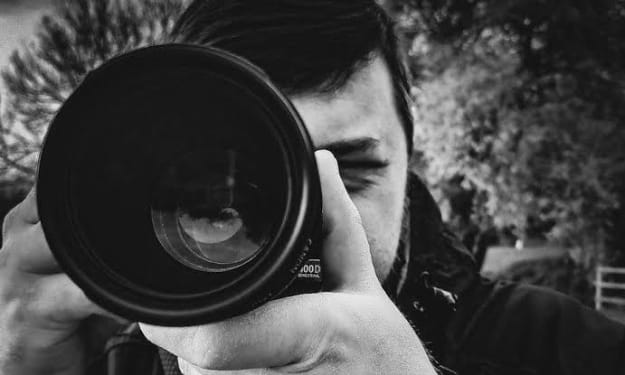
The photograph that saved her life
The train roared past, its steel wheels screeching against the tracks, drowning out the sounds of the bustling platform. Amidst the crowd stood a girl—thin, pale, almost invisible. Her name was Alina, a 19-year-old who looked more like a shadow than a person. She clutched a tattered schoolbag to her chest and stared blankly at the yellow line just inches from the edge. She had come to the station not to travel but to disappear. Life had become unbearable. Her father had died two years ago in a factory accident, and her mother, overwhelmed by grief, turned cold. Poverty clung to their lives like mold, and Alina, once a bright student with dreams of becoming a journalist, had dropped out of school to work at a sewing shop. Each day drained her more. Each night she cried silently in a corner of their one-room home. Her only escape was through writing in a diary she kept hidden in her bag. But even words had stopped comforting her. On that particular morning, after another argument at home, she walked toward the station with no ticket, no destination—just a decision. She sat on a bench and waited, counting each train, each minute, waiting for the platform to clear enough for her to do it without a scene. As she rose and stepped forward, a voice behind her called out, “Excuse me! Can I take your photo?” She froze. A man, perhaps in his mid-30s, held a professional-looking camera. He wore a denim jacket and had a kind but tired face. “I’m a street photographer,” he explained. “I capture real emotions. You have... something in your eyes. May I?” Alina hesitated. No one had spoken to her kindly in months. She nodded without a word. He clicked the camera once. Twice. Then smiled. “Thank you,” he said gently. “You have a powerful presence.” She didn’t reply but turned away, tears suddenly burning her eyes. She hadn’t heard anything good about herself in a long time. “What’s your name?” he asked. “Alina,” she whispered. “I’m Imran,” he said. “You’re meant for more than sadness, Alina. I don’t know what you’re going through, but... I hope this photo reminds you that you exist. And that you matter.” She didn’t know what to say. He handed her a small card with his Instagram handle. “I’ll post it later. Look for yourself through someone else’s eyes.” Then he walked away, blending into the morning crowd. --- That night, Alina lay awake, the small card still clutched in her hand. She opened her mother’s old mobile and found the photographer’s page. And there it was. The caption read: > “I saw a girl today at the train station. There was sorrow in her eyes, but strength too. This is a face that has a story—a story worth telling. Alina, if you’re reading this: the world is waiting for your voice.” Over a hundred strangers had liked and commented on the post: “She’s beautiful.” “There’s something poetic in her gaze.” “Tell her she’s not alone.” Alina read every word. Again and again. For the first time in months, her tears were not from pain but from a strange sense of hope. She felt seen. --- In the weeks that followed, something shifted. Alina reached out to Imran. They met again. He listened to her story—not with pity, but with respect. He offered to publish her writings as captions on his photographs. Slowly, she began to write again. Short poems. Stories of survival. Dreams long buried. Her words started resonating with others. Imran's page grew. So did her confidence. By the end of the year, she had her own social media account under the name AlinaWrites, where she shared raw, heartfelt pieces about poverty, grief, healing, and hope. A local magazine noticed her and offered her a part-time job writing articles. Her mother, seeing the light return to her daughter’s eyes, began changing too. They healed together—slowly, imperfectly, but truly. --- Years later, Alina stood on the same platform—not as a girl wanting to vanish, but as a woman launching her first self-published book titled “The Photograph That Saved My Life.” A crowd had gathered. Imran stood beside her, proud. She held the book in one hand and the same photograph in the other. It was framed now, preserved like a sacred memory. In the picture, her eyes were tired, but fierce. Lost, yet quietly searching. As she looked out at the crowd, she said, “Sometimes, we think we’re invisible. That no one sees us, hears us, or cares. But all it takes is one person, one moment, one photograph—to remind you that your story matters. That you matter.” The applause was thunderous. But all she could hear was the quiet whisper inside her that had once wanted to give up… now turned into a roar that said, “Keep going.”
By Shehzad khanabout a year ago in Humans
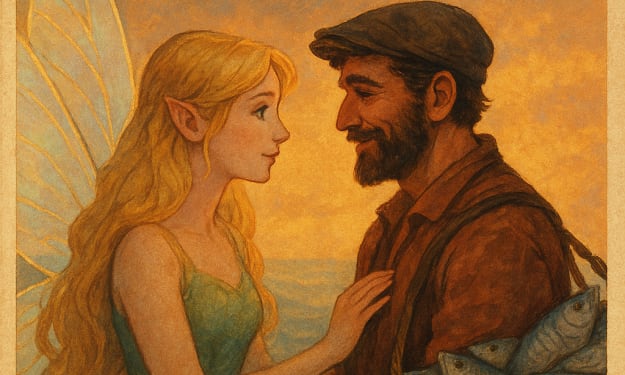
A Catch Beyond the Sea. AI-Generated.
Once upon a time, in a quiet seaside village, lived a humble fish seller named Kareem. He lived alone in a small wooden hut near the shore. Every morning before sunrise, he sailed his old boat into the deep blue sea, cast his net, and brought back fresh fish to sell in the village market.
By Raza Ullahabout a year ago in Humans
The Goat and the Lion: A Tale of Cunning and Courage"
Deep in the heart of an ancient forest, where the trees stood tall like wise old guardians and the wind carried whispers of old legends, lived a goat named Kavi. Kavi wasn’t like other goats. He was not the strongest, nor the fastest, and his horns curved more awkwardly than majestically. But what he lacked in strength, he made up for in his boundless curiosity and a clever mind that never stopped working. In the same forest, reigning with a growl that shook the treetops and a gaze that turned blood cold, lived a lion named Asad. Asad was not just any lion—he was the king of this forest. His claws could tear bark from trees, and his roar alone could stop a herd of deer mid-sprint. He ruled with fear, rarely questioned, never challenged. Kavi had heard tales of Asad’s cruelty. The lion took what he wanted, hunted for sport, and reminded all creatures that the jungle had a hierarchy—and he sat at the very top. Most animals steered clear of Asad, and Kavi had always done the same. But fate, as it often does, decided to stir the pot. One dry summer afternoon, the forest’s riverbed turned to cracked earth. Water was scarce. Even the birds had flown to distant lakes. Kavi, parched and weary, ventured further than he ever had, toward the northern caves—a place the elders warned young goats never to go. But thirst makes you brave—or desperate. As he approached a hidden spring near the mouth of a cave, Kavi dipped his mouth into the cool water. The relief was immediate, divine. But just as he lifted his head, he heard the unmistakable low growl behind him. It was Asad. "Drinking from my spring?" the lion snarled, stepping from the shadows, his golden eyes blazing. "Do you have a death wish, goat?" Kavi's heart pounded. He knew running was useless—lions loved the chase. He took a breath and did the one thing most wouldn’t dare in Asad’s presence. He spoke. "I didn’t know it was yours, Your Majesty," Kavi said, bowing slightly. "But now that I do, I must say... it makes perfect sense. Such a strong lion would need the freshest water to keep his strength." Asad paused. Flattery was unusual from prey. Intriguing, even. "Your tongue is silver," Asad said. "But it won't stop your blood from spilling." "Before you eat me," Kavi said quickly, "may I ask a favor? One that will make your greatness known throughout the forest." The lion chuckled. "You wish to delay death with words?" "No," said Kavi. "I wish to turn my end into a royal event. Let me return to my herd for one day. I will tell them I am to be eaten by the king himself. Let them witness it. They will sing your name in fear and awe. Your legend will grow." Asad narrowed his eyes. "And what stops you from running away?" "You do," Kavi replied. "Because if I don’t return, your reputation will be that of a lion who chases helpless goats instead of hunting with honor. But if I come back willingly, even your enemies will fear your command." The forest went silent. Even the wind seemed to hold its breath. Finally, Asad smirked. "You have one day, goat. Return here at dawn, or I will hunt every goat in your herd." Kavi bowed and trotted off. --- That night, Kavi didn’t sleep. Not because of fear, but because his mind was racing. He had bought time—but he needed a plan. By morning, as the sun rose, Kavi returned—not alone, but with a cart, a long stick, and a strange device made from old vines and a hollowed gourd. Asad, seeing the goat had returned, approached with visible surprise—and amusement. "What trickery is this?" "I promised you a performance worthy of your greatness," said Kavi. "But first, allow me to blindfold you for the grand reveal. Royalty should not see the stage before the play begins." Asad, amused and curious, agreed. Kavi quickly tied the blindfold around the lion’s eyes and used the moment to push him gently into the cart, binding his paws with a slipknot he had crafted. Before Asad could realize the trick, Kavi blew into the gourd—producing a high-pitched whistle that summoned a dozen goats from the treeline. They ran forward, helping Kavi secure the lion with ropes and a makeshift wooden cage. Asad roared and struggled, but it was too late. The king of the jungle had been outwitted by a goat. --- News of the event spread faster than wildfire. The mighty lion, brought down not by force, but by intelligence. The forest buzzed with a new energy. Animals whispered Kavi’s name with admiration. Even the predators began to tread more carefully. The elders named Kavi a sage, and a new council was formed—one where not just strength, but wisdom had a voice. As for Asad, he was released weeks later, but his reign of terror had ended. Pride wounded, he retreated to the deeper forests, rarely seen again. Kavi lived a long life, not as a ruler, but as something even rarer in the wild—a symbol. A reminder that brains could beat brawn, that courage wasn’t always loud, and that sometimes, the smallest horns could bring down the loudest roar.
By Lal Sher Khan about a year ago in Humans