love
All you need is Love, and Love is all you need.
My Dear Birthday Girl
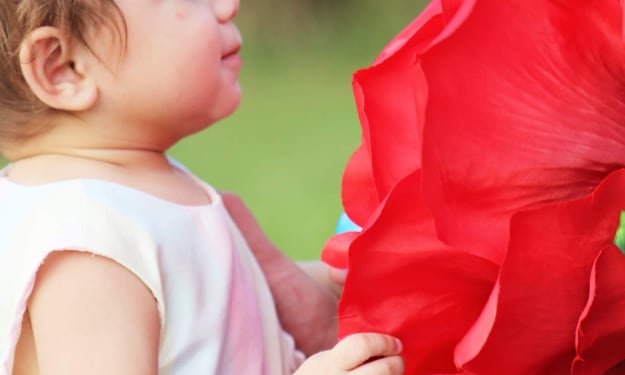
Dear baby girl, Wow. You are turning five years old on July 1st. Where did the time go? You were a baby what feels like yesterday. You’ve grown into a beautiful little girl. You have come a long way. You went from being non-verbal to talking. You learned how to play. You have already done some amazing things. As your Auntie I am really proud of you.
By Jessie Lynn Nelsonabout a year ago in Humans
The first known example of human social empathy is Little Benjamin.
For over half a million years, Benjamina's tiny skull was concealed in the Atapuerca Mountains of Spain. Her account now calls into question long-held beliefs about the origins of human empathy.
By Francis Damiabout a year ago in Humans
He Said He Loved Me—So Why Did I Feel So Small?
He Said He Loved Me—So Why Did I Feel So Small? They always say love lifts you up. But I only ever felt like I was shrinking. It started with small things. He’d tease me in front of his friends—jokes about how I couldn't cook, how I talked too much, or how I was “overly sensitive.” At first, I laughed. I told myself it was harmless, that it was just his way of being playful. But over time, those jokes felt less like play and more like knives that nicked away at my self-esteem. His name was Ryan. We met at a friend's rooftop party in the middle of July. The city skyline glittered behind him like a promise. He was charming, confident, and funny in that easy way that draws people in. And when he looked at me, I felt seen. Chosen. Special. "I’ve never met anyone like you," he told me after just a week. "You’re different. You’re real." Those words settled into my bones like warmth on a winter day. I didn’t know it then, but they were the beginning of a slow unraveling. In the early days, he showered me with attention. Good morning texts, late-night calls, surprise flowers delivered to my work. I remember thinking, Is this what love is supposed to feel like? I had never been adored like this before. It was intoxicating. But the tide turned subtly. He started pointing out things I should “work on.” My makeup was “a bit much.” I was “too emotional.” He preferred me in neutrals instead of bright colors. “You’re prettier when you’re not trying so hard,” he’d say. It sounded like a compliment, but it felt like a correction. I began to shrink myself to fit into his version of what was acceptable. I stopped wearing red lipstick. I stopped speaking up when his friends talked over me. I started editing myself, not just around him, but everywhere. And still, he told me he loved me. But that love came with conditions—unspoken rules that I always seemed to break. If I brought up something that upset me, I was “too dramatic.” If I asked for more time together, I was “clingy.” If I cried, he’d sigh and say, “Here we go again.” I began apologizing for everything. For having needs. For feeling too much. For existing in a way that wasn’t convenient for him. One night, after a particularly cold dinner where he spent more time on his phone than talking to me, I asked him if everything was okay. He rolled his eyes and said, “God, why are you always so needy?” Something in me cracked. That night, I lay in bed staring at the ceiling. I replayed every moment that led us here—the charm, the slow erosion, the way I had become a ghost of the woman I used to be. Was this love? Why did it feel so heavy? So hollow? So...lonely? That’s when the truth landed, sharp and undeniable: Love should never make you feel small. It should make you feel safe. Seen. Cherished. Ryan didn’t love me—he loved the version of me he could control. The version that didn’t challenge him, that stayed quiet, that dimmed her light so his could shine brighter. The next morning, I did something I hadn’t done in months. I wore my red lipstick. I looked at myself in the mirror and said out loud, “You are enough.” Then I packed my things, left his apartment, and never looked back. It wasn’t easy. The weeks that followed were filled with doubt, pain, and the slow process of rebuilding. But each day, I stood a little taller. Laughed a little louder. Felt a little more like myself. I realized something powerful: Sometimes, the person you love most isn’t your soulmate—they’re your lesson. Ryan taught me what love isn’t. And that’s a lesson I carry with me every single day. Now, when I love, I do it with open eyes and a full heart. And I never, ever apologize for taking up space. --- 💬 Final Thought: If someone says they love you but leaves you feeling small, unheard, or not enough—it’s not your fault. It’s not love. Real love doesn't dim your light. It helps you shine.
By Azmat Roman ✨about a year ago in Humans
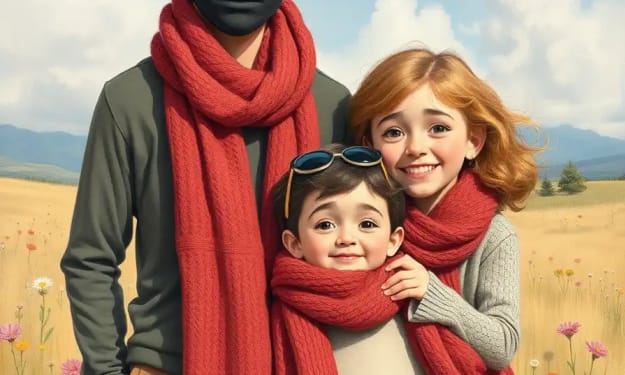
🧣 The Scarf That Smelled Like Mom.. AI-Generated.
👦 The Last Hug Ayaan was ten when his world quietly broke. His mother, whom he lovingly called Ammi, was the soft center of his life. She was not loud, but her presence filled the home — in the smell of her cooking, the rhythm of her footsteps, the way she hummed naat while folding laundry.
By DR. Allama iqbalabout a year ago in Humans
The Weight of Empty Chairs
I used to think friendship was about how much you could give. I believed that loyalty was its own reward, that showing up for people would mean they’d do the same for you when it mattered most. But I was wrong. Life has a cruel way of revealing who’s really on your side—not when things are going well, but when everything falls apart.
By Abdul hasib Habibiabout a year ago in Humans
The Checklist Man: Why I Walked Away From Everything I Thought I Wanted
I met Daniel at a mutual friend’s engagement party. He was tall, impeccably dressed, and carried himself with a quiet confidence that made people lean in when he spoke. He wasn’t loud or flashy. He didn’t need to be. He had the kind of presence that filled a room without trying. When he smiled at me across the candlelit table, my stomach fluttered. When he walked over with two glasses of wine and said, “I figured you were a Pinot Noir type,” I nearly convinced myself I was. He checked all the boxes. Handsome. Ambitious. A product manager at a reputable tech firm, with plans to open a boutique consultancy on the side. He drove a clean white Tesla, read nonfiction for fun, and called his mother every Sunday. He knew how to fold a fitted sheet, how to cook a medium-rare steak, and how to listen — really listen — when I talked. So when we started dating, my friends were thrilled. “Finally,” they said. “You deserve someone like this.” And I believed them. I told myself, This is it. This is what love looks like when you grow up. We settled into a rhythm that looked perfect from the outside. Weekend brunches, morning jogs, matching luggage for our trip to Tulum. He was generous, patient, and made space for me in every sense of the word. When he kissed me on the forehead before work, I sometimes thought, I could marry this man. But something inside me stayed quiet. And it wasn’t a peaceful quiet — it was the kind of silence that presses against your ribs at night when you’re alone with your thoughts. A gentle suffocation. At first, I ignored it. I blamed my restlessness on stress. On past baggage. On the absurd idea that maybe I didn’t deserve someone this stable. But over time, that silence grew teeth. It was in the way he talked about five-year plans with a certainty that felt like a cage. In the way he loved routines — the same Tuesday sushi, the same Saturday yoga — while I craved spontaneity like air. It was in his perfectly pressed shirts and meticulously organized bookshelf, which made my scribbled journals and messy art supplies feel like an intrusion. He never made me feel small — not intentionally. But around him, I began shrinking. One night, we were lying in bed, our legs tangled, his breath soft against my neck. He whispered, “I want to grow old with you.” And my chest tightened. Not because I didn’t love him. I did. In a way. But because the life he wanted — the house in the suburbs, the dinner parties, the steady progression of promotions and family holidays — felt like someone else’s dream draped over my shoulders. I didn’t want to grow old like that. I wanted to chase sunsets in countries I couldn't pronounce. I wanted conversations that meandered at 2 a.m., and cities that smelled like possibility. I wanted to feel uncertain, alive, broken, real. The next morning, I sat across from him at the breakfast table. His hair was tousled. He wore that soft navy T-shirt I always borrowed. He looked like home. And I told him I was leaving. He didn’t raise his voice. Didn’t throw his coffee mug. He just stared, like I’d spoken a language he’d never heard. “But why?” he asked. “What did I do wrong?” That was the hardest part. He hadn’t done anything wrong. He was, in many ways, ideal. The man your mother hopes you'll bring home. The kind of love people write wedding toasts about. But he wasn’t mine. And I wasn’t me when I was with him. Some decisions don’t come from logic. They come from the gut. From the ache you feel when you're not living in alignment with your truth. From the quiet knowledge that staying would mean slow erosion, and leaving would mean pain — but also possibility. So I packed my things. I cried. I second-guessed myself more times than I can count. But I left anyway. Because he was perfect on paper. But I’m not made of paper.
By Azmat Roman ✨about a year ago in Humans
She Died at 34. I Still Set Her Alarm Every Morning.
It was 6:30 AM—the time I’d set her alarm for the last ten years. Every morning without fail, my phone buzzes with that same melody, a reminder of a life abruptly silenced at 34. She’s been gone for over two years now, but I still set her alarm every morning. Some might think it’s strange—maybe even morbid—but for me, it’s a lifeline. It’s the invisible thread that ties the past to the present, the echo of a love that refuses to fade. --- The Beginning of Forever I met her on a rainy October afternoon, the kind of day that felt heavy with promise. She was late, breathless from rushing, hair wild from the wind. I remember thinking she was the most beautiful mess I’d ever seen. Her laugh was infectious, and her spirit, unbreakable. For ten years, we built a life filled with quiet mornings, loud arguments, and endless dreams. We fought about silly things—what to have for dinner, who forgot to take out the trash—but beneath it all was an unshakable bond. She was my anchor and my storm, fierce in love and relentless in her ambition. At 34, she had already achieved more than most do in a lifetime. A career she loved, friends who adored her, and a family that was everything to her. --- The Sudden Silence Then, one day, everything stopped. A call at 3 AM shattered the world I knew—she was gone. No warning. No goodbye. Just silence. The weeks that followed were a blur of grief and disbelief. I went through her things, desperate to hold on to any piece of her. Among the scattered memories was her phone, still on, still alive with reminders of her daily routine. That’s when I saw it—the alarm she set every morning at 6:30 AM, a simple act of preparation for the day ahead. I could almost hear her voice saying, “Don’t forget, you’ve got this.” --- A Ritual of Love That morning, I set her alarm on my phone. It felt wrong, but also strangely comforting. The first time it went off, I almost cried. It was like hearing her say hello one more time. Days turned into weeks, weeks into months, and every morning at 6:30 AM, I heard that alarm ring. I’d silence it, but never delete it. Some nights, I wonder if she’s out there, somewhere, waiting for that alarm to wake her. And maybe, in some way, it does. --- The Power of Memory Setting her alarm is more than just a routine. It’s a promise—to remember her, to honor her, and to keep moving forward even when the weight of loss feels unbearable. It reminds me of the mornings we shared: the coffee we never finished, the newspaper she always read first, the quiet moments before the chaos of the day. Her alarm is a beacon. It keeps her close, even when she’s far away. --- What I’ve Learned Losing her taught me that grief doesn’t have an expiration date. There’s no timeline for healing. Sometimes, it’s just about finding little ways to hold on. The alarm is my small act of rebellion against the finality of death. It says, “You’re gone, but not forgotten.” For anyone who has lost someone, I hope you find your own ‘alarm’—a ritual, a memory, a moment—that helps you carry their spirit forward. Because love, real love, doesn’t end with goodbye. It lives in the things we do every day, in the quiet alarms that wake us to keep going. --- Epilogue So, every morning, at exactly 6:30 AM, I hear her call. And I answer, setting my own alarm just a little later, for the life she dreamed I’d live. She died at 34. But through that alarm, she wakes up with me every morning.
By Azmat Roman ✨about a year ago in Humans