love
All you need is Love, and Love is all you need.
Was Martin Luther King Jr. an INFJ? The Personality Type of a Civil Rights Icon
What made Martin Luther King Jr. one of the most uniquely powerful leaders of the 20th century? Was it the eloquence of his speeches, the strategy of his campaigns, or something deeper within his psychological makeup? While history often focuses on King’s role in the Civil Rights Movement, examining his personality through the lens of the Myers-Briggs Type Indicator (MBTI)—a system derived from Carl Jung’s theories of psychological types—provides a fascinating perspective.
By Sunshine Firecracker™about a year ago in Humans
Can we please stop demonising lack of attraction? . Top Story - August 2025.
I want to talk about something I'm feeling really passionate about in my mid-forties, following twenty-five years of dating and relationship experiences; physical attraction, and the traditional idea of monogamy. Also what I observe from other people's marriages, relationships, and needs.
By Karen Caveabout a year ago in Humans
The Last Dance in New York
It was the kind of evening New York City was famous for—buzzing lights, the restless rhythm of footsteps, and the hum of voices in a dozen different languages. Alejandro, a Spanish dancer from Seville, had only been in the city for two weeks, yet it already felt like he had lived a lifetime. For years, he had dreamed of performing at the International Dance Festival, a stage where legends were born and forgotten in equal measure. Tonight, his name would be among the hopefuls.
By arsalan ahmadabout a year ago in Humans
Love and Balance Finding Harmony in Relationships
Fulfilling relationships are based on a give and take, where emotional, mental and physical needs are considered and met. Love is not enough in itself, it takes effort, it takes empathy, it takes understanding to make it work. 3) Partners should be open and share the responsibilities and respects the individuality of the other person. It is the hard way of realizing that it has to be 50/50 or else it won't work, and you truly invest in each other. This foundation enables love to nurture growth and development and not dependency, fostering a partnership in which both individuals feel supported, valued, and appreciated.
By Emeri Adamesabout a year ago in Humans
How Love Keeps the Heart Young Forever. AI-Generated.
Love has long been celebrated as one of the most powerful forces in human life. It inspires creativity, heals wounds, and fuels motivation like nothing else. More than just an emotion, love provides vitality that transcends age. People who nurture loving relationships often display a youthful spirit, radiating joy that makes them feel alive. Scientific research also suggests that loving bonds contribute to better health outcomes, reinforcing the idea that love is more than fleeting—it is transformative and enduring.
By Emeri Adamesabout a year ago in Humans
Why Love Is the Greatest Gift of All
Love is something that all of us have experienced in some form or another, and that’s not too surprising, because love is spiritual, not religious, but if it were, it would be one of the most widely recurring threads throughout all of our faiths. It’s the spirit of human cooperation and goodwill, of helping and empathizing with each other, becoming entwined in knots of caring and concern that bring meaning to our lives. Love makes life fuller and more meaningful from relationships with friends to romantic love. People who are willing to open up to love typically live richer lives, because love is a source of both joy and resilience. Love is still the greatest gift because even though you may have everything, achieved everything and have the nicest things in life, nothing can satisfy both body and soul as the gift of unconditional love.
By Hayley Kiyokoabout a year ago in Humans
Art of Heartbreak
Heartbreak is never quiet. It doesn’t just sit in your chest—it echoes, it bleeds into your mornings, it spills across every brushstroke when you’re an artist. For Elena, her heartbreak was louder than the city outside her apartment window. She was twenty-six, a painter who had once believed love would always inspire her. Her last collection had been built around her partner, Daniel—a series of glowing portraits that galleries praised as “intimate” and “achingly beautiful.” The irony was not lost on her now. The love that had inspired her most celebrated work had also left her shattered when Daniel walked away. For weeks, her canvas stood untouched. The tubes of paint hardened, brushes crusted over, and the silence of her studio was unbearable. She stopped attending shows, stopped returning calls, stopped being the version of herself she had promised to be when she first picked up a brush as a child. “Maybe I’m not an artist without him,” she whispered to no one in particular. But the truth was—Elena was still an artist, just one who had forgotten that pain is also a muse. One night, when sleep refused to come, she sat at her easel. The city hummed outside, and she opened a tube of deep crimson, smearing it onto the canvas with her palm. No plan, no sketch—just raw color. She layered it with black, then gold, then streaks of white that cut across like scars. By dawn, she had created something wild and unrecognizable. It wasn’t beautiful in the traditional sense, but it was alive. For the first time since Daniel left, Elena felt a spark of herself flicker again. Painting became her therapy. Every evening, she let her grief out in color. Some days the canvases were stormy, with violent strokes of gray and jagged edges. Other days, they were fragile and almost tender—soft blues, blurred lines, faint shapes of faces she no longer dared to draw in detail. Each piece was messy, imperfect, but true. Months passed, and Elena slowly realized she wasn’t just painting heartbreak—she was painting survival. Her apartment filled with canvases that told the story of a heart breaking, grieving, and slowly learning to beat again. When her friend Maya visited, she gasped. “Elena… these are incredible. You need to show them.” Elena shook her head. “They’re too personal.” “Exactly,” Maya replied. “That’s what makes them powerful. People don’t want perfect—they want real.” Against her fear, Elena agreed to a small exhibit at a local café. She almost backed out the morning of the opening, but something in her whispered: Your story deserves to be seen. That night, strangers stood in front of her canvases, staring longer than she expected. A man touched his chest and whispered to his partner, “This one feels like us.” A young woman wiped her eyes. An older couple held hands, silent but visibly moved. For the first time, Elena understood that art wasn’t just about expression—it was about connection. Her heartbreak was no longer only hers; it had become a mirror where others could see their own stories. After the exhibit, people approached her. Some wanted to buy paintings, others just wanted to say thank you. A young musician told her, “Your work makes me feel less alone.” That sentence alone felt like more than any gallery review she had ever received. And then, slowly, life brought something Elena had almost given up on—love. It didn’t happen with fireworks or sweeping gestures. It started quietly, with Adrian, a photographer who had been at her exhibit. He wasn’t Daniel. He didn’t try to be. He asked about her art before he asked about her heart. He understood silence, respected space, and laughed with his whole chest. Elena was terrified at first. Her instinct was to protect what was left of her heart, to build walls higher than any canvas. But little by little, she realized love wasn’t meant to erase pain—it was meant to teach her that her heart could hold both. Her new paintings reflected this change. They weren’t just red and black anymore—they shimmered with emerald greens, soft yellows, gentle pinks. Her art had evolved, just as she had. One evening, as she stood beside Adrian in her studio, she whispered, “I used to think heartbreak destroyed me.” He looked at her work and replied, “Maybe it made you whole.” Elena finally understood. Heartbreak wasn’t the end of her story. It was just the beginning of the masterpiece she was always meant to create.
By LUNA EDITHabout a year ago in Humans
Why Love Is the Most Searched Human Emotion. AI-Generated.
Love is one of the most universal human experiences, transcending culture, language, and geography. From early childhood attachments to lifelong partnerships, humans are drawn to understanding, experiencing, and expressing love. This emotion touches nearly every aspect of life, shaping relationships, decisions, and personal identity. Its universality makes it a topic of constant curiosity. People search for answers about love’s nature, its challenges, and its effects on well-being. The persistent quest to understand love reflects its central role in human life, driving both emotional and intellectual engagement across generations.
By Stella Johnson Loveabout a year ago in Humans
How Love Transcends Material Things in Life
In a world that places so much value on wealth, possessions, and status, love is the only currency that truly counts, both now and forever. Whereas material possessions can fade, break, or depreciate in value, love increases its strength over time. You can’t buy or replace authentic Love, Care and Connection. Love brings purpose, happiness and satisfaction to life and brings a sense of security that money alone cannot do. It forms connections, stimulates creativity, and boosts emotional health. In the end, love is an ageless treasure, revealing that the best things in life can't be held or touched, but are felt within the heart.
By Stella Johnson Loveabout a year ago in Humans
The dance we promised . AI-Generated.
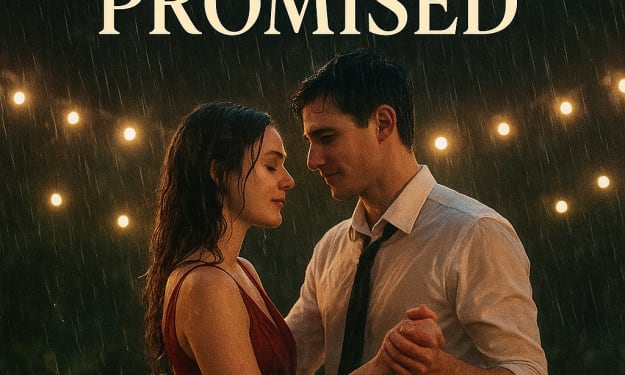
The rain began as a whisper against the tall windows of the reception hall, soft enough to be ignored at first. By the time the band launched into its third slow song, though, it was coming down in heavy silver streaks, drumming on the roof like an impatient heartbeat. Guests crowded under the awning, clutching champagne flutes, their laughter rising above the storm. Amara stood alone near the edge of the dance floor, her heels dangling from one hand. Her dress clung to her shoulders in the August humidity, and a faint curl had returned to her normally straight hair. She felt like a misplaced puzzle piece—someone invited out of obligation rather than belonging. Weddings always did that to her. She scanned the hall again, and that’s when she saw him. Liam Hayes. He was leaning casually against a column, tie loosened, the sleeves of his white dress shirt rolled to his elbows. He looked older, of course—his face sharper, shoulders broader—but his eyes were still that same stormy blue that had once made her sixteen-year-old heart stutter. Her stomach twisted. She hadn’t seen him in ten years. They’d grown up side by side, inseparable through every scraped knee and late-night movie marathon. Liam was her best friend, her secret crush, and her dance partner at every high school function—except prom. He’d promised her a dance under the stars that night, but instead, he left without saying goodbye. She heard later that his father had taken a job across the country. He never called. Never wrote. And she’d pretended not to care. Now he was here, at her cousin’s wedding of all places, looking devastatingly calm while she felt like every nerve in her body was on fire. “Amara?” She froze as his voice—lower, steadier than she remembered—cut through the music. She turned to find him smiling in that soft, apologetic way he used to when he’d shown up late to their movie nights. “Hi,” she managed, tucking a strand of damp hair behind her ear. “Liam.” “It’s been a while.” “Ten years,” she said before she could stop herself. His smile faltered for a moment, guilt flickering in his expression. “Yeah. I guess it has.” A silence stretched between them, filled only by the muffled sound of the band inside. She considered making an excuse, retreating to the safety of her table—but then a gust of wind swept through, carrying the smell of rain and wet pavement. “Want to get some air?” Liam asked, gesturing toward the garden outside. She hesitated, then nodded. The storm had turned the garden into a watercolor painting—petals scattered across puddles, strings of fairy lights glowing through sheets of rain. They stepped under the awning, both watching the storm in silence. “You look good,” Liam said after a moment, his voice almost tentative. “Thanks.” She glanced at him, noticing how his jaw tightened as if he wanted to say more. “You look… different.” He chuckled softly. “That’s one way to put it.” Another beat of silence. Finally, Amara sighed. “Why didn’t you say goodbye?” Liam turned to her, his expression softening. “I wanted to. That night, I almost drove over to your house. But everything was… messy. My dad got the job offer last minute, and we left in two days. I told myself I’d call, but then weeks passed. Months. And I thought maybe it was better for you if I didn’t.” She stared at him, stunned. “Better for me?” “I figured you’d move on faster if I wasn’t clinging to you.” A laugh escaped her lips—sharp and humorless. “Newsflash, Liam, I didn’t.” His eyes widened, regret etched across his face. “Amara…” She shook her head, blinking back tears she didn’t expect. “You were my best friend. And then you were just… gone.” “I’m sorry.” His voice was hoarse, sincere. “I thought I was protecting you, but I was just being a coward.” The rain softened slightly, turning into a mist. Amara wrapped her arms around herself, trying to steady her racing heart. She hadn’t realized how much she’d buried over the years until now. “Do you ever think about that night?” she asked quietly. His brows furrowed. “Prom?” “Yeah.” A small smile tugged at his lips. “Every time it rains.” Amara felt her breath catch. “I promised you a dance under the stars,” Liam continued, glancing out at the storm. “But I guess this’ll have to do.” Before she could respond, he stepped into the rain, extending a hand toward her. She stared at him like he’d lost his mind. “Liam, you’re going to ruin your clothes.” “Worth it,” he said simply, a playful glint in his eyes—the same one he used to have when daring her to jump into the lake with him in the middle of October. She hesitated, then slipped off her shawl, set down her shoes, and stepped forward. The rain was warm, soaking her dress instantly, but she didn’t care. His hand closed around hers, firm and steady, and she felt sixteen again. The band’s music drifted through the open doors as Liam pulled her close, his other hand resting gently at her waist. “I’m sorry for everything,” he murmured as they swayed, their movements slow and easy despite the puddles underfoot. “For leaving. For not calling. For missing ten years of your life.” Her throat tightened. “You hurt me.” “I know.” He met her eyes, rain sliding down his face. “But if I could go back, I’d do it all differently.” Amara wanted to stay angry, to keep holding onto the walls she’d built. But as he twirled her under the string lights, she felt those walls crumble. She’d missed this—his warmth, his laugh, the way he always made her feel like she was the only person in the world. When the song ended, he didn’t let go. Instead, he whispered, “I never stopped caring about you, Mara. Not once.” Her breath hitched. They stood there in the rain, the world blurring around them, and for the first time in years, she let herself believe him. She brushed wet hair from her face, smiling softly. “We finally got our dance.” “Yeah,” he said, his smile tender. “Took us long enough.” And then, under the fairy lights and soft drizzle, he kissed her. It wasn’t the kiss of a high school crush, rushed and uncertain. It was the kiss of two people who had lived, lost, and somehow found their way back to each other. When they finally pulled apart, laughter bubbled between them. They were drenched, shivering, and utterly alive. “We’re probably going to catch colds,” she teased. “Worth it,” he said again, grinning. Amara glanced back toward the reception hall, where their friends and family danced obliviously. For the first time that evening, she didn’t feel out of place. She felt… home. Liam squeezed her hand. “Can I make you another promise?” She raised an eyebrow. “You’re not great with those.” He chuckled. “Fair. But this one’s different.” “Alright. What is it?” “That I’m not going anywhere this time.” Something in his voice—steady, earnest—made her believe him. She smiled, leaning her head against his shoulder. “Good. Because I’m not letting you disappear again.” The rain finally eased, leaving behind a world that smelled of wet earth and fresh beginnings. Hand in hand, they walked back inside, dripping water across the marble floor, earning a few amused stares. Neither cared. They’d missed a decade of each other’s lives, but as Liam brushed a kiss across her temple, Amara realized something profound: They had the rest of their lives to make up for it. And that was a promise worth keeping.
By Mubashir Khan about a year ago in Humans
The dance we promised . AI-Generated.
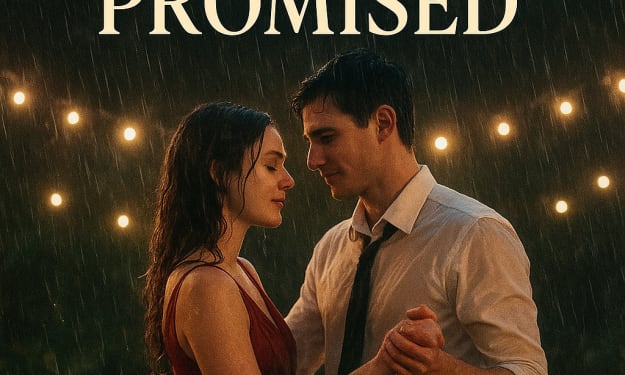
The rain began as a whisper against the tall windows of the reception hall, soft enough to be ignored at first. By the time the band launched into its third slow song, though, it was coming down in heavy silver streaks, drumming on the roof like an impatient heartbeat. Guests crowded under the awning, clutching champagne flutes, their laughter rising above the storm.
By Sigma writes about a year ago in Humans