love
All you need is Love, and Love is all you need.
How U.S. Dating Culture Reflects Changing Social Priorities
The culture of dating in the United States has always been indicative of the significance of the society as a whole and its values. Due to the changing nature of social norms, the methods of building romantic relationships change too. The culture of dating in the U.S. today displays a population who is reevaluating the importance of things in relationships and is thinking beyond strictly set expectations and targets more purposeful relationships based on values. The dating habits of the Americans today provide a clue into the changing attitude towards work, identities, emotional well-being, and self-fulfillment.
By Olivia Smith9 months ago in Humans
What Local Dating Reveals About Modern American Love
The contemporary American love is in a dilemma. Individuals are now faced with more dating choices than ever, but they are deciding to look closer to home and focus on fewer choices. Local dating has emerged as a strong indicator of what the Americans exactly desire of relationships nowadays. In place of pursuing far-off opportunities and idealized relationships, singles are focusing on vicinity, familiarity, and emotional verisimilitude. This respite to intimacy shows still another subsequent change of values, in which connection is all the more significant when it is based on the same space and life.
By Olivia Smith9 months ago in Humans
How American Singles Balance Independence and Partnership
In the United States, the definition of the relationship is being transformed by the singles. Love has ceased to be a preference between individual liberty and emotional attachment. Most Americans are instead exploring relationships which will enable them remain who they are but form meaningful relationships with others. This is a move in a wider cultural direction, where personality, self-awareness, emotional well-being has become equally important as romance.
By Olivia Smith9 months ago in Humans
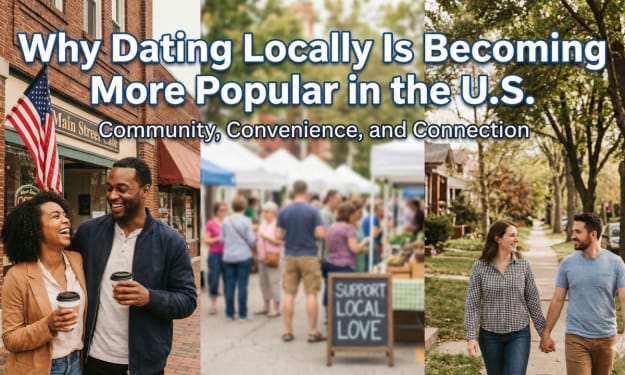
Why Dating Locally Is Becoming More Popular in the U.S.
The dating process had an unlimited potential in a land as big and varied as the United States. As the world grew smaller thanks to technology, and social networks were opened to individuals on the other side of the country, several predicted long-distance romance to become the primary method of dating in the contemporary culture. Another trend has instead prevailed. A greater number of Americans are dating locally and take a deeper satisfaction in dating and growing close to home in relationships. This change is an indication of evolving values in terms of emotional security, compatibility of lifestyle, and the need to be connected to the real world.
By Olivia Smith9 months ago in Humans
Why Community and Proximity Matter in American Love
Given that today, in technologically advanced world, one can reach anybody, anywhere, American love stories are being influenced by something far more familiar to them. Once again, despite global dating applications and cyber communication, most Americans believe that community-based and distance relationships are more important and lasting. It feels secure proximity with each other both physically and socially which virtual relationships cannot easily duplicate.
By Olivia Smith9 months ago in Humans
The Man Everyone Saw, But No One Truly Noticed
Every morning, at exactly 8:15, he stood at the same bus stop. Same place. Same posture. Same worn-out bag resting beside his feet. People passed him every day—office workers rushing to meetings, students glued to their phones, shopkeepers counting time. Everyone saw him, yet no one truly noticed him. He blended into the background, like a lamppost or a signboard—present, but invisible. No one knew his name. No one asked where he was going. He was simply there. e morning, the rain was heavier than usual. The kind of rain that feels like the sky is finally releasing years of silence. The bus was late, tempers were short, and impatience filled the air. Suddenly, a young woman slipped on the wet pavement. Her bag fell open, papers scattering across the road. People glanced briefly, then looked away. No one stopped. Everyone was in a hurry. Except him. He stepped forward calmly, helped her stand, and quietly gathered the papers one by one. He handed her the bag with a gentle nod. “Thank you,” she said, surprised—not just by his help, but by his presence. He smiled softly, as if unused to being acknowledged. You’re here every day, aren’t you?” she asked. “Yes,” he replied. “For fifteen years.” “Fifteen years?” Her eyes widened. “What do you do?” He paused, as if weighing whether the truth still mattered. “I used to be a teacher,” he said. The word felt strange at the bus stop—out of place among traffic noise and hurried lives. told her his story slowly. He had taught at a government school. He believed in discipline, honesty, and giving children dreams larger than their circumstances. Teaching wasn’t just a job—it was his identity. One year, he failed a powerful man’s son. The student hadn’t studied. Rules were rules. He was asked to “adjust the result.” He refused. Within months, he lost his job. No recommendations. No second chances. Pride wouldn’t allow him to apologize for telling the truth. Life unraveled quietly after that. His marriage collapsed under financial pressure. Friends stopped calling. Society moved on. And the man who once stood before classrooms full of children now stood silently at a bus stop, waiting for days to pass. What are you waiting for now?” the girl asked gently. He looked at the road ahead. “I wait for buses,” he said, then smiled faintly. “And sometimes… I wait to be seen.” e bus arrived. People rushed forward, pushing past them both. The girl hesitated, then let the bus leave without her. That evening, she wrote an essay for her college assignment. She titled it: “The People We See Every Day, But Never Truly Notice.” She wrote about the man at the bus stop. About dignity, about pride, about how society quietly discards honest people. She didn’t use his name—because she didn’t know it—but she captured his silence perfectly. She posted it online. By morning, it had gone viral. housands shared it. Hundreds commented. Some recognized the bus stop. Some recognized themselves. A week later, a private school principal read the essay and felt uneasy. He wondered how many teachers like that man had been lost to silence. The next morning, the principal went looking. he man was standing there as usual. “You were a teacher?” the principal asked. “Yes,” the man replied cautiously. “Would you like to teach again?” The question hung in the air—fragile, powerful. Tears filled the man’s eyes. He nodded, unable to speak. oday, he still comes to the same bus stop. But things are different now. People greet him. Children wave at him. Some even ask him questions while waiting for their ride. He still carries the same bag—but now it holds lesson plans, books, and hope. He is still quiet. But he is no longer invisible. eflection This story is not about one man. It’s about millions like him. People who lose everything not because they were wrong—but because they refused to be dishonest. People who fade into the background because they don’t shout, beg, or demand attention. Sometimes, all a person needs is to be truly seen. And sometimes, noticing someone can change an entire life.
By Zahid Hussain9 months ago in Humans
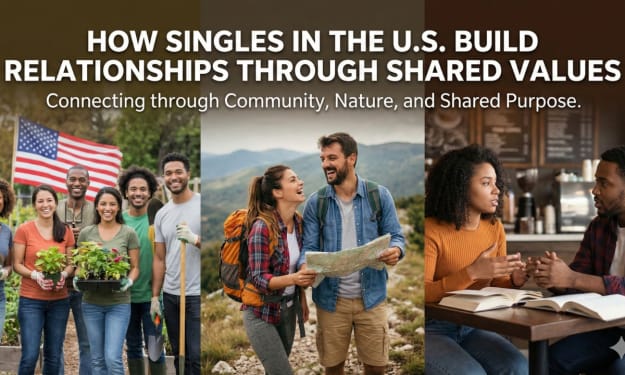
How Singles in the U.S. Build Relationships Through Shared Values
Throughout the United States, the manner in which singles go about relationships has changed beyond the superficial appeal and shallow chemistry. Although physical interest continues to contribute to the creation of connection, quite a large number of single people are currently focusing more on the similarity of values as the basis of sustaining relationships. This change is an indication of a better realization that fulfillment in the long term can be achieved by a sense of compatibility in beliefs, priorities, and views on life and not just excitement.
By Olivia Smith9 months ago in Humans
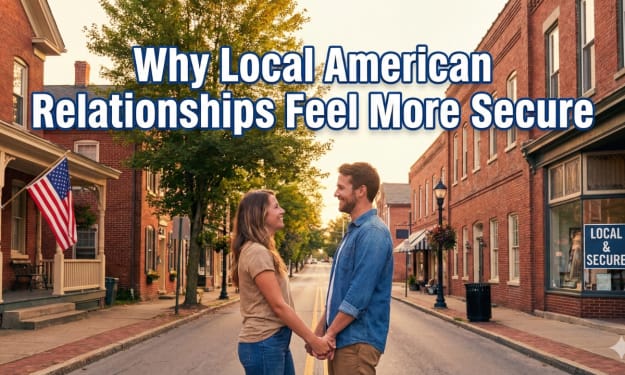
Why Local American Relationships Feel More Secure
In an age where digital relationships cross borders and dating apps make the world an ever-expanding option, most Americans are rediscovering the power of local relationships. Romantic relationships established in the neighborhood tend to be safer, not the easier ones, but since they are rooted in the reality. The nearness creates coherence, knowledge, and presence, which have grown to be significant assets in the hectic and unpredictable world.
By Olivia Smith9 months ago in Humans
How Dating Expectations Differ Across American States
The American dating is a topic that is always talked of as having one cultural style yet in practice, the expectations in regards to romance are very different depending on the state. The way of people dating, commitment, and relationships is determined by geography, lifestyle, economic conditions and personal values in the localities. What is considered normal or expected in one of the states can be something strange or even unacceptable in another. These variations define how individuals meet, but what they want to develop when connecting once a relationship starts.
By Grace Smith9 months ago in Humans
Why Americans Value Compatibility Over Casual Dating
Dating culture in the United States is also undergoing a tangible change in that it is no longer just a casual affair but a relationship founded on compatibility. Whereas casual dating was a symbol of freedom and exploration, it is getting to be something more meaningful to many Americans. This shift indicates a shifting focus in an emotionally conscious and emotionally experienced world, as well as a rising wish to be stable in an increasingly unstable world.
By Grace Smith9 months ago in Humans
How U.S. Singles Are Choosing Love Based on Lifestyle
In the United States, there is an apparent change in the manner in which individuals get romantic partners. Love is no longer determined by simple attraction, chemistry, and milestones. Rather, lifestyle compatibility has taken the position of one of the crucial variables that have been used in making relationship choices. The U.S. singles are becoming more conscious of the fact that having similar habits, and values in everyday life and long term priorities are significant contributors to relationship satisfaction. This self consciousness is defining the current dating processes, relationships, and commitment in society.
By Grace Smith9 months ago in Humans
What Makes Local American Dating Feel More Meaningful
The relevance of local dating in the US among Americans has also been revived in an era where digital dating facilitates connections in any part of the world. Although there are people available in the entire country or even the world, most Americans have discovered that dating locally seems more significant and emotionally satisfying. Known locations, common practices and even common social surroundings give one a feeling of ease whereby relationships will develop naturally without the sense of being forced or hurried. This spiritual attraction to the localism is a desire to find something real and certain in contemporary romance.
By Grace Smith9 months ago in Humans