literature
Whether written centuries ago or just last year, literary couples show that love is timeless.
I'm Not a Strong Black Woman; I'm Weak
The first time I voiced it, my therapist’s pen halted in mid-air. “I’m not a resilient Black woman.” Those words had a bitter taste, like medicine I had been avoiding. She leaned in, her expression serious. “What makes you say that?”
By Mubarak Hossain Akash2 years ago in Humans
The Love Languages You’ve Never Heard Of: Beyond the Famous Five
Introduction For decades, Gary Chapman’s famous model of the five love languages—words of affirmation, acts of service, receiving gifts, quality time, and physical touch—has provided a framework for understanding how we give and receive love. While this model has served millions well, the complexities of modern relationships reveal that love is communicated through an even richer array of languages. Beyond the familiar five, there are subtle, unexpected, and deeply personal ways that individuals express and perceive love. These unique expressions not only deepen our connections with others but also allow us to better understand the many layers of our own hearts. This article explores these lesser-known love languages, offering new perspectives on how love can be felt, shared, and celebrated in today’s diverse world.
By Mysteries with Professor Jahani2 years ago in Humans
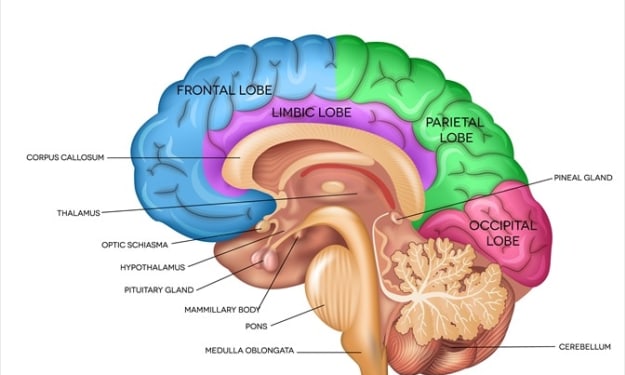
The Human Brain . Content Warning. AI-Generated.
The human brain is one of the most complex and fascinating organs in the human body, serving as the control center for all bodily functions, thoughts, emotions, and behaviors. Weighing about three pounds and containing approximately 86 billion neurons, the brain is a marvel of biological engineering that scientists are still striving to fully understand. Each of these neurons can form thousands of connections with other neurons, creating trillions of synapses that enable the communication networks essential for every aspect of our lives, from breathing and digestion to memory, language, and abstract thinking. The brain is divided into several major parts, each with distinct functions. The cerebrum, the largest part of the brain, is responsible for higher cognitive functions such as thinking, decision-making, perception, and voluntary movement. It is divided into two hemispheres—left and right—which control opposite sides of the body and are further subdivided into four lobes: frontal, parietal, temporal, and occipital. The frontal lobe governs reasoning, planning, problem-solving, and emotions; the parietal lobe manages sensory input and spatial orientation; the temporal lobe processes auditory information and is essential for memory and language; and the occipital lobe is primarily responsible for vision. Below the cerebrum lies the cerebellum, which plays a key role in motor control, coordination, balance, and fine-tuning movements. The brainstem, which connects the brain to the spinal cord, is responsible for basic life-sustaining functions such as heart rate, breathing, and sleeping. The brain communicates with the rest of the body through the nervous system, which includes the central nervous system (brain and spinal cord) and the peripheral nervous system (nerves extending throughout the body). Electrical impulses travel between neurons across synapses via neurotransmitters, enabling the brain to process sensory information and issue motor commands almost instantaneously. Additionally, the brain regulates hormone production through the hypothalamus and pituitary gland, influencing growth, metabolism, and reproductive functions. One of the brain’s most extraordinary features is its plasticity—the ability to change and adapt throughout life in response to learning, experience, and injury. This neuroplasticity allows individuals to acquire new skills, recover from brain damage, and form new memories. Memory itself is a complex process involving encoding, storing, and retrieving information. Different types of memory—such as short-term, long-term, episodic, and procedural—are stored and processed in various regions of the brain, including the hippocampus and the prefrontal cortex. Language is another remarkable function of the brain, primarily managed by areas such as Broca’s area and Wernicke’s area, which are critical for speech production and comprehension. Emotions are processed in the limbic system, especially in the amygdala and the hypothalamus, which influence how we react to situations and form emotional memories. Despite its capabilities, the brain is also susceptible to disorders such as Alzheimer’s disease, Parkinson’s disease, depression, anxiety, and traumatic brain injuries, all of which can significantly affect cognition, behavior, and quality of life. Ongoing research in neuroscience and related fields seeks to unravel the brain’s many mysteries, leading to new treatments for mental and neurological conditions. Advances in technology, such as brain imaging (MRI, fMRI, PET scans), have allowed scientists to observe the brain in action and identify how different regions are activated during specific tasks. Understanding the brain also has implications beyond medicine, influencing fields like artificial intelligence, education, and psychology. The human brain is not only a biological organ but also the seat of consciousness, self-awareness, creativity, and the very essence of what it means to be human. It enables us to imagine, create art, solve problems, build societies, and experience the world in deeply personal and meaningful ways. As research continues to unlock its secrets, the brain remains a source of wonder and inspiration, a testament to the complexity of life and the potential of the human mind.
By Shohan Hossen2 years ago in Humans
Beyond the Headlines: Everyday Life in Modern Afghanistan Through My Eyes
When people hear the word “Afghanistan,” their minds often go straight to war zones, political crises, or humanitarian headlines. For most of the world, my country exists only in breaking news segments and grim statistics. But for me, Afghanistan is something much more intimate—it's my home, full of quiet mornings, shared laughter, and everyday beauty that rarely makes it to international screens.
By Mysteries with Professor Jahani2 years ago in Humans
The Power of Silence: How Embracing Quiet Moments Transformed My Life
In a world buzzing with notifications, chatter, and endless digital noise, silence often feels like a forgotten language. For years, I ran from it, filling every pause with sound—music during commutes, podcasts while walking, videos playing in the background while I cooked, cleaned, or even showered. Silence, to me, felt empty. But it wasn’t until life forced me into a space where noise wasn’t an option that I discovered silence was never empty. It was full—of truths I’d long avoided, of emotions I hadn’t processed, and of healing I didn’t know I needed.
By Mysteries with Professor Jahani2 years ago in Humans
From Strangers to Family: The Unexpected Bonds Formed During Difficult Times
From Strangers to Family: The Unexpected Bonds Formed During Difficult Times In our fast-moving lives, we pass by countless strangers—on sidewalks, in cafes, on public transport—rarely considering the stories they carry. But when hardship strikes, those who were once invisible can suddenly become lifelines. During adversity, something remarkable happens: strangers transform into companions, confidants, and even chosen family. These unexpected bonds aren’t built on years of shared history but on a deeper connection—empathy born from shared struggle.
By Mysteries with Professor Jahani2 years ago in Humans
The Simple Seeds of Success
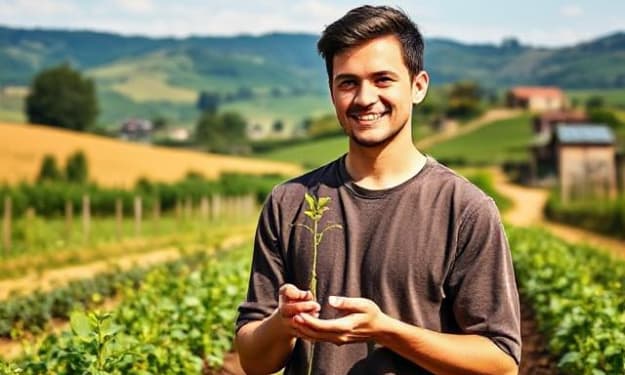
"The Simple Seeds of Success" In the small village of Oakwood, nestled between tall oak trees and rolling hills, lived a young man named Tom. Tom had big dreams. He wanted to be successful, live comfortably, and help others in his community. But despite his ambitions, he often felt lost, unsure of how to take the first step toward achieving his goals.
By ABID ULLAH2 years ago in Humans
When AI Becomes a Caregiver
In a sunlit room filled with quiet hums and calm faces, a robot cradles an elderly man in its arms—not with cold calculation, but with startling gentleness. This scene, which once belonged in a sci-fi movie, is quickly becoming a potential reality as artificial intelligence (AI) and robotics evolve beyond tasks of convenience into realms of empathy and care.
By Sultan Khan2 years ago in Humans
Who Owns You? Social Media Platforms or Yourself?
In the digital age, your online identity is arguably as important as your physical one. Social media platforms like Facebook, Instagram, TikTok, and X (formerly Twitter) have become the gatekeepers of our virtual selves. They store our data, influence what we see, shape our opinions, and monetize our presence—often without our informed consent. The question is no longer whether our data is being collected, but rather: Who owns it, and what rights do we have over it? Utah may be the first U.S. state to answer this question in a groundbreaking way. With the Digital Choice Act set to take effect on July 1, 2026, the state is proposing something revolutionary: giving individuals the right to truly own and transfer their online identity and data across digital platforms. This legislation is not just a policy change; it’s a paradigm shift in how we view data ownership, privacy, and the architecture of the internet itself. The Current Landscape: Locked in Digital Walled Gardens Right now, when you create an account on a social media platform, you are essentially handing over your personal data—your photos, posts, preferences, and behavioral patterns—in exchange for access to their service. In return, these companies build detailed profiles of you, which they use to serve targeted ads and, in many cases, sell insights to third parties. Even if you choose to leave a platform, your data doesn’t leave with you. Try switching from Facebook to a smaller, privacy-focused network and you’ll find there’s no easy way to carry your connections, posts, or digital persona with you. You start over from scratch. This model discourages competition and traps users in what are often referred to as "walled gardens." The Utah Solution: A Digital Bill of Rights Utah's Digital Choice Act is a potential breakthrough. It proposes that platforms must support open-source identity protocols that allow users to carry their social graph and data with them wherever they go on the internet. Think of it like having a passport for your online identity that works on any platform you choose to visit. The bill requires large social media companies to build systems that allow users to: Export their data in usable formats Port their digital identity to other platforms Retain control over how their data is used and shared Use third-party tools to interact with multiple platforms from one interface These principles align with what some technologists and ethicists call "self-sovereign identity" — the idea that individuals should have full control over their digital presence, just as they do their physical identity. Why This Matters for the Human Community The implications of such a law go beyond privacy. Data is power, and reclaiming that power can shift the balance back in favor of individuals and communities. Here’s why this matters: 1. Privacy as a Human Right When you control your data, you reduce the risk of it being misused. From targeted disinformation campaigns to identity theft and surveillance, centralized control of personal data makes us all vulnerable. Giving people the ability to manage and move their data can mitigate these risks. 2. Mental Health and Digital Wellbeing Social media platforms are engineered for engagement, often at the cost of mental health. Algorithms optimize for outrage and addiction, keeping users scrolling endlessly. With more control over how and where their data is used, users can choose platforms that prioritize healthy interaction. 3. Economic Empowerment Your data has value. Right now, it's the platforms that reap the profits. If individuals can control and even monetize their own data, it could open up new economic models where users are compensated for their participation. 4. Democratizing the Internet Interoperable digital identities mean smaller platforms can compete more fairly with tech giants. Users wouldn’t be penalized for trying out new communities because they could take their data and friends with them. This fosters innovation and diversity in the digital ecosystem. Potential Challenges and Criticism As promising as Utah’s legislation sounds, it is not without its challenges. 1. Technical Feasibility Building open protocols that support interoperability is complex. Platforms have invested billions in proprietary systems, and retrofitting them for openness will not be easy or cheap. 2. Corporate Pushback Tech giants are likely to resist any change that threatens their monopolies. Lobbying efforts may attempt to water down or delay the implementation of such laws. 3. Security Risks Opening up systems can introduce new vulnerabilities. Ensuring that portable identities are secure and not susceptible to fraud or misuse will be critical. 4. User Awareness Many users are unaware of how their data is used or why this issue matters. Public education will be essential to drive adoption and demand for digital autonomy. A First Step Toward Digital Freedom Despite these challenges, the Digital Choice Act represents a meaningful first step toward a freer, fairer internet. If successful, it could set a precedent for other states—and even countries—to follow. The internet was born as a decentralized, open system. Over time, it has become dominated by a few mega-corporations that profit off our attention and data. Reclaiming ownership of our digital selves is not just a matter of privacy—it’s a matter of freedom, dignity, and democracy. Utah's bold move may just be the spark needed to ignite a global conversation about digital rights and responsibilities. As we move deeper into the 21st century, it's time we ask not just what technology can do, but what it should do for the people it serves.
By Qismat ullah wazir 2 years ago in Humans
Title: Why Personal Narratives Matter: The Power of Human Stories
Title: Why Personal Narratives Matter: The Power of Human Stories Introduction: Humanity's Lifeblood We told stories before we could write, tweet, or even carve symbols into stone. Around ancient fires, under starlit skies, humans shared their lives through words—simple, raw, and powerful. These stories weren’t just entertainment; they were bridges—connecting generations, preserving culture, and giving meaning to life. Despite all the data and distractions of the digital age, one thing is still true: stories continue to move us. In ways that facts alone cannot, personal narratives—which are intimate, honest, and deeply human—can change minds, motivate action, and cultivate empathy. Why, then? What is it about personal storytelling that matters so much?
By Afia Sikder2 years ago in Humans
How Human Memory Works: The Fascinating Science of Forgetting and Remembering
Title: How Human Memory Works: The Fascinating Science of Forgetting and Remembering The Mysterious Power of Memory One of the most fascinating and intricate aspects of our existence is human memory. From remembering the scent of your grandmother’s kitchen to recalling a complicated mathematical formula, memory is intricately tied to every part of our lives. Imagine your brain as a living library, constantly cataloging, storing, and retrieving information that defines who you are. But this system isn’t flawless. Trauma or illness can cause us to misplace keys, forget names, or even completely lose our memories. So, exactly how does memory work? What makes us forget? Furthermore, how can we enhance our memory? The depths of human memory, their formation and decay, and the prospects for memory science are examined in this article. How Does Human Memory Work? The process of encoding, storing, and retrieving information is at the heart of memory. It is an essential brain function that enables us to navigate the present, make plans for the future, and learn from the past. Without memory, our experiences would be fleeting and meaningless.
By Afia Sikder2 years ago in Humans