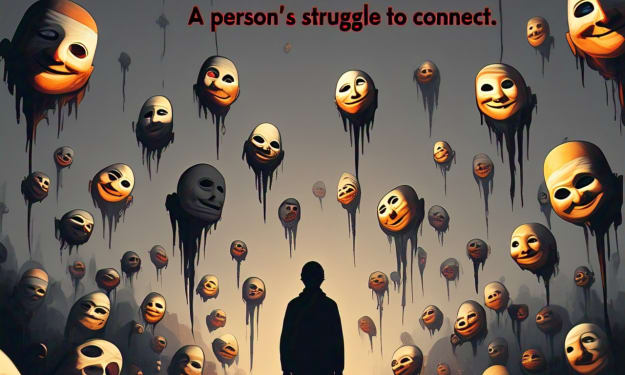
friendship
C.S Lewis got it right: friendship is born when one person says to another: "What! You too? I thought I was the only one!"
God-winks and Easter Lillys
Spring is in the air, and unlike the last one, Holy Week occurs somewhat later this year, so it is not as cold. In addition to weather, symbols of the season are all around us—especially in the stores filled with Easter décor, candy, chocolate, and everything needed for that Easter basket. Although not as popular as Christmas in the consumer market, it still draws many people into the spirit of giving. After all, who doesn’t like to have an excuse to eat more chocolate?
By H. L. "Scooter" Ward, Jr.2 years ago in Humans
Forget Yesterday:The Mistake that Changed how I Lead Forever
Every ocean sunset reminds us to learn from the past without burdening ourselves and to embrace the new day. I’ve worked in kitchens across ten countries, led brigades of twenty chefs or more, and cooked under pressure for heads of state, VIP guests, and thousands of travelers.
By Cristian Marino2 years ago in Humans
The Apologies I Never Said Out Loud—But Always Meant. AI-Generated.
There’s a certain kind of ache that lives in the throat—the one that never found its way into words. The apologies I never spoke still echo somewhere between memory and regret. Not because I didn’t care, but because sometimes pride, fear, or pain build walls higher than intention can climb.
By PrimeHorizon2 years ago in Humans
The Clockmaker’s Secret
In a quiet town nestled between hills and fog, there lived an old man named Eliot, known to most simply as “the Clockmaker.” His shop was an odd little building—wedged between two taller, more modern stores—its windows dusted with time and its shelves lined with ticking, tocking machines of every kind. Clocks with golden faces, cuckoo birds, pendulums, and gears danced their endless rhythms from dawn to dusk. Eliot rarely spoke more than necessary. He wore the same charcoal vest every day and smelled faintly of oil and cedarwood. Children whispered that he built clocks that could travel through time. Of course, no one took them seriously—children have wild imaginations, after all. One rainy Thursday, a girl named Mira pushed open the heavy door of the shop. She was 12 years old, sharp-eyed, and curious by nature. Her grandfather’s old pocket watch had stopped working, and her mother, too busy with work, had handed it over and said, “Take it to the Clockmaker. He’s the only one who might understand that ancient thing.” Mira walked in, the doorbell chiming overhead. Eliot looked up, adjusted his glasses, and studied her. “I need this fixed,” she said, placing the watch gently on the counter. Eliot picked it up with practiced hands, examining its worn edges and faded inscription: To Arthur, May Time Always Be On Your Side. “Where did you get this?” he asked, voice slow and steady. “It belonged to my grandfather,” she replied. “He passed last year.” Eliot nodded solemnly. “This watch... it's not broken. It’s waiting.” Mira frowned. “Waiting?” The Clockmaker didn’t answer. Instead, he turned and walked toward the back of the shop. Mira hesitated, then followed. The back room looked nothing like the storefront. Here, the clocks were silent. Tools and blueprints covered every surface. In the center stood a strange contraption—a towering grandfather clock unlike any other. Its hands spun erratically. There were no numbers on its face, only constellations. “This,” Eliot said, gesturing to the machine, “is what your grandfather helped me build.” Mira blinked. “What?” Eliot gave a rare smile. “Arthur was my apprentice, many years ago. He had a brilliant mind. We built a clock that didn’t just tell time—it could listen to it. Feel it. Bend it.” Mira stared at the machine. “You mean... this thing can time travel?” “In a way,” Eliot replied. “But not how people imagine. It doesn’t take you through time. It lets you speak to time. Ask it questions. Hear echoes.” Mira clutched the pocket watch. “Can it let me talk to him? My grandfather?” Eliot hesitated. “Perhaps. But time always has a price.” “I’ll pay it.” Eliot nodded once, then opened the pocket watch. Inside, beneath the face, was a tiny etched symbol—a star with seven points. He fit it into a groove in the large clock’s base. The air grew still. “Hold the pendulum,” he instructed. Mira grasped the cool brass rod. The world around her seemed to dim. Suddenly, she heard a voice—not in her ears, but in her mind. “Mira?” It was warm, familiar. “Grandpa?” she whispered. “You found Eliot, didn’t you?” Tears welled in her eyes. “I miss you.” “I miss you, too. But listen carefully. The clock is powerful. Too powerful. Don’t let it fall into the wrong hands. Eliot… he tried to hide it. But others will come looking.” “What do I do?” “Be brave. Be kind. And always question time—it doesn’t always run straight.” The voice faded. The pendulum slowed. Eliot placed a hand on her shoulder. “You did well.” Mira wiped her eyes. “Someone’s coming for the clock?” He nodded. “Yes. And now, it may be up to you.” He handed her the pocket watch, now glowing faintly with golden light. “It’s more than a keepsake. It’s a key.” Mira didn’t fully understand what had happened—but she knew one thing: her life had just changed. She wasn’t just a girl who missed her grandfather anymore. She was the keeper of time’s secret.
By Ashutosh Kumar2 years ago in Humans
Dating Feels Off? It Could Be Low Effort Love
It's easy to feel like something is missing in the dating world today. Relationships that begin with a spark often devolve into meaningless routines. These days, dating seems off. We need to think about the quiet epidemic of "low-effort love." This subtle dynamic may be more common than we think—an unseen thread that runs through many of the problems couples face today.
By Bloom Boldly2 years ago in Humans
GREEK GENERAL AND KING PORUS
326 BC, on the banks of the Jhelum River A cloudy sky, light rain, and the smell of blood flowing on the battlefield… This was the scene when the armies of the Greek conqueror Alexander the Great and the great Indian King Porus stood face to face. Alexander had conquered many parts of the world, but he knew that it would not be easy to gain a foothold on Indian soil, especially in front of a king who was an expert in elephant armies.
By Hamza khan2 years ago in Humans
The Love Languages You’ve Never Heard Of: Beyond the Famous Five
Introduction For decades, Gary Chapman’s famous model of the five love languages—words of affirmation, acts of service, receiving gifts, quality time, and physical touch—has provided a framework for understanding how we give and receive love. While this model has served millions well, the complexities of modern relationships reveal that love is communicated through an even richer array of languages. Beyond the familiar five, there are subtle, unexpected, and deeply personal ways that individuals express and perceive love. These unique expressions not only deepen our connections with others but also allow us to better understand the many layers of our own hearts. This article explores these lesser-known love languages, offering new perspectives on how love can be felt, shared, and celebrated in today’s diverse world.
By Mysteries with Professor Jahani2 years ago in Humans
Behind the Smiles
A Story About Trust, Lies, and Finding the Truth There was a girl named Alia who always smiled. At school, she had many friends. Everyone liked her jokes, her kind words, and her bright face. But what they didn’t know was this: Alia was not truly happy. Behind her smile, there was pain. Alia had learned to hide her feelings. She believed that if she showed her sadness, people would walk away. So, she smiled—every day, every moment. Even when she was tired. Even when she felt alone. Her friends, Nisha, Meera, and Kabir, laughed with her, took selfies with her, and shared secrets—at least, that’s what she thought. One day, Alia overheard something that broke her heart. She was walking past the school garden when she heard Meera’s voice. She stopped, thinking they might be talking about class. But what she heard was very different. “She’s so fake,” Meera said. “Always acting like she’s perfect.” “I know,” Nisha added. “She thinks we’re her real friends. It’s so easy to fool her.” They all laughed. Alia stood frozen. Her hands shook, and her eyes filled with tears. The people she called friends had been pretending. She didn’t say anything. She turned and walked away quietly. That night, Alia stared at the ceiling of her room. She felt small. She thought about the many times she helped them, listened to them, and made them laugh. It was all a lie. They wore smiles, just like hers—but theirs were sharp like knives. For the next few days, Alia stayed quiet. She still smiled, but something had changed. She watched people more closely. She started to see things she had never noticed before. Kabir only talked to her when he needed help with homework. Meera only called her when she wanted company. Nisha always changed the topic when Alia talked about her own problems. Alia realized she had been alone all along. But instead of feeling weaker, she felt stronger. She stopped trying to please everyone. She stopped answering texts that didn’t feel honest. She began to write in a notebook, letting her true feelings come out. She joined the library club, where she met Sana, a quiet girl who loved books. They started talking, slowly. With Sana, Alia didn’t need to pretend. She could be sad. She could be real. One afternoon, after school, Alia sat under the big tree near the playground. She looked up at the sky. For the first time in a long while, her smile felt real. Sana came and sat beside her. “You look different today,” she said. Alia nodded. “I think I finally see who my real friends are.” Sana smiled gently. “It hurts, doesn’t it? When people pretend.” “Yes,” Alia said. “But it also helps you find the ones who don’t.” From that day, Alia started to build her life differently. She didn’t want fake smiles around her anymore. She wanted people who spoke the truth—even if it was hard. Slowly, her world changed. It became smaller, but stronger. She had fewer people around her, but she trusted them. And they trusted her. Sometimes, the old pain came back. But Alia knew how to handle it now. She no longer hid behind a mask. She didn’t need to. She had learned that being real was more powerful than pretending. Because behind every fake smile is a truth waiting to be free. And Alia had finally found hers.
By Silent Lessons2 years ago in Humans
Waffling Your Way to Stronger Friendships: The Power of Wednesday Waffles
In today's fast-paced world, maintaining strong friendships can feel like an uphill battle. Between demanding jobs, family responsibilities, and the constant hum of digital distractions, it's easy to let weeks or even months slip by without meaningful connection. But what if there was a simple, delightful way to keep those bonds strong? Enter the "Wednesday Waffle," a weekly ritual that's redefining how we stay connected with our closest friends. Imagine this: every Wednesday, you and your friends share a short video update, a bite-sized glimpse into each other's lives, as warm and comforting as a freshly made waffle. This isn't just another fleeting social media trend; it's a movement that's nourishing friendships, one syrup-drizzled moment at a time.
By Alain SUPPINI2 years ago in Humans