friendship
C.S Lewis got it right: friendship is born when one person says to another: "What! You too? I thought I was the only one!"
"When Hearts Connect":
In a quiet town nestled between green hills and winding rivers, two boys from different worlds met under the most ordinary of circumstances. One was Rafiq, a quiet, book-loving boy who had just moved to the town from the city. The other was Zeeshan, a free-spirited, adventurous boy who knew every trail and turn in the area like the back of his hand. Rafiq’s first day at school wasn’t easy. The students whispered about the “city boy,” and he found it hard to join their games or conversations. At lunch, he sat alone, pretending to be interested in a dog-eared novel. But someone had noticed him. “Why do you always read during lunch?” a voice said. Rafiq looked up to see Zeeshan, a tall boy with a crooked smile and grass stains on his shalwar. “Because books don’t judge you,” Rafiq replied quietly. Zeeshan grinned. “Well, that’s boring. Come on. Let’s play cricket. You can’t just live in books.” “I don’t know how.” “Even better! I’ll teach you,” Zeeshan said, grabbing his hand. And just like that, a friendship sparked. From that day on, the two became inseparable. Rafiq introduced Zeeshan to fantasy novels, chess, and science projects. Zeeshan, in return, showed Rafiq how to climb trees, fly kites, and catch fish in the river. Their differences didn’t matter—in fact, they were the very reason they connected. Rafiq brought thoughtfulness and calm; Zeeshan brought courage and excitement. One summer evening, while sitting on the hilltop watching the sun dip below the horizon, Zeeshan asked, “Do you ever miss the city?” “Sometimes,” Rafiq said. “But not as much anymore. Not since I met you.” Zeeshan smiled and threw a small pebble toward the fading sun. “Then don’t ever leave.” “I won’t,” Rafiq promised. But life, as it often does, had its own plans. The next year, Rafiq’s father received a job offer in another province. It was an opportunity the family couldn’t pass up. Rafiq was heartbroken. He didn’t know how to break the news to Zeeshan. When he finally told him, they were sitting under their favorite banyan tree near the riverbank. “So… you’re really going?” Zeeshan asked, staring at the water. “I don’t want to,” Rafiq whispered. “But I have no choice.” They sat in silence, the sound of water filling the space between them. “I’ll write to you,” Rafiq said. “You better,” Zeeshan replied, trying to sound tough but wiping away a tear with the back of his hand. The day Rafiq left, Zeeshan stood at the bus stop, holding a small gift—a leather bookmark with the word "Yaariyaan" carved into it. “So you don’t forget,” he said, handing it over. “I could never,” Rafiq replied. Over the years, letters flew back and forth. They shared their dreams, school troubles, family updates, and thoughts they couldn’t say to anyone else. But as time passed, the letters slowed. Life got busier. High school, college, work. Years passed. Ten years later, Rafiq returned to the town—not for fun, but for his uncle’s funeral. He hadn’t visited in nearly a decade. The town looked the same, yet different—older, slower. He stood by the riverbank, under the old banyan tree, holding the weathered bookmark in his hand. Memories came rushing back—laughter, cricket matches, reading in the shade. Then he heard a familiar voice behind him. “You still read books during lunch?” Rafiq turned around, shocked. It was Zeeshan—taller, stronger, with the same crooked smile. “Zeeshan…” They stared at each other, then burst out laughing like nothing had changed. “I thought you forgot me,” Zeeshan said. “Never,” Rafiq replied. “I still have your gift.” They sat under the banyan tree for hours, catching up on lost time. Zeeshan had stayed in town, running his father’s farm. Rafiq had become a schoolteacher in Karachi. Though their lives had taken different paths, something deeper remained untouched—their bond. “Funny,” Rafiq said. “It’s like no time passed.” “That’s how real friendship works,” Zeeshan replied. “When hearts connect, nothing can break them—not distance, not time.” Rafiq smiled, placing the bookmark back in his book. “I think it’s time I started writing letters again.” They sat there until the sun set, just like old times. Because sometimes, even after years apart, true friends pick up exactly where they left off.
By Arjumand Saidabout a year ago in Humans
Understanding and Supporting People Who Are Mute
Understanding and Supporting People Who Are Mute Have you ever met someone who couldn’t speak? A person who cannot speak is often called "mute." This word can sound a little old-fashioned, and today, many people prefer to say someone is "nonverbal" or "unable to speak." No matter what word you use, it's important to understand what this means and how we can support people who live without the ability to talk.
By Jeno Treshan about a year ago in Humans
The Magnetic Power of Her: Why Women Own the Art of Attraction
From the sway of her hips to the quiet fire in her eyes, there is something deeply magnetic about a woman. Throughout history, art, poetry, music, and even the very foundations of culture have revolved around the allure of the feminine. But what exactly makes women so captivating, so endlessly desirable? Why do so many songs sing her praises, why do men fantasize, dream, chase, and even lose themselves for her?
By Lovely Diyaabout a year ago in Humans
A Light in the Crowd: The Story of Shahzad
A Light in the Crowd: The Story of Shahzad In the quiet town of Meadowfield, where days often passed unnoticed and seasons gently blended into one another, a man named Shahzad lived. He was the kind of person you noticed even in a crowded room—not because he was loud or flamboyant, but because something was unmistakably warm about him. A kind of energy that made people feel at ease, as if just being around him made the world a little better.
By Ahmar saleemabout a year ago in Humans
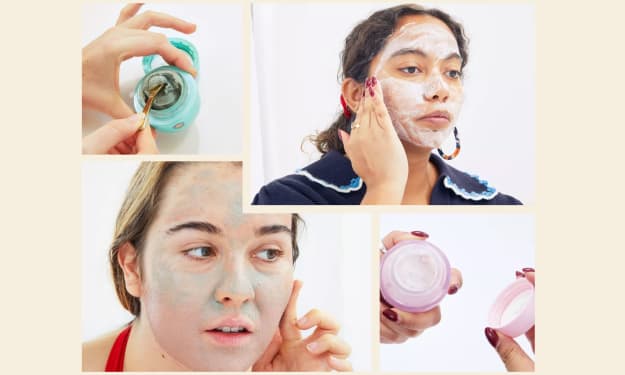
Clay Masks vs. Cream Masks: Which One is Right for Your Skin Type?
In the ever-evolving world of skincare, face masks remain a staple for anyone looking to pamper their skin while targeting specific concerns. Two of the most popular types of masks—clay masks and cream masks—often sit on opposite ends of the skincare spectrum. Each offers distinct benefits and caters to different skin types and needs. But how do you decide which one is right for your skin?
By abdulshariqabout a year ago in Humans
How to Break Up With Someone and Still Sleep at Night
It's never easy to break up with someone. You may feel overwhelmed, and the idea of hurting someone you once loved may keep you awake. However, ending a relationship doesn't have to be a terrifying experience. This complete guide will show you how to break up with someone in a way that shows respect, avoids hurt feelings, and keeps your peace of mind.
By Relationship Guideabout a year ago in Humans
Your Brain on Social Media. AI-Generated.
In 2025, social media is an inescapable force, shaping how we think, feel, and connect. Platforms like X, TikTok, and Instagram have evolved with AI-driven algorithms, immersive VR experiences, and hyper-personalized feeds. While these innovations foster creativity and community, they also hijack attention, amplify stress, and rewire our brains. Backed by cutting-edge neuroscience and psychology research, this article explores how social media impacts your brain in 2025 and offers practical, science-based strategies to regain control.
By David Andrewsabout a year ago in Humans
The Day I Stopped Chasing Perfection
Start writing...For most of my life, I believed perfection was the goal. I thought success meant having flawless work, the right words at the right time, and a life that looked good from the outside. I was raised to believe that if something wasn’t perfect, it wasn’t worth doing. But the reality was different. Behind the constant pursuit of perfection, I hid my fears. I feared failure, judgment, and not being good enough. Every time I started a creative project, I would abandon it midway because it didn’t live up to the impossible standard I had set. I avoided opportunities just because I wasn’t sure I’d be perfect at them. Slowly, perfectionism wasn’t making me better. It was holding me back. The Breaking Point I remember the day it hit me. I was working on a design project for a client I deeply respected. I spent hours on details no one else would notice. I kept tweaking and changing, refusing to submit the final version. Eventually, I missed the deadline. The client was disappointed, and I felt crushed. Not because I delivered bad work, but because I didn’t deliver anything. That day, I realized: perfection had become my prison. Understanding the Cost of Perfection Perfectionism is often disguised as a virtue. We tell ourselves it’s a sign of ambition, of high standards. But perfectionism is rooted in fear, not excellence. It stops us from taking risks, from finishing what we start, and from showing our true selves. I started reading about it and learned that many creatives, entrepreneurs, and even students suffer from the same struggle. The need to appear perfect often results in anxiety, procrastination, and burnout. We edit our lives for public approval and lose the raw beauty of who we are. The most ironic part is that perfectionism never truly satisfies. Even when something appears "perfect," we doubt it. We keep finding flaws. We seek validation instead of fulfillment. And in the process, we become our own harshest critics. Embracing Imperfection Letting go of perfectionism didn’t happen overnight. But I began with small steps: Starting before I felt ready: I pushed myself to begin projects even if I didn’t feel 100% prepared. Publishing my drafts: Instead of endlessly editing, I began sharing my work as drafts—open to feedback, not judgment. Allowing mistakes: I accepted that typos, awkward moments, or failed attempts were part of the process. Limiting my revisions: I gave myself a set number of edits and stuck to it, resisting the urge to "perfect" endlessly. To my surprise, people responded better to my authentic, imperfect work than they ever did to my polished silence. A Shift in Perspective As I began embracing imperfection, I noticed a shift: I felt freer and more creative I became more consistent with my projects I started building real connections with people who related to my honesty Ironically, my work improved. Not because it was flawless, but because it was real. It carried emotion, character, and truth—qualities perfectionism often edits out. It also gave me room to grow. When you let go of the pressure to be perfect, you give yourself permission to evolve. You realize that every mistake is just a stepping stone to mastery. What I Gained From Letting Go One of the greatest gifts of embracing imperfection is self-acceptance. I no longer tie my worth to my work. I no longer fear criticism as much, because I know it's part of the journey. I also discovered the joy of experimentation. I tried new styles, wrote in different genres, and explored unfamiliar ideas—things I never would have done under the weight of perfectionism. Even my relationships improved. When you're not pretending to be perfect, people feel safer around you. They share more. They trust more. And real human connection becomes possible. It even changed the way I view others. Once I accepted my own flaws, I became more forgiving of others'. I stopped expecting impossible standards from people around me. That made me more patient, more present, and more understanding. The Role of Vulnerability Part of embracing imperfection is embracing vulnerability. It means allowing people to see you when you're uncertain, when you're learning, and when you're not at your best. It's scary. But it's also powerful. Brené Brown, in her research on vulnerability, describes it as the birthplace of innovation, creativity, and change. I found that to be absolutely true. Some of my best work came not when I was confident, but when I was honest about my uncertainty. When you show up as your true self—flaws and all—you inspire others to do the same. Practical Tips to Embrace Imperfection If you struggle with perfectionism, here are a few things that helped me: 1. Set process goals, not outcome goals: Focus on doing the work instead of getting a perfect result. 2. Treat everything as an experiment: Shift your mindset from "success vs. failure" to "learning experience." 3. Share your journey: Let others see your process, not just your polished results. 4. Practice self-compassion: Speak to yourself like you would to a kind friend. 5. Celebrate progress: Done is better than perfect. 6. Limit your perfection zones: Be selective. Not everything needs to be your masterpiece. 7. Take breaks: Sometimes perfectionism is a sign of burnout. Rest resets perspective. 8. Create without editing: Try freewriting or unfiltered brainstorming. Give yourself permission to make a mess. 9. Surround yourself with supportive people: Find those who value growth over perfection. 10. Remind yourself: imperfect action beats perfect inaction. Final Thoughts Today, I’m no longer chasing perfection. I’m chasing truth, growth, and joy. My creativity flows more freely. I take more risks. I connect with people on a deeper level. Life is messy, unpredictable, and full of imperfection. But that’s what makes it beautiful. So if you’re stuck, afraid to begin, or constantly rewriting your story—stop. Start where you are. Let it be messy. Let it be real. Because the best version of you isn’t the perfect one. It’s the honest one. And in that honesty, there is peace. Start today. Start small. But start.
By Abdul Rahman about a year ago in Humans