friendship
C.S Lewis got it right: friendship is born when one person says to another: "What! You too? I thought I was the only one!"
Capricorn Man and Gemini Woman Compatibility Score. AI-Generated.
The pairing of a Capricorn man and a Gemini woman is anything but predictable. On the surface, they may seem like polar opposites—he's grounded, serious, and goal-oriented, while she's playful, free-spirited, and full of ever-changing ideas. However, beneath their differences lie a potential for growth, learning, and unexpected connection—if both are willing to stretch beyond their comfort zones.
By Inspire and Funabout a year ago in Humans
Breaking Free from Perfectionism: Embracing the Imperfections of Being Human
Breaking Free from Perfectionism: Embracing the Imperfections of Being Human Introduction From the earliest days of childhood, many of us are taught to strive for perfection. We get high marks, awards, and praise for our flawless appearance. In a world that celebrates idealism and perfection, anything less can feel like failure. But this pursuit of flawlessness often comes at a cost: anxiety, self-doubt, exhaustion, and a disconnect from our authentic selves.
By Afia Sikderabout a year ago in Humans
Why They Didn’t Text Back: What Ghosting Taught Me About Self-Worth. AI-Generated.
Introduction: They were texting me every day. Morning check-ins. Nighttime "sweet dreams." Then suddenly: nothing. No warning. No explanation. Just silence. Ghosting hurts — not just because they left, but because it makes you question your worth. I’ve been ghosted, love-bombed, breadcrumbed... and here’s what I learned about dating, healing, and finally reclaiming my power. Keywords: why they ghosted me, how to move on after ghosting, modern dating advice . Ghosting Feels Personal — But It Isn’t It’s easy to think: What did I do wrong? But often, ghosting says more about the other person’s emotional immaturity than it does about your value. People ghost because: They fear confrontation. They’re emotionally unavailable. They want an easy exit. That doesn’t excuse it. But it does reframe it. Stop Replaying the Conversations I used to scroll through old texts looking for clues — rereading their compliments, wondering where it all shifted. Hard truth: They made a choice to leave without closure. Your mind seeking answers won’t bring peace — it just reopens the wound. 3. Rejection Can Be Redirection One ghosting experience led me to start therapy. Another pushed me to set clearer dating boundaries. A third inspired this very story. Instead of spiraling into shame, I started asking: “What is this experience trying to teach me about myself?” 4. Create a No-Contact Ritual When someone ghosts you, the temptation to check their profile or send “just one more message” is strong. What helped me: Unfollow or mute them (no shame). Write a letter you’ll never send. Light a candle and say goodbye. Make closure something you give yourself, not something you wait for. 5. Rebuilding My Self-Worth Being ghosted left me feeling disposable. Like I wasn’t memorable enough to deserve a goodbye. That pain dug up old wounds — feelings of abandonment, rejection, not being “enough.” So I started therapy. I dove deep into books like Attached by Amir Levine and Set Boundaries, Find Peace by Nedra Glover Tawwab. I began journaling affirmations like: “I am not defined by someone else’s silence.” “I release the need to be chosen.” “My worth is not up for negotiation.” The more I healed, the more I realized that being ghosted didn’t make me less lovable — it simply removed someone who never truly valued me to begin with. 6. What I Look for Now in Love After that experience, my dating standards changed — radically. I don’t chase butterflies anymore. I look for: Consistency — Do they follow through? Clarity — Are their words and actions aligned? Compassion — Do they communicate, even when it’s hard? I also set clear boundaries early on: If communication fades, I address it once. If I’m met with silence again, I let it go without begging. I never accept crumbs and call them dinner. Final Thoughts: You Are Not Disposable Getting ghosted can feel like being erased. Like all those moments — the laughs, the late-night talks, the future plans — meant nothing. But I promise you, they did mean something. They meant that you were open. You were brave. You were emotionally present in a world that often runs from intimacy. That is not weakness. That is your strength. If you’ve been ghosted, let me say this: You are not hard to love. You are not too much. You are not unworthy of closure. You are a whole person. You deserve communication, respect, and someone who shows up — not someone who disappears. Let them go. And let yourself grow Final Thoughts: You Are Not Disposable Getting ghosted can feel like being erased. Like all those moments — the laughs, the late-night talks, the future plans — meant nothing. But I promise you, they did mean something. They meant that you were open. You were brave. You were emotionally present in a world that often runs from intimacy. That is not weakness. That is your strength. If you’ve been ghosted, let me say this: You are not hard to love. You are not too much. You are not unworthy of closure. You are a whole person. You deserve communication, respect, and someone who shows up — not someone who disappears. Let them go. And let yourself grow. Want to Share Your Story? Have you ever been ghosted? What helped you move forward? Drop a comment or send me a message — someone out there needs to hear how you healed. Tags: #DatingAdvice #Ghosting #ModernLove #SelfWorth #Relationships #EmotionalHealing #HeartbreakRecovery #Boundaries #Closure
By Saqib Ullahabout a year ago in Humans
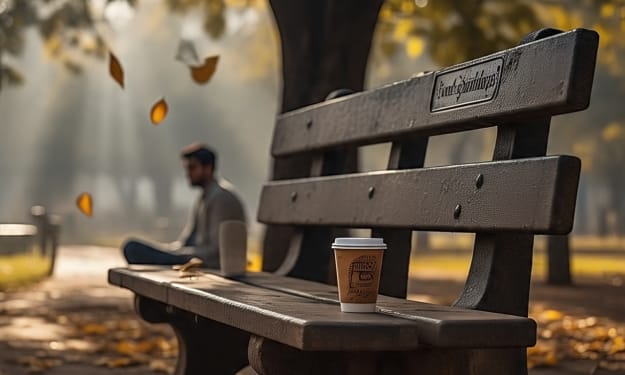
“The Bench at Willow Park”
Every Saturday morning, the same old wooden bench at Willow Park hosted two friends—Arman and Sameer. It wasn’t just a bench to them; it was where years of laughter, secrets, and silence had taken place. They first met on that bench as teenagers. Arman had stormed out of the house after yet another fight with his father. Sameer was the new kid in town, sitting alone with a sketchbook in hand, drawing the trees. Arman sat down without asking, huffing and puffing. Sameer didn’t look up. For ten minutes, they sat in silence. And then Sameer offered him a peanut candy. Arman took it with a smirk. “Rough day?” Sameer had asked. “You could say that,” Arman replied. That was it. A small exchange that marked the beginning of something lifelong. From that day on, every Saturday morning, they returned. Sometimes they talked for hours, other times they simply sat in comfortable silence. The bench became a witness to growing pains, young dreams, and quiet healing. In their twenties, they shared stories of first jobs and broken hearts. Arman wanted to be a writer but ended up in an office job. Sameer, quiet and observant, became a graphic designer. They celebrated successes on that bench, mourned failures, and cracked jokes that only made sense to the two of them. Then came love. Arman fell hard and fast for Leena, a spirited teacher with a laugh that echoed like wind chimes. Sameer was more cautious, eventually marrying Sana, a gentle soul who made art feel like religion. When they got engaged, the bench became a meeting ground for plans and nerves and endless wedding advice. Life grew fuller—children, responsibilities, career moves—but they never skipped a Saturday unless one was out of town or sick. Even then, there’d be a message: "Bench feels empty without you." When Arman lost his job in his late thirties, it was the bench that held his frustration, his fear. Sameer didn’t offer solutions. He simply handed him a cup of hot tea and listened. “I feel like I’m starting over,” Arman had said. “Maybe that’s not such a bad thing,” Sameer replied. When Sameer’s mother passed away, he cried on that very bench. Arman placed a hand on his shoulder and said nothing. Because real friends know when to speak—and when not to. Time moved on. Hairlines receded, their children grew up, and retirement began to enter their conversations. The bench had weathered it all—sunshine, storms, even a minor flood. It had chipped paint and creaky legs, but it stood firm. Much like their friendship. Then, one crisp autumn morning, something changed. Sameer arrived as usual, two coffees in hand. But Arman wasn’t there. Ten minutes passed. Then twenty. Sameer thought maybe he was running late. But his phone remained silent. That evening, Sameer got the call. Arman had passed away in his sleep. Peacefully. Quietly. Just like the way he’d often sit on that bench, watching the world go by. Sameer didn’t cry right away. He simply looked out the window for a long time. The next Saturday, he still went to the park. Still brought two coffees. He sat in their usual spot. Alone. The bench felt different. Lighter in weight but heavier in emotion. Sameer closed his eyes and imagined Arman beside him, smirking as he always did when he caught someone staring. “You still bring two coffees?” a jogger passing by asked gently. “Habit,” Sameer replied, smiling faintly. “Memories are thirsty, too.” Week after week, Sameer kept coming. People began to notice him—an old man with a kind face and two coffees. Some assumed his friend had moved away. Others, that he was waiting for someone who would never come. And they were right. In a way. But to Sameer, Arman was still there. In the rustling leaves. In the sound of distant laughter. In the way the sun hit the bench just right around 9:00 a.m. Eventually, the city decided to replace the bench—it had grown too unstable. But when they removed it, they found a carving underneath the armrest. Simple, barely noticeable: A & S – Forever Saturdays. Touched by the story, the city council placed a new bench in the same spot, stronger and made of oak. But they kept the carving, engraved it into a small bronze plaque on the side: “Dedicated to the friendship of Arman & Sameer – who proved that true companionship doesn’t fade with time.” Now, children climb it, couples rest on it, and old men feed birds near it. But every Saturday morning, just as the sun rises, an old man with gentle eyes sits with two coffees. One for himself. One for memory. Because some friendships never leave us. They live on—in gestures, in laughter, and in quiet moments on a park bench where two souls once met and never let go.
By Arjumand Saidabout a year ago in Humans
How One Daily Habit Changed My Confidence Forever
I never thought something so small could make such a big difference in my life. For years, I struggled with self-confidence. I questioned myself constantly—at work, in relationships, and even in front of the mirror. I wasn’t always like this. Somewhere along the way, I lost the strong, self-assured version of me. And the worst part? I didn’t even notice it slipping away until I no longer recognized who I was.
By Dadullah Danishabout a year ago in Humans
In Love, We Live
e In a world racing toward innovation, competition, and self-preservation, it is easy to overlook the one force that breathes life into all things—love. The phrase “In Love, We Live” is more than poetic sentiment; it is a profound truth that speaks to the core of our humanity. Love, in its many forms, is the invisible current that connects us, sustains us, and propels us toward meaning. It is the essence of life itself.
By Noor Hussainabout a year ago in Humans
Capricorn Man and Taurus Woman Compatibility Score. AI-Generated.
When a Capricorn man and a Taurus woman come together, the stars align in one of the most grounded and enduring partnerships of the zodiac. Both Earth signs, this couple shares a practical approach to life, a deep appreciation for stability, and a mutual desire for long-term commitment. Their relationship isn't one marked by dramatic highs and lows, but rather by a steady, comforting rhythm that builds trust and intimacy over time.
By Inspire and Funabout a year ago in Humans
How Humanity Evolved Faster Than Our Minds. AI-Generated.
When the first Homo sapiens walked the African savannas nearly 300,000 years ago, they carried spears, shared stories around fires, and worried about predators in the bushes. Fast-forward to today, and we carry smartphones, scroll endlessly through social feeds, and worry about unread emails. Technology has evolved at light speed — but our minds? They're still stuck in the Stone Age.
By Ahmet Kıvanç Demirkıranabout a year ago in Humans