friendship
C.S Lewis got it right: friendship is born when one person says to another: "What! You too? I thought I was the only one!"
Pisces Man and Sagittarius Woman Compatibility Score. AI-Generated.
When the deeply emotional Pisces man meets the spirited Sagittarius woman, the connection is instantly intriguing yet complicated. These two signs are vastly different in temperament, desires, and emotional needs, but their union can be one of immense growth — if both are willing to adapt. With Pisces being a mutable water sign and Sagittarius a mutable fire sign, change is inevitable, but whether that change unites or separates them depends on how they navigate each other’s worlds.
By Inspire and Funabout a year ago in Humans
Dating a Married Man Wasn’t the Worst Part
I knew he was married the second I met him. And I didn’t care. That’s the part I hate admitting the most. It wasn’t like I was lied to or tricked or swept off my feet by some master manipulator. I walked into it with my eyes wide open. And maybe something inside me wanted to get burned.
By Ava Writes Truthabout a year ago in Humans
The photograph that saved her life
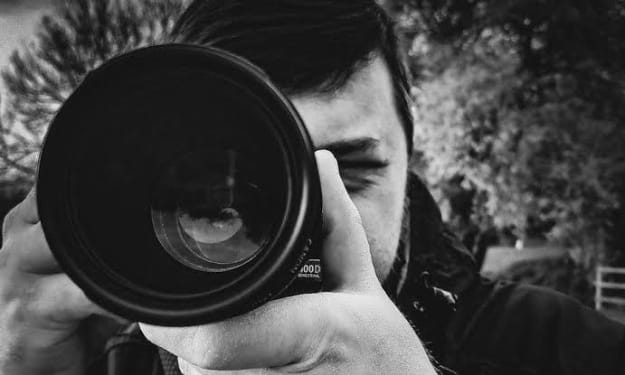
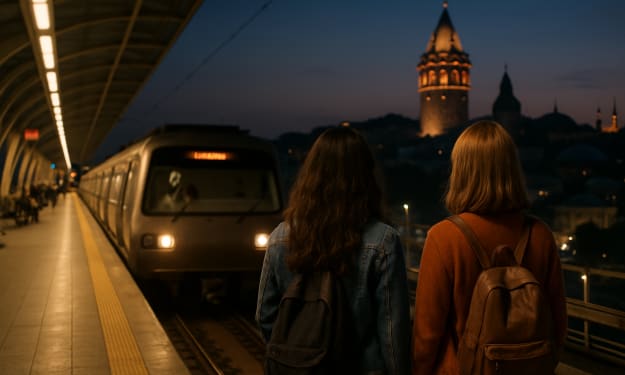
The train roared past, its steel wheels screeching against the tracks, drowning out the sounds of the bustling platform. Amidst the crowd stood a girl—thin, pale, almost invisible. Her name was Alina, a 19-year-old who looked more like a shadow than a person. She clutched a tattered schoolbag to her chest and stared blankly at the yellow line just inches from the edge. She had come to the station not to travel but to disappear. Life had become unbearable. Her father had died two years ago in a factory accident, and her mother, overwhelmed by grief, turned cold. Poverty clung to their lives like mold, and Alina, once a bright student with dreams of becoming a journalist, had dropped out of school to work at a sewing shop. Each day drained her more. Each night she cried silently in a corner of their one-room home. Her only escape was through writing in a diary she kept hidden in her bag. But even words had stopped comforting her. On that particular morning, after another argument at home, she walked toward the station with no ticket, no destination—just a decision. She sat on a bench and waited, counting each train, each minute, waiting for the platform to clear enough for her to do it without a scene. As she rose and stepped forward, a voice behind her called out, “Excuse me! Can I take your photo?” She froze. A man, perhaps in his mid-30s, held a professional-looking camera. He wore a denim jacket and had a kind but tired face. “I’m a street photographer,” he explained. “I capture real emotions. You have... something in your eyes. May I?” Alina hesitated. No one had spoken to her kindly in months. She nodded without a word. He clicked the camera once. Twice. Then smiled. “Thank you,” he said gently. “You have a powerful presence.” She didn’t reply but turned away, tears suddenly burning her eyes. She hadn’t heard anything good about herself in a long time. “What’s your name?” he asked. “Alina,” she whispered. “I’m Imran,” he said. “You’re meant for more than sadness, Alina. I don’t know what you’re going through, but... I hope this photo reminds you that you exist. And that you matter.” She didn’t know what to say. He handed her a small card with his Instagram handle. “I’ll post it later. Look for yourself through someone else’s eyes.” Then he walked away, blending into the morning crowd. --- That night, Alina lay awake, the small card still clutched in her hand. She opened her mother’s old mobile and found the photographer’s page. And there it was. The caption read: > “I saw a girl today at the train station. There was sorrow in her eyes, but strength too. This is a face that has a story—a story worth telling. Alina, if you’re reading this: the world is waiting for your voice.” Over a hundred strangers had liked and commented on the post: “She’s beautiful.” “There’s something poetic in her gaze.” “Tell her she’s not alone.” Alina read every word. Again and again. For the first time in months, her tears were not from pain but from a strange sense of hope. She felt seen. --- In the weeks that followed, something shifted. Alina reached out to Imran. They met again. He listened to her story—not with pity, but with respect. He offered to publish her writings as captions on his photographs. Slowly, she began to write again. Short poems. Stories of survival. Dreams long buried. Her words started resonating with others. Imran's page grew. So did her confidence. By the end of the year, she had her own social media account under the name AlinaWrites, where she shared raw, heartfelt pieces about poverty, grief, healing, and hope. A local magazine noticed her and offered her a part-time job writing articles. Her mother, seeing the light return to her daughter’s eyes, began changing too. They healed together—slowly, imperfectly, but truly. --- Years later, Alina stood on the same platform—not as a girl wanting to vanish, but as a woman launching her first self-published book titled “The Photograph That Saved My Life.” A crowd had gathered. Imran stood beside her, proud. She held the book in one hand and the same photograph in the other. It was framed now, preserved like a sacred memory. In the picture, her eyes were tired, but fierce. Lost, yet quietly searching. As she looked out at the crowd, she said, “Sometimes, we think we’re invisible. That no one sees us, hears us, or cares. But all it takes is one person, one moment, one photograph—to remind you that your story matters. That you matter.” The applause was thunderous. But all she could hear was the quiet whisper inside her that had once wanted to give up… now turned into a roar that said, “Keep going.”
By Shehzad khanabout a year ago in Humans
When Compassion Disappears
The city was awake, as usual. Cars crawled down slick roads, people rushed past one another, heads bent low against the wind, eyes fixed on screens or sidewalks—anywhere but each other. No one noticed the man sitting near the traffic light, huddled beneath a frayed blanket with a cardboard sign that read:
By Atif jamal about a year ago in Humans
The Goat and the Lion: A Tale of Cunning and Courage"
Deep in the heart of an ancient forest, where the trees stood tall like wise old guardians and the wind carried whispers of old legends, lived a goat named Kavi. Kavi wasn’t like other goats. He was not the strongest, nor the fastest, and his horns curved more awkwardly than majestically. But what he lacked in strength, he made up for in his boundless curiosity and a clever mind that never stopped working. In the same forest, reigning with a growl that shook the treetops and a gaze that turned blood cold, lived a lion named Asad. Asad was not just any lion—he was the king of this forest. His claws could tear bark from trees, and his roar alone could stop a herd of deer mid-sprint. He ruled with fear, rarely questioned, never challenged. Kavi had heard tales of Asad’s cruelty. The lion took what he wanted, hunted for sport, and reminded all creatures that the jungle had a hierarchy—and he sat at the very top. Most animals steered clear of Asad, and Kavi had always done the same. But fate, as it often does, decided to stir the pot. One dry summer afternoon, the forest’s riverbed turned to cracked earth. Water was scarce. Even the birds had flown to distant lakes. Kavi, parched and weary, ventured further than he ever had, toward the northern caves—a place the elders warned young goats never to go. But thirst makes you brave—or desperate. As he approached a hidden spring near the mouth of a cave, Kavi dipped his mouth into the cool water. The relief was immediate, divine. But just as he lifted his head, he heard the unmistakable low growl behind him. It was Asad. "Drinking from my spring?" the lion snarled, stepping from the shadows, his golden eyes blazing. "Do you have a death wish, goat?" Kavi's heart pounded. He knew running was useless—lions loved the chase. He took a breath and did the one thing most wouldn’t dare in Asad’s presence. He spoke. "I didn’t know it was yours, Your Majesty," Kavi said, bowing slightly. "But now that I do, I must say... it makes perfect sense. Such a strong lion would need the freshest water to keep his strength." Asad paused. Flattery was unusual from prey. Intriguing, even. "Your tongue is silver," Asad said. "But it won't stop your blood from spilling." "Before you eat me," Kavi said quickly, "may I ask a favor? One that will make your greatness known throughout the forest." The lion chuckled. "You wish to delay death with words?" "No," said Kavi. "I wish to turn my end into a royal event. Let me return to my herd for one day. I will tell them I am to be eaten by the king himself. Let them witness it. They will sing your name in fear and awe. Your legend will grow." Asad narrowed his eyes. "And what stops you from running away?" "You do," Kavi replied. "Because if I don’t return, your reputation will be that of a lion who chases helpless goats instead of hunting with honor. But if I come back willingly, even your enemies will fear your command." The forest went silent. Even the wind seemed to hold its breath. Finally, Asad smirked. "You have one day, goat. Return here at dawn, or I will hunt every goat in your herd." Kavi bowed and trotted off. --- That night, Kavi didn’t sleep. Not because of fear, but because his mind was racing. He had bought time—but he needed a plan. By morning, as the sun rose, Kavi returned—not alone, but with a cart, a long stick, and a strange device made from old vines and a hollowed gourd. Asad, seeing the goat had returned, approached with visible surprise—and amusement. "What trickery is this?" "I promised you a performance worthy of your greatness," said Kavi. "But first, allow me to blindfold you for the grand reveal. Royalty should not see the stage before the play begins." Asad, amused and curious, agreed. Kavi quickly tied the blindfold around the lion’s eyes and used the moment to push him gently into the cart, binding his paws with a slipknot he had crafted. Before Asad could realize the trick, Kavi blew into the gourd—producing a high-pitched whistle that summoned a dozen goats from the treeline. They ran forward, helping Kavi secure the lion with ropes and a makeshift wooden cage. Asad roared and struggled, but it was too late. The king of the jungle had been outwitted by a goat. --- News of the event spread faster than wildfire. The mighty lion, brought down not by force, but by intelligence. The forest buzzed with a new energy. Animals whispered Kavi’s name with admiration. Even the predators began to tread more carefully. The elders named Kavi a sage, and a new council was formed—one where not just strength, but wisdom had a voice. As for Asad, he was released weeks later, but his reign of terror had ended. Pride wounded, he retreated to the deeper forests, rarely seen again. Kavi lived a long life, not as a ruler, but as something even rarer in the wild—a symbol. A reminder that brains could beat brawn, that courage wasn’t always loud, and that sometimes, the smallest horns could bring down the loudest roar.
By Lal Sher Khan about a year ago in Humans
The Lion's Promise
The sun was low in the sky, bleeding golden fire across the African savannah. Dust danced on the wind as birds called overhead, and herds of antelope grazed near the distant trees. In the heart of this vast land walked a young boy named Ayo—barefoot, quiet, and curious. Orphaned at a young age, Ayo had grown up on the edge of his village, watching the wild from afar, never quite belonging to the people nor the land. One day, when chasing a lost goat deep into the bush, Ayo found himself face to face with something ancient, powerful, and terrifying: a full-grown male lion, its golden mane burning in the sunset. He froze. The lion stared back. But the lion did not pounce. Instead, it sat, calm as the wind, watching Ayo with strange intelligence in its amber eyes. Then, with a slow rumble, it turned and began to walk away, stopping only once to look back—an invitation. That moment changed everything. In the days that followed, Ayo returned to the wild, again and again. The lion, whom he named Raka, allowed him to sit nearby, share silence, and eventually, share trust. There were no words, but there was understanding. Raka showed him where water hid beneath the dry earth. He showed him how to move with the rhythm of the wild—how to listen. As seasons changed, so did Ayo. He grew tall and lean, more at home beneath the stars than under a roof. Some villagers whispered that he was cursed, too close to beasts. Others said Bast, the ancient lioness goddess, had chosen him. Only the old healer believed truly: "The boy walks with the wild. One day, it will walk with us." That day came sooner than anyone expected. Late one evening, smoke curled into the sky from the western trees. Unusual. No one farmed there. Ayo, out tending the goats near the edge of the savannah, sensed it before he saw it—danger. He followed the smoke trail swiftly and quietly. What he saw froze his blood. A camp of poachers, armed with rifles, machetes, and cruel traps. They spoke in harsh voices, laying out maps and whispering of riches—elephant tusks, lion pelts, village raids. One man laughed, pointing toward Ayo’s home. “They’ll never see it coming. Tomorrow at first light.” Ayo ran. Not to the village—but to Raka. He found the lion under the moonlight, drinking at a small stream. Out of breath, Ayo dropped to his knees and looked into Raka’s eyes. “They’re coming,” he whispered. “They’ll kill everything.” Raka rose, sensing the urgency in the boy’s trembling voice and scent. He roared—not a warning, but a promise. The next morning, as the poachers crept toward the sleeping village, rifles loaded, the sky broke with a sound that seemed to tear the earth in two. RRAAAAAWWWRRRRR! A lion’s roar exploded across the plains. Then another. And another. It wasn’t just Raka. From the surrounding wilds, other lions emerged—female hunters, young males, old warriors. The poachers panicked. One fired blindly. Another screamed. Chaos erupted as Raka leapt into their midst like a shadow on fire. The lions didn’t attack to kill—they attacked to drive out. By the time the villagers awoke, the poachers were gone—fleeing, terrified, dropping weapons and stolen goods in their path. The lions had vanished back into the bush. And standing at the village gate was Ayo, dirt on his face, Raka beside him, both silent as the sunrise. There was awe in the eyes of the people. No one called him cursed now. The elders fell to their knees. The healer wept. “He has brought the spirit of the wild to protect us.” In the days that followed, the village changed. No longer did they burn trees or hunt lions. They began to listen—to the wind, the birds, the boy, the lion. Ayo became their guide, their protector, the bridge between two worlds. But wild things do not stay long. One day, Raka did not return to their usual meeting place. Ayo searched for hours, then days. Finally, under the great baobab tree, he found the lion’s tracks leading away—into the deeper wild, where no man followed. He stood there in silence. And then, from far beyond the hills, came one last roar—deep, proud, eternal. Ayo smiled. He did not cry. Because he knew: The roar had not just saved a village. It had awakened its soul. --- Would you like an image created based on this story too?
By Muheebullahkhan about a year ago in Humans
Strength Isn’t Optional: Why the Modern Man Must Rise Up
Why Strength is No Longer Optional — It’s a Responsibility Let’s be real for a moment. We live in a world where strength is often misunderstood. We confuse loud voices for leadership, bravado for courage, and sometimes even gentleness for weakness. But strength—real, unwavering, internal strength—is something entirely different. It’s not just a gym membership or a flexed bicep in a mirror selfie. It’s a mindset. It’s a lifestyle. And above all, it’s an obligation. Let’s break this down and talk about what real strength looks like today—and why it matters now more than ever. --- 1. “No Woman Wants a Weak Man” — Let’s Talk Masculinity Before you roll your eyes or clench your fists, hear me out. This isn't about toxic masculinity or outdated gender roles. It’s about responsibility and stability. Women (and partners in general) are not looking for domination; they’re looking for direction. Not for someone who barks orders, but someone who shows up—especially when it’s hard.
By Mindfulness about a year ago in Humans
“The Stranger Who Changed My Life in One Conversation”
The Stranger Who Changed My Life in One Conversation It was a rainy Tuesday, the kind that soaked you to the bone and matched the heaviness in your chest. I was 26, unemployed, and carrying a backpack full of rejection letters and doubt. I had just come from another failed job interview—number fourteen that month—and my confidence had slowly dissolved into the puddles I walked through. I ducked into a small café to escape the downpour. It wasn’t fancy—just a few wooden tables, a flickering “OPEN” sign, and the smell of burnt espresso. I ordered the cheapest coffee on the menu and sat by the fogged-up window, staring at nothing. I didn’t even notice the man who sat down across from me until he spoke. “Tough day?” He had silver hair, a sharp nose, and a calm presence that somehow cut through the noise in my head. I looked up, surprised. “I guess you could say that.” He gave a knowing smile. “You looked like someone trying to convince the world they’re okay.” I blinked. That was exactly how I felt. “You some kind of therapist?” He chuckled. “No. Just someone who’s been where you are.” Something about the way he said it made me stay. I could’ve ignored him. Walked away. But I didn’t. I sat back and let out a long sigh. “I just feel like I’m running out of time,” I admitted. “Everyone around me is building careers, getting married, buying houses. And I’m...here. Drinking cheap coffee in a place that smells like overcooked beans.” He nodded slowly, as if every word I said made perfect sense. “I was 28 when I lost everything,” he said. “I had a business, a fiancé, a future all mapped out. One bad deal, and it all collapsed. I remember sitting in a laundromat at 2 a.m., watching my last clean shirt go in circles, wondering if that was the peak of my life.” I looked at him, surprised. “What did you do?” “I asked myself one question: What would I be doing if I wasn’t afraid of failing again?” He stirred his coffee absentmindedly. “And the answer wasn’t rebuilding what I lost. It was doing something entirely different.” “Which was?” “Photography. I’d always loved it but never gave it a chance. I was too busy being what everyone expected me to be.” I looked at my own reflection in the window. I didn’t know what I wanted anymore. I just knew I was tired of pretending. “What if you don’t have that kind of passion?” I asked. He leaned in. “Everyone does. But we bury it. Under bills, expectations, fear. The trick is digging it up again.” I stayed quiet for a while. The rain had stopped. The city looked cleaner somehow, like it had been washed of its weight. He stood up, pulled a pen from his coat pocket, and wrote something on a napkin. “This isn’t some magical advice. Just a reminder.” He pushed it across the table. Then he smiled. “You’ll figure it out. Sometimes you just need one honest conversation to remember who you are.” And with that, he walked out. I unfolded the napkin. It read: “You are not late. You are just arriving where you were always meant to begin.” --- I never saw that man again. But I still have that napkin. That day, something shifted. It didn’t solve everything. I still struggled for a while. But I started writing again—something I hadn’t done since college. Not for money or validation, just because it felt like me. Months later, I self-published a short story. A year after that, I got a part-time job at a magazine. Today, I’m a full-time writer. Still not rich, still not perfect, but finally living in alignment with the person I forgot I could be. All because of one stranger… who reminded me that even on your darkest day, one conversation can bring back the light.
By ANAS AFRIDIabout a year ago in Humans