friendship
C.S Lewis got it right: friendship is born when one person says to another: "What! You too? I thought I was the only one!"
Hearts Above the Clouds
The village of Kalrith sat nestled high in the misty arms of the Elenra Mountains, so high that the clouds often passed beneath it like rivers of smoke. Few travelers ventured that far up the winding paths, and those who did were often drawn not by maps, but by stories. They spoke of a place where the air smelled of pine and cinnamon bread, where laughter echoed louder than the wind, and where dreams—quiet ones, wild ones—seemed to grow stronger in the thin mountain air. And at the heart of Kalrith stood a house unlike any other: The Hearthstead Inn. It wasn’t the largest building in the village, nor the grandest, but it pulsed with life. Built of sun-warmed stone and timber smoothed by years of care, its roof was always dusted with a little snow, even in summer. Smoke curled gently from its chimney, and lights glowed warmly through thick glass windows, inviting wanderers and weary hearts alike. It was run by Mira Thorne, a woman of silver-streaked curls and hands always dusted with flour. She had once been a traveler herself, chasing stories across oceans and deserts, but Kalrith had whispered something to her soul. She came to rest there one winter and never left. And the inn had become more than shelter. It was a place where broken hearts learned to beat again. Each room at Hearthstead had its own personality—Room Seven always smelled faintly of lilac, even when no flowers were around. Room Two had creaky floorboards that made just the right kind of music at night, and Room Five had a slanted window perfect for watching shooting stars. Mira didn’t assign rooms. The house did. And it always seemed to get it right. One storm-heavy evening, a boy named Lio arrived, soaked to the bone, a guitar strapped to his back and fear flickering in his eyes. He had walked for days, escaping the city below where noise drowned dreams and expectations built cages. Mira, without a word, wrapped him in a blanket, handed him a cup of honeyed tea, and smiled. The kind of smile that said: You’re safe now. Breathe. Lio stayed longer than he intended. So did most. He fixed up the old piano in the sitting room, played gentle tunes in the evening, and discovered that music didn’t have to be loud to be powerful. It could be like firelight—warm, comforting, steady. Then there was Lena, who came the next spring. She was a mountain guide by trade, but her compass had been spinning wild since her brother disappeared on an avalanche trek. She had no intention of resting, only asking questions. But the house had a way of softening sharp grief. Mira never pushed, just made room in the kitchen, and soon Lena found peace kneading bread dough and telling stories to the village children. Over the years, more came. A painter who’d lost color in her world and found it again in the sunrise over the eastern ridge. A widower who planted flowers in the frozen soil and watched them bloom like hope. A girl with tangled hair and a stutter who read aloud to the fire until her voice grew clear and strong. Mira’s Hearthstead didn’t promise answers. It didn’t fix every hurt. But it gave space—for hearts to mend, for lungs to breathe, for dreams to stretch taller than the mountains themselves. One morning, long after she’d come to call the inn home, Mira stepped onto the porch and watched the valley below. The clouds moved like tides beneath her feet, golden in the sunrise. She thought of the people who had passed through, of how they’d arrived with heavy hearts and left with lighter steps. She closed her eyes and listened. Somewhere inside, someone was laughing. A kettle whistled. The piano sang. The world below could be loud and sharp. But here, above the clouds, it was gentle. Kind. Real in a way that mattered. Hearthstead wasn’t magic, not exactly. It was something simpler. A warm meal. An open door. A quiet space to dream. And that, Mira had come to believe, was the kind of magic that changed lives. --- In the house where the wind sang lullabies, where tea cups clinked like little heartbeats, and where every soul was welcomed without question, dreams didn’t just survive. They soared. --- Hearts Above the Clouds was more than a name. It was a promise. And every morning, as the sun touched the snowcaps and warmed the stones of the Hearthstead, that promise rose again—higher than the clouds.
By Muhammad Saad about a year ago in Humans
A Rainy Day That Became My Favorite Memory
The Day the Rain Came I’ve always loved the sound of rain. The soft tapping on windows, the rhythm of drops hitting the pavement, the way the world slows down just a little. But there was one rainy day that went from ordinary to unforgettable — a memory I still hold close to my heart.
By Habib kingabout a year ago in Humans
Clash of the Stone Titans. AI-Generated.
I. The Arena The stadium smelled of sweat, dust, and crushed stone. Sunlight poured through cracks in the wooden beams, cutting golden slivers across the rocky arena floor. The crowd roared, a living wave of sound, as the competitors stepped forward. These weren’t ordinary wrestlers. Their muscles were carved like mountains, veins bulging like rivers across granite cliffs. But their greatest strength was not in their biceps or their grip—it was in their connection to the rocks themselves. Every wrestler carried a slab of stone, each one as unique as the person who bore it. Some were jagged and rough, others smooth and worn by years of training. The stones were more than weights—they were partners, extensions of their spirit. --- II. The Champions Jaro and Kellan had faced each other for nearly a decade. They had begun as friends, training in the shadow of the same quarry, their laughter echoing off stone walls. But the arena had a way of changing bonds into rivalries. Jaro’s slab was dark, streaked with veins of white quartz. Kellan’s was pale and speckled, like the clouds before a storm. Each stone carried the memory of every fall, every victory, every blistered hand that had pressed against it. Today’s match would decide the championship. The ground shook as they circled each other. Dust rose in thin columns around their feet. Every eye in the stadium followed the movements of the stone, not just the wrestlers. --- III. The Struggle The first clash echoed like thunder. Their stones collided, and a spray of dust exploded into the air. Hands gripped, feet pivoted, and muscles screamed in unison with the crowd’s roar. Jaro pushed with the force of a boulder rolling down a hill. Kellan resisted, twisting, ducking, and planting his slab like a shield. They were dancers, each move measured, each breath synchronized with the heartbeats of the stones beneath their hands. Memories of their youth flickered through Jaro’s mind—Kellan teaching him the proper stance, the laughter when a slab had slipped and nearly crushed a toe. Yet none of that mattered now. Only the arena, the stone, and the will to dominate. --- IV. The Turning Point For an instant, Jaro felt his slab shift. A hairline crack had formed over the years, a hidden weakness. He pushed harder. The stone trembled. The crowd held its collective breath. Kellan saw it, too. He leaned into his stone, planting it with the precision of a sculptor. Jaro stumbled. A roar erupted from the stands—but it wasn’t just the crowd; it was the echo of every match they had fought, every rivalry turned friendship turned rivalry again. In that moment, something unexpected happened. Both men froze. Their eyes met. And in the chaos of competition, they remembered the quarry, the laughter, the days when stones were teachers, not weapons. --- V. The Twist Suddenly, the arena floor quaked—not from the wrestlers, but from the earth itself. The giant stones they had wrestled with for years began to split, crack, and shift as if the world itself demanded their attention. The crowd panicked. Dust and small rocks fell from the ceiling. Jaro and Kellan dropped their slabs, scrambling to keep their footing. But when the dust settled, something remarkable had happened. Their stones had merged at the center of the arena, forming a single monolith, taller and stronger than either could have carried alone. No one had won or lost, yet the audience erupted. It was more than a match—it was a testament. Two wrestlers, two stones, one legacy. --- VI. The Legacy Years later, children trained in the same arena, carrying slabs of stone just like Jaro and Kellan once did. Stories of the titans spread beyond the cliffs and quarries. The monolith remained in the center, a silent reminder of strength, friendship, and the power of shared struggle. The wrestlers became legends—not because they defeated each other, but because they had learned that true strength comes from connection, endurance, and respect for the stones that teach us more than we ever know. --- Message to the Reader Strength is measured not just in what you can lift, but in what you can endure. Every challenge, every struggle, every friendship is a stone we carry—and sometimes, when we place it beside someone else’s, we build something stronger than ourselves. ---
By Muhammad Riazabout a year ago in Humans
The Cure for Loneliness
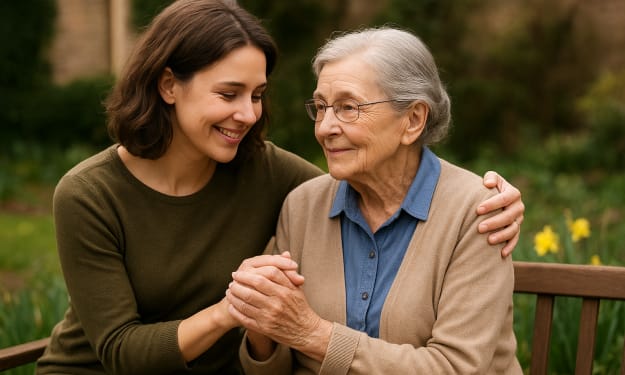
There was a time when Emily thought loneliness was something that happened to other people — the elderly, the socially awkward, or those who lived far from civilization. She had friends, a stable job, and an apartment in the heart of the city. Her phone was full of notifications, her calendar dotted with lunch dates and meetings. Yet, on a quiet Thursday night, sitting in her small living room with the hum of traffic outside, she realized she had never felt more alone. It wasn’t the absence of people that troubled her. In fact, she was often surrounded by them — at the office, on the subway, at the café where she grabbed her morning coffee. The problem was the absence of connection. Conversations had become surface-level exchanges, predictable and polite. The laughter she shared with colleagues felt hollow, the kind that dissolved into silence the moment she turned away. Emily had read articles about loneliness, how it could be as harmful to health as smoking or obesity. The science didn’t surprise her. Loneliness was more than an emotion; it was a slow, gnawing hunger for something you couldn’t name. She had tried the usual remedies — joining clubs, attending networking events, even downloading dating apps. None of them worked. The more she tried to fill her time, the emptier it felt. One Saturday morning, while scrolling through social media, she saw a post from a local community center about a volunteer program. It was a small note at the bottom of their page: Looking for volunteers to visit residents at Rosewood Care Home. The photo showed an elderly man in a wheelchair holding hands with a young woman, both smiling in a way that felt… real. It wasn’t the posed happiness she was used to seeing online. Something about it made her pause. The following week, Emily walked into Rosewood Care Home with a mixture of nervousness and curiosity. The scent of fresh flowers and disinfectant lingered in the air. A nurse led her to the recreation room, where a group of residents sat in a circle, chatting softly. That’s when she met Margaret. Margaret was eighty-seven years old, with silver hair pinned neatly at the back of her head and eyes that sparkled with a mischief Emily didn’t expect. She spoke slowly, but her words carried weight, as if each one had been chosen carefully. Emily learned that Margaret had been a schoolteacher for forty years. She had no children, and most of her family had passed away. “People think I’m lonely,” she said with a small smile, “but I’m just… waiting for good company.” Emily began visiting every Saturday. At first, their conversations were simple — the weather, old movies, the latest book Margaret was reading. But over time, Margaret started sharing her life stories: the day she first stood in front of a classroom, the summer she traveled across Europe with nothing but a suitcase and a camera, the heartbreak of losing her fiancé to an illness they barely understood at the time. Emily listened, sometimes laughing, sometimes holding back tears. Something strange happened over those weeks. Emily noticed her own loneliness easing, not because she was constantly busy, but because she was finally connected to someone in a way that felt authentic. Margaret didn’t check her phone mid-conversation. She didn’t nod absentmindedly while thinking about her next appointment. She was present. One afternoon, Margaret handed Emily a worn leather photo album. “If you want to understand me,” she said, “you should see where I’ve been.” They sat together for hours, flipping through faded photographs. In one, Margaret stood on a cliff overlooking the ocean, her hair whipping in the wind. In another, she sat at a small café table in Paris, laughing with friends. Emily felt as if she were traveling through time, experiencing pieces of a life far richer than she had imagined. Winter came, bringing early sunsets and cold winds. Emily’s friends continued their busy lives, and she still had nights when the city felt too big, too indifferent. But every Saturday with Margaret gave her something solid to hold onto — proof that genuine connection could still exist in a world obsessed with speed and convenience. One morning in February, Margaret wasn’t in the recreation room. A nurse explained that she had caught a bad cold and was resting in her room. Emily went to see her, finding her propped up on pillows, a blanket tucked around her shoulders. Margaret smiled weakly. “You didn’t have to come,” she whispered. “I wanted to,” Emily replied. She stayed for hours, reading aloud from one of Margaret’s favorite novels until the older woman drifted to sleep. As Emily watched her breathing steady, she realized something she had been too afraid to admit: she loved this woman like family. Margaret recovered, but the experience left Emily deeply aware of how fragile life was. She began to notice other people around her — the quiet man who always rode the same subway car, the neighbor who watered her plants when she was away. She started small conversations, asked real questions, and listened without rushing. The world didn’t feel as distant anymore. Months later, Emily sat with Margaret in the care home garden, where daffodils swayed in the spring breeze. “You know,” Margaret said, “loneliness isn’t cured by people. It’s cured by caring for people.” Emily smiled. She knew Margaret was right. It wasn’t about filling the room with voices or keeping her schedule full. The cure for loneliness, she realized, was the act of giving — of stepping into someone else’s world without expecting anything in return. That summer, Emily began organizing small reading sessions at Rosewood, bringing in volunteers and books for the residents. The laughter she heard there was different from anything she’d experienced before — unpolished, unfiltered, and warm. Emily still lived in the same apartment, walked the same streets, and worked the same job. But she no longer felt invisible in the crowd. She had found her place in the quiet moments, in the gentle exchange between hearts that recognized each other. And though loneliness might visit from time to time, she now knew how to greet it: with a chair, a listening ear, and the willingness to care.
By Hazrat Bilalabout a year ago in Humans
The Day a Rich Man Learned True Wealth
The morning air was sharp — the kind that bites at your skin and makes each breath puff out in little clouds. Frost clung to the sidewalks like a thin layer of powdered sugar. The city’s usual rush had slowed; people walked hunched, hands buried deep in pockets, scarves wrapped high. Inside a sleek black luxury car parked near a busy corner, Arman Khan sat waiting. His world was polished and precise. The dark wool of his tailored suit held no wrinkles. His leather shoes reflected the morning light like mirrors. On the seat beside him, a leather briefcase held documents for a meeting he had been planning all week. In his hand, he cradled a paper cup of steaming coffee from the city’s most exclusive café. The kind of coffee that came with a name you had to pronounce twice before getting it right. He sipped slowly, scrolling through emails, his life running like clockwork. Arman was known in the business world for his wealth, success, and relentless drive. He owned multiple companies, vacation homes, and an impressive garage of cars. People admired him. Many envied him. By most definitions, he had it all. Then something caught his attention. Through the tinted glass, he noticed a man walking slowly along the icy pavement. His coat was thin, more suited for autumn than winter. His shoes, once black, were now faded and frayed at the edges. In his hand, he carried a small paper bag — the kind you might get from a corner bakery. Arman’s first thought was automatic: Another homeless man. He was used to seeing them through his car window, like part of the city’s background. Some days he felt pity. Other days, he barely noticed. But this time was different. The man looked straight at him and smiled. Not a tight, polite smile. Not one hiding an unspoken request for money. This was something rare — a genuine, warm smile that seemed almost out of place on such a cold, hard morning. Before Arman could look away, the man stepped closer and tapped lightly on the window. Arman lowered it halfway, bracing himself for a request. Instead, the stranger reached into his paper bag, pulled out a rough piece of bread, and held it out. “You look like you skipped breakfast,” he said softly. For a moment, Arman just stared. This man clearly had little — yet here he was, offering food. Not for payment. Not for gratitude. Simply because he thought someone else might need it. “You… you don’t have to do that,” Arman said awkwardly. The man smiled again. “I have enough for today. Maybe you need this more than me.” He placed the bread gently on the car door and turned to walk away. Something in Arman’s chest tightened. In his life, he had given away thousands — to charities, fundraisers, and organizations. He had written checks without a second thought. But all of it had been from his pocket, never truly from his heart. “Wait!” Arman called, stepping out of his warm car into the icy air. The man stopped. “What’s your name?” Arman asked. “Rahim,” he replied. Arman reached for his wallet, but Rahim shook his head. “I didn’t give you bread to get something back. Just… pass the kindness on.” With that, Rahim blended back into the slow-moving crowd. Arman stood there for a moment, holding the bread, the cold air biting his face. It wasn’t much — just a piece of bakery loaf — yet it felt heavier than gold. That day, Arman didn’t go to his meeting. Instead, he drove through the city, buying warm meals and handing them out himself. No assistants. No cameras. No headlines. Just real conversations, real smiles, and warm food passed from one pair of hands to another. He kept Rahim’s bread in a small glass case on his desk. A reminder that true wealth isn’t measured by how much you keep — but by how much you can give without expecting anything in return.
By Fakhr Writterabout a year ago in Humans
The Competition Fallacy: Conditioning Women to Destroy Each Other
fal·la·cy [noun]: a mistaken belief, especially one based on unsound argument. While there is some debate about the origin of chess, the general consensus dates back to India and chaturanga, a board game depicting a war between two armies. Over the centuries, as the game was adapted between nations, small changes were made to the rules and shapes of the pieces, eventually evolving into the game we know today.
By Vanessa Brownabout a year ago in Humans
Build Friendship
When you're in the process of building trust and getting to know each other, hopefully you'll also start building a close friendship with your partner. If you're going to commit to a long-term relationship and work at building true love, make sure you're doing it with someone who you not only love, but also like and enjoy spending time with.
By LaMarion Zieglerabout a year ago in Humans