feature
Humans featured post, a Humans Media favorite.
Hand to the Fire
I keep touching the hot stove top. It keeps singeing my hand and I don’t know how to make the pain stop. Maybe if I touch it on the hottest part, the pain will stop. OUCH! What the hell. Why does it keep hurting me, burning me? And why, am I blistering. I know, let me increase the fire and touch it again. If it burns off the blisters, then the pain will stop. One of these times it has to stop. I’ll just keep changing it up a little here and a little there, until it does.
By Alexandra Grant8 months ago in Humans
Do Adults Ever Stop Being Children?
Are We Truly Growing Up, or Are We Just Children Pretending to Be Adults? Growing up… The word itself sounds simple, yet truly understanding its meaning is anything but easy. From a very young age, we are taught one repeated sentence: “You need to grow up.” But almost no one asks the real question: “What does growing up actually mean?”
By Nurgul Najaf8 months ago in Humans
The Day ‘Stop’ Meant Nothing”
A quiet sign, a loud tragedy, and the cost of a world that won’t pause The stop sign had been there longer than anyone could remember. Its red paint had faded into a tired maroon, edges nicked and scarred by time, winters, and neglect. It stood at the corner like a patient elder, asking—politely, repeatedly—for the world to slow down. Most days, people barely noticed it. Cars rolled through the intersection without fully stopping, drivers glancing left and right just long enough to convince themselves it was safe to keep moving. Cyclists treated it like a suggestion. Walkers passed beneath it, trusting that someone else would obey. The sign did not shout. It did not move. It simply waited, believing in the rules it was made to represent. On the day everything changed, the sky was overcast—one of those gray mornings that feels unfinished, as if the sun forgot to show up. The air carried a cold stillness, the kind that makes sounds sharper and silences heavier. Snow threatened but didn’t fall. Life continued in its ordinary, careless rhythm. And then, somewhere beyond that quiet corner, violence arrived without asking for permission. There are moments in life when you realize how fragile the idea of “normal” really is. How quickly it dissolves. How easily it abandons us. That day, the word stop lost its power—not just on that sign, but everywhere. Gun violence does not announce itself. It doesn’t send warnings ahead of time. It doesn’t respect neighborhoods, routines, or innocence. It crashes into lives like an unwanted storm, leaving behind questions that never find answers. Afterward, people gathered near that intersection. Some stood silently. Others cried. A few argued—about causes, about laws, about what should have been done. The stop sign watched it all, unchanged, unmoved, still doing its job. Still asking the same thing it always had. Stop. But stopping is not something we are good at anymore. We rush through days like they owe us something. We scroll past suffering. We debate tragedies instead of mourning them. We turn real pain into statistics because numbers feel safer than names. Slower than grief is reflection, and reflection requires us to pause—something our world resists with impressive determination. The stop sign is a simple object, but it carries a complex promise: that if we all agree to pause, we can protect one another. That shared responsibility can reduce harm. That rules exist not to control us, but to keep us alive. Gun violence exposes how often we break that promise. After every incident, we hear the same phrases. Thoughts and prayers. This is complicated. Now is not the time. Each sentence is a way of rolling through the intersection without fully stopping. A way of acknowledging the sign without obeying it. Somewhere beneath the surface of all this noise, there are people trying to survive quietly. They don’t always protest. They don’t always speak. They float through the aftermath—traumatized, exhausted, invisible. Like something drifting beneath frozen water, their pain is easy to miss if you aren’t looking for it. Silent survival doesn’t make headlines. The survivors carry it with them to grocery stores, classrooms, and bedrooms where sleep comes reluctantly. They flinch at loud sounds. They measure exits when entering rooms. They learn to live with a background fear that never fully fades. And still, the world asks them to move on. The stop sign remains, doing what it has always done. It does not blame. It does not choose sides. It simply insists that some things require our full attention. That speed is not always strength. That hesitation can be an act of care. But caring takes effort. It requires us to sit with discomfort instead of rushing to conclusions. To listen without planning our rebuttals. To acknowledge that prevention is harder than reaction, and patience harder than outrage. In a culture addicted to momentum, stopping feels unnatural. We mistake motion for progress. We confuse volume with action. We demand quick fixes for slow-burning problems. Gun violence does not thrive in silence alone. It thrives in avoidance. Avoiding hard conversations. Avoiding responsibility. Avoiding the pause that might force us to change. The day “stop” meant nothing was not a single day. It was a culmination. A buildup of moments when we chose convenience over caution, speed over safety, certainty over compassion. That’s what makes the sign so haunting. It reminds us that the tools for prevention are often already in place—but they only work if we agree to honor them. You can repaint a stop sign. You can replace it. You can install brighter lights, louder warnings. But none of it matters if we don’t believe in the message behind it. Stop is not weakness. Stop is not surrender. Stop is not delay for the sake of delay. Stop is a decision. A decision to value life over haste. A decision to notice the people we usually overlook. A decision to treat prevention as seriously as punishment. Long after the crowd dispersed, the intersection returned to its routine. Cars passed. People walked. The sign stood quietly, holding its ground. It did not know about politics or policy. It did not understand arguments. It only understood its purpose. To protect. Maybe that’s what we’ve forgotten—not just how to stop, but why stopping matters. If we paused more often, we might see what’s drifting beneath the surface of our communities: grief waiting to be acknowledged, fear waiting to be eased, resilience waiting to be supported. If we stopped, even briefly, we might hear the quiet voices drowned out by louder ones. We might notice the warning signs before they become memorials. The stop sign will keep standing there, faithful and ignored, until we decide its message is worth following. The question isn’t whether the sign is clear enough. The question is whether we are willing to listen.
By Inayat khan9 months ago in Humans
What Floats When No One Carries You
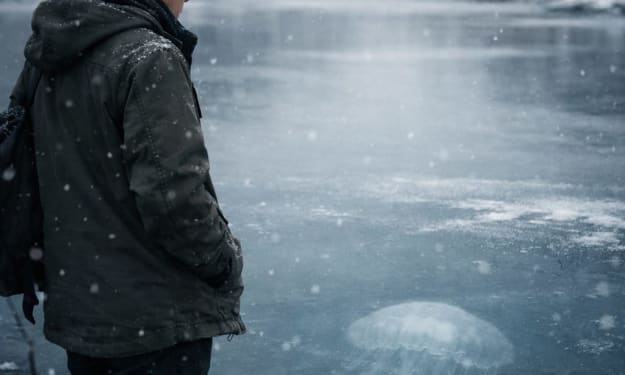
Some pain never shows itself. It doesn’t bleed. It doesn’t bruise the skin. It simply lives inside you, quietly—like something floating beneath the surface of water. Present, steady, unseen. I think I am something like that. Floating. Not because I’m light—but because sinking would mean stopping. The house was silent when I woke up that morning. Not peaceful silence. The kind that feels unfinished. My mother’s room door was closed. My father had already left for work. On the table sat a cup of tea, cold and untouched, probably left there from the night before. I had to go to school. That part of the day always felt heavier than it should have. My foot still hurt. The doctor had called it a “minor injury,” the kind that heals on its own. People love the word minor. It makes pain sound optional. Like something you can simply ignore if you try hard enough. But pain doesn’t work that way when you have to walk. “Just take the bus,” they said. Buses cost money. And money isn’t always something you have when you need it. So I walked. The air was sharp with cold. Each step sent a reminder up my leg that I wasn’t okay, even if I looked like I was. I tried not to limp. People notice weakness more than they notice pain. Cars passed. People passed. Faces buried in phones, conversations, laughter. No one asked if I was alright. And that’s the rule of the world, I think—you’re invisible until you fall. Halfway there, I stopped near a small frozen pond. The surface was quiet, almost glass-like. Beneath it, something moved slowly. A jellyfish drifted just below the ice, its soft colors muted by the water. It wasn’t swimming. It wasn’t sinking. It was simply… floating. I stood there longer than I meant to. Watching it felt strangely familiar. It moved because the water moved it. No direction of its own. No resistance. No struggle anyone could see. I thought, Maybe this is what surviving looks like when no one carries you. School was loud, but I felt distant from it. Sitting hurt. Standing hurt. Thinking hurt. My body and mind seemed to argue with each other all day. The teacher asked a question I knew the answer to. I didn’t raise my hand. Silence had become easier than speaking. When no one truly listens, words feel like wasted effort. During lunch, everyone gathered in groups. I sat near the window, staring out toward the pond again, the way light reflected off its surface. I remembered when I was younger—when my mother used to walk me to school, holding my hand tightly like she was afraid the world might take me away. Back then, the road felt shorter. Back then, pain didn’t follow me everywhere. Back then, I didn’t feel like I had to prove I deserved to exist. Time changes everything. Except the expectations. On the way home, snow began to fall. My foot had gone numb, but I kept walking. Stopping felt dangerous. Like if I paused too long, I might not start again. The sky was heavy and gray. Each breath came out like a small cloud. I thought about how strange it was that pain could feel so lonely even when you’re surrounded by people. When I reached home, the silence greeted me again. I dropped my bag and sat on the floor. That’s when the tears came—not suddenly, not dramatically. Just quietly. Like they had been waiting all day for permission. I didn’t try to stop them. People think strength is loud. They think it looks like confidence, or bravery, or winning. But sometimes strength is just continuing. Continuing to walk. Continuing to show up. Continuing to float. No one sees how heavy that can be. The next morning, my foot still hurt. But something inside me had shifted. I realized I wasn’t weak for struggling. I wasn’t broken because things were hard. I had been surviving without support, without rest, without being asked the simplest question: Are you okay? And I was still here. That mattered. Later that day, someone finally noticed. “You look tired,” they said. Not accusing. Just observant. For once, I didn’t smile automatically. “I am,” I said. The world didn’t collapse. They didn’t walk away. They just nodded—and listened. It wasn’t a solution. It didn’t fix my pain or my situation. But it reminded me of something important: Being seen doesn’t require being loud. It requires being honest—with the right people. I still smile sometimes. But now, I let it come naturally. I let it leave when it needs to. I don’t force strength anymore. I don’t pretend pain doesn’t exist just to make others comfortable. I’m learning that floating isn’t failure. Sometimes, floating is survival. And maybe that’s enough—for now.
By Inayat khan9 months ago in Humans
Love Between Two Enemies Part Seven
The Cost of Saving Her Ethan Ashford became a ghost overnight. Not officially—his name was still on buildings, still whispered in financial circles—but something fundamental had shifted. The man who once walked into rooms and bent them to his will now moved through the city like someone marked. Hunted. He felt it in the silence of unanswered calls. In the sudden politeness of former allies. In the way doors that once opened without question now hesitated. Luca DeSantis hadn’t just taken control of the narrative. He had rewritten Ethan’s identity. --- Isabella didn’t sleep. Every time she closed her eyes, she felt the cold bite of chains around her wrists, smelled oil and rust, heard Luca’s calm voice echoing in the dark. Everyone gives in. She sat curled on the couch in Ethan’s penthouse, wrapped in a blanket she didn’t remember taking. Dawn crept through the windows slowly, painfully. Ethan stood in the kitchen, staring at nothing, a mug of untouched coffee in his hand. “You should rest,” he said quietly without turning around. She laughed softly, hollow. “You first.” He didn’t respond. She watched him then—really watched him—and saw the cost already etched into his posture. The weight in his shoulders. The way his jaw tightened as if holding something back. “You didn’t save me,” she said suddenly. He turned, startled. “What?” “You traded yourself,” she continued, her voice steady but raw. “That’s not saving.” He set the mug down slowly. “You’re alive.” “For now,” she replied. “And you’re ruined.” Silence filled the space between them. Ethan met her gaze. “I’d do it again.” Her eyes burned. “That’s what scares me.” --- The fallout began within hours. Ashford Industries released a statement retracting Ethan’s accusations, citing “emotional distress” and “incomplete historical data.” The Riverside documents were labeled inconclusive. Investors relaxed. Luca’s victory was surgical. Richard Ashford returned to the spotlight the same afternoon, composed and victorious, flanked by legal counsel. Ethan watched the press conference on mute. His father looked directly into the camera and said, “My son is no longer affiliated with this company in any decision-making capacity.” Disowned. Publicly. Isabella’s chest tightened painfully. “I’m so sorry.” Ethan didn’t look away from the screen. “He chose power over blood a long time ago.” “And Luca?” she asked quietly. Ethan’s lips curved into something sharp. “He chose me as an example.” --- Three days later, Isabella returned to the Moretti estate. Not because she wanted to. Because Luca demanded it. The house felt different now—less like a home, more like a cage polished to perfection. Her father barely spoke to her, his eyes avoiding hers as if she were a liability he didn’t know how to manage. Luca arrived that evening like a conqueror. “You look well,” he said casually, pouring himself a drink. She didn’t sit. “You got what you wanted.” “For now,” he replied. “But control requires maintenance.” She stared at him. “You used me.” “Yes,” he said simply. “And you used him.” Her breath hitched. “No.” “You knew he would sacrifice himself,” Luca continued calmly. “You let him.” The words struck deeper than she expected. “I didn’t ask him to,” she said. “But you benefited,” Luca replied. “That’s how this world works.” He stepped closer. “You’re free now. No chains. No warehouses. All it cost was Ethan Ashford’s future.” She looked at him with pure hatred. “You’ll never own me.” Luca smiled faintly. “Everyone belongs to something. You just haven’t accepted what owns you yet.” --- Ethan’s days blurred together. He moved out of the penthouse—too visible, too vulnerable—and into a smaller apartment under a name that wasn’t his. He met quietly with contacts his father never knew about. People who didn’t care about reputations. People who dealt in leverage. At night, he replayed the moment he agreed to Luca’s terms. The sound of chains unlocking. Isabella collapsing into his arms. He would make the same choice again. But the cost was accumulating. One evening, a knock came at his door. He froze, hand instinctively reaching for the drawer beside the couch. “Ethan,” a familiar voice called softly. “It’s me.” Isabella. He opened the door and she stepped inside, eyes searching his face as if to confirm he was real. “You shouldn’t be here,” he said quietly. “I know,” she replied. “I don’t care.” She crossed the room and stood in front of him, close enough that he could smell her shampoo, feel the warmth she carried. “I can’t stay away,” she whispered. He closed his eyes briefly. “Luca is watching you.” “I’m watching you,” she said. “And you’re disappearing.” He opened his eyes. “That’s safer for you.” She shook her head fiercely. “Don’t decide that for me.” Silence stretched between them, charged and fragile. “You’re the only thing he can’t control,” she said softly. “That’s why he’s trying to break you.” Ethan swallowed. “And he’s succeeding.” She stepped closer, pressing her forehead to his chest. “Then let me help you rebuild.” He rested his chin against her hair, breathing her in like oxygen. “You don’t know what you’re asking.” “Yes,” she replied. “I do.” --- Luca made his next move two days later. The photos surfaced online just before midnight. Blurry. Strategically framed. Ethan entering Isabella’s building. Isabella leaving his apartment hours later. The headline was ruthless: MORETTI HEIRESS CONTINUES AFFAIR WITH DISGRACED ASHFORD HEIR By morning, Isabella was summoned by her father. “This ends now,” he said coldly, slamming his tablet onto the desk. “You will publicly denounce him.” She stared at the screen, then at her father. “Or what?” “Or you lose everything,” he snapped. “Your inheritance. Your name. Your protection.” She laughed bitterly. “You already sold my protection.” He stood abruptly. “Think carefully.” She did. For exactly three seconds. “I won’t,” she said. “Not anymore.” --- Ethan found out from the news. ISABELLA MORETTI CUT OFF FROM FAMILY AFTER REFUSING PUBLIC STATEMENT His heart slammed painfully. She arrived at his apartment an hour later with one suitcase. “I guess I’m homeless,” she said lightly. He pulled her into his arms without a word. They stood there for a long time, holding on to each other like survivors of the same storm. “This is war,” Isabella said quietly. Ethan nodded. “Not the kind our families taught us.” She looked up at him. “Then teach me yours.” His eyes darkened with resolve. “It won’t be clean.” “I don’t want clean,” she replied. “I want free.” --- That night, Luca watched the same news with interest. He set his phone down slowly and smiled. “Good,” he murmured to himself. “Now they have nothing left to lose.” And that, he knew, was when people became truly dangerous. In Part Eight: “Nothing Left to Lose” Ethan and Isabella go underground together. A hidden ally resurfaces with explosive evidence. And Luca makes a mistake—underestimating love sharpened by loss… When everything is taken, what remains becomes a weapon.
By Ahmed aldeabella9 months ago in Humans
Love Between Two Enemies Part Two
Lines Drawn in Blood --- PART TWO – LINES DRAWN IN BLOOD Some wars were loud. They came with shouting, gunfire, headlines splashed across newspapers. Others were quieter—waged in boardrooms, whispered threats, contracts signed in ink that carried more poison than blood. The war between the Ashfords and the Morettis belonged to the second kind. And Ethan Ashford was standing directly in its path. --- The morning after the gala, New York looked deceptively peaceful. Sunlight poured through the floor-to-ceiling windows of Ethan’s penthouse, glinting off glass towers and moving traffic far below. The city was alive, indifferent, unaware that generations of hatred had shifted slightly off balance the night before. Ethan stood barefoot near the window, coffee growing cold in his hand. He hadn’t slept. Every time he closed his eyes, he saw her. Isabella Moretti. Her voice—steady, intelligent. Her eyes—dark, guarded, alive with something that challenged him. The way she’d said “This is a mistake”… and stayed anyway. He exhaled slowly. “This can’t happen,” he muttered to himself. His phone buzzed. FATHER. Ethan didn’t answer immediately. He already knew why his father was calling. News traveled fast in their world—especially bad news. On the third buzz, he answered. “You embarrassed this family last night,” his father said without greeting. Ethan closed his eyes. “Good morning to you too.” “Don’t get clever,” Richard Ashford snapped. “I saw the photos.” Photos. Of course. “There are cameras everywhere,” his father continued. “You were seen talking to her.” Ethan’s jaw tightened. “Talking is not a crime.” “To a Moretti, it is.” Silence stretched between them. “Stay away from her,” his father said finally. “This is not a request.” The line went dead. Ethan stared at the phone. For the first time in his life, obedience didn’t come naturally. --- Across the city, Isabella Moretti was fighting her own battle. The Moretti estate felt colder that morning. The marble halls echoed with tension, and every glance her family threw her way carried accusation. Her mother watched her over breakfast, worry etched into her face. Her younger brother avoided her eyes completely. Her father didn’t sit down. “You humiliated us,” he said, standing at the head of the table like a judge. Isabella set her fork down carefully. “By speaking?” “By forgetting who you are,” he replied sharply. “And what they did to us.” She met his gaze. “What exactly did they do, Father?” The question landed harder than a slap. His eyes darkened. “Enough.” “No,” Isabella pressed, her voice calm but firm. “You’ve told me the story my entire life—but never shown me proof.” His hand slammed onto the table. “You will not question me.” She rose slowly. “Then you will not control me.” The room froze. That was when he delivered the real blow. “You will marry Luca DeSantis.” Her breath caught. “What?” “The engagement will be announced next week,” he said coldly. “The DeSantis alliance will protect us.” Protect us—from the Ashfords, he didn’t need to say. Isabella’s chest tightened painfully. “You can’t do this.” “I already have.” --- Luca DeSantis was everything Isabella feared. Polished. Calculated. Smiling without warmth. He arrived that evening with flowers and promises, kissing her hand like she was already owned. She smiled back, playing the role expected of her, while her mind screamed. Because somewhere deep inside, uninvited and dangerous, lived the memory of Ethan Ashford. --- Three days later, fate struck again. Ethan hadn’t planned to be at the municipal archives. He hadn’t planned on digging through dusty records and forgotten contracts. But something had been gnawing at him. A memory from childhood—his father yelling, lawyers arguing, a single word repeated over and over: Riverside. The Ashfords had acquired Riverside land decades ago. The Morettis had claimed it was stolen. Ethan pulled a thick folder free and began to read. And then his blood ran cold. There it was. A clause buried deep within an old joint venture contract—signed by both families. If evidence surfaced proving unethical acquisition, both families would lose the land. To the city. Permanently. Mutual destruction. “No,” Ethan whispered. The truth was worse than hatred. It was shared guilt. --- He didn’t know why he went to her. He only knew he couldn’t not. That night, Isabella slipped away from a suffocating dinner and found herself standing in a quiet private garden behind a historic townhouse. And then she saw him. Ethan stepped from the shadows like a secret she’d been trying to bury. “You shouldn’t be here,” she said immediately. “I know.” “You really don’t.” “I do,” he replied. “And I came anyway.” Her heart betrayed her, pounding hard. “Why?” she demanded. “Because we’re both being lied to.” That stopped her. He told her everything. About the contract. The clause. The truth no one wanted exposed. She listened in silence, her face pale, her hands clenched. When he finished, she whispered, “They ruined each other… and blamed the other side.” “Yes.” A laugh escaped her—bitter, broken. “Our families are monsters.” “Maybe,” Ethan said quietly. “But we don’t have to be.” She looked at him then—not as an enemy, not as temptation—but as an ally. And that was far more dangerous. --- Their meetings became secret. Late nights. Hidden corners of the city. Conversations layered with tension and restraint. They argued. They laughed. They uncovered pieces of the past together. And slowly, against all logic, something intimate began to form. One night, standing too close, breathing the same air, Ethan reached out—then stopped himself. “This is a bad idea,” he said hoarsely. Isabella’s voice was barely a whisper. “Then why does it feel like the only honest thing in my life?” He didn’t answer. He kissed her. The world tilted. It wasn’t gentle. It wasn’t careful. It was hunger restrained for too long. When they broke apart, breathless and shaken, reality rushed back in. “This changes everything,” she said. “Yes,” he agreed. “And it might destroy us.” --- The next morning, headlines exploded. ASHFORD INDUSTRIES UNDER INVESTIGATION Someone had leaked partial information. Someone wanted war. And that evening, Isabella received a ring she hadn’t agreed to wear. The engagement announcement was scheduled. The trap was closing. In Part Three: “The Engagement Trap” Isabella is forced to stand beside a man she doesn’t love. Ethan is pushed to choose between loyalty and truth. And when the past finally speaks through an unexpected witness… One family will strike first.
By Ahmed aldeabella9 months ago in Humans
The School System
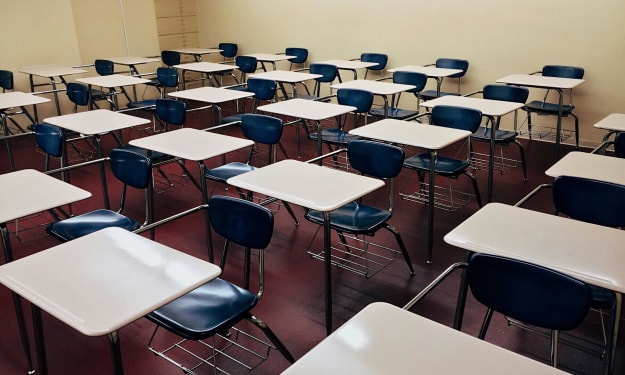
The school system does not fail loudly. It fails politely. It still rings its bells, prints its worksheets, uploads its timetables and holds its assemblies about well-being and future pathways. From the outside, it looks functional. Even progressive. New acronyms appear every few years. New frameworks. New strategic plans featuring pastel logos and mission statements about innovation.
By Emilie Turner9 months ago in Humans