family
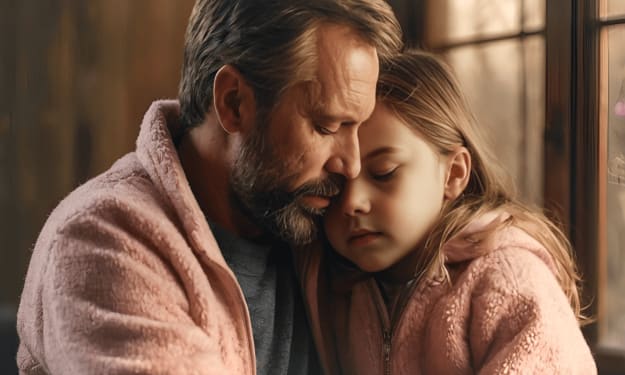
Family unites us; but it's also a challenge. All about fighting to stay together, and loving every moment of it.
Why Honesty is the Cornerstone of Healthy Relationships
Honesty is often touted as the foundation of any healthy relationship. It’s more than just telling the truth; it involves openness, transparency, and integrity between partners. When both individuals in a relationship commit to being honest, it creates a safe space for love to flourish. This article will explore the vital role of honesty in relationships, its benefits, and how to cultivate it effectively.
By Abdul Jamil Nasir2 years ago in Humans
Can Diet Affect Cancer Risk?
One of the most important points of the pH miracle diet is that cancer can be prevented and reversed by applying the principles of the diet. Although these statements have caused some controversy in the world of health and wellness, many people credit the use of the pH miracle diet in reversing their cancer and improving their overall level of health.
By Alexey Sabadyr2 years ago in Humans
First Boyfriend Advice for 13-Year-Olds: A Guide for Parents and Teens
Teenage relationships can be hard to figure out and can make you feel many different things. Having a first boyfriend can be a big deal for 13-year-olds, but they also need their parents' help, understanding, and direction during this time. This in-depth guide has useful tips for both kids and parents on how to talk about a first boyfriend.
By Teenage Parenting2 years ago in Humans
Can Alkaline Foods Slow Aging?
When many people hear the word “diet” they immediately think of weight loss. The focus on thinness in our society has equated this word with shedding a few pounds. However, diet really means any food or drinks you put into your body. The diet that you consume has a profound impact on your overall health. The pH miracle diet is not just a diet for weight loss. In fact, the first volume of this popular series was dedicated to health in general. The original pH miracle diet book focuses on many issues, including aging.
By Alexey Sabadyr2 years ago in Humans
Key Steps to Building Trust in Your Relationship: A Comprehensive Guide
Building trust in a relationship is fundamental to its success. Trust fosters security, intimacy, and commitment, allowing partners to feel safe and valued. However, trust doesn’t develop overnight; it requires consistent effort, open communication, and mutual respect. This comprehensive guide will explore key steps to building trust in your relationship.
By Abdul Jamil Nasir2 years ago in Humans
When a Man Falls to the Streets, His Worth is Not Gone...!!
When a Man Falls to the Streets, His Worth is Not Gone...!! In the journey of life, people often find themselves at various crossroads. Some rise to great heights, while others, despite their best efforts, find themselves brought low, sometimes even to the streets. There is a common saying: "When a man falls to the streets, his worth is gone." However, this statement reflects a shallow understanding of human existence. True value is not determined by one’s social position or wealth; rather, it lies in the strength of one’s spirit, the depth of one’s struggle, and the perseverance to rise again. Let’s think about this for a moment: when a person ends up on the streets, it is rarely because they have chosen that path. In most cases, it’s a culmination of events—personal loss, failed dreams, or circumstances beyond their control—that brings them to this point. It is often a combination of betrayal, unfortunate circumstances, or sheer misfortune. A person may lose their job, their family, or their health, and with these, they may lose their place in society. Society, in its often cruel and judgmental nature, tends to forget about them, as if their existence has lost its value. But is this really true? Is a person’s worth only defined by their material wealth or social standing? Is their life reduced to nothing when they are seen on the streets? No, the reality is far more complex and deeply human. Take, for instance, the story of Charles, a man who once worked as a successful banker. He had a stable job, a family, and a secure life. But after a series of bad decisions and unfortunate events, Charles lost everything—his job, his house, and eventually, his family. He found himself living on the streets of a bustling city, with nothing but the clothes on his back and a tattered blanket for warmth. People passed by him every day, many of them casting pitying looks, some even ignoring his presence entirely. The world had abandoned him, and it seemed as though his life had lost all value. However, what most people failed to see was the internal struggle that Charles was enduring. The man on the street was not simply a symbol of failure; he was a person—a human being with hopes, dreams, and the desire to rebuild his life. His spirit had been battered, but it was not broken. Charles spent days searching for jobs, doing odd jobs, and slowly rebuilding his life from the ground up. It took time, it took patience, and most of all, it took resilience. His worth was never gone; it was merely obscured by the external circumstances that he was facing. The true value of a person cannot be measured by the temporary setbacks they face in life. No one is immune to hardship, and everyone, at some point, may find themselves knocked down. But the question is: how do we rise again? The real measure of a person’s worth is found in their ability to endure, to learn, to grow, and to rise from the ashes of their challenges. A person may fall to the streets, but that is not where their story ends. Another example is that of Sara, a young woman who grew up in a small, humble town. She was an exceptional student, known for her intelligence and drive. Sara had big dreams—dreams of becoming a doctor and helping those in need. She worked tirelessly throughout her education, overcoming countless obstacles along the way. However, life took an unexpected turn when she lost both her parents in a tragic accident. Overwhelmed by grief and financial instability, Sara struggled to maintain her studies. After a failed attempt to support herself through various part-time jobs, she ended up on the streets, homeless and broken. Yet, despite the overwhelming challenges she faced, Sara never lost sight of her dreams. Her time on the streets became a temporary chapter in her life, not the defining one. She sought help, joined a community of people who supported her, and slowly, over time, she regained her footing. Today, Sara is a renowned doctor, having completed her medical education against all odds. Her journey from the streets to success is a testament to the fact that no matter how low we may fall, our worth remains intact as long as we have the strength to rise again. What we need to understand is that a person’s worth is not something that can be discarded when they face misfortune. It is not something that vanishes when they lose their job, home, or wealth. True worth lies in the values that a person holds—their integrity, their character, and their resilience. It lies in their capacity for love, compassion, and the strength to keep going, no matter how hard life gets. Take the example of Mahatma Gandhi, a man who led India to independence. Gandhi was born into a well-respected family, and he was well-educated. But even he faced failure and rejection before becoming the iconic leader that the world remembers today. In his early years, he struggled with self-doubt, failed in his attempt to become a lawyer, and experienced the sting of racial discrimination in South Africa. He could have easily been swept into the currents of despair and self-pity, but instead, he used those hardships to fuel his passion for justice and equality. His worth was not defined by the struggles he faced, but by the compassion, integrity, and leadership he embodied in the face of adversity. The same applies to anyone who faces hardship in life. The key is to recognize that the road may be long, and the journey may be hard, but that does not diminish one’s worth. Whether on the streets or in a high-rise office, a person’s value is not measured by their circumstances but by their character, their willingness to rise, and their commitment to keeping the light of hope alive even when everything seems dark. In conclusion, when a man falls to the streets, his worth is not gone. His worth is embedded in his very essence—the determination to rise again, to fight through adversity, and to learn from every failure. It is not his situation that defines him, but his response to it. Life will test us all at various points, but it is our ability to endure, learn, and continue the fight that truly reveals our value. So, let us never forget that the man on the streets is no less valuable than the one in the highest tower. For the strength of a human spirit is not defined by external circumstances, but by the will to keep moving forward, no matter how many times we fall.
By Dipak Pawar2 years ago in Humans
A Vision of Love. AI-Generated.
Emily was born blind. Her smile, however, could light up the darkest corners of the world. Her father, David, was her anchor—her guide in a world she could only sense through sounds, textures, and smells. Together, they lived in a small, close-knit town with life simple but love abundant. David had told stories of the world to Emily, who had never known her mother—when she was just a baby. Day after day, he explained the world to her in vivid detail—the colour of autumn leaves on fire, the softness of snowflakes on bare skin, and the glorious gleam of morning sun. Emily listened intently, painting the colours in her mind's eye. "Daddy," she often asked, "Do you think I'll ever see what you see? The colours, the trees, the sky? Your face?" David would pause, his heart heavy with both love and sorrow. "Emily," he'd say, "you already see more than most people. But I promise, one day, you'll see it all." David was not one to give empty promises. That night, after Emily had retired to bed, he sat at the kitchen table and let her words keep turning in his head. He looked out into the night and up at the stars shining brightly into the sky, resolute. If there was a glimmer of hope, then he would find a way for Emily to see. Over the weeks that followed, David really began his research. He consulted doctors in other cities and even went online to reach out to the experts. One day, he came across a breakthrough procedure that was said to help restore sight via a corneal transplant. Suddenly, there was hope in his heart. But when he found out how much it cost, his heart dropped to the pit. It cost a lot for surgery and the donor process-away for David, who was just a mechanic in a small town. Still, David was determined. He sold his tools, mortgaged their home, and even gave up his cherished truck—the one piece of his late wife he had held onto. But even after all that, the money wasn't enough. When David saw the specialist, the doctor presented an option. "If you're a match," the doctor said hesitantly, "you could donate your cornea. But you need to understand—you'll lose your sight permanently." David didn't hesitate. "Take mine," he said firmly. The doctor looked at him astonished. "Are you sure? This isn't something you can undo." David's voice didn't waver. "I've seen the world. She hasn't. Let her see." He made no mention of this plan to Emily because he could not stand the burden of her anxiety or guilt. He informed her instead that a miracle was working in motion and soon she would see. The surgery day arrived. Emily was anxious yet excited. She clutched David's hand as the nurses wheeled her into the operating room. David whispered, "When you wake up, the first thing you will see is everything I've ever told you about. Remember the sunsets, the flowers, the stars? They're waiting for you." Emily's surgery was a success. When she opened her eyes for the first time, her world was bright and colorful. She gazed upon the hospital room, the colourful flowers on the windowsill, and the sunshine threaded through the curtains as tears streamed down her face. "Daddy?" She called out her voice, trembling, "Where are you?" David's footsteps were unsteady, slow steps as he approached her bed. Emily turned toward him and then saw him for the first time: the smile that was kind; the wrinkles told stories of sacrifice and love; and the bandages that covered his eyes. "Daddy, what happened?" she whispered. David knelt beside her bed, taking her hands in his. "Do you see me, Emily? Emily nodded, tears falling freely. "I see you, Daddy. But why can't you see me?" David smiled, though his bandaged eyes hid the depth of his emotions. "Because I've already seen the most beautiful thing in my life—your happiness. That's enough for me." Emily broke down, hugging him tightly. "You gave me your sight?" David's voice was soft but steady. "It was always yours, sweetheart. You deserve to see the world." And from that moment onwards, Emily became David's guide as well. She spoke of the world to him with the passion and detail he once used to speak unto her. Bound by love that was transcendent of sight, they navigated the web of life together. Emily never took her father's sacrifice for granted. Inspired by his selflessness, she became a champion for the visually impaired, creating awareness and raising funds for those who could not afford to obtain better medication and drugs. David, though blind, saw the world more clearly than ever through Emily’s descriptions and achievements. He would sit on the porch, listening to her talk about the beauty of the sunset, knowing he had given her a gift far greater than sight—the gift of love. For Emily and David, vision wasn’t about eyes but about seeing the world through each other’s hearts.
By Papri Paul 2 years ago in Humans
Dear Estranged
Dear Estranged loved ones, As much as it pains me to talk about it, I have cried too many tears that I feel the life has been taken right out of my eyes. You treated me differently and judged me in my times of need. However, all is not only forgiven, but I would like to express my gratitude.
By Sid Aaron Hirji2 years ago in Humans
Dear Mother Mary
Dear Mary, If you’re reading this letter, my Dad, and your friend of almost 60 years, is dead. You said it was unfair that you got to spend more time with him than I did. Or that it didn’t matter in terms of our grief. To know him for a minute, a decade, or a lifetime, was to be forever moved by him. Moved by a man that would move mountains, and give you, or any stranger passing by, the shirt off his back. You were there with me when his shirts no longer fit, and could no longer give, but was forced to receive. You were there for me when that man had once again become a boy. When the cancer had riddled his brain, rendering him but a shell of his former self. When you could hold his frail frame close to yours, and you could hear the ocean.
By E.K. Daniels2 years ago in Humans