family
Family unites us; but it's also a challenge. All about fighting to stay together, and loving every moment of it.
Something Is Better Than Nothing
I sat on the worn-out bench behind the old community library, watching the clouds move slowly across the pale blue sky. The world felt unusually quiet that afternoon—like it was holding its breath, waiting for something to happen. Maybe that’s why I finally broke down and cried.
By Salman khanabout a year ago in Humans
The Man Who Collected Whispers
No one knew his name. In the city of lights and never-ending noise, he drifted like smoke — unnoticed, unremarkable. Every morning, he sat on the same bench in the corner of Willow Park with a small leather notebook and a fountain pen older than the trees.
By VoiceWithinabout a year ago in Humans
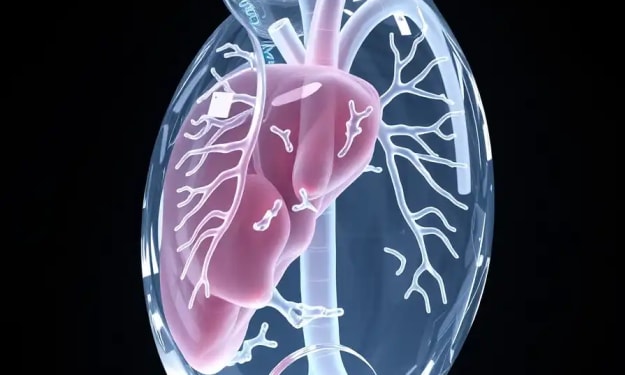
"Your Liver Works Hard — These 7 Habits Help It Recover
The liver is one of the most hardworking organs in your body. It filters toxins, processes nutrients, regulates blood sugar, supports digestion, and stores energy. But with modern diets, pollution, alcohol, and medications, your liver can get overworked.
By DR. Allama iqbalabout a year ago in Humans
The Scent of Tea: A Simple Girl’s Extraordinary Love Story
I was tired—tired of the city, the chaos, the constant race toward something that never felt real. The skyscrapers, the rush hour, the glowing screens, the curated conversations—after a while, it all lost meaning. I had spent years in that loop, chasing progress, chasing promotions, chasing approval.
By Ameer Gullabout a year ago in Humans
The Silence She Left Behind
Daniel was a man of few words and faithful routines. A high school literature teacher in a small coastal town, he lived a quiet, content life with his wife, Clara, and their daughter Lily, who was barely five. They didn’t have much—no beach house, no luxury vacations, no fancy cars. But in their little rented apartment near the old lighthouse, they had warmth, laughter, and bedtime stories.
By Ameer Gullabout a year ago in Humans
When Hearts Choose Death
John Stevens was a young man with a quiet strength. Raised in a small town filled with old traditions, he knew exactly what his family expected from him. His father, Mr. Stevens, was a stern but loving man who had worked hard to build the family’s reputation. He wanted John to follow in his footsteps—a stable job, a respectable marriage, and a life that upheld the family’s honor.
By Ameer Gullabout a year ago in Humans
Dear sperm donor that pussied out when it was time to be a real man,
Dear sperm donor that pussied out when it was time to be a real man, I’m told that I can't speak my mind to you because you would lay your hands on her…. Again. But heres the thing this aint speaking, so let me address you little boy. You broke something i care about and i deal with the fall out from your actions each shift. My job is to put fries in the bag and make a few burgers and drinks but ask anyone they know what my unpaid job is. And yea i know I’ll be told “its not your job and its not your responsibility,” but son you broke something i care about. You broke her heart. And that just dont sit right with me. I’ve seen to much pain and sadness come from her gender. Its not my fight but i’ll give you a war if that is what i need to prove that mindset your trying to convince her is right is actually wrong and nothing more then a fake truth from a narcissist.
By josh napperabout a year ago in Humans
What is news 🗞️. AI-Generated.
Sure! Here’s an expanded version of the explanation, roughly around 1000 words, diving deeper into the concept of news and its impact on society. --- ### **What is News? Understanding Its Role and Impact in Today's World** In today’s world, news plays a pivotal role in shaping our understanding of the world around us. From the latest political developments to scientific breakthroughs, from celebrity gossip to sports updates, news influences every facet of modern life. But what exactly is news? How does it impact our daily lives, and why is it so important for society? #### **The Definition and Evolution of News** At its core, news is information about current events or developments that are significant or relevant to the public. It serves as a medium to inform people about what is happening around them, both locally and globally. News can take many forms—stories, reports, features, and updates—and can be delivered through various channels like television, newspapers, radio, online platforms, and even social media. The concept of news has existed for centuries, although its form and the speed at which it is delivered have evolved dramatically over time. Ancient civilizations relied on oral tradition or public announcements to spread news. As societies developed, so did methods of communication. In ancient Rome, for example, the Acta Diurna, or "Daily Acts," was a form of newspaper, posted in public places, to keep citizens informed about state matters and decrees. The invention of the printing press in the 15th century was one of the most important milestones in the history of news. It revolutionized the distribution of information, making it easier and faster to print and share news. By the 19th century, newspapers became a significant part of people's lives, with large publishing houses producing daily editions that covered national and international events. With the advent of radio in the 20th century, news broadcasting reached even greater heights, allowing people to hear live updates on important events as they unfolded. This was followed by the rise of television, which not only brought news into people's homes but also added visual elements, making it more accessible and engaging. In recent decades, the digital revolution has brought about another seismic shift in how news is consumed. The internet, social media, and smartphones have made news available at any time and from any place. The speed of information exchange has increased exponentially, allowing people to stay up-to-date on breaking news from across the globe within minutes. #### **The Role and Purpose of News** The primary role of news is to inform the public. But beyond just reporting facts, news helps individuals and communities make informed decisions. It provides a framework for understanding the world, offering context, analysis, and commentary. News serves multiple purposes: 1. **Informed Citizenship**: In democratic societies, a well-informed public is essential for making decisions that impact society. By keeping citizens updated on political developments, social issues, and governmental actions, news allows people to participate meaningfully in civic life. 2. **Accountability and Transparency**: News plays a vital role in holding governments, corporations, and individuals accountable for their actions. Investigative journalism, in particular, exposes corruption, injustice, and unethical behavior. It ensures that those in power are held to account by the public. 3. **Social Cohesion**: By reporting on events that shape collective experiences—like major sporting events, natural disasters, or cultural milestones—news helps foster a sense of shared experience. It brings people together around common interests, fostering a sense of community. 4. **Education**: News is a powerful educational tool. Through feature stories, documentaries, and in-depth analyses, news outlets teach people about complex topics ranging from science and technology to history and art. News helps build a more informed society, where people can understand and engage with complex issues. 5. **Entertainment and Leisure**: In addition to being informative, news can also be entertaining. Entertainment news, celebrity gossip, sports updates, and light-hearted stories provide a form of escapism, helping people unwind and stay connected to popular culture. #### **The Evolution of News Consumption** The way people consume news has changed dramatically in recent years. Traditionally, people would rely on newspapers, radio, and television to stay informed. However, the rise of the internet and digital media has disrupted these traditional methods. Today, a significant portion of the population gets its news from online platforms, including social media, websites, and mobile apps. Social media platforms, such as Twitter, Facebook, and Instagram, have become primary sources of news for many people. News can go viral in a matter of minutes, and individuals can share their opinions and reactions with a global audience. However, this also raises concerns about misinformation and the spread of false narratives. The speed of news on social media sometimes compromises accuracy, as rumors and fake news can spread quickly, often without proper fact-checking. The digital age has also ushered in the era of citizen journalism. With smartphones equipped with cameras and social media platforms allowing instant sharing, anyone can now report on events as they happen. This has democratized news reporting, but it has also led to a decrease in traditional journalistic standards in some cases, as amateur reporters may not always verify information before publishing it. Moreover, personalized news is becoming more common. Algorithms track a user's preferences and suggest news stories based on past reading habits. While this allows people to receive news that is most relevant to them, it also raises concerns about creating echo chambers, where individuals are only exposed to viewpoints that align with their existing beliefs. #### **The Impact of News on Society** News has a profound impact on society, both positive and negative. On the one hand, news is a tool for empowering individuals and communities. It opens up dialogue on important issues, facilitates social change, and fosters understanding among different groups. For example, the coverage of the Civil Rights Movement in the 1960s or the global awareness of climate change in recent years shows how news can bring attention to social issues and inspire collective action. However, there are also negative aspects to the role of news. The constant bombardment of information, especially in the digital age, can lead to information overload. People can become desensitized to important events or overwhelmed by the sheer volume of news stories. This can result in what some call "news fatigue," where individuals disengage from consuming news altogether, feeling that it is too much to process. Additionally, the sensationalization of news has become a growing concern. In an age where clicks, views, and social shares drive revenue, news outlets sometimes prioritize stories that are designed to elicit strong emotional reactions, such as outrage or fear. This can distort public perception and reduce the focus on important, but less "clickable," issues. #### **The Future of News** The future of news seems to be ever-changing, with technology playing a major role in shaping how information is disseminated. With advancements in artificial intelligence and machine learning, we may soon see algorithms that can tailor news even more precisely to individual preferences. However, this also poses challenges regarding diversity of perspectives and the risk of reinforcing biases. Another exciting development is the potential for immersive news experiences through virtual and augmented reality. These technologies could allow people to "experience" news in ways that were previously unimaginable—by placing themselves in the middle of events, such as attending a live rally or exploring a disaster zone. Despite the rapid changes in the news landscape, the core mission of news remains unchanged: to inform, educate, and engage the public. The role of news in society will continue to evolve, but its importance will remain central to democracy, culture, and human progress. #### **Conclusion** News is more than just a form of communication—it is a critical tool that shapes the way we understand and interact with the world. It educates, empowers, entertains, and holds individuals and institutions accountable. As the landscape of news continues to evolve, it is important to remember the responsibility that comes with it. Whether consumed on a smartphone, a television, or in print, news will continue to be a central element of society, influencing the way we think, act, and relate to one another in an ever-changing world. --- This version provides an in-depth exploration of the concept of news, its historical development, its current role, and its impact on society, all while sticking to the general theme. Let me know if you'd like to adjust or focus on any specific parts!
By Khizar khanabout a year ago in Humans
I Found Myself in the Silence: What Quitting the Noise Taught Me
I used to think that silence was empty. That if I wasn’t talking, listening, or watching something, I wasn’t really alive. The constant buzz of social media, the relentless scroll of news, the endless chatter of people, podcasts, playlists—it all became the wallpaper of my life. Noise wasn’t just around me; it was inside me. And I didn’t know how much it was costing me until I let it go.
By Salman khanabout a year ago in Humans