family
Family unites us; but it's also a challenge. All about fighting to stay together, and loving every moment of it.
Ben Askren’s Heart Stopped Four Times, What Really Happened and How He Survived
A Life Nearly Lost, a Fighter’s Spirit Unbroken On July 9, 2025, former MMA and wrestling champion Ben Askren, 40, shared his first public update since undergoing a double lung transplant. In an emotional Instagram video from his hospital bed, he described a terrifying ordeal where he said he “died four times,” with his heart stopping for about 20 seconds on each occasion.
By Bevy Osuosabout a year ago in Humans
How I Learned to Grieve Someone Still Alive
I never thought it was possible to mourn someone who's still alive - until my younger brother changed in ways I never imagined. Not through accident or disability, but through emotional disconnection, addiction and slow fading of the person I once knew.
By MelCreatesabout a year ago in Humans
Aries Woman and Virgo Man Compatibility Score. AI-Generated.
When the bold and adventurous Aries woman meets the calm and analytical Virgo man, sparks may fly—but whether they ignite a lasting flame or fizzle out depends on how well they can embrace each other’s differences. This pairing is often marked by contrasting energies, but if both partners are willing to compromise and learn from one another, a stable and stimulating relationship is possible.
By Inspire and Funabout a year ago in Humans
Breaking up with Cancer. Top Story - July 2025.
Dear Endometrial Adenocarcinoma, I hate you. With a passion. You have taken so much from me. I was worried that you were going to take my life. If I hadn't had previous surgery from the first time we were "together", I would have been in stage three cancer. I was ready to take you with me to the very end.
By Jessie Lynn Nelsonabout a year ago in Humans
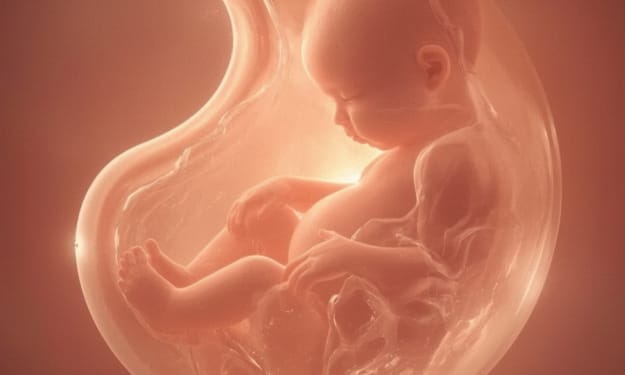
From a Single Cell: The Journey of Life
In the soft silence of a warm womb, where no light reaches and no sound disturbs, a miracle begins quietly. It starts with a single cell — a zygote. The moment of union between a mother’s egg and a father’s sperm sparks an extraordinary journey. From this tiny beginning, smaller than a grain of sand, a new life will slowly form — full of thoughts, dreams, and laughter yet to come. The story of the zygote starts at conception. Deep within the fallopian tube, the sperm meets the egg, each carrying half the genetic instructions of a human being. In a blink of biological brilliance, they merge — forming the zygote, a complete cell with 46 chromosomes. The blueprint of life is now ready. The zygote knows its task: to divide, grow, and become someone unique. Only a few hours later, the zygote begins its first division, becoming two cells, then four, then eight. This cluster of multiplying cells travels down the fallopian tube toward the uterus — a journey of nearly a week. Each division is perfectly planned, coded deep in its DNA, like a song it was born knowing how to sing. By the time it reaches the womb, it is a blastocyst — a hollow ball of cells, ready to settle in its home for the next nine months. Once nestled in the uterine lining, the blastocyst begins the next phase: implantation. It burrows gently into the thick, nourishing walls of the uterus. Some cells will become the placenta, the lifeline between mother and child. Others will become the embryo — the early form of a baby. Week by week, change happens quickly. By week 3, the cells form three distinct layers — each destined to become parts of the body. One layer will become the nervous system and skin, another the muscles and bones, and the last the organs. The heart, no larger than a poppy seed, begins to beat around week 5 — a tiny rhythm, fast and strong, announcing the presence of life. By week 6, small buds appear — arms and legs in their earliest form. Eyes and ears start to take shape, though the embryo is still less than an inch long. Inside, organs begin to grow — the liver, kidneys, and intestines all finding their place. Tiny fingers and toes begin to separate, moving from paddle-like shapes to the recognizable form of hands and feet. By the end of the 8th week, the embryo is now called a fetus. The fetus now looks more human. The face has a nose, lips, and even eyelids. The brain grows rapidly, sending signals to twitch muscles and flex joints. Though the mother may not feel it yet, the baby is already moving — shifting in its watery world, reacting to touch, floating peacefully in amniotic fluid. As weeks pass, the fetus becomes stronger and more complex. The heartbeat is now easy to detect. The fingers curl, and the toes wiggle. At around 12 weeks, the fetus can suck its thumb, swallow, and make facial expressions. By 16 weeks, the mother might feel the first flutter — a gentle reminder that she is never alone now.
By Ikhtisham Hayatabout a year ago in Humans
The Window That Never Closed
I was thirteen when I noticed the window in our living room never closed fully. It wasn’t broken—it just stopped an inch short, letting the wind slip through like a secret. Mom used to put a thick velvet curtain over it, tucking it tightly as if she could shut out the cold and the world together. But I’d always pull it open the moment she left the room. I wanted to feel the wind. I needed to.
By Abuzar khanabout a year ago in Humans