fact or fiction
Is it a fact or is it merely fiction? Fact or Fiction explores relationship myths and truths to get your head out of the clouds and back into romantic reality.
Breakup Recovery Blueprint: Science-Backed Ways to Heal Your Heart (Without Losing Yourself)
Have you ever felt like a grand piano fell on your chest during a breakup? You are human, not dramatic. Your personality, your routines, and even your sleep can be disrupted by romantic endings. The good news is that there is no guesswork involved in mending.
By Milan Milicabout a year ago in Humans
The Unsent Message
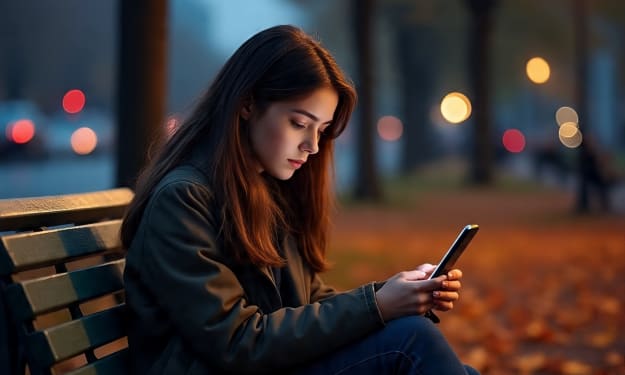
The Unsent Message The glow of her phone illuminated her face in the dim light of her bedroom. Emma stared at the screen, her thumb hovering over the “Send” button. She had typed it, deleted it, retyped it, and paused again—frozen by a cocktail of fear, hope, and uncertainty. The words were simple: I miss you more than I thought I ever could. But in the silence of the night, those words felt monumental. It had been six months since James had moved to another city for work. Six months since their last long conversation. Six months since the last time he laughed at her terrible jokes in person. Life had pushed them apart, not with malice, but with necessity. And yet, the pull in her chest every time she saw his name in her contacts reminded her that some connections didn’t fade so easily. Emma swiped the message away, leaving it unsent. She couldn’t bring herself to hit send. What if he had moved on? What if he read the words and felt the same way—and that would hurt too? The weight of possibilities pressed on her like a stone. So she kept it, a private confession that existed in a digital purgatory, neither sent nor forgotten. Her phone buzzed suddenly. A notification from James: “Hey, how’s life over there? Haven’t heard from you in a while.” Her heart skipped. She opened the conversation, her thumb trembling. She could reply with casual words, masking the storm inside her. Or… she could send the message she had been sitting on, the message that carried every thought and every fear she had bottled up. She typed, Hey, I’m okay. Just busy with work and life. Then deleted it. Then typed again, I miss you. And paused. The unsent message floated in her drafts like a ghost, invisible yet palpable. That night, sleep refused to come. Emma replayed memories in her mind: the way he had once tucked her hair behind her ear, the quiet moments in cafés, the shared silence that had spoken louder than words. Each memory made the unsent message heavier, more impossible to ignore. The next morning, she found herself wandering to the park where they had first met. The autumn leaves crunched under her feet, and the air was crisp with the smell of approaching winter. She sat on their favorite bench and took out her phone. The unsent message glared at her from the screen, accusing and pleading at the same time. She thought about the life they had imagined together. The adventures, the coffee-fueled nights, the whispered dreams under streetlights. And yet, life had its own plan. The message contained not just her longing, but also her apology for the distance, for the missed calls, for every little thing she had failed to say. Emma’s thumb hovered again. And then, unexpectedly, she found herself laughing. Not out loud, but quietly, a laugh that carried relief and a little defiance. The message didn’t have to be sent to matter. It had already done its work. Writing it had given her clarity. It had let her confront her feelings, embrace them, and, for the first time in months, feel light instead of burdened. She opened the message once more. Her eyes skimmed the words she had agonized over: I miss you more than I thought I ever could. And she realized something crucial. The message was not for him. It was for her. It was a reminder that feelings are valid, that longing is natural, and that some confessions are meant to exist in their own quiet space, untouched and perfect in their sincerity. Weeks passed. Emma didn’t send the message. She didn’t even open the drafts often. Life moved forward. She started new routines, met new people, and rediscovered joys she hadn’t realized she had forgotten. And yet, when she did think of James, the memory was warm rather than painful. That unsent message had acted as a bridge, connecting her past to her present without demanding anything in return. One evening, as she scrolled through her phone, she found a message from James again: “Just wanted to say, I hope you’re doing well. Miss you.” Her heart fluttered, but she didn’t rush to reply. Instead, she took a deep breath, smiled, and typed a simple response: “I’m doing well, thanks. Miss you too.” The simplicity of the words surprised her. There was no need for grand confessions or emotional overflows. Some feelings, she realized, could be honored quietly. That unsent message remained in her drafts. A digital monument to a version of herself that felt deeply, vulnerably, and sincerely. It reminded her that sometimes, the act of expressing your heart, even silently, could be more powerful than any words ever sent. Emma put her phone down, looking out the window at the city lights shimmering like a thousand tiny stars. She felt a sense of peace she hadn’t known in months. The unsent message had taught her a truth life often hides: that some expressions of love are meant to be kept, not to change the world, but to change us. And in that quiet, gentle understanding, she finally let go of the need for resolution. The message existed perfectly, unsent, and that was enough.
By Abdul Muhammad about a year ago in Humans
“The Words I Never Said”
By Murad Ali Shah She sat two desks away, always with a cup of coffee and a small, worn-out notebook. Every morning at 8:30 sharp, she’d walk into the office with her hair slightly damp from the shower, earbuds tucked in, and the faintest smile that seemed to hold a whole world behind it.
By Murad Ali Shahabout a year ago in Humans
💎 The Blind Man and the Diamond
In a distant kingdom where pride and intellect ruled the throne, a challenge arrived that even the wisest could not solve. Two flawless stones — one a true diamond, the other mere glass — lay before the royal court, gleaming alike under the sun. The king, his ministers, and scholars all failed to tell them apart. Then came a blind man, humble yet fearless, who asked for a chance to judge what sighted eyes could not see. What unfolded was not a contest of jewels, but of wisdom — a timeless reminder that truth shines brightest in the heart, not the eyes.
By hamad khanabout a year ago in Humans
The Psychological Effects of Color
Have you ever thought about how you feel when looking at different colors? We are surrounded by color in different tones and textures. Buildings, parks, stores and people - all have color. The mall is bombarded by color to make us buy everything on offer. We think we don't notice the different nuances and ways that marketing has on our senses.
By Elizabeth Woodsabout a year ago in Humans
Echoes of Earth
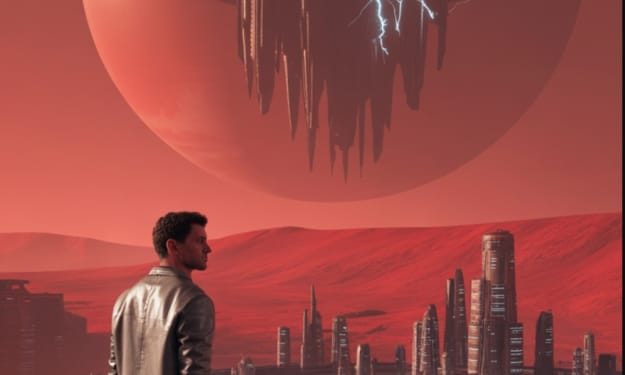
Year: 2101 — Mars Colony, City of Gravehold The red sun of Mars bled through the horizon like a dying ember, staining the metallic city of Gravehold in shades of gold and rust. Beneath its vast energy dome, the city pulsed with artificial life — floating trams glided through corridors of glass, and drones weaved between towers that reached for a sky no human could breathe. In the distance, far above the clouds of iron dust, hovered the Kingdom of Dreadspire — a colossal citadel suspended by magnetic fields, its black spires glimmering with lightning veins. From there, the Elites ruled over every breath taken on Mars. They owned the oxygen, the water, and the hope of every soul that walked below. Among those souls was Assakzai, a lone wanderer of Gravehold. He moved through the city’s narrow alleys, his footsteps echoing against steel walls engraved with digital codes — remnants of a humanity that once lived freely on Earth. His reflection in the neon puddles looked tired, like a man carrying the weight of a forgotten planet. The streets hummed with the low throb of generators. Holographic ads shimmered in the air: > “Serve Dreadspire. Secure your Tomorrow.” Tomorrow. The word had lost its meaning long ago. Assakzai paused at the edge of the dome. Beyond it stretched the Crimson Wastes — a vast Martian desert that shimmered under the cold, thin sunlight. The dunes moved like liquid fire, glowing faintly beneath the planet’s second moon. Gigantic oxygen harvesters stood in silence, their towers blinking like lonely beacons. He rested his hand on the transparent wall that separated him from the endless dust. His breath fogged the glass — the only real mist he had seen in years. And for a moment… he remembered. He remembered Earth — not as the corrupted ruin it became, but as the living miracle it once was. Blue skies. Green forests. Rivers that sang, and rain that smelled of home. He remembered people — honest, kind, warm. There was love, respect, and care; life was hard, but hearts were soft. Then came the greed. Mankind built machines to outthink their own conscience. Nations fought for power, not survival. The skies turned black with smoke and ash, and oceans boiled under human arrogance. They called it “progress.” But in truth, it was extinction wearing a crown. Now Mars was their punishment — and their prison. The Kingdom of Dreadspire rose from that arrogance: a citadel of the rich and ruthless, who lived in sunlight while the rest toiled in shadow. Down in Gravehold, the people had traded their freedom for survival. A small voice interrupted his thoughts. “Do you ever wish to go back?” Assakzai turned. A young woman stood there, cloaked in silver work-gear, her face marked with soot and determination. Her eyes — pale and curious — carried the same longing he felt in his bones. “To Earth?” he asked. She nodded. “My mother used to say it was beautiful. That people loved without fear.” Assakzai smiled faintly. “They did. Once. Before they forgot what it meant to be human.” The girl stepped closer to the glass, staring out at the desert. “Do you think we’ll ever be like them again?” He looked past her — toward the floating black fortress of Dreadspire glowing in the sky. “Maybe,” he said softly, “when we stop worshiping power… and start remembering peace.” Above them, the fortress lights flickered. A storm brewed over the desert — red lightning twisting like veins across the sky. But in that storm, Assakzai saw something else — a spark, a chance, perhaps even destiny. For every empire built on fear, there always rises one soul who remembers love. And as Gravehold’s night fell, Assakzai whispered to the wind — > “The Earth may be dead… but her spirit still walks among us.”
By Bismillah Achakzaiabout a year ago in Humans
When My Mother’s Silence Revealed More Than Words
It was the spring she stopped making her famous apple pie. I remember the kitchen being too quiet, the smell of cinnamon missing. My mother had always baked on Saturdays — humming softly, tasting with care, dusting flour across the counter like an artist who painted in sugar and butter. But that Saturday, she just stood by the oven, watching it. The pie burned slightly. She scraped the edges away in silence, pretending it didn’t matter.
By Malaika Pioletabout a year ago in Humans
Under the Skin, There Are Roads
They say we leave our trails in ourselves, not in the world. Every grief, every year we pretended not to notice, every small vow broken softly—none of it vanishes. It hides in the body and waits. Bones remember angles even after posture changes. Scars memorize what language forgets. Blood, it turns out, is an archivist with a key to every locked room.
By Rebecca A Hyde Gonzalesabout a year ago in Humans
just like i wanted
chapter6 just like i wanted "it isn't what you think!" i protest. it's obvious to me that Carter thinks i'm rejecting a part of him. and it makes sense that he would feel spurned and judged when i distance from his habit. honestly, there isn’t another way to interpret my dissociation from his perspective, but it is the intention and motive for my pushback that i wish to give my personal definition to.
By ⸘jason alan‽about a year ago in Humans
The American Dream of Homeownership Has Aged (Literally)
A new report from the National Association of Realtors shows the median age of U.S. homebuyers has climbed to 56 in 2024, the oldest on record — up from 31 in 1981. For first-time buyers, the median age has risen from 29 to 38, reflecting how much harder it’s become to buy a home early in life. This 25-year jump marks a fundamental shift in affordability and access. Median home prices have surged to roughly $420,000, while the median household income is about $79,000 — far below the $110,000+ estimated to comfortably afford that home at current mortgage rates of 7–8%. In 1981, a typical home cost about three times the average household income; today, it’s closer to five-and-a-half times, and much higher in many metro areas.
By Peter Thwing - Host of the FST Podcastabout a year ago in Humans