fact or fiction
Is it a fact or is it merely fiction? Fact or Fiction explores relationship myths and truths to get your head out of the clouds and back into romantic reality.
Unveiling the Secrets: The Science of Happiness and How to Sprinkle Joy into Everyday Life
Are you tired of chasing happiness like it's a rare Pokémon, only to find it slipping through your fingers like sand in an hourglass? Fear not, fellow joy-seeker, for the science of happiness is here to rescue you from the abyss of gloom! Let's embark on a whimsical journey through the enchanted forest of positive psychology and uncover the mystical secrets to cultivating joy in the mundane.
By Alexander Mensah2 years ago in Humans
The Great Debate: Is Cereal Soup?". Content Warning.
Ah, the age-old question that has divided breakfast tables and sparked heated debates among cereal aficionados and culinary connoisseurs alike: is cereal soup? Strap on your aprons and prepare for a culinary journey through the deliciously contentious world of breakfast philosophy.
By Alexander Mensah2 years ago in Humans
10 Signs Your Pet is Plotting World Domination: A Pawsitively Purrplexing Predicament
**Introduction:** Picture this: you're lounging on your couch, absentmindedly scrolling through your phone, when suddenly you catch your furry friend giving you a sideways glance. Sure, it's adorable, but what if there's more to it? What if behind those innocent eyes lies a mastermind plotting to take over the world? Before you brush off the idea as pure fiction, consider the following signs that your pet might just be harboring ambitions of global domination.
By Alexander Mensah2 years ago in Humans
Symbiosis: A New Era for Humanity
In the year 2045, renowned biotechnologist Dr. Amelia Ruiz lived in a bustling metropolis. Her purpose was to develop human capacities and improve quality of life by conducting research that spanned the gap between advanced technology and human biology. Amelia led the groundbreaking "Symbio" project, which attempted to build a mutually beneficial cooperation between artificial intelligence and humans. Amelia was overwhelmed with excitement as she made her way through the sophisticated halls of her laboratory one bright morning. The bio-integrated AI prototype they had been working on, known as "Eli," was expected to be unveiled today. Eli wasn't simply meant to be a cutting-edge piece of technology; he was meant to be a part of a human. It interacted with the brain to improve mental abilities, control bodily processes, and even support emotional health. Amelia believed Eli had the key to solving many of the world's most pressing issues, including mental health issues and chronic ailments. The group convened in the demonstration room, which featured holographic screens and state-of-the-art medical equipment. Amelia took a deep breath and started talking to her coworkers. "This day represents a turning point in human history," she said. "With Eli, we can break free from the constraints of our biology and usher in a new chapter in human potential." Excitement filled the room as Jack, a volunteer, the first test subject, was introduced. A spinal cord injury had left Jack paralyzed from the waist down for a number of years. The club picked him not only because of his health but also because of his persistent optimism and resolve. The surgery started, and the room went quiet. Eli's nervous system was connected to Jack through a precise insertion of bio-nanobots, a delicate integration process. With hundreds of hours of practice and years of research as their guides, Amelia and her team worked carefully. The process was finished after what felt like an age. Jack opened his eyes slowly, and the room held its breath. With a calm yet hopeful voice, Amelia walked over to him. "Jack, are you hearing me?" How are you feeling? Jack blinked many times, taking in the deluge of fresh sensory data. He then moved his legs while displaying a look of pure wonder. Even though it was a tiny, hesitant movement, it was sufficient to cause excitement to spread across the space. With tears in his eyes, Jack muttered, "I... I can feel my legs." "I am able to transfer them." The team gave each other huge hugs and cheered as they realized what an incredible accomplishment this was. It was a deeply fulfilling moment for Amelia. This was the result of years of arduous labor, sleepless nights, and sacrifices—a real enhancement of human life. Jack's development was keenly watched throughout the ensuing few months. Eli was able to improve his cognitive abilities and regain his mobility, which allowed him to become more focused and intelligent than ever. Eli was soon assisting patients with a range of ailments, from severe anxiety and depression to neurodegenerative disorders, thanks to the prototype's success, which opened the door for additional trials. Still, moral conundrums accompanied significant progress. Inquiries surfaced regarding the possible abuse of such formidable technology, the consequences for personal privacy, and the fundamental nature of humanity. Requiring cautious use and stringent rules, Amelia found herself at the center of these arguments. At a symposium on global ethics, one evening, Amelia stood by herself on her hotel room balcony and looked out at the city lights, fuming from an especially spirited debate. With every new development, humans had to face more difficulties as the world was changing quickly. A feeling of determination gripped her as she thought about what lay ahead. Science has always been about pushing the boundaries and discovering new things, but it has also been about compassion, empathy, and an unyielding commitment to improving human existence. Amelia was aware that the road ahead would be arduous, but she had trust in a future in which humans and technology coexisted happily and improved one another in a symbiotic dance toward a better tomorrow, led by Eli and the spirit of creativity. "
By Sakibul Hassan 2 years ago in Humans
The impact of a tragic accident on a small community
In the heart of a quaint town nestled amidst rolling hills and whispering pines, life moved with the gentle rhythm of a lullaby. Neighbors knew each other's stories, and children grew up in the embrace of a close-knit community. But beneath the tranquil surface, every soul carried a shard of vulnerability, waiting to be shattered by the unexpected.
By Labu Hossain2 years ago in Humans
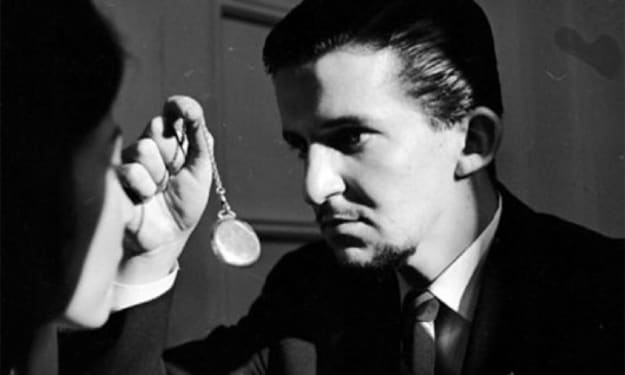
Hypnosis and the mysteries of the subconscious world
What is hypnosis? The word "hypnosis" comes from the word "Hypnos" which translates from Greek to Vietnamese as "sleep". However, hypnosis is not actually related to sleep. In fact, hypnosis can be more like a state between sleep and wakefulness.
By Ken Daklak2 years ago in Humans
Are we humans mainly evil ?. AI-Generated.
That's just the start of Brian's story. From neo-Nazi to family man, his journey out of darkness into the light is a testament to the possibility of redemption. It's a narrative of transformation that's both compelling and hopeful.
By THECONNECTIONCOMPASS2 years ago in Humans
“Does Happiness Truly Make You Happy?” . AI-Generated.
In a world where happiness is hailed as the ultimate goal, we find ourselves trapped in a paradoxical spiral of misery. Despite our nation's very foundation being built upon the right to pursue happiness, and the incessant urging from the 'wine mom brigades' to live, laugh, and love, people are sinking deeper into despair with each passing day.
By Wali Ahmed Khan2 years ago in Humans
THE EXCURSION OF PERSONAL GROWTH
In the mission for personal development, one should embrace the excursion as opposed to the objective. It’s a slow course of development and improvement, where little advances prepare for huge change. Every choice and activity, regardless of how irrelevant, contributes to the advancement of oneself.
By Mirza Afzal Baig2 years ago in Humans
10 strange things that cannot be explained by science
1. Soul and body Medicine is beginning to understand the ways in which the mind influences the body. The placebo effect (virtual therapy, in which patients are given fake drugs) proves that people can always reduce their symptoms or pain by believing in the effectiveness of the treatment. whether this treatment is truly effective or not. However, this is only a very small first step in understanding the process between the soul and the body, the body's ability to heal itself is much more surprising than what modern medicine can do. create.
By Ken Daklak2 years ago in Humans