fact or fiction
Is it a fact or is it merely fiction? Fact or Fiction explores relationship myths and truths to get your head out of the clouds and back into romantic reality.
The Obsidian Bloom
The year is 2342, and the great cities of Earth are no more, swallowed by the rising oceans centuries ago. Humanity now thrives in sprawling, self-sustaining habitats that float like iridescent jellyfish across the vast, calm expanse of the Panthalassan Sea. Lyra, a bio-engineer whose hands were as accustomed to the microscopic world of cellular regeneration as they were to the weathered controls of her personal submersible, was a creature of the deep. Her world was a kaleidoscope of bioluminescence and the silent hum of life support systems.
By noor ul aminabout a year ago in Humans
Echoes of a Forgotten City
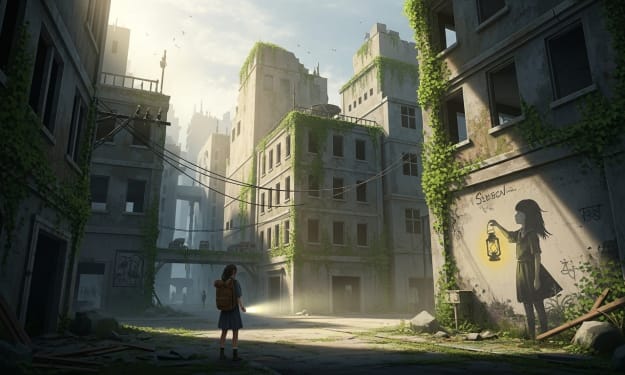
The train screeched to a stop at a station that time had nearly erased. Mira stepped out, boots crunching on gravel, the scent of rust and dry earth wrapping around her. She glanced at the cracked sign—Virellia. Barely legible. Almost mythical. The city that vanished after the war, swallowed by rumor and silence. She had come to uncover a story, to dig into a place most people pretended never existed. Her editor called it “an investigative piece on lost cities,” but to Mira, it was personal. Her grandfather had once lived here. Or survived here, rather. The air was still. No birds. No wind. Just the weight of everything unsaid. “You’re chasing ghosts,” her editor had told her. Maybe. But ghosts leave behind whispers. The city was little more than collapsed buildings and scorched stone. Trees had grown through broken windows, vines twisted around lampposts like skeletal arms clinging to what remained. A forgotten library stood at the edge of the plaza—half-burned, its columns blackened but proud. Mira stepped inside, brushing aside a curtain of ivy. Dust exploded in the sunlight. Her flashlight flickered to life, sweeping over fallen shelves and torn pages. Something metallic caught her eye—a box, locked but barely. She pried it open. Inside were letters, bound in twine. They were in her grandfather’s handwriting. June 18, 1946 To whoever finds this, This city was not lost. It was hidden. On purpose. To protect something greater than memory. The people here did not vanish. They became stories. Mira’s breath caught. She sat on the stone floor, turning the fragile letters gently, reading by flashlight and heart. They told of artists who painted beauty into bomb shelters, of children who played in alleys under curfews, of secret concerts at midnight. They told of resistance, of love found in silence, and goodbyes whispered under rubble. Her grandfather had written them for someone—maybe her. Or maybe no one at all. The next morning, she explored deeper into Virellia. Behind the post office, she found a cellar door. Rusted. Locked. She smashed it open with a rock, nearly falling down the steps as the wood gave way. Inside, candle stubs lined the shelves. Old ration tins, maps, charcoal sketches. And in the center, a wall-sized mural—untouched, like it had been painted yesterday. A girl holding a lantern stood at the edge of the city, her back turned to destruction, her face painted with quiet determination. The words beneath it were written in the same hand as the letters: “We endured. We remember.” She began documenting everything. Photos, voice notes, letters scanned into her laptop. She created a makeshift workstation in the burned-out café across from the church. As days passed, the city began to speak louder. The wind picked up. Birds returned. As if her presence had awakened something. She found a graveyard behind a collapsed school, the names half-erased but still there. One grave had her great-grandmother’s name. Mira knelt before it, hand trembling, tears falling silently. For the woman who had lived, and died, in silence. For a city that had never asked to be forgotten. On her last day, Mira recorded a video. “The world erased Virellia,” she said, “but it still echoes. Through letters, art, memory. It was never truly gone. Just waiting.” She uploaded it before boarding the return train, her backpack heavier with stories than she ever imagined. Back in the city, her article went viral. Readers flooded the comments with memories, theories, old photographs. Survivors reached out. A museum offered to archive the letters. A filmmaker wanted to adapt her story. And Mira knew—Virellia was no longer silent.
By Shah Nawazabout a year ago in Humans
When the Moon Forgot to Rise
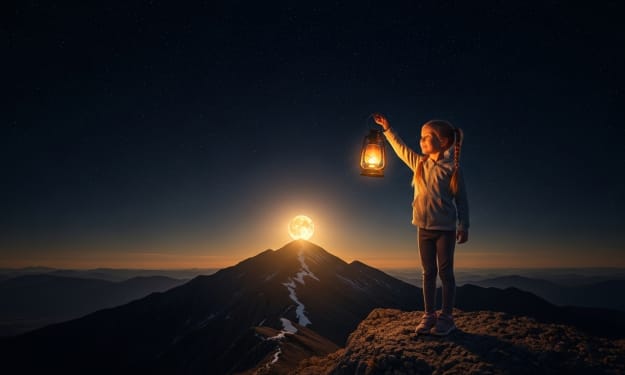
Long ago, in a quiet village cradled between the mountains and the sea, people lived by the rhythm of the sky. By day, the sun painted gold across the fields. By night, the moon cast silver dreams upon the sleeping earth. For generations, it had been so—until one evening, the moon simply forgot to rise. At first, the villagers waited patiently. Children pressed their noses to the windowpanes, expecting the moon to peek out from behind the clouds. The elders sipped their teas, whispering that perhaps it was just late, or shy. But as the hours passed, a strange stillness settled over the land. The stars blinked uncertainly. The tide grew confused and restless. Wolves in the forest paced nervously under the barren sky. And in the heart of the village, a small girl named Elira stood in her backyard, staring at the place where the moon should have been. “Where did you go?” she whispered. “Why did you leave?” Elira was a quiet girl with a head full of questions and a heart full of stories. Her grandmother, a dreamweaver who told tales stitched with stardust, once told her that the moon was not just a light in the sky—it was a guardian of dreams, a keeper of the night. But how could dreams survive if the night had forgotten its keeper? The next morning, the world felt tired. People woke unrested, their dreams jagged or absent. Plants drooped. Birds were disoriented. Even the sun seemed to shine more harshly, as if overcompensating for the moon’s absence. That night, again, no moon. Just a cold, hollow sky. By the third night, fear crept in like a frost. Lanterns were lit early, and stories of shadow creatures and forgotten curses surfaced from dusty corners of memory. Some blamed the stars. Some blamed the sea. But Elira didn’t believe in blame—she believed in searching. So she packed her small satchel: a candle stub, her grandmother’s worn map of the skies, a smooth stone she called Lucky, and a crust of bread. With nothing but the dim glow of her lantern and a courage she didn’t know she had, she slipped into the night. She wandered past the edge of the village, past the whispering fields, into the Forest of Whispers. Trees loomed like giants, murmuring secrets in languages older than words. But Elira walked steadily, her light flickering with each step. Deep in the woods, she met the Owl Queen. Perched on an ancient branch, feathers like moonlight and eyes like galaxies, the Owl Queen blinked slowly at Elira. “You walk when others hide,” she said. “Why?” “Because something is wrong,” Elira said. “The moon is missing.” The Owl Queen studied her. “Few notice when the light goes missing. Fewer still go searching for it.” “Do you know where it went?” The Owl Queen turned her head toward the sky. “The moon is tired, child. Forgotten. Ignored. Dreams are replaced with screens. Silence with noise. The moon called out, but no one listened.” “I’ll listen,” Elira whispered. And with that, the Owl Queen gave her a single silver feather and a direction: climb to the top of Dreamer’s Peak and speak to the sky. So Elira climbed. Days passed. Storms threatened. But her feet did not falter. At last, she reached the summit—a lonely crag that touched the stars. There, under the weight of infinite space, she lit her candle and held up the moon map. “I don’t know where you’ve gone,” she said aloud. “But I remember you. I remember how you lit my dreams. How you made shadows gentle. How you kept the dark from being scary. I still need you.” For a long moment, there was silence. Just the wind. Just the stars. And then—faint at first—a soft glow, like the blush of memory. Then stronger. Brighter. A silver curve crested over the horizon. The moon had heard her. It rose slowly, gently, bathing the mountaintop in light. And with it came a peace that Elira had never known. Tears spilled down her cheeks, but they were not sad ones—they were the tears of someone who had found something they were afraid was lost forever. When Elira returned to the village, the moon high above, the people gathered in the square, wide-eyed and hopeful. “You brought it back,” someone whispered. “No,” Elira said, shaking her head. “It was never truly gone. We just forgot how to look for it.” From that night onward, the villagers changed. They took time to sit in the dark and watch the stars. Children told bedtime stories again. People dreamed brighter. And on clear nights, they would point to the sky and say, “Look—Elira’s moon.” But Elira knew better. The moon wasn’t hers. It belonged to everyone brave enough to believe in the light, even when all they could see was darkness.
By Shah Nawazabout a year ago in Humans
The Art of Slowing Down
We live in a world that rewards speed. Faster results. Quicker replies. Instant updates. We rush through our mornings, skim through meals, multitask our way through work, and collapse into bed with one eye on tomorrow’s to-do list. Success is often measured in how much we can get done, how quickly we can reply, and how far ahead we can stay. But in all this momentum, we’ve lost something essential. We’ve forgotten how to slow down. Slowness Is Not Laziness Let’s get one thing straight: slowing down doesn’t mean giving up. It’s not laziness, or apathy, or failure. It’s intention. It’s choosing presence over productivity. It’s recognizing that our value isn’t determined by our output. In fact, the art of slowing down is a form of rebellion—a conscious choice to push back against a culture that glorifies burnout and busyness. The Moment That Made Me Pause My own journey toward slowness began the hard way. I was juggling two jobs, trying to finish a side project, replying to texts at red lights, and sleeping with my phone under my pillow “just in case.” I thought I was being efficient, maximizing every moment. Until one day, I missed something. I was sitting at a coffee shop, laptop open, multitasking like a pro. I barely noticed the elderly man beside me until the barista brought over his drink with a warm smile and said, “See you tomorrow, Mr. Patel.” He smiled back and said, “Same time, same place.” And then he just… sat. No phone. No laptop. Just sipping his coffee and looking out the window. He wasn’t wasting time—he was using it well. That moment stuck with me. I started asking myself, What am I racing toward—and what am I missing along the way? The Hidden Cost of Constant Speed When we move too fast, we trade depth for efficiency. We skim books instead of reading them. We eat while scrolling instead of tasting. We talk but don’t always listen. We even forget how to breathe properly. (Seriously—how often do you take a full, slow breath?) Chronic rushing leads to chronic stress. Our bodies stay in fight-or-flight mode, our minds bounce from thought to thought, and our creativity flattens under pressure. Relationships suffer. Sleep suffers. Life begins to feel like a blur. Slowing down isn’t just a nice idea—it’s necessary for mental, physical, and emotional health. The Beauty Found in Slowness When you slow down, you start to notice things again. You feel the warmth of sunlight through the window. You hear the wind in the trees. You taste the first sip of coffee. Conversations become richer. Walks become meditative. Even boredom—once the enemy—becomes a doorway to creativity. Slowness teaches you to live rather than perform. You’re no longer rushing through your life as if it’s a task list. You’re experiencing it fully. Practical Ways to Slow Down Slowing down is not about dropping everything and moving to a mountain cabin (though that does sound nice). It’s about small shifts in awareness and habit. Here are some practical ways to begin: 1. Wake Up Without Rushing Start your day 15 minutes earlier. Use that time to stretch, sip tea, or sit in silence. Resist the urge to check your phone immediately. Let your mind ease into the day. 2. Practice Mindful Transitions Pause between tasks. Take a few deep breaths before switching from work to dinner, or from a meeting to your commute. These tiny pauses anchor you. 3. Single-Tasking Over Multitasking Multitasking splits your focus and increases stress. Try doing one thing at a time. If you’re walking, walk. If you’re eating, eat. Your brain (and body) will thank you. 4. Create Technology-Free Time Designate moments in your day that are screen-free. No social media. No notifications. Just you, the present, and whatever you choose to do with it. 5. Schedule Nothing Yes—schedule unstructured time. A morning with no plans. An hour to wander. Let yourself get bored. That's where ideas and peace can bloom. --- Conclusion: Slow Is a Superpower We often say life is short. But maybe, life just feels short because we speed through it. Slowing down doesn’t mean doing less—it means living more deliberately. It means noticing the world around you, the people beside you, and the person you are becoming. You don’t need to escape to live more slowly. You just need to pause, breathe, and remember that time is not a race to win—it’s a rhythm to feel. So take a deep breath. Unclench your jaw. Look up from your phone. And take the scenic route—because sometimes, the detour is the destination.
By Junaid Ali (Official)about a year ago in Humans
From $5 to $500: How Vocal Media Changed My Online Earnings
In the beginning, I had little hope that I could make real money online without investing heavily or learning technical skills. Like many others, I explored countless online earning platforms—survey sites, YouTube, affiliate marketing, and even low-paying gigs. But none brought consistent results. That changed the day I discovered Vocal Media. Vocal Media is a platform that allows anyone to share their stories, articles, opinions, and experiences while earning money based on views and tips. It sounded too good to be true at first, but it wasn’t long before I realized that this could become a reliable source of online income. My First $5: The Beginning of a Journey Like most beginners, my first article on Vocal Media earned just a few cents in the first week. I had shared a motivational story about overcoming challenges during college. I promoted the link on my social media, WhatsApp status, and a few Facebook groups. Within a few days, I hit $5. It wasn’t much—but it was a sign that Vocal Media worked. What stood out was the simplicity of the process. No fancy tools, no video editing, no special skills—just pure storytelling. That’s when I decided to treat it seriously. Learning, Adapting, and Growing After my first few articles, I started studying what kind of content performed well. I noticed that motivational articles, life lessons, relationship advice, and personal growth stories tended to get more views. I began refining my writing style, choosing better titles, and structuring articles to keep readers engaged. Here are some things I learned: Catchy Titles Matter: A great title grabs attention and improves click-through rates. Emotional Connection: Stories that connect with the reader emotionally get more shares. Promotion Is Key: Simply publishing isn’t enough—you must share the article across platforms like Facebook, Medium, LinkedIn, and WhatsApp groups. Using these strategies, I saw my earnings slowly climb with each new post. Crossing $100: A Turning Point Within a few months and after publishing around 15-20 articles, I crossed the $100 mark. I received my first payout via PayPal, and that single email of payment confirmation gave me more motivation than anything else ever had. I realized that Vocal Media could be more than just a hobby. I also started receiving tips from readers who appreciated my content. These tips ranged from $1 to even $10 per post. Tips, combined with bonuses from Vocal Challenges and referral programs, helped increase my total income faster. Consistency Pays Off: From $100 to $500 As I became more consistent with my publishing, I built a small but loyal readership. People began to look forward to my new articles. I kept improving my storytelling, sharing real-life experiences, and offering useful advice on topics like online earning, mindset shifts, and self-discipline. By month six, my total earnings crossed $500. This wasn’t just luck—it was the result of steady effort, creativity, and smart promotion. Why Vocal Media Stands Out Here’s why I believe Vocal Media is one of the best platforms for beginner writers or anyone looking to earn online: No investment required: Free to join and publish. User-friendly platform: Easy-to-use editor with beautiful formatting. Monetization from day one: You don’t need 1,000 followers to start earning. Supportive community: Vocal has regular challenges and writing prompts with cash prizes. Global exposure: Your stories can reach an international audience. Tips for New Writers on Vocal Media If you’re just starting on Vocal Media, here are some tips to grow faster: 1. Choose trending and evergreen topics. 2. Write regularly (at least 1 article per week). 3. Share your articles everywhere—especially on Facebook and WhatsApp. 4. Use attractive thumbnails and headlines. 5. Engage with other writers on the platform. Final Thoughts From earning my first $5 to making over $500, Vocal Media has been a life-changing platform for me. It showed me that you don’t need to be a professional writer or a tech expert to succeed online. If you have a voice, a story, or a lesson to share, there’s an audience out there waiting to read it—and you can get paid for it. So, if you’ve been looking for a legit and beginner-friendly way to earn online, give Vocal Media a try. It might just change your earnings story too—just like it did for me.
By Sophia Graceabout a year ago in Humans
The Politics of Ghosting
The Politics of Ghosting On care, dignity, and modern dating We can, for any number of reasons, feel justified in withholding care from others, choosing instead to prioritize only ourselves. For much of my life, I've leaned in the opposite direction — neglecting my own needs while centering the needs of others. In an effort to recalibrate, to land in that radical middle space, I've sometimes swung too far the other way, treating self-care as if it were in conflict with care for others. These days, I'm working to right-size care in my life — making space for both self-respect and mutual responsibility.
By Burhan Afridiabout a year ago in Humans
Authentic Connection: Effort or Being?
I've come to a profound realization: none of the people who are truly good to me became my friends because I tried to make them so. Instead, we were drawn to each other naturally, connecting with ease as soon as we met. I now understand that no relationship in this world can be forced. If you attempt to gain affection by sacrificing your true feelings, you are destined to fail. People who genuinely like me don't need me to force myself to do anything; they simply want me to be free and happy.
By Emily Chan - Life and love sharingabout a year ago in Humans
THE GIRL IN APARTMENT 4B
The building was a monolith of faded brick and chipped paint, a testament to decades of city grime and countless transient lives. Ten stories high, it loomed over the street like a tired giant, its windows, a hundred vacant eyes, reflecting the indifferent sky. Leo, the new superintendent, knew every crack in its crumbling facade, every loose floorboard, every groan of its ancient pipes. But of all its secrets, the most intriguing was the girl in Apartment 4B.
By noor ul aminabout a year ago in Humans
The Purpose and Mystery
Introduction Since the beginning of time, humans have pondered the question: Why do we exist? This fundamental inquiry has inspired countless philosophies, religions, and scientific theories. While the answers differ based on belief systems and personal experiences, the quest for meaning remains central to the human experience. This article explores the mystery of human existence, the search for purpose, and the factors—biological, spiritual, and philosophical—that shape our understanding of ourselves.
By haider aliabout a year ago in Humans