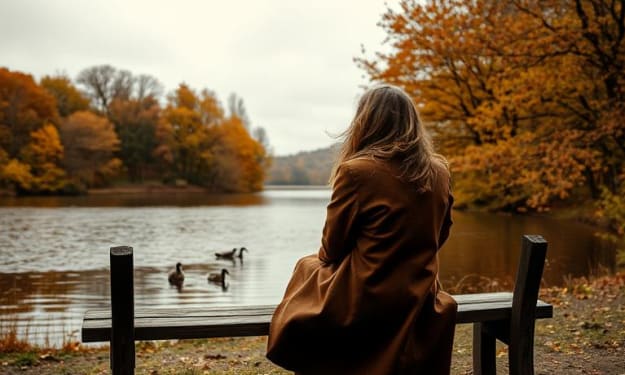
divorce
Divorce isn't an end; it's a different beginning.
The Day I Realized My Love Was a Solo Act
I poured my heart into him like a river rushing into a cracked dam, hoping the force of my love would hold us together. Every morning, I brewed his coffee—two sugars, a splash of cream—before he stirred awake. I memorized the creases in his brow when he frowned at his phone, decoding his moods like a cryptographer. I planned dinners, picked movies, and laughed at his half-hearted jokes, even when they landed flat. I convinced myself this was love: a relentless giving, a steady stream of effort to keep us afloat. But one crisp October afternoon, as leaves crunched under my boots and the wind carried his indifference like a whisper, I saw it clearly. My love was a solo act—a one-woman show with no audience, no encore, just me on a stage I’d built for two.
By Great pleasureabout a year ago in Humans
Breaking Free from the Cycle of Unreturned Affection
Unrequited love—it's a painful cycle that many people experience at least once in their lives. Whether it’s a crush that never blossomed, a relationship that faded out, or simply someone you care about deeply who doesn’t feel the same, the experience of unreturned affection can take a heavy toll on your emotional well-being. While it's natural to want to hold on to feelings for someone, it's important to recognize when you are stuck in a cycle that prevents you from healing and moving forward.
By Great pleasureabout a year ago in Humans
Why One-Sided Relationships Are a Lesson in Self-Worth
One of the most painful and confusing experiences many of us face in life is being involved in a one-sided relationship. Whether romantic, familial, or platonic, these types of relationships can leave us feeling drained, unappreciated, and questioning our own worth. At first, we might brush off the signs, hoping things will change or that we simply need to try harder. But the truth is, one-sided relationships are a powerful teacher—one that can reveal much about our sense of self-worth. In this article, we will explore why these relationships are not only challenging but also necessary for personal growth, helping us to reclaim our value and embrace healthier connections.
By Great pleasureabout a year ago in Humans
The Exhaustion of Carrying a Relationship Alone
Relationships are meant to be a partnership, a space where two people support, understand, and nurture each other. However, there are times when one partner finds themselves doing most, if not all, of the work. This can be emotionally draining, mentally exhausting, and ultimately damaging to the relationship itself. The feeling of carrying a relationship alone can erode self-esteem, cause emotional fatigue, and create a toxic imbalance that may become impossible to fix. It’s not just about chores or finances—it's about emotional labor, effort, and investment. So, what happens when one person is shouldering all the weight?
By Great pleasureabout a year ago in Humans
How to Recognize When You’re the Only One Trying
Relationships—whether romantic, platonic, familial, or professional—thrive on mutual effort. You invest time, energy, and emotion, expecting the other party to meet you halfway. But what happens when they don’t? You push harder, convince yourself they’ll come around, and pour more of yourself into the connection. Then, one day, it hits you: you’re the only one trying. Recognizing this imbalance saves you from exhaustion, resentment, and wasted time. Let’s explore how to spot the signs, trust your instincts, and reclaim your energy.
By Great pleasureabout a year ago in Humans
Loving Too Much: My Story of Unreciprocated Devotion
Loving someone who doesn’t love you back is one of the most painful experiences anyone can endure. I know this firsthand. My story isn't just about heartbreak—it’s about the depths of unreciprocated devotion and how it shaped me. For years, I invested myself in a relationship that was doomed from the start. I gave everything to someone who couldn’t give back the same love I poured into them.
By Great pleasureabout a year ago in Humans
One-Sided Relationships: The Warning Signs I Ignored
We’ve all heard the saying, “Relationships are a two-way street.” But what happens when one side of that street is completely empty? In one-sided relationships, there’s a lopsided dynamic where one person is always giving, and the other is always taking. Unfortunately, I know this scenario all too well. Looking back, I now see the red flags I ignored. I ignored them because I believed that love and care were enough to fix everything. But love, without reciprocity, often leaves us feeling drained, unappreciated, and lost.
By Great pleasureabout a year ago in Humans
When Friendship Becomes a One-Way Street
Friendship, at its best, is a beautiful bond that provides emotional support, joy, and mutual growth. It is founded on shared interests, trust, and an understanding that both parties give and take. However, there are times when friendship begins to feel imbalanced—when it turns into a one-way street, where only one person gives while the other takes. This shift can be emotionally draining and lead to confusion, hurt, and a sense of betrayal. In this article, we will explore the signs of a one-way friendship, how to recognize the dynamics at play, and what steps you can take to address the situation.
By Great pleasureabout a year ago in Humans
The Psychology Behind Staying in a One-Sided Relationship
Relationships thrive on mutual effort, respect, and emotional investment. Yet, some people find themselves trapped in one-sided relationships, where they pour their energy into a dynamic that offers little in return. Why do they stay? What drives someone to cling to a partnership that leaves them drained, unfulfilled, or even invisible? The psychology behind this choice reveals a complex interplay of emotions, self-perception, and behavioral patterns. Far from simple weakness, the decision to remain in a one-sided relationship often stems from deep-seated psychological factors that deserve exploration and understanding.
By Great pleasureabout a year ago in Humans
The Art of Letting Go When You’re the Only One Holding On
You clutch the rope tighter, knuckles whitening, as the frayed strands dig into your palms. The other end dangles loose, untethered, whipping in the wind. No one pulls back. No one matches your effort. Yet you stand there, heels dug into the earth, refusing to release. Sound familiar? We’ve all held on to something—or someone—long after it stopped holding us back. The art of letting go begins when you recognize you’re the only one still gripping the line.
By Great pleasureabout a year ago in Humans
Why One-Sided Relationships Feel Like Emotional Quicksand
Relationships thrive on balance. Two people invest time, energy, and emotion, creating a bond that lifts both up. But when only one side pours in effort, the dynamic shifts. It transforms into a trap—a sinking, suffocating mess that drags you down the harder you fight to stay afloat. One-sided relationships don’t just hurt; they engulf you like emotional quicksand, pulling you deeper with every desperate step. You give, you hope, you wait, and yet the ground beneath you never firms up. Why does it feel this way? Because unreciprocated effort erodes your sense of self, warps your perception of love, and leaves you stuck in a cycle of yearning for something that never comes.
By Great pleasureabout a year ago in Humans
The Silent Pain of Loving Someone Who Doesn’t Love You Back
It starts small, doesn’t it? A fleeting glance you hold onto a little too long, a text you reread until the words blur into something more than they are. For me, it was his laugh—sharp, unguarded, the kind that made me feel like I’d stumbled into a secret room of his soul. I met Daniel at a mutual friend’s dinner party, one of those haphazard gatherings where the wine flows too freely and everyone pretends they’re more interesting than they are. He wasn’t the loudest in the room, but he didn’t need to be. His presence pulled me in like gravity, and I didn’t fight it.
By Great pleasureabout a year ago in Humans