breakups
When it comes to breakups, pain is inevitable, but Humans thinks that suffering is optional.
Unmasking the Narcissistic Persona: A Practical Guide
The term "narcissist" has become ubiquitous in modern conversation, often used loosely to describe anyone with a noticeable degree of self-absorption. However, pathological narcissism—a pervasive and enduring pattern of thought and behavior—is far more complex and insidious. For those navigating personal or professional relationships, discerning the presence of genuine narcissistic traits is a critical skill for self-preservation. It is not about simply identifying a love for compliments, but rather recognizing an underlying, fragile psychological structure that relies on the manipulation and exploitation of others for sustenance.
By Humberto Jaeres12 months ago in Humans
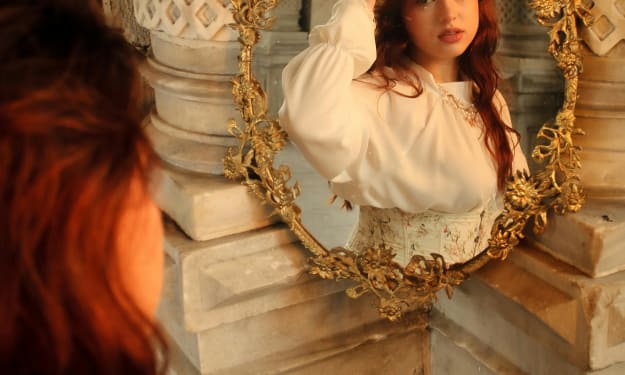
How to Stop Feeling So Insecure in Your Relationship
Insecurity can creep in quietly, even in the happiest couples. Whether it’s fear of losing someone you love, constant comparison, or overthinking every little thing, insecurity can slowly erode trust and connection. However, you don't have to let your fear of hurt dictate your love life. With the right mindset and actions, we can all learn how to feel confident, valued, and secure in our relationships.
By Relationship Guide12 months ago in Humans
Less Furious, More Curious
It feels like the world’s gone mad — egos on parade, empathy in short supply, decency downgraded to weakness. But here’s the secret: peace isn’t found by escaping the chaos. It’s found by standing in the middle of it, clear-eyed and unshakable, while everyone else spins.
By THE HONED CRONE12 months ago in Humans
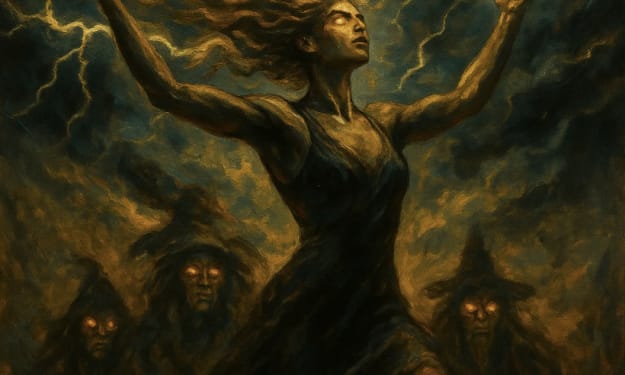
Halloween: The Night of Mystery, Costumes, and Community
Halloween, celebrated every year on October 31, is one of the most fascinating and widely recognized holidays in the world. It blends ancient traditions, religious influences, and modern pop culture into a single night filled with costumes, candy, and creativity. While many people see Halloween as a fun holiday for children, its history reveals a much deeper and symbolic meaning tied to fear, harvest, and the connection between the living and the dead. The origins of Halloween date back over 2,000 years to the ancient Celtic festival known as Samhain. The Celts, who lived in what is now Ireland, the United Kingdom, and parts of France, celebrated their new year on November 1. They believed that on the night before, October 31, the boundary between the worlds of the living and the dead became blurred. On this night, ghosts of the dead were thought to return to Earth. To protect themselves, people would light large bonfires, wear costumes made of animal skins, and offer food to appease wandering spirits. When Christianity spread across Europe, church leaders sought to replace the pagan festival with a more religious observance. The church designated November 1 as All Saints’ Day, or All Hallows’ Day, to honor saints and martyrs. The night before became known as All Hallows’ Eve, which over time evolved into Halloween. Despite its religious connection, the holiday retained many of the ancient customs, such as dressing up and lighting fires. In the 19th century, Irish and Scottish immigrants brought Halloween traditions to North America. Over time, the holiday transformed from a spiritual and superstitious observance into a community-centered event. By the early 20th century, Halloween had become a night of parties, games, and neighborhood gatherings. Trick-or-treating, one of the most iconic Halloween traditions, became popular in the 1930s and 1940s. Children dress up in costumes and go door to door asking for treats, echoing old customs of offering food to spirits or to poor people who prayed for the dead. Today, Halloween is celebrated not only in the United States but also in Canada, the United Kingdom, and many other parts of the world. It is estimated that Americans spend billions of dollars annually on costumes, candy, decorations, and events. Costume trends change each year, often reflecting popular movies, celebrities, or internet culture. Some people prefer spooky outfits such as ghosts, witches, and vampires, while others choose fun or creative costumes that make people laugh. Beyond costumes and candy, Halloween is also a night of community and creativity. Many neighborhoods organize haunted houses, costume parades, and pumpkin carving contests. The carved pumpkin, known as the jack-o’-lantern, has become one of the most recognizable symbols of the holiday. The tradition originated from an Irish myth about a man named “Stingy Jack,” who tricked the devil and was doomed to wander the earth with only a carved turnip and a burning coal to light his way. When the Irish came to America, they discovered that pumpkins were larger and easier to carve, and thus the modern jack-o’-lantern was born. In addition to fun and festivities, Halloween has deeper cultural and psychological meanings. For some, it provides a way to confront fear in a safe and playful environment. Horror movies, haunted attractions, and ghost stories allow people to experience the thrill of fear without real danger. For others, Halloween represents creativity and freedom, a night where everyone can be someone—or something—else. Many people also ask whether Halloween is harmful or inappropriate due to its dark symbols. In reality, modern Halloween is less about darkness and more about imagination, art, and social connection. It allows people of all ages to celebrate together, to decorate their homes, and to take part in a shared tradition that bridges generations. In recent years, Halloween has also expanded online, with social media becoming a major part of how people share their costumes, decorations, and parties. Digital creativity—such as short videos, filters, and Halloween-themed content—has helped the holiday grow globally, even in countries where it was not traditionally celebrated. In the end, Halloween is more than just candy and costumes. It’s a celebration of history, creativity, and community. It connects ancient beliefs with modern entertainment and continues to evolve with every generation. Whether through a child’s laughter during trick-or-treating or an adult’s excitement at a costume party, Halloween remains a night that reminds us how humans have always used imagination to face their fears—and to have a little fun along the way.
By America today 12 months ago in Humans
The Hidden Truth About a Man’s Glow
Nobody tells you this. They’ll tell you to chase success, to build muscle, to stack paper until you finally feel enough. But no one warns you that a man can have it all — the money, the body, the cars — and still walk around dim.
By Randolphe Tanoguem12 months ago in Humans
The Half-Finished Race
People often say that women mature faster than men. In one sense they do, but that advantage is temporary. If maturity were a marathon, women would sprint the first half and cross the midpoint far ahead. They would celebrate as if the race were over. Men would lag behind, slower at first, but they would keep running. They would finish the second half while many of the early sprinters stood still. That second half of the race, the one built on endurance, sacrifice, and humility, is where real adulthood begins.
By Peter Thwing - Host of the FST Podcast12 months ago in Humans
The Goat Life A Journey of Survival, Faith, and the Human Spirit
I recently watched the movie “The Goat Life”, and I felt deeply moved by its story, emotions, and message. This is not just a film — it is a reflection of real human suffering, faith, and the strength of survival. After watching it, I decided to write this story in my own words, from my heart.
By Izhar Ullah12 months ago in Humans
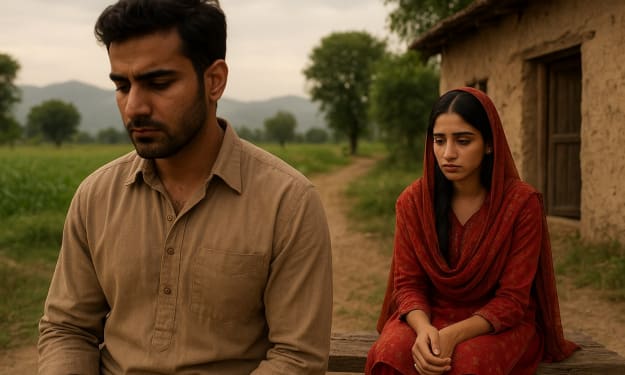
The Broken Promise: A Tale of Love, Class, and Silent Suffering
Aslam was leaving his uncle’s house today — apologizing to everyone as if he would never return. Even if his uncle had lived for a thousand years, Aslam no longer felt like spending another moment there. The silence of the previous day, the silence that came from Shinu, still echoed painfully in his mind.
By shahkar jalal12 months ago in Humans
(Part 2) The Nature of Faithfulness: Why Men and Women Fail Differently and Love the Same
If the first truth of love is difference, the second is duty. What reason can describe, revelation can redeem. Part I examined the divided mind of desire through the lens of logic and biology. Part II turns to the deeper reality beneath them: pride. Every failure of love, whether male or female, begins in pride. Pride blinds the mind, corrupts the will, and destroys the capacity to sacrifice. It is the single force that can turn God’s design of complementarity into conflict.
By Peter Thwing - Host of the FST Podcast12 months ago in Humans
(Part 1) The Nature of Faithfulness: Why Men and Women Fail Differently and Love the Same
Every man and woman desires love, but they do not experience love in the same way. The human heart is one, yet the human mind is divided by design. Men and women think, feel, and attach differently. That difference is not a flaw in nature. It is a pattern that reflects purpose. Ignoring it does not create equality. It only breeds resentment.
By Peter Thwing - Host of the FST Podcast12 months ago in Humans