breakups
When it comes to breakups, pain is inevitable, but Humans thinks that suffering is optional.
🌍 Real Life Struggle Story — “From Darkness to Dawn”
Ravi was born into a very poor family. He was only 7 years old when his father passed away. He was so poor that he could not even afford to eat two meals a day. In school, he was not allowed to study because he could not pay the fees. When he turned 15 years old, he started his struggle life journey. This is Ravi’s story.
By Harsh Sharma9 months ago in Humans
The Angry Man in Your House. Top Story - February 2026.
"If you grow up with an angry man in your house, there will always be an angry man in your house" This statement has caused plenty of controversy online, people say its a statement that blames victims while also undermining those who break traumatic cycles to form health relationships... but if I'm honest now that I'm in my 30s it makes more sense to me than ever, and I'd argue that its not just about fathers and uncles.
By S. A. Crawford9 months ago in Humans
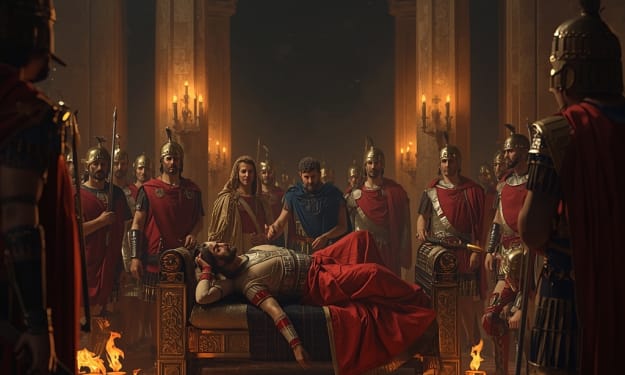
Alexander the Great — Part 4: Death, Division, and an Immortal Legacy
Babylon had become Alexander’s administrative center and was intended to be the capital of his vast empire. The city was strategically located and symbolized the blending of Eastern and Western cultures — a key vision for Alexander. He planned new military campaigns, including a possible invasion of Arabia, and began organizing naval expeditions. However, after days of heavy drinking and planning, Alexander suddenly fell ill. Ancient sources describe him suffering from fever, weakness, and the gradual loss of speech. Within roughly ten days, he died. The exact cause of Alexander’s death remains one of history’s great mysteries. Some historians suggest malaria, typhoid fever, or another disease common in the region. Others believe complications from old battle wounds and exhaustion contributed to his decline. There have also been theories of poisoning, though evidence remains inconclusive. Whatever the cause, the sudden loss of such a powerful ruler left a massive empire without clear leadership. Alexander had not named a definitive successor. When asked on his deathbed who should inherit the empire, he reportedly said, “To the strongest.” Whether this statement is accurate or not, it reflected the reality that followed. His generals, known as the Diadochi, began competing for control. At first, they attempted to maintain unity by ruling in the name of Alexander’s unborn son and his half-brother, but tensions quickly escalated into open conflict. The Wars of the Diadochi lasted for decades. Former allies turned against each other, carving the empire into separate kingdoms. Ptolemy took control of Egypt and established a dynasty that would rule for nearly three centuries. Seleucus gained vast territories in the east, forming the Seleucid Empire. Antigonus and his descendants controlled parts of Asia Minor and Greece. Instead of a single unified empire, Alexander’s conquests transformed into a network of Hellenistic states. Despite political fragmentation, Alexander’s cultural influence continued to grow. His campaigns had spread Greek language, art, and philosophy across Asia and the Middle East. This fusion of Greek and local traditions created what historians call the Hellenistic world. Cities founded by Alexander, especially Alexandria in Egypt, became centers of learning and innovation. The Library of Alexandria housed thousands of scrolls and attracted scholars from across the known world. Advances in science, mathematics, astronomy, and medicine flourished during this period. Alexander’s leadership style also left a lasting impact. He encouraged cultural integration, adopting aspects of Persian dress and customs and promoting marriages between his soldiers and local populations. Though some of his Macedonian troops resisted these policies, they contributed to the blending of cultures that defined the Hellenistic age. Trade routes expanded, connecting Mediterranean markets with those in India and Central Asia. Ideas and technologies traveled along these routes, shaping civilizations for centuries. Over time, Alexander became more than a historical figure; he became a legend. Stories about his life were retold in many cultures, each adding its own interpretations. In Greek and Roman traditions, he was portrayed as a heroic conqueror and brilliant strategist. In Persian and Middle Eastern tales, he appeared as a complex ruler, sometimes wise and sometimes destructive. In South Asian folklore, he was remembered as a powerful but distant invader. These varied portrayals demonstrate how deeply his story resonated across different societies. Historians continue to debate Alexander’s character. Some view him as a visionary who sought to unite diverse peoples under a shared culture. Others see him as an ambitious conqueror driven by personal glory. He could be generous and respectful toward defeated enemies, as seen with King Porus, but also ruthless when facing resistance. His execution of close companions, such as the general Parmenion, and his increasing demand for divine honors reveal the pressures and changes he experienced as his empire grew. What is certain is that Alexander transformed the ancient world in an extraordinarily short time. In little more than a decade, he dismantled one of the largest empires in history and replaced it with a new cultural and political landscape. His campaigns opened routes for trade and communication between East and West, influencing the spread of ideas that would shape future civilizations. Even the rise of the Roman Empire was indirectly influenced by the Hellenistic states that emerged from Alexander’s conquests. Alexander’s tomb itself became part of the mystery surrounding his legacy. After his death, his body was placed in a golden sarcophagus and eventually transported to Egypt. It was displayed in Alexandria, where later rulers and visitors reportedly paid their respects. Over time, however, the exact location of his tomb was lost. Despite numerous searches, it has never been definitively found, adding another layer to the legend of the man who conquered so much yet left behind unanswered questions. Part 4 of Alexander’s story shows that while his life ended abruptly, his influence did not. His empire fractured, but his vision of cultural connection endured. He remains a symbol of ambition, leadership, and the complexities of power. Alexander the Great’s journey from a young Macedonian prince to the ruler of a vast empire continues to inspire fascination. His story is not only about conquest but also about the spread of ideas, the blending of cultures, and the enduring impact one individual can have on the course of history.
By Say the truth 9 months ago in Humans
The Realisation
Sometimes you just realise things from a distance even if you don’t want to … And I came to this realisation : You never wanted me to- I don’t think that you even liked me for real … you just liked the attention and how I made you feel - and yes there was some kind of an connection but only because on text message - which was honest but now I know a bit to harsh you decided to cut me completely out of your life .. at first I was crying when I realised you blocked me because I didn’t meant it in a petty way but just honest about or situation - not because I was petty ..
By _ lilinana9 months ago in Humans
Dating problems couples face today and practical solutions experts recommend
As one of the most widespread dating issues that couples have to encounter nowadays, poor communication is one of the major concerns. Being able to fit in multiple responsibilities, distracted by the computer, and having different communication preferences, couples are likely to fail in understanding the intentions or emotional needs of their partners. Even little things may grow big when not expressed well, which results into frustration, lack of connection and tension that cannot be resolved. Most couples find it hard to engage in deep conversations other than those that are superficial.
By Robert Smith9 months ago in Humans
Dating dilemmas people face about modern relationships emotional boundaries
What emotional boundaries actually appear in contemporary relationships is one of the largest dating dilemmas nowadays. Due to their continuous connectivity via phones and social media, most individuals find it hard to find the line between being close to each other and being emotionally overexposed. Daters are confused about the amount of information to reveal, when they should not be too vulnerable and where personal emotional responsibility starts and where it ends. This misunderstanding may give rise to anxiety and emotional exhaustion.
By Robert Smith9 months ago in Humans
Speaking to Time Instead of the Room
Much of modern communication is oriented toward immediacy. Writing is framed as something meant to be consumed quickly, reacted to instantly, and replaced just as fast by whatever comes next. Under this model, the value of a piece is measured almost entirely by its initial reception. If it does not land immediately, it is treated as a failure. This assumption narrows the purpose of writing and misunderstands how meaning actually travels through time.
By Peter Thwing - Host of the FST Podcast9 months ago in Humans
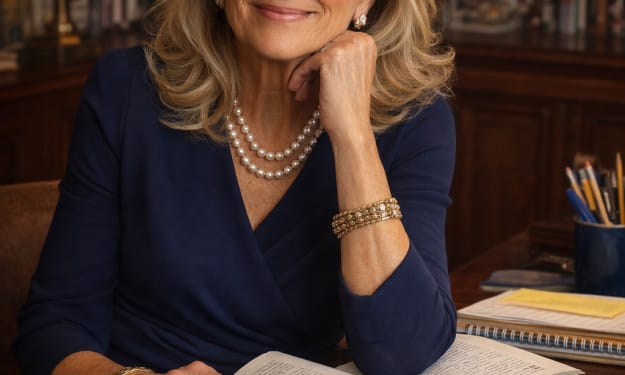
Jill Biden: The Educator, Advocate, and Influential First Lady
**Jill Biden: The Educator, Advocate, and Influential First Lady** Jill Biden is a prominent public figure whose influence extends beyond politics into education, social advocacy, and American cultural life. Known widely as the former First Lady of the United States, she has built a distinct identity grounded in teaching, lifelong learning, and public service. Her role attracted global attention not only because of her position beside the president, but also because of her decision to remain professionally active while serving in the White House. Born Jill Tracy Jacobs, she grew up in New Jersey in a family that valued education and hard work. From an early age, she developed a strong interest in literature and learning, which later shaped her career path. She pursued higher education with determination, earning degrees in English and education, and eventually completing a doctorate in educational leadership. Her academic journey reflects her belief that education is a lifelong process and a powerful tool for social progress. **What Makes Jill Biden Different From Other First Ladies** One of the most frequently asked questions about Jill Biden is what sets her apart from previous First Ladies. The answer lies largely in her professional choices. Unlike many who stepped away from their careers while in the White House, Jill Biden continued working as a college professor. She taught English and writing to community college students, often emphasizing the importance of access to education for people from diverse backgrounds. This decision resonated with many Americans and redefined expectations of the First Lady’s role. **How Jill Biden Built Her Career in Education** Jill Biden’s career in education spans decades. She worked as a high school teacher, reading specialist, and later as a professor in higher education. Teaching was not simply a profession for her, but a core part of her identity. She often spoke about her students as a source of inspiration and emphasized that education can change lives. Her experience in classrooms shaped her advocacy and informed her understanding of the challenges facing teachers and students across the country. **Why Jill Biden Is Strongly Associated With Education Advocacy** Education advocacy is central to Jill Biden’s public image. Throughout her career, she promoted literacy, supported educators, and highlighted the importance of community colleges and vocational training. She consistently emphasized that education should be accessible, inclusive, and respected as a profession. Her background allowed her to speak with credibility on these issues, making her a trusted voice in national conversations about learning and opportunity. **What Causes and Issues Jill Biden Supports** Beyond education, Jill Biden has been associated with several social causes. She has shown strong support for military families, focusing on the unique challenges faced by service members and their loved ones. Health and wellness initiatives have also been a priority, particularly those connected to community well-being and preventative care. Her advocacy style tends to focus on empathy, visibility, and practical support rather than political confrontation. **How Jill Biden Balances Family and Public Life** Another common question people search about Jill Biden is how she balances family responsibilities with public duties. Her life has involved navigating intense public scrutiny while maintaining close family relationships. Her marriage to Joe Biden spans decades and has included moments of personal hardship as well as political success. Through these experiences, she has often emphasized resilience, partnership, and the importance of family support. **How Jill Biden Handles Public Attention and Criticism** As a high-profile public figure, Jill Biden has faced media attention and criticism. Her approach has generally been measured and composed. Rather than responding emotionally to criticism, she often focuses on her work and responsibilities. She has also been vocal in defending her family when necessary, while continuing to project an image of stability and professionalism. **What Impact Jill Biden Has Had on Modern Public Service** Jill Biden’s influence goes beyond her official title. She helped reshape public perceptions of what a First Lady can be by combining professional work with ceremonial duties. Her example encouraged broader discussions about women in leadership, work-life balance, and the value of maintaining personal identity in public service roles. For many, she represents a model of commitment, consistency, and purpose. **Why Jill Biden Continues to Attract Public Interest** Interest in Jill Biden remains strong because her story connects education, family, and public service in a relatable way. People are drawn to her authenticity, her long-standing dedication to teaching, and her steady presence during moments of national change. Rather than relying solely on political influence, she has built her reputation through years of work and advocacy. Jill Biden’s legacy is closely tied to education, resilience, and redefining traditional roles. Her journey demonstrates how professional dedication and public service can coexist, leaving a lasting impression on American society and beyond.
By America today 9 months ago in Humans
I Learned This the Hard Way
I Learned This the Hard Way There was a time when I believed that if I just worked harder, everything would eventually fall into place. I didn’t question it. I didn’t doubt it. That idea was repeated so often by teachers, family, and motivational posts online that it felt like a universal truth.
By Story Prism9 months ago in Humans
30 Signs Your Girlfriend Is Cheating on You: 'Shocking Studies'. Content Warning.
You are not going anywhere because something is not right, and that queasy stomach feeling is not letting go. Perhaps she has been distant recently, or her cell phone has become a safe deposit box, or she is just simply different.
By Tarek Rakhiess9 months ago in Humans
Mental Health Warning Signs Within Emotionally Draining Relationships You Notice
Constant emotional burnout is one of the first indications of an emotionally exhausting relationship. However, you might be exhausted despite rest, emotionally exhausted after communication, or so stressed working on sustaining the relationship. This exhaustion can come as a result of being in a constant conflict management or on eggshells, or holding back your real feelings in order not to create tension. In the long run, this emotional exhaustion may decrease motivation, concentration and general pleasure in life.
By Robert Smith9 months ago in Humans