book reviews
Reviews of books by relationship gurus, dating experts, and cautionary tale-tellers.
A Beacon of Strength: Celebrating an Inspirational Woman on International Women's Day
International Women's Day is a momentous occasion that transcends borders, celebrating the achievements, resilience, and contributions of women worldwide. As I reflect on the women who have left an indelible mark on my life, one individual stands out as a beacon of strength and inspiration. Her name is Sarah, a remarkable woman whose unwavering spirit and dedication have shaped not only her own narrative but have also illuminated the path for countless others, making her a fitting subject for celebration on this International Women's Day. Sarah's story begins in humble surroundings, where adversity could have easily stifled her dreams. Raised in a small town, she faced socio-economic challenges that might have deterred many. However, from a young age, Sarah exhibited a tenacity and determination that set her apart. Her parents, humble and hardworking, instilled in her the values of perseverance and resilience, shaping the foundation upon which she would build her life. What struck me most about Sarah is her unyielding commitment to education. In a community where educational opportunities were limited, she demonstrated an insatiable thirst for knowledge. Against all odds, she pursued her studies with vigor, eventually earning a scholarship that paved the way for a college education. Witnessing her relentless pursuit of intellectual growth, I couldn't help but be inspired by her resilience in the face of adversity. Sarah's journey took an unexpected turn when she chose a career in a male-dominated field. Undeterred by societal norms and expectations, she pursued her passion for science with unwavering determination. Her professional journey was not without its challenges – she encountered skepticism, subtle bias, and at times, outright opposition. Yet, Sarah navigated these obstacles with a grace that left an indelible impression on those around her. Beyond her professional endeavors, Sarah became a champion for gender equality and empowerment. In a landscape where women often found their voices muted, she spoke up with conviction, challenging stereotypes and advocating for opportunities for her female colleagues. Through mentoring and support, Sarah actively contributed to creating an inclusive environment, inspiring others to dream beyond the constraints of gender norms. As a friend, Sarah has been a pillar of strength and hope during moments of personal struggle. Her ability to empathize, coupled with a practical and solution-oriented approach, has provided solace and guidance. She embraces vulnerability as a source of strength, encouraging open conversations about challenges that, in turn, foster a sense of community and support. Sarah's impact extends beyond her immediate circle. Through community initiatives, she has worked tirelessly to provide educational opportunities for girls, dismantling barriers and fostering a sense of empowerment. Her commitment to paying it forward exemplifies the essence of International Women's Day – a celebration of achievements, but also a call to action for a more equitable and inclusive world. In times of doubt or difficulty, Sarah's story serves as a wellspring of inspiration. Her resilience, intellectual curiosity, and commitment to the betterment of her community embody the qualities that make her a beacon for women aspiring to overcome challenges and break barriers. It is the essence of her journey – one marked by determination, compassion, and a relentless pursuit of equality – that makes Sarah an embodiment of the spirit of International Women's Day. In celebrating Sarah, we celebrate not just an individual but a collective force that propels us toward a future where women's achievements are not anomalies but an integral part of the fabric of society. As we honor her on this International Women's Day, let us all reflect on the countless Sarah's and the world whose stories of strength and resilience continue to shape a more inclusive and equitable future for all.
By Kingajmurphy3 years ago in Humans
THE DRAGON BESIDE ME
In the tapestry of life, there are threads woven with the resilience and grace of extraordinary individuals. Among these threads, one stands out vividly—a woman whose presence is as formidable as it is inspiring. She is not a conqueror of lands nor a seeker of fame, yet her impact is monumental. This is a tribute to the woman who brought me to this earth, a dragon in her own right, fierce and gentle, powerful and kind.
By Yannick Simo3 years ago in Humans
Prime Minister Narendra Modi's Hectic Schedule Continues Following BJP's CEC Meeting
Prime Minister Narendra Modi's Hectic Schedule Continues Following BJP's CEC Meeting In the early hours of the morning, shortly after the conclusion of a marathon Central Election Committee (CEC) meeting of the Bharatiya Janata Party (BJP), Prime Minister Modi wasted no time in setting his sights on the day's agenda. With a packed itinerary ahead, he embarked on a journey that would take him from the corridors of political power to the heart of rural India.
By MANDEEP KUMAR3 years ago in Humans
What The Last 24 Hours of Death Row Prisoner Look Like
if of this writing, 2,738 people were serving death sentences in the United States; however, this figure could fluctuate if sentences are carried out, reduced, or reversed. Racial and demographic breakdowns include 42% White, 41% Black, 13% Latino, and lower numbers of Asian and Native American ancestry. Only 2% of prisoners are female.
By Abdur Rahman 3 years ago in Humans
Your Brain on Food
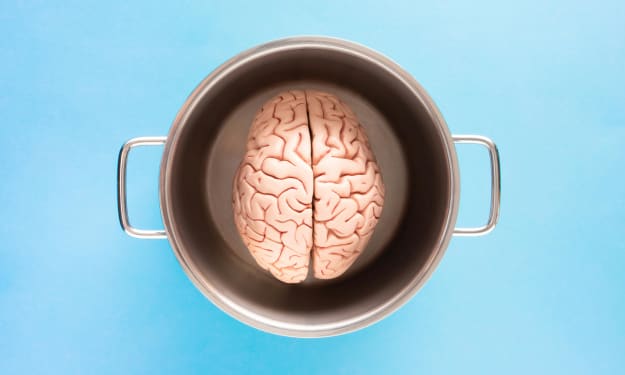
Your Brain on Food If you sucked all of the moisture out of your brain and broke it down to its constituent nutritional content, what would it look like? Most of the weight of your dehydrated brain would come from fats, also known as lipids. In the remaining brain matter, you would find proteins and amino acids, traces of micronutrients, and glucose. The brain is, of course, more than just the sum of its nutritional parts, but each component does have a distinct impact on functioning, development, mood, and energy. So that post-lunch apathy, or late-night alertness you might be feeling, well, that could simply be the effects of food on your brain. Of the fats in your brain, the superstars are omegas 3 and 6. These essential fatty acids, which have been linked to preventing degenerative brain conditions, must come from our diets. So eating omega-rich foods, like nuts, seeds, and fatty fish, is crucial to the creation and maintenance of cell membranes. And while omegas are good fats for your brain, long-term consumption of other fats, like trans and saturated fats, may compromise brain health. Meanwhile, proteins and amino acids, the building block nutrients of growth and development, manipulate how we feel and behave. Amino acids contain the precursors to neurotransmitters, the chemical messengers that carry signals between neurons, affecting things like mood, sleep, attentiveness, and weight. They're one of the reasons we might feel calm after eating a large plate of pasta, or more alert after a protein-rich meal. The complex combinations of compounds in food can stimulate brain cells to release mood-altering norepinephrine, dopamine, and serotonin. But getting to your brain cells is tricky, and amino acids have to compete for limited access. A diet with a range of foods helps maintain a balanced combination of brain messengers, and keeps your mood from getting skewed in one direction or the other. Like the other organs in our bodies, our brains also benefit from a steady supply of micronutrients. Antioxidants in fruits and vegetables strengthen the brain to fight off free radicals that destroy brain cells, enabling your brain to work well for a longer period of time. And without powerful micronutrients, like the vitamins B6, B12, and folic acid, our brains would be susceptible to brain disease and mental decline. Trace amounts of the minerals iron, copper, zinc, and sodium are also fundamental to brain health and early cognitive development. In order for the brain to efficiently transform and synthesize these valuable nutrients, it needs fuel, and lots of it. While the human brain only makes up about 2% of our body weight, it uses up to 20% of our energy resources. Most of this energy comes from carbohydrates that our body digests into glucose, or blood sugar. The frontal lobes are so sensitive to drops in glucose, in fact, that a change in mental function is one of the primary signals of nutrient deficiency. Assuming that we are getting glucose regularly, how does the specific type of carbohydrates we eat affect our brains? Carbs come in three forms: starch, sugar, and fiber. While on most nutrition labels, they are all lumped into one total carb count, the ratio of the sugar and fiber subgroups to the whole amount affect how the body and brain respond. A high glycemic food, like white bread, causes a rapid release of glucose into the blood, and then comes the dip. Blood sugar shoots down, and with it, our attention span and mood. On the other hand, oats, grains, and legumes have slower glucose release, enabling a steadier level of attentiveness. For sustained brain power, opting for a varied diet of nutrient-rich foods is critical. When it comes to what you bite, chew, and swallow, your choices have a direct and long-lasting effect on the most powerful organ in your body.
By Nguyen Trung Dung 3 years ago in Humans
The Importance of Self-Love Languages: Nurturing Your Emotional Well-Being
The Power of Understanding Your Love Language Love is the purest emotion one feels towards themselves and another individual. While the expression of love can vary in its entirety from one person to another, the care we hold for the ones we love shares an undeniable impact on how we forge our perceptions of interpersonal relationships. The way we communicate our feelings to someone also says a lot about how we are wired, the method of conveying our affection to our beloved ones is called a love language. You may express affection to the one you love regularly, but do you take the time to ensure that you are communicating it in the way that the other person prefers? Even love can become lost in translation when two individuals speak different love languages.
By Hridya Sharma3 years ago in Humans