art
The best relationship art depicts the highs and lows of the authentic couple.
Explore the Art of Custom Jewellery in Sri Lanka
Discover the Art of Custom Jewellery in Sri Lanka When you think of Sri Lanka’s rich heritage, the images that first come to mind are lush tea plantations, ancient temples, and the sparkling crystals of its gemstones. For those who want their personal style to mirror this heritage, “Best Custom Jewellery Sri Lanka” promises more than ordinary. Each piece is a dialogue between a master jeweller and the customer’s dream, producing a timeless treasure that carries the island’s spirit.
By Buddhika Jayanath12 months ago in Humans
The Taxi Driver Who Remembered Everyone
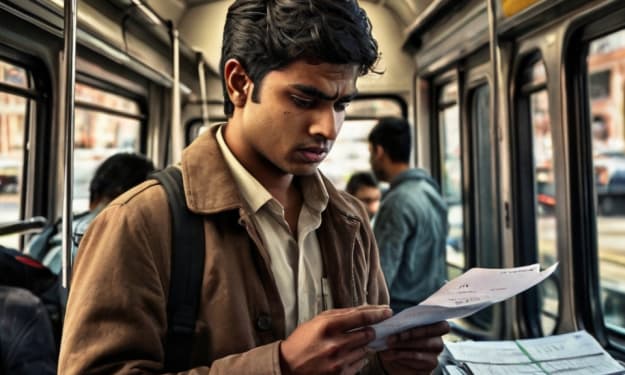
The Taxi Driver Who Remembered Everyone By Abdul Muhammad The first morning I met him, I was late for my shift. The sun had barely risen, and the streets still smelled like rain. I waved frantically at the yellow taxi slowing near the curb. The driver rolled down his window. He was an older man with silver hair under a faded cap and kind, deep-set eyes. “Hospital?” he asked. “Yes, please. City General,” I said, sliding into the back seat. He nodded, pulling into traffic without another word. The cab smelled faintly of cardamom and worn leather. On the radio, an old song hummed softly. For the first time that week, I felt my shoulders unclench. When we reached the hospital, I paid the fare. He gave me a small, almost secret smile and said, “See you tomorrow, Doctor.” I didn’t think much of it until the next morning — when he was already waiting outside my apartment building. --- For the next three weeks, I saw him every morning, almost without fail. At first, we rode in silence, the city rushing by in a blur of headlights. But gradually, he started talking. “You know,” he said one morning, “I once drove a woman who was about to give birth. Right there, in the back seat. She named the baby after me.” He chuckled, eyes shining in the rearview mirror. The next day, he told me about a man who cried quietly all the way to the airport, leaving his hometown for good. Another day, he remembered a schoolgirl who used to pay with coins she kept in a plastic toy purse, always exact change. He spoke with a strange tenderness, as if each passenger was a chapter in a book only he had read. I found myself listening more closely every day, waiting for the next story. It was a relief, after nights filled with beeping monitors and cold fluorescent lights, to hear about ordinary lives moving through the city. --- One morning, after a particularly brutal night shift — two code blues, one lost patient, and endless rounds — I slumped into the back seat, barely able to keep my eyes open. He glanced at me through the mirror and said softly, “Long night?” I nodded. He was quiet for a moment, then said, “There was a boy once. A medical student. He used to sit just where you are. Always looked tired. Always had a notebook. One day, he told me he wasn’t sure he could keep going. Too much death, he said. Too much weight.” My heart stuttered. “What happened to him?” I asked. The driver smiled faintly. “He kept going. He graduated. He’s a surgeon now.” I swallowed hard. I didn’t ask how he knew that. --- A few days later, it happened again. He started talking about a young girl who used to get into his cab every Sunday with a bunch of flowers. “She said they were for her father,” he said. “Grave’s not far from here. She never cried, but her hands shook every time.” I froze. My father’s grave was just two blocks from the route we were on. When I was a teenager, I used to visit every Sunday — always with flowers. “Did you… drive her recently?” I asked carefully. He shook his head. “No. Many years ago. But I remember every face. Every story.” The city lights flickered across his profile. I felt a chill run down my spine, though the cab was warm. --- That night, I couldn’t sleep. I kept thinking about his words. How could he have remembered me from all those years ago? There must have been hundreds — thousands — of passengers since then. The next morning, I decided to ask him. “Do you really remember everyone you drive?” He looked at me through the mirror, his expression unreadable. “Not everyone,” he said slowly. “But some people… leave a mark. You’re one of them.” “Why?” I asked, my voice quieter than I expected. He smiled — that same small, secret smile from our first ride. “Because you’re still carrying so many stories inside you,” he said. “And one day, you’ll need someone to remind you that you’re more than the sad ones.” We pulled up to the hospital. I sat there for a long moment, staring at my own tired reflection in the window. When I finally got out, I realized I hadn’t asked his name. The next day, he wasn’t there. --- Days turned into weeks. I took different taxis, buses, even walked to work sometimes. But I never saw him again. Still, every time I passed the spot where he used to wait, I found myself looking. Some nights, after my shift, I would sit in the hospital courtyard and think about all the faces I’d seen — patients, families, colleagues. Maybe, I thought, this was what he meant. That our lives are just a series of rides, crossing paths for a little while, leaving pieces of ourselves behind. One evening, I pulled a small notebook from my pocket and started writing down the stories of my own patients. Not just the sad ones, but the good ones too — the baby who went home smiling, the elderly man who cracked jokes until his last breath, the teenager who beat cancer and brought us cookies a year later. As I wrote, I felt something shift inside me — like a window opening. Maybe I would never see the taxi driver again. But in some strange way, he had reminded me why I chose this life. Because remembering is its own kind of medicine.
By Abdul Muhammad 12 months ago in Humans
Why More Vapers are Switching to Diposable Vaping Devices
Over the past several years, the vaping community has been explicitly undergoing a change, with more and more vapers transitioning to disposable vapes instead of using refillables or pod systems. This is propagated by convenience, discovery of flavors and the dynamic quality of disposable devices such as RAZ vapes. Specifically, the search of RAZ vape flavors is a popular one, and such questions as which flavor is Ruby RAZ vape? or where can I find raz vape are frequently asked. In this blog we are going to discuss why this change has happened and why the RAZ line, like Raz RYL Classic 35K (Buy here) disposable vape models, became the center of change.
By alinasir nasir12 months ago in Humans
Your greatness exists beyond the screen.
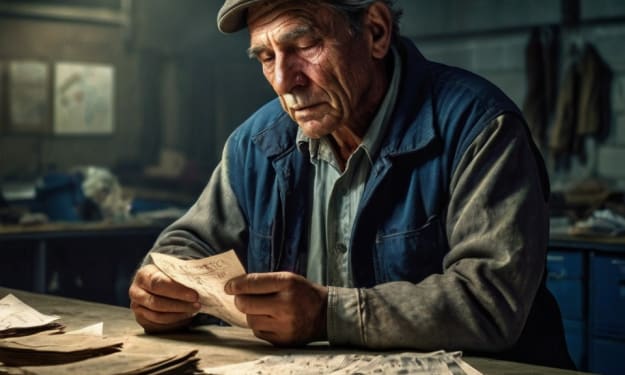
We are constantly searching. It’s a natural human impulse, a need to find models, to seek out proof that excellence is achievable, that life can be lived on a grand, shining scale. For many of us, that search leads directly to the pedestals we construct for the famous—the artists, the athletes, the digital personalities, the people whose lives appear curated, flawless, and perpetually exciting. We watch their every move, memorize their quotes, and track their every professional and personal triumph. We call this admiration, but too often, it crosses a vital line into genuine, self-diminishing idolatry. This fascination is understandable. When we feel a little lost, a little uncertain about our own path, it can feel profoundly reassuring to look at someone whose trajectory seems so perfect, whose success seems so inevitable. But we must have an honest conversation about the actual cost of this practice, because the relentless focus on the luminescence of others only casts a deepening shadow over the light that resides in us. The energy we spend tracking a faraway star is energy we are not spending tending to our own necessary and beautiful gardens. Think about the capacity we sacrifice: the dreams put on hold, the local efforts never undertaken, simply because the standard we’ve adopted is impossible, distant, and utterly unreal. When we worship external figures, we are fundamentally accepting a narrative that suggests true achievement belongs to a chosen, select few. We internalize the belief that we are meant to be the spectators, not the participants. We begin to measure our messy, day-to-day reality—the struggle to find balance, the necessary failures, the quiet work that happens behind closed doors—against a meticulously crafted public performance. This is a rigged game, and it’s one we will always lose. The perfect life we see streaming across a tiny handheld screen is an illusion, a highlight reel stitched together by teams of experts, carefully masking the human complexities, the moments of doubt, the sheer, mundane effort required just to maintain that level of visibility. And here’s the thing about perfection: it is static, and it is entirely unhelpful. Human life, a life worth living, is about growth, movement, and the grace we afford ourselves and others when things inevitably go wrong. When we elevate others to the status of gods, we strip them of their humanity, but more damagingly, we strip ourselves of our own inherent worth. We create a psychic distance between the kind of life we think we should have and the powerful, valuable life we already possess. We become convinced that our lives are too small, our contributions too quiet, and our struggles too common to be meaningful. That conviction, dear friends, is the most corrosive myth we can embrace. It is a theft of potential, a dismissal of our unique signature on the world. The pivot we must make—the essential shift in perspective that will transform our personal and collective futures—is to redirect that powerful, searching gaze inward. It is time to treat our own lives, our own inherent gifts, and our own necessary journeys with the same intense devotion we reserve for strangers. This is not a call for narcissism; it is a profound recognition that every great movement, every lasting change, every moment of genuine connection begins with an individual who decided their own story mattered enough to be fully lived. Believing in yourself is not a luxury; it is the fundamental prerequisite for meaningful engagement with the world. We must define success not by the flash of fame, but by the quiet satisfaction of a life well-worked. Success is keeping your promises to yourself. It is showing up for the small, hard moments in your community. It is the integrity you demonstrate when no one is watching. That is the kind of lasting victory that changes the texture of a family, a neighborhood, and ultimately, our world. It requires the acceptance of the fact that your current effort, however humble it may seem, is an act of creation, and it deserves your full, unwavering attention. Consider your personal narrative. Is it being written in the quiet hours of focused effort, or is it being edited and critiqued based on what someone else, someone you’ve never met, is doing on the other side of the country? We have the power, right now, to reclaim the pen and author a story of self-determination. This involves embracing the beautiful, imperfect reality of who you are and where you are. It means replacing the question, "Why can't I be like them?" with the far more potent and necessary question, "What only I can bring to the table?" When we do this, when we turn the light back onto our own capacities, something transformative happens. We recognize that the true engine of progress is not the solitary, shimmering idol, but the collective power of millions of individuals doing their specific, localized work with commitment and heart. That teacher in the classroom, the neighbor organizing the food drive, the entrepreneur developing a sustainable solution—these are the figures who deserve our admiration, because they are tangible, they are accessible, and they remind us that the work is here. They remind us that we can join them. They remind us that we are the resource we have been searching for all along. The time for passive spectatorship is over. It is a moment for deep, foundational confidence in the unique power of your voice, your experiences, and your potential contributions. Stop feeding the machine of external worship and start investing in the beautiful, complicated human standing right in front of the mirror. Your life is not a supporting role in someone else’s movie. You are the protagonist, the director, and the screenwriter. Own that role. Embrace the struggle, celebrate the small, crucial victories, and know, in the deepest part of your being, that the only light that truly matters is the one you decide to shine. It is time to believe in the undeniable greatness of you.
By William Bower12 months ago in Humans
Keys to Nowhere
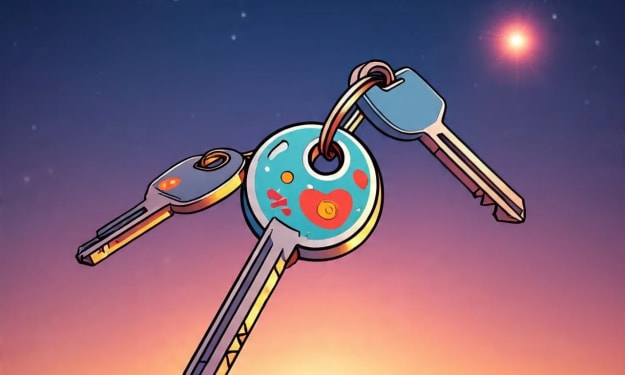
It started with a set of keys. Not just any keys—my master keys. The ones that opened my apartment, my mailbox, my office drawer, even the mysterious lock on the basement door I never dared to open. One morning, they simply vanished. I checked the usual places: my desk, my bag, the kitchen counter. Nothing. I even crawled under the couch cushions, where loose change and last year’s popcorn kernels go to retire. Still nothing. At first, I laughed. Losing keys happens to everyone, right? But the more I searched, the more it felt like the keys hadn’t been misplaced. It felt like they’d been erased from existence. The Spiral Losing keys sounds trivial, but let me assure you—it can throw your entire life into chaos. You don’t realize how much of your daily identity depends on those tiny pieces of metal until they’re gone. I found myself locked out of my own space, both literally and metaphorically. I canceled plans because I couldn’t leave. I avoided work calls because my office was out of reach. My life became a series of locked doors, mocking me from the other side. And somewhere between the tenth and fifteenth time I emptied my bag onto the floor, I began to wonder: what if this wasn’t about the keys at all? Nowhere, Everywhere A strange thing happens when you’re forced to stop. At first, the frustration eats you alive. But then, you notice the things you usually overlook. I realized my apartment wasn’t just cluttered—it was a museum of neglected intentions. Half-read books stacked like mini skyscrapers. A dusty guitar that hadn’t sung in months. Notes on the fridge reminding me of goals I’d abandoned. The keys weren’t just missing. They were pointing me to nowhere. And yet, “nowhere” had something to say. The Conversations in My Head With no keys, I had no choice but to sit in stillness. And in that stillness, my brain staged a mutiny. “Maybe you’ve been running on autopilot too long,” it whispered. “When was the last time you created something, instead of chasing deadlines?” “Do you even know what door you’re trying to open anymore?” The questions stung. I hated admitting that the grind had swallowed me whole. I lived like every day was a checklist: wake, work, scroll, sleep. The keys had been my compass. Without them, I was lost—but maybe that was exactly what I needed. Humor in the Madness Of course, not every moment was philosophical. Some were downright ridiculous. Like the time I accused my cat of hiding the keys in a secret feline vault. Or the time I interrogated my toaster—because if socks can vanish in washing machines, why couldn’t keys disappear into kitchen appliances? At one point, I even drafted a ransom note to myself: “We have your keys. Leave three chocolate bars by the window, and we’ll consider returning them.” Desperation makes you creative. The Breakthrough The keys never showed up. Weeks passed, and I replaced the locks. But in that limbo, I discovered something better than a jangling chain of metal. I found time. Time to finish one of those abandoned books. Time to dust off the guitar and strum three rusty chords. Time to call an old friend and admit that I was exhausted from pretending to have it all together. The keys had led me to nowhere. But nowhere wasn’t empty—it was full of everything I’d been ignoring. What “Nowhere” Really Means We spend our lives chasing “somewhere”—the next job, the next trip, the next version of ourselves that looks more polished and impressive. But maybe we all need a trip to nowhere sometimes. A pause. A locked door that forces us to look inward instead of outward. The keys I lost reminded me that security isn’t just about locks and doors. It’s about feeling at home with yourself, even when things don’t go as planned. Final Thought I never did solve the mystery of the missing keys. Maybe they slipped into a parallel universe. Maybe my cat really is a criminal mastermind. Or maybe the universe simply wanted me to slow down and listen. What I do know is this: sometimes losing the thing you think you can’t live without opens the door you didn’t know you needed. And so, my “keys to nowhere” ended up unlocking something bigger: the reminder that life’s detours often lead us right back to ourselves.
By LUNA EDITH12 months ago in Humans
You Were Born This Way
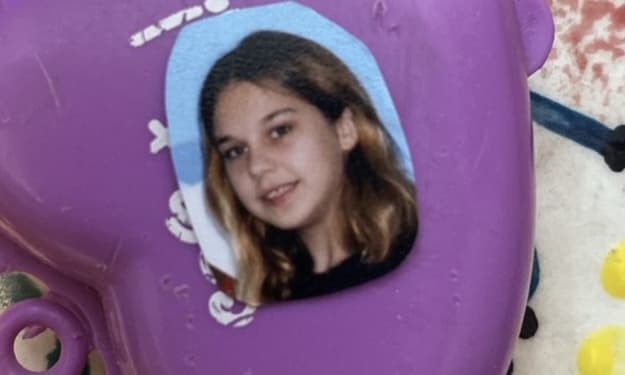
“You called her broken since the day she was born, but she was never really broken until you broke her.” – Kendra Jaymes Picture this you were brought into this world. A perfect baby, no damage no trauma. Just an innocent pink cheek human. You would cry as a baby, and toddler as nearly 100% of babies and toddlers do. You would touch counter tops, windows and doors with sticky fingers, climb on counter tops to try reach the good snacks. You would play with your barbies, stuffed animals and imaginary friend. You would fall down riding your bike and scrap your knee, cry. You would read books with a flash light under your blanket or play your Gameboy quietly at night. You would build forts, make magic potions in the backyard. And let’s not forget those Red Georgia clay mud pies. You would play in the woods, come home dirty and covered in mud and wash off with the water hose.
By Kendra Jaymes12 months ago in Humans