advice
Dating, married, single, divorced, and more. Advice on the relationships you have in life. Dear, Humans..
How to Stay in Love with Your Spouse . AI-Generated.
Maintaining love in a marriage isn’t a one-time effort. It’s an ongoing process that keeps the bond strong through life’s ups and downs. Long-term happiness depends on how well partners nurture their connection every day. But let’s face it — routines, stress, and busy schedules can make love fade if you’re not careful. Staying in love requires intentional acts, awareness, and practical strategies rooted in real advice from experts.
By LaMarion Zieglerabout a year ago in Humans
Dating a Married Man Wasn’t the Worst Part
I knew he was married the second I met him. And I didn’t care. That’s the part I hate admitting the most. It wasn’t like I was lied to or tricked or swept off my feet by some master manipulator. I walked into it with my eyes wide open. And maybe something inside me wanted to get burned.
By Ava Writes Truthabout a year ago in Humans
The photograph that saved her life
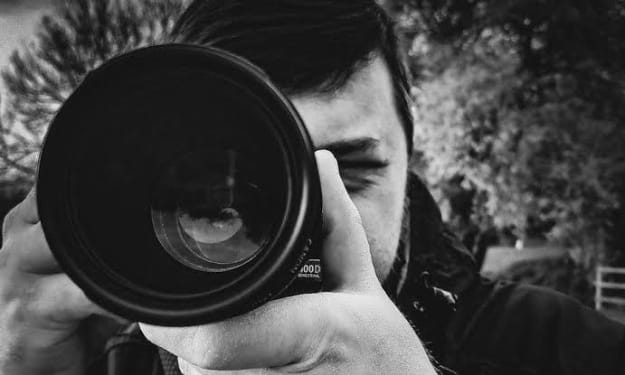
The train roared past, its steel wheels screeching against the tracks, drowning out the sounds of the bustling platform. Amidst the crowd stood a girl—thin, pale, almost invisible. Her name was Alina, a 19-year-old who looked more like a shadow than a person. She clutched a tattered schoolbag to her chest and stared blankly at the yellow line just inches from the edge. She had come to the station not to travel but to disappear. Life had become unbearable. Her father had died two years ago in a factory accident, and her mother, overwhelmed by grief, turned cold. Poverty clung to their lives like mold, and Alina, once a bright student with dreams of becoming a journalist, had dropped out of school to work at a sewing shop. Each day drained her more. Each night she cried silently in a corner of their one-room home. Her only escape was through writing in a diary she kept hidden in her bag. But even words had stopped comforting her. On that particular morning, after another argument at home, she walked toward the station with no ticket, no destination—just a decision. She sat on a bench and waited, counting each train, each minute, waiting for the platform to clear enough for her to do it without a scene. As she rose and stepped forward, a voice behind her called out, “Excuse me! Can I take your photo?” She froze. A man, perhaps in his mid-30s, held a professional-looking camera. He wore a denim jacket and had a kind but tired face. “I’m a street photographer,” he explained. “I capture real emotions. You have... something in your eyes. May I?” Alina hesitated. No one had spoken to her kindly in months. She nodded without a word. He clicked the camera once. Twice. Then smiled. “Thank you,” he said gently. “You have a powerful presence.” She didn’t reply but turned away, tears suddenly burning her eyes. She hadn’t heard anything good about herself in a long time. “What’s your name?” he asked. “Alina,” she whispered. “I’m Imran,” he said. “You’re meant for more than sadness, Alina. I don’t know what you’re going through, but... I hope this photo reminds you that you exist. And that you matter.” She didn’t know what to say. He handed her a small card with his Instagram handle. “I’ll post it later. Look for yourself through someone else’s eyes.” Then he walked away, blending into the morning crowd. --- That night, Alina lay awake, the small card still clutched in her hand. She opened her mother’s old mobile and found the photographer’s page. And there it was. The caption read: > “I saw a girl today at the train station. There was sorrow in her eyes, but strength too. This is a face that has a story—a story worth telling. Alina, if you’re reading this: the world is waiting for your voice.” Over a hundred strangers had liked and commented on the post: “She’s beautiful.” “There’s something poetic in her gaze.” “Tell her she’s not alone.” Alina read every word. Again and again. For the first time in months, her tears were not from pain but from a strange sense of hope. She felt seen. --- In the weeks that followed, something shifted. Alina reached out to Imran. They met again. He listened to her story—not with pity, but with respect. He offered to publish her writings as captions on his photographs. Slowly, she began to write again. Short poems. Stories of survival. Dreams long buried. Her words started resonating with others. Imran's page grew. So did her confidence. By the end of the year, she had her own social media account under the name AlinaWrites, where she shared raw, heartfelt pieces about poverty, grief, healing, and hope. A local magazine noticed her and offered her a part-time job writing articles. Her mother, seeing the light return to her daughter’s eyes, began changing too. They healed together—slowly, imperfectly, but truly. --- Years later, Alina stood on the same platform—not as a girl wanting to vanish, but as a woman launching her first self-published book titled “The Photograph That Saved My Life.” A crowd had gathered. Imran stood beside her, proud. She held the book in one hand and the same photograph in the other. It was framed now, preserved like a sacred memory. In the picture, her eyes were tired, but fierce. Lost, yet quietly searching. As she looked out at the crowd, she said, “Sometimes, we think we’re invisible. That no one sees us, hears us, or cares. But all it takes is one person, one moment, one photograph—to remind you that your story matters. That you matter.” The applause was thunderous. But all she could hear was the quiet whisper inside her that had once wanted to give up… now turned into a roar that said, “Keep going.”
By Shehzad khanabout a year ago in Humans
"The Night Roses Wilted
There’s a kind of silence that lingers in the air after a dream dies—a silence that wraps around your chest like a warm coat, until you realize it’s slowly choking you. That’s the silence I remember most from that night. The night I believed I was falling in love… and then watched it all unravel. It started beautifully, like the kind of evening that makes your heart whisper, "Maybe, just maybe." I met Caleb at a bookstore downtown. He was standing in the poetry section, thumbing through a worn-out copy of Neruda. When he noticed me lingering by the Brontë novels, he smiled—soft, crooked, sincere. He offered a comment about how real romance wasn’t about grand gestures but the silences between the lines. I didn’t know it then, but I think I loved him for that sentence alone. For two weeks, we talked endlessly. Voice messages at 2 a.m., long walks through the city, coffee cups scribbled with quotes. I thought I’d found the kind of connection that novels try to describe but never quite capture. So when he asked me out on an actual date, a real one, with a restaurant reservation and everything, I felt like the world had finally tilted in my favor. He chose an Italian place tucked behind a row of brownstones. Candlelight spilled from the windows, and soft jazz made the air feel like velvet. Caleb wore a navy blue sweater that matched the color of the sky just after dusk. He handed me a single rose, red as confession. We talked over pasta and red wine. Everything felt so natural, like we were resuming a story we’d already been living in parallel. He touched my hand once and didn’t pull away. His thumb brushed the inside of my palm, like he was memorizing it. Then his phone buzzed. At first, he ignored it. Then again. The third time, he excused himself. “Just a work thing,” he murmured with a half-smile. He was gone for eight minutes. I know because I counted. Not out of impatience—but because the air shifted. The jazz sounded hollower. The candle flickered harder. When he returned, his face was different. Still handsome. Still Caleb. But the softness had hardened slightly, like wind over still water. He forced a smile, sat down, and said, “Sorry about that.” We tried to resume the rhythm, but the song had changed. His eyes were elsewhere. Then he said it. “There’s something I didn’t tell you.” I froze mid-sip. “Okay.” He looked down at the tablecloth like it had the words he needed. “I’m engaged.” The world didn’t stop. That was the worst part. The room kept buzzing. The jazz kept playing. The candle kept burning. And I sat there, still breathing, still blinking, while everything inside me cracked. He spoke quickly then, like a dam breaking. “It’s complicated. We’ve been off and on. I didn’t think we’d get back together. But she called yesterday. She’s… she’s pregnant.” He reached for my hand. “I didn’t plan this. I didn’t mean to fall for you.” That’s when I realized: he had. And so had I. I didn’t cry. Not then. I didn’t make a scene. I didn’t shout or break the wine glass or throw the rose back in his face. I just looked at him, really looked, and saw a man torn between duty and feeling. And I pitied us both. I stood up slowly, careful not to knock over the candle. I looked down at him and said, “You could’ve told me.” He nodded. “I know.” The walk home was quiet. The kind of quiet that burrows under your skin. I passed couples laughing, children tossing coins into fountains, a street musician playing something soft and aching on a violin. Every note felt like a wound. At home, I placed the rose on my windowsill. By morning, it had started to wilt. Some stories don’t get endings. They just stop, mid-sentence, like a pen that’s run out of ink. That night didn’t break me. But it left a bruise I carried for months. And yet, if you asked me whether I’d erase it—if I’d undo the bookstore meeting, the late-night calls, the brush of a thumb across my palm—I wouldn’t. Because for a moment, I felt seen. For a moment, I was the poetry between the lines. And even wilted roses once bloomed.
By 🇲 🇮 🇳 🇩 🇺 🇳 🇫 🇴 🇱 🇩 🇪 🇩 about a year ago in Humans
Why Our Generation Is Tired, Loud, and Still Hopeful. AI-Generated.
There’s a quiet kind of tired running through our generation. It’s not just from lack of sleep. It’s not fixed by coffee or a good weekend. It’s deeper. It’s the kind of exhaustion that comes from living in survival mode—mentally, emotionally, and spiritually—for years.
By Anwar Jamilabout a year ago in Humans
From Struggle to Strength
Life is a journey filled with ups and downs, challenges and triumphs. Every individual, no matter how strong or successful, faces difficulties at some point in their lives. These struggles may come in many forms — personal loss, professional setbacks, health issues, or emotional turmoil. The key to a fulfilled and successful life lies not in avoiding these challenges but in learning how to overcome them and emerge stronger.
By The Thought Mirrorabout a year ago in Humans
The Lightkeeper's Promise
The wind whispered across the sea cliffs as Elara stepped onto the overgrown path leading to the lighthouse. The structure loomed against the gray sky, worn and forgotten, its glass crown shattered, its iron frame rusting like an old wound. Her grandfather had kept it once, before the sea claimed him and silence swallowed the beacon. She hadn’t planned to come back to the village. But the will had left her the lighthouse, and with her mother gone, the world felt untethered. She needed something to anchor her—something to fix. The villagers warned her. “The sea doesn’t forget,” they said. “Neither does the light.” The first note appeared on the third day. It was tucked into the crack of a stone stair, written in delicate script on yellowed paper: “The sea calls, but the light remains. I wait for you, as I always have. —A.” Elara blinked. There was no name, no explanation. She assumed it was some remnant from her grandfather’s time—a love note, perhaps. But something about it felt... recent. Warm. As if the ink had only just dried. By the end of the week, the second note came, caught between the blades of the weathered lantern: “Do you remember the way the sky turned violet that night? How we danced barefoot in the storm, laughing like the world had never broken?” Elara pressed the note to her chest. Her heart ached with a strange, impossible recognition. She had never danced in a storm, not barefoot, not here. And yet, a memory stirred beneath her ribs—a flash of lightning, a hand in hers, eyes full of the sea. She began restoring the lighthouse obsessively. She scrubbed the walls, cleared the lens, repaired what she could with trembling hands. With every swing of the hammer, more memories slipped through her mind like mist—of someone beside her, of a voice that hummed when the world fell asleep. And the notes kept coming. Each one richer than the last. Stories of evenings under starlight, of promises whispered before the sea, of love that defied storms and time itself. One read: “You promised you’d come back. You said, even if it took lifetimes, the light would guide you. And I kept it burning, even when the sea stole everything else.” Elara began to dream of him. A man with kind eyes and salt-touched hair. He called her by name before she spoke it. He held her like she was the last fragile thing in the world. She never remembered his face fully, only the warmth of his touch, and the feeling that she had once been entirely known. Late one evening, while climbing the steps with a lantern in hand, Elara found the final note. It lay in the center of the room where the light had once shone, pinned under a smooth, sea-glass stone. “Tonight marks a hundred years since the sea took you. I’ve waited, through every silence, through every life. If you remember now, truly remember—light the beacon, and I will find you again.” Elara’s hands trembled. She turned slowly toward the ancient lantern, fully restored, ready—but never lit. Could it be real? Her rational mind scoffed. But her heart—her soul—told her she had waited too. Not just days. Not just years. Lifetimes. She lit the beacon. At first, nothing happened. The golden flame flickered and steadied, casting warm halos into the fog-drenched night. Then—out on the water—a shimmer. A figure emerged from the mist, walking along the rocks, where the sea lapped gentle and bright. Not a ghost, not a shadow. A man, alive in breath and step. He looked up, and Elara felt her breath catch. She knew him. Every cell in her remembered him. He stepped into the light of the tower, and the years melted away. “You came back,” he whispered. “I never left,” she said, tears sliding down her cheeks. “I just forgot. But the light… the light remembered.” He reached out, and when their hands met, it was as if the lighthouse exhaled—its glass glowing a little brighter, the beams sweeping the horizon in wide, forgiving arcs. The sea was quiet that night. Not mournful, but listening. And the lighthouse, long silent, kept its promise.
By Muhammad Saad about a year ago in Humans
The Baby and the Brave Balloon
In a quiet village where the wind whispered through trees and dandelions danced without music, lived a little baby named Nia. She was just learning how to sit without toppling over and how to laugh at the funny sounds her dog made when it sneezed. One sunny morning, Mama brought Nia a surprise—a shiny red balloon, tied carefully to her tiny wrist with a soft white ribbon. “It’s your first balloon,” Mama said with a smile. “Be gentle with it, okay?” Nia giggled, her eyes wide with wonder. The balloon bobbed and swayed with every breeze, and Nia thought it was the most magical thing in the world. She reached out to touch it again and again, her chubby fingers never quite catching it. What Nia didn’t know was that this balloon was no ordinary balloon. It had a tiny heart drawn just beneath the knot and a spirit full of adventure. It had seen the clouds from above once before, when it was released at a birthday party by a careless cousin. But the wind had brought it down to Earth again, waiting for another chance to soar. This balloon—let’s call him “Puff”—was brave. Brave enough to dream of the sky again. For days, Puff floated loyally beside Nia, tied to her wrist as she crawled across blankets, played with her blocks, and babbled nonsense to her stuffed animals. He had never been this close to someone so little, so full of newness and light. But the sky still called to Puff. One afternoon, Mama took Nia to the park. The sun warmed the grass, birds chirped songs like lullabies, and kites soared above the trees. Nia sat beneath a shady tree, her eyes filled with awe as she watched the sky swirl with color. Then—just for a moment—Mama looked away to fix Nia’s hat. And in that tiny moment, a gentle gust of wind tugged at the ribbon. Snap. The knot loosened. The string slipped from Nia’s wrist. Puff wobbled uncertainly… then rose. Higher… and higher… and higher. Nia blinked, startled, then lifted her hands toward the sky. “Baah!” she cried. Her voice was too small to stop the wind, but it was full of feeling. She watched as her red balloon grew smaller and smaller, floating up into the big, wide blue. Puff felt the wind beneath him, a thrill racing through his seams. He was free! But then he heard something that made his string quiver—the soft, sad sound of Nia’s cry. It wasn't a wail of anger or fear. It was something softer… a sound like “Come back.” The clouds ahead looked like castles. The sun felt warm on his red rubber skin. But Puff turned and looked down. And he remembered. He remembered the way Nia’s eyes lit up when she saw him, the way she reached for him like he was the moon. He remembered her laughter, her tiny hands, and how she had never tried to pop him or let him go on purpose. The sky would always be there. But little babies? They grow up. They forget balloons. Puff hesitated… then did the bravest thing he’d ever done. He turned around. The wind pushed against him, harder now. The kites teased him as he passed. “Where are you going?” they called. “The adventure is up here!” But Puff had found something more important than adventure. He floated down, fighting every current, every breeze. Lower… lower… until— Plop. He landed right in Nia’s lap. Her eyes lit up with joy. “Buh-buh!” she squealed, hugging the string close to her chest. Mama looked over in surprise. “Well! That balloon really is brave, huh?” Puff was tied a little tighter this time—just enough to keep him near, but loose enough to still feel the wind. And from that day on, Puff didn’t mind floating low, bobbing gently beside a baby learning how to walk. He’d already seen the sky. But he’d found something even higher: the happiness of being someone’s first friend. And Nia? She never forgot her red balloon. Even when she grew older and played with bigger toys, she kept Puff—wrinkled and deflated—tucked safely in a box labeled “First Best Friend.” Because some adventures start in the sky… And some begin right next to a baby’s heart.
By Muhammad Saad about a year ago in Humans