advice
Dating, married, single, divorced, and more. Advice on the relationships you have in life. Dear, Humans..
The Coffee That Saved Me
I thought I left my village to chase opportunity. But what I really left behind was myself. In a one-room apartment in Addis, far from family and firewood, it wasn’t success I was searching for—it was the smell of my grandmother’s coffee.I
By Buno Genale about a year ago in Humans
From Darkness to Light in Just One Week
🔸 Introduction: Sometimes life gets so heavy that you start feeling disconnected even from your own self. In those moments, even a tiny ray of hope can be enough. I had a time in my life when everything felt meaningless, and yet... just one week later, everything changed.
By Sarmad rehmanabout a year ago in Humans
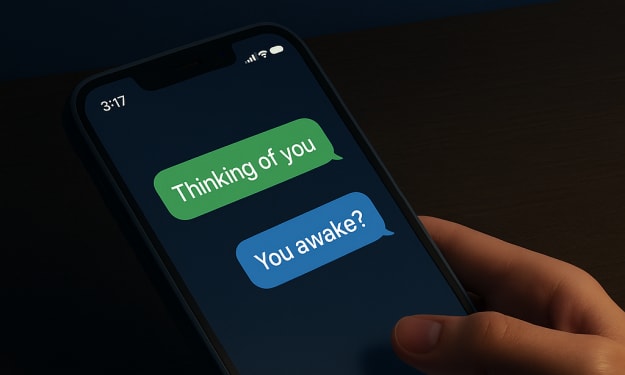
Why Do Couples Text at Odd Hours? Signs It Matters
In today’s digitally-driven world, communication doesn’t follow a 9-to-5 schedule. Text messages can pop up at any hour—2 a.m., 4:37 a.m., even just before dawn. For couples, these late-night or early-morning texts can hold deeper meanings, whether it’s a signal of emotional closeness, distress, or even hidden dynamics.
By Richard Baileyabout a year ago in Humans
Toxic Risks of Passive Smoking
In modern society, the problem of smoking is of high concern not only for smokers. The warning for passive smoking should have been claimed primarily to the one appealing to the people who purchase cigarettes. Passive smoking or secondhand smoking (SHS) is an issue relevant for everyone; as smokers affect their own health and the health of non-smokers to an equal extent. According to the research of the World Health Organization, only six out of ten believe that smoking damages the nonsmoker; only two-thirds of nonsmokers are aware of that, and just half of all smokers know about that (2017). Involuntary smoking or passive smoking is dangerous in its ways: the smoke consumed comes from the smoker exhaling it as well as from the lit cigarette. Conditioning and ventilating systems are not able to protect nonsmokers from being exposed to SHS, nor is separating smokers from nonsmokers useful. The fact is that any amount of secondhand smoke is harmful; there is no safe limit for nonsmokers. Based on data retrieved from research, secondhand smoke that was not inhaled tends to turn into thirdhand smoke (THS) or residual tobacco smoke (American Cancer Society, 2015). For months, it gets stored in dust and on surfaces at homes, in offices, and in cars. The substance is dangerous for its carcinogens leading to lung cancer. Evidence shows, that polycyclic aromatic hydrocarbons, the carcinogens, were detected in the dust collected in the smoker's houses. This implies that multi-unit houses are a reasonable way to deal with the SHS issue at home; separated offices for smokers and nonsmokers will help to tackle the problem at the office. Cancer is the most widespread consequence of secondhand smoke. Only in the US about 3,000 lung cancer deaths a year are stated to be caused by SHS, while less than 100 lung cancer deaths per year are the outcomes of ordinary outdoor air pollution (World Health Organization, 2017). As a rule, smokers prefer not to get deep into the death statistics; however, nonsmokers should pay attention to the variety of disorders they are exposed to from SHS. Those include not just lung cancer, but also the following: brain, bladder, breast, rectum, pharynx, and stomach cancers (American Cancer Society, 2015). Cancer cells vary as well as their inhibition body organs do, but they have one source, and that is secondhand smoking. SHS at home is a challenge mainly at home, where people spend most of their time and where their children are inhaling the smoke. Secondhand smoking along with thirdhand smoking leads children to the following diseases: leukemia, brain tumors, lymphoma, and liver cancer (American Cancer Society, 2015). Smoking parents rarely expect their habit to affect their children. However, the issue concerns even infants. Studies show, that children inhaling SHS not only get ear infections, lung infections, and asthma more often, but also are exposed to sudden infant death syndrome (SIDS) (American Cancer Society, 2015). Moreover, further research revealed, that THS impacts human DNA provoking serious disorders for the next generations (American Cancer Society, 2015). The results of the studies conducted represent that the only treatment for SHS outcomes underlies in elimination of smoking sources. The studies worldwide provide intimidating statistics and findings on passive smoking drawing public attention to this issue. The smoking problem is spread more than just at a certain place of human activity; sadly, smokers smoke at home, as well as in public places and offices. Health organizations perform research not simply to warn the smokers of the problem, but rather to attract the attention of the nonsmokers as well. The issue concerns every person on the planet, especially the children who get exposed to toxic substances causing incurable diseases and deaths. To solve the problem, public and governmental measures should be applied to divide smokers from nonsmokers in every public place. More to that, people should be aware of the problem of choosing a healthy smoking-free lifestyle.
By Neel Smithabout a year ago in Humans
The Forgotten Skill of Being Still
It began with a silence I didn’t ask for. One morning, my phone died without warning. No beeping. No blinking red bar. Just... stillness. My laptop, too, refused to boot. And for reasons beyond logic or technology, the Wi-Fi was down, the power was flickering, and every noise I was used to—the buzzing of apps, the pings of messages, the soft hum of my smart home assistant—was suddenly gone. For a moment, it felt like a power outage. But it turned out to be something far rarer. A stillness outage. --- At first, I panicked. Where were the updates? The notifications? The distractions I wore like armor? I paced the living room like a restless animal, reaching for screens that didn’t respond. My body fidgeted, trained by years of scrolling and clicking. My thoughts grew loud in the absence of input, racing from old regrets to overdue tasks. I had no idea how loud the world had become until it suddenly shut up. --- By hour three, I was forced to sit. Not because I wanted to. But because I had exhausted every possible way to distract myself. So I sat. No music. No messages. Just me, the couch, and the sound of wind pressing gently against the windows. It was uncomfortable. Like meeting a stranger I’d been avoiding for years. That stranger, I realized, was myself. --- Stillness is not the same as doing nothing. We live in a culture that equates stillness with laziness. If you're not producing, optimizing, multitasking—you're wasting time. But what if that time, the quiet time, is exactly where the soul regenerates? As I sat there, something strange began to happen. My breathing slowed. My heartbeat softened. My thoughts, once tangled and sharp, began to unravel and stretch. It was like the static in my mind had been dialed down, and I could finally hear the melody beneath it all. --- I remembered moments I had long buried beneath my digital avalanche: The way my grandmother used to sit on the porch for hours, saying nothing but smiling at the sky. The long train rides I took as a child, staring out the window with nothing to do but imagine. The walks through forests where even my thoughts had learned to whisper. These weren’t moments of boredom. They were moments of connection—with the world, with myself, with the rhythm of life. Somewhere along the way, I had forgotten how to be still. --- The next day, I didn’t turn my phone back on right away. I could’ve. Everything worked again—Wi-Fi, electricity, social media. The storm had passed, both outside and in. But I chose to keep the silence a little longer. I went outside. There was a park down the street I hadn’t visited in over a year. I sat on a bench and simply watched—children playing, leaves trembling in the breeze, a couple walking hand in hand, laughing over something unshared. No headphones. No podcasts. Just presence. And that’s when it clicked. Stillness isn’t just about pausing. It’s about paying attention. --- We often ask where peace has gone in this world, but maybe the real question is: when did we stop making space for it? You see, peace doesn’t shout. It doesn’t push itself into your schedule or demand a like or a retweet. Peace is polite. It waits in quiet corners, behind unhurried breaths, in long walks with no destination. Stillness is how peace introduces itself. --- Since that strange, silent morning, I’ve made stillness a ritual. Ten minutes a day. Sometimes more. No devices. No stimulation. Just breath. Just being. Just noticing. It’s not always comfortable. The mind resists. But I’ve learned to greet the discomfort with curiosity instead of avoidance. And what I’ve found—beneath the noise, the hustle, the digital frenzy—is something I didn’t know I had lost: My center. --- We talk about self-care like it’s something you can buy, download, or schedule. But the most powerful act of care you can offer yourself is presence. In stillness, we remember that we are not machines meant to produce. We are human beings—meant to feel, to breathe, to witness. And in those moments of deep stillness, I’ve heard something even more profound than a thousand notifications: My own voice. Clear. Calm. True. ---
By Mati Henry about a year ago in Humans
The Forgotten Promise: A Tale of Friendship and Fate . AI-Generated.
: The first time Sara met Zain, it was raining. She still remembered that afternoon vividly: standing at the school gate, holding a dripping umbrella too big for her small hands. Zain, soaked from head to toe, had smiled and said, “Guess we’re both terrible at checking the weather.” It made her laugh, and that laugh became the start of a friendship that would last for years — or so she thought.
By Saeedullah Shanabout a year ago in Humans
Best Indian Companies in AI Technology 2025. AI-Generated.
Artificial Intelligence (AI) is no longer a futuristic buzzword—it’s a present-day powerhouse, reshaping industries and societies. In 2025, India is not just adopting AI but actively building world-class AI technologies tailored to its own needs. From governance to healthcare, and retail to defense, Indian AI companies are pushing boundaries to create real-world impact.
By Manikesh Tripathiabout a year ago in Humans