advice
Dating, married, single, divorced, and more. Advice on the relationships you have in life. Dear, Humans..
The Day I Walked Away to Find Myself
I didn’t pack a bag. I didn’t write a long goodbye text. I didn’t even take my charger. I just slipped my phone onto airplane mode, put it face down on the table, and walked out of my apartment like the place was holding its breath and I was finally letting it exhale. Outside, the city was still wet from last night’s rain. Puddles collected the sky in broken pieces, and the air smelled like metal and mud. I didn’t have a destination. That was the point. For years, every step I took belonged to a plan, a person, a deadline. That morning, I decided to walk until the noise inside me ran out of words. At the first red light, I almost turned back. My mind did what it always does—started counting the things I should be doing: the emails, the apology I owed someone, the message I hadn’t replied to, the life I hadn’t been living. But then the light changed to green, and I let the city make the choice for me. I crossed. There’s a bakery three blocks down that I’ve passed a thousand times but never entered. Today I did. The bell above the door made a soft, old sound, like it had been there long before me and would stay long after. The woman behind the counter had kind eyes and a tired smile. “First time?” she asked, and when I nodded, she said, “Then you’re getting the almond croissant. Non-negotiable.” I took my coffee and croissant to a corner table and sat where I could watch the window fog and clear with every gust of wind from the door. I tore the pastry open with my fingers, watching flakes scatter like little versions of me—every piece given away over the years. Every favor I didn’t have the energy to do but said yes to. Every conversation where I swallowed the truth and served something easier instead. My reflection in the window looked like a stranger I almost recognized. I remembered being fourteen and filling the last page of a cheap blue diary with a promise to never lose myself for anyone. I remembered being twenty-three and erasing parts of myself like pencil marks, to fit into a shape that didn’t scare anyone. I remembered last week, staring at a ceiling at 3:17 a.m., wondering how a person could be surrounded by people and still feel like a locked room. When I finished the croissant, I wrote on the napkin: I miss me. I folded it and put it in my pocket like evidence. Back on the street, I walked without thinking. Past the bus stop where I once cried into a scarf no one noticed. Past the park where I used to read before life got louder than books. Past a couple arguing in low, exhausted voices—the kind of fight where both people want to be understood but neither wants to listen first. I didn’t judge them. I just recognized them. I had been both of them. I kept walking until the city started to thin out and the trees got taller. There’s a small footbridge over a creek—nothing special, just wood and rusted nails—but I stood there longer than I planned. The water underneath moved with a kind of certainty I envied. It didn’t argue with the rocks. It didn’t justify its path. It just went. So I tried something I hadn’t done in years: I talked to myself out loud. Not the panicked kind of self-talk you do when you’re late or lost, but the honest kind. “I don’t hate my life,” I said to the creek. “I just don’t remember choosing most of it.” I listed things I thought I loved and realized some of them were just habits. I listed people I gave my time to and realized some of them were just comfortable ghosts. I listed rules I lived by and realized some of them were never mine. An older man with a baseball cap and a dog passed me on the bridge. He nodded. I nodded back. It felt like we were sharing a secret: neither of us had figured it out, and both of us were still trying. On the way back, I took a different route, on purpose. I didn’t want to return to my apartment the same way I left it. I stopped at a stationery shop and bought a notebook with a cover the color of wet leaves. At home, I made tea I didn’t drink and sat at my desk without opening my laptop. I wrote three headings on the first page: What I’m Carrying, What I’m Letting Go, What I’m Choosing. Under What I’m Carrying, I wrote: The fear that if I stop saying yes, I’ll stop being loved. The belief that if I’m not useful, I’m not valuable. The version of me people clap for, even when it exhausts me. Under What I’m Letting Go, I wrote: Apologizing for needing rest. Explaining my boundaries to people committed to misunderstanding them. Waiting to be chosen. And under What I’m Choosing, I wrote slowly, like I wanted the ink to sink deeper than the page: Mornings that start quiet. People who ask, “How are you, really?” and wait for the answer. Work that feeds me, not just my resume. Saying no without a novel attached. A life where I don’t abandon myself to be acceptable. I cried—not the dramatic movie kind, but the messy kind you almost choke on because it’s coming from someplace deep and old. When it stopped, I felt empty in a way that wasn’t scary. It felt like an empty room ready to be lived in. I texted two people. One was an apology that didn’t include self-blame. The other was a boundary that didn’t include justification. Neither reply came immediately. For once, I didn’t refresh the screen to make them arrive faster. As the day faded into evening, I lit the only candle I owned, the one I’d been saving for a “special moment” I could never define. The room smelled like vanilla and something I couldn’t name—maybe hope, maybe freedom, maybe both. I read a few pages from a book I never finished, not because I was trying to be productive but because I actually wanted to know how the character ended up. Before sleeping, I taped the napkin from the bakery above my desk: I miss me. Under it, on the notebook’s first page, I added one more line: But I think I know where to find me now. I won’t pretend everything changed overnight. The next day, I still had emails. People still asked for things. Old habits still knocked like persistent salesmen. But now I had a door I could close. A voice I could hear. A map I was actually willing to follow. Choosing yourself isn’t a one-time decision. It’s a daily practice. It’s the way you put your phone down when your heart needs silence. It’s the way you breathe before you answer. It’s the way you leave a room that keeps shrinking you. It’s the way you return to the bridge, to the bakery, to the notebook—again and again—until the life you’re living finally sounds like your own voice reading it out loud. If you’re lost right now, I won’t tell you to be brave. I’ll tell you to be honest. Sit with the life you’ve built and ask, “How much of this belongs to me?” If the answer hurts, don’t run. Take a walk. Buy a cheap notebook. Write badly but truthfully. Cry without apologizing. Say no without decorating it. And then, when you’re ready, choose yourself in small, stubborn ways—until it becomes the only way you know how to live. Maybe one day you’ll tape your own sentence above your desk. Maybe it’ll say I’m back. Maybe it’ll just say Me. Either way, I hope you never forget it.
By Nirupam Kushwaha about a year ago in Humans
Rising Together: The Power of Human Potential
In a quiet corner of the world, nestled between hills and wind-blown fields, stood a village once forgotten by time. The roads were cracked, the buildings weathered, and opportunity was a distant dream. But it was here, in this seemingly insignificant place, that something extraordinary began. It started with a young girl named Amina, who, at just twelve years old, asked a question no one had dared to ask before: “Why does it have to be this way?” Her village had long accepted its hardships — the failing crops, the poor schools, the distant hospitals. The elders would sigh and say, “It’s just the way things are.” But Amina refused to believe that. She believed in something different — in the quiet, unshaken power of people who truly cared. One evening, while sitting beside her grandmother’s small fire, Amina asked again, “What if we could grow food together? Teach each other? Build things no one has ever built?” Her grandmother smiled, not because the idea was new, but because it was finally voiced aloud. Word spread quickly. At first, just a few curious neighbors showed up the next week with seeds, tools, and questions. But soon, others followed — mothers, engineers who had once left for the city, former teachers, and children full of ideas. They didn’t have much, but they had what mattered: compassion, the will to try, and each other. A retired electrician helped light the old schoolhouse with solar panels. An elder who’d once trained in herbal medicine began teaching young women how to grow healing plants. A former teacher turned her tiny home into a reading nook where books could be borrowed freely. The movement grew, not just in scale but in spirit. Villages nearby took notice. One sent its young programmers to set up a shared Wi-Fi network powered by wind turbines made from scrap metal. Another shared blueprints for water filtration systems. There were no contracts, no profit — just people helping people. Soon, the village became a hub of unlikely innovation. Kids once expected to leave school early were now building apps that connected local farms to city markets. Elders, once considered too old to contribute, taught traditional skills that inspired new inventions. The barriers between generations, backgrounds, and beliefs softened. Amina, still only a teenager, helped organize the first Unity Conference — a gathering of communities from across the region who shared one thing in common: they had decided not to wait for the world to change. They had decided to become the change. During her speech, Amina stood on a wooden platform under an open sky and said: "We are not here because we are the strongest, the richest, or the most educated. We are here because we chose to believe in each other. Compassion is not weakness. Innovation is not limited to those with fancy labs. And unity is not a dream — it is a decision." Her words echoed across the hills and far beyond. Media outlets picked up the story. Universities sent researchers to learn from their systems. The world, long hungry for hope, saw in this village a living example of what could be possible. Ten years later, Amina stood where it had all begun — beside her grandmother’s fire. Only now, the village was no longer hidden in shadows. It was a model, a symbol of human potential unlocked by simple but powerful values. In her hand, she held a letter from a global foundation inviting her to speak on innovation and social change. But what she was most proud of wasn’t her growing recognition. It was watching children run past on their way to a new school built by the community, powered by wind and love, where compassion and collaboration were part of the curriculum. The world still had problems. There were still storms, setbacks, and inequality. But Amina had learned something profound — that when people rise together, not for profit, power, or pride, but for each other, they become a force no challenge can truly overcome. And so the village kept rising — not alone, but together.
By Muhammad Saad about a year ago in Humans
10 Unspoken Needs Women Secretly Crave in Relationships
She smiles. She laughs. She says she’s okay. But deep down? She’s not always saying everything. In relationships, many women hold back. Not because they don’t trust their partners. But because they worry they’ll sound “too much,” “too sensitive,” or just flat-out “needy.” They’ve been taught to tough it out and keep it cool. But inside, Emotional needs are simmering quietly.
By Milan Milicabout a year ago in Humans
The Secret Influence of White Label Chemicals: Enabling Contemporary Brands Behind the Scenes
In the dynamic world of product development, branding, and retailing, it's a silent but potent force behind most of the products we use every day: white label chemicals. You might not hear them spoken about, but they're behind a lot of cleaning products, industrial chemicals, personal care products, and even the green ones. Behind most of the brand names on supermarket shelves is a complex system of chemical manufacturers making high-grade formulas to be rebranded.
By ABDULLAH TAYYABabout a year ago in Humans
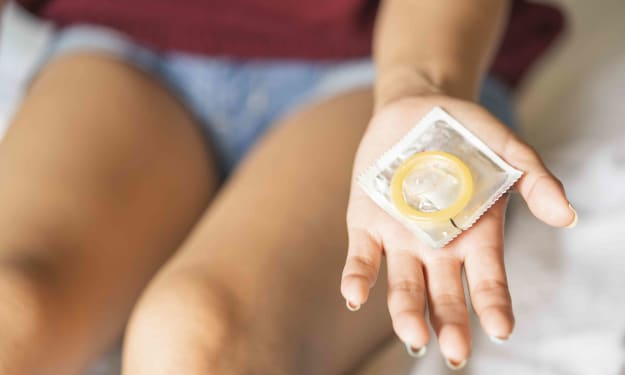
Condom Uses: What You Need to Know
Imagine a simple, thin shield that has quietly reshaped public health, empowered millions, and averted countless crises around the world. It’s a tool often whispered about, sometimes debated, yet its impact resonates globally – from bustling metropolises to remote villages. Despite its humble appearance, this guardian has a fascinating history, far-reaching benefits, and persistent misunderstandings. Have you ever considered how one small invention could hold such immense power in protecting futures and promoting well-being across diverse cultures? This isn't just about a product; it’s about understanding a pivotal instrument in the ongoing fight for healthier lives and stronger communities worldwide.
By Reality Brooabout a year ago in Humans
"Oops, I Made a Genius Mistake!"
It all started on a Monday morning — the kind of morning where your coffee is more confused than caffeinated. I was preparing for the biggest presentation of my career: a pitch for a new marketing campaign that could finally get me noticed by upper management. I had spent two weeks creating the perfect slideshow: clean, clever, and bursting with data. But then came The Slide. Slide #7. The one I was most proud of. It featured a sleek pie chart comparing customer engagement rates across platforms — Instagram, Facebook, TikTok, and... “Snackchat.” Yes. Snackchat. Not Snapchat. Snackchat. Now, in my defense, it was 1 a.m. when I finalized that slide, and I was halfway through a family-sized bag of pretzels. My brain was clearly trying to multitask. But the next morning, standing in front of the entire executive team with “Snackchat” projected onto a 10-foot screen, I didn’t have time for excuses. I froze. There was a full second of painful silence. Then someone giggled. And then, like popcorn in a microwave, the entire room erupted into laughter. “This is brilliant!” our creative director blurted out. “Snackchat! A social platform for foodies? I’d use that in a heartbeat!” Before I could explain that it was just a typo, the team was already riffing off it. “You could have live snack streams!” “Or limited-time ‘bite-sized’ posts!” “Swipe up to eat!” “Wait,” said one of the executives, pausing mid-laugh. “Are we actually… doing this?” Somehow, in the space of five minutes, my biggest typo had become our company’s next innovation. They loved it. I didn’t have the heart to tell them it was an accident. And honestly? I started loving it too. That afternoon, our entire department shifted gears. The “Snackchat Initiative” was born. I was suddenly promoted to “Lead Creative Coordinator for Snackchat Branding,” which sounded impressive until I realized I had no idea what that even meant. But I wasn’t about to question it — I now had a team of five and a corner cubicle with a plant I didn’t know how to take care of. The next two weeks were a whirlwind. We built mockups of the app, developed a goofy brand mascot (a potato chip named “Crispy”), and even staged a pretend launch video where people took dramatic selfies with their sandwiches. It was absurd. It was fun. And somehow, it was catching on. Then came the moment we unveiled Snackchat to the public as an April Fool’s launch. Our company posted a teaser on all our socials, and the internet went wild. People started tagging their food photos with #Snackchat. Brands jumped in with mock partnerships. A pizza chain offered “Snackchat Exclusive Slices,” whatever that meant. Even Snapchat posted, “We’re watching you, Snackchat 👀.” It was beautiful chaos. By the end of the week, our campaign had gone viral. Our engagement numbers tripled, we were trending on Twitter (or X or whatever it’s called now), and my inbox was full of interview requests from food bloggers who genuinely believed Snackchat was real. That’s when our CEO called me into her office. I was bracing myself. Maybe this had all gone too far. Maybe I was about to be fired for accidentally rebranding the company as a sandwich-sharing startup. Instead, she said, “You turned a mistake into a masterpiece. This is the most attention we’ve had in months. What’s your next idea?” My next idea? I hadn’t thought that far ahead. I was still recovering from the trauma of Slide #7. But in that moment, I realized something. Creativity isn’t always about getting things perfectly right — sometimes, it’s about embracing the hilarious, unexpected turns. I never would have dreamed up Snackchat on purpose. But once it was out there, I leaned into it. And that made all the difference. So, my next idea? I smiled. “Well,” I said, “how do you feel about a dating app for introverts called ‘Shhh’?” She blinked. Then she laughed. “Let’s talk.” --- Moral of the Story: Don’t fear mistakes — sometimes they’re just creative ideas wearing the wrong hat. You never know which typo might turn into your biggest breakthrough.
By Muhammad Saad about a year ago in Humans
ChatGPT Is Not Your Therapist": OpenAI CEO Issues Privacy Warning
In a recent podcast appearance, OpenAI CEO Sam Altman made a candid and concerning statement about the use of ChatGPT, particularly when it comes to mental health and therapy. He warned users that using AI chatbots like ChatGPT for emotional or psychological support does not come with the same legal protections and confidentiality as professional therapy. This disclosure has sparked an important conversation around privacy, ethical usage, and the limitations of artificial intelligence in sensitive domains.
By Taimoor Khanabout a year ago in Humans
The Silence Between Generations
The village of Narayanpur stirred each morning not with alarm clocks or smartphones, but with the rooster’s crow and the rhythmic clang of women drawing water from the well. It was a village caught between eras — its cracked mud houses and dusty courtyards whispering stories from the past, while the younger generation dreamt of distant cities they could barely pronounce.
By AFTAB KHANabout a year ago in Humans
The World Is Too Much For Us
**The World Is Too Much for Us** By; Abdur-Rahman By The city hummed like a restless beast—cars honking, people shouting, screens flashing endless streams of information. Noah stood at the edge of the rooftop, his fingers gripping the cold railing as the wind whipped through his hair. Below him, life moved in chaotic waves, but up here, for just a moment, there was silence.
By Path To Progressabout a year ago in Humans
LIFE....
The Beginning of Life Life begins with birth, but it truly starts to take shape as we grow. In our early years, we explore the world with curiosity. As children, everything is new — we learn to walk, talk, and understand the basics of relationships and emotions. These early stages are the foundation of who we become.
By USA daily update about a year ago in Humans
how to impress a teacher
I still remember the day I stayed after my college lecture in Mumbai, heart pounding, hands sweaty—only to offer the professor a thoughtful question that revealed I’d done more than skim the slides. That moment wasn’t about flattery; it set the tone for how she saw me—as someone genuinely curious.
By Michael B Norris (swagNextTuber)about a year ago in Humans