advice
Dating, married, single, divorced, and more. Advice on the relationships you have in life. Dear, Humans..
Gemini Woman and Capricorn Man Compatibility Score. AI-Generated.
The union between a Gemini woman and a Capricorn man is a unique blend of lightness and gravity. She is airy, curious, and thrives on variety, while he is grounded, disciplined, and prefers a life built on stability. At first glance, their differences may seem too wide to bridge, but beneath the surface lies the potential for a powerful partnership—one that balances her boundless energy with his steady determination.
By Inspire and Funabout a year ago in Humans
Why Saying “I’m Sorry” Is So Hard
It’s only two words. Just six letters. And yet, for many of us, “I’m sorry” feels like trying to push a boulder uphill. We know it’s the right thing to say. We know it could heal wounds, bridge distances, and ease tension. But when the moment comes, our lips tighten, our throat closes, and the words get stuck somewhere between our mind and our mouth.
By Habib kingabout a year ago in Humans
Always Show Concern To Issues That Affect Other People by Blessing chibike
CHAPTER 1 Dede was an indigene of a village called Arota. Arota village was a very happy one. The people Loved and Care for One another. They were l rich,but they were very hardworking. Their only occupation and source of livelihood was farming and this they did relentlessly.
By Agho Christian about a year ago in Humans
The Evolving Mind: Unlocking the Power of Modern Human Psychology
The Evolving Mind: Unlocking the Power of Modern Human Psychology How Fresh Insights into Thought, Emotion, and Behavior Are Shaping a Healthier, Happier Future In a bright, plant-filled office in Copenhagen, a team of designers, psychologists, and neuroscientists gather around a whiteboard, sketching ideas for a wellness app. They're not just building another tool—they’re translating decades of psychological research into something practical, beautiful, and human. What they’re doing reflects a powerful trend happening across the globe: modern psychology is evolving, and with it, our understanding of what it means to live a balanced, fulfilled life. At the heart of this evolution is a simple yet powerful shift. For much of the 20th century, psychology focused heavily on dysfunction—what goes wrong in the human mind. Depression, anxiety, trauma, addiction. But today, the field has broadened. It's no longer just about diagnosing problems; it's about enhancing well-being, building resilience, and understanding how people can truly thrive. This more holistic approach is called positive psychology, a field that has grown rapidly since the late 1990s. Pioneered by researchers like Martin Seligman and Mihaly Csikszentmihalyi, it asks questions like: What makes life worth living? How can we cultivate optimism, purpose, and joy? The answers aren’t just theoretical—they’re deeply practical. Take, for example, the concept of growth mindset, popularized by psychologist Carol Dweck. It’s the idea that our abilities and intelligence aren’t fixed, but can grow with effort and learning. This simple shift in perspective has transformed classrooms, coaching, parenting, and even corporate leadership. When people believe they can grow, they do. Or consider emotional intelligence, once a fringe concept, now a cornerstone of modern psychology. EQ, as it’s often called, emphasizes self-awareness, empathy, and emotional regulation—skills that are increasingly recognized as essential for success in relationships, workplaces, and even global leadership. One person who has experienced this transformation firsthand is Amina, a 32-year-old teacher in Nairobi. “I used to think emotions were something you had to suppress to be strong,” she says. “But through therapy and learning more about emotional intelligence, I’ve realized they’re a source of strength. I’m now a better teacher, a better partner, and a happier person.” Stories like Amina’s are becoming more common, thanks in part to increased access to psychological knowledge through podcasts, online courses, therapy apps, and social media. People from all walks of life are learning about boundaries, attachment styles, mindfulness, neurodiversity, and trauma-informed care—not just in universities or clinics, but in daily conversations, community centers, and TikTok videos. But modern psychology isn’t just about the individual. It’s also becoming more socially aware. There’s a growing understanding that mental health doesn’t exist in a vacuum. It’s shaped by culture, environment, inequality, and systemic forces. That’s why many psychologists now advocate for community-based approaches, inclusive practices, and culturally sensitive therapy. Technology, too, is playing a huge role. Tools like AI-driven mental health apps, virtual reality for trauma treatment, and online therapy platforms are making support more accessible than ever before. While challenges around privacy, ethics, and human connection remain, the potential is enormous. With the right guidance, digital tools can extend care to those who might never have accessed it otherwise. Still, perhaps the most hopeful development in modern psychology is its growing celebration of neurodiversity—the idea that different brains work in different ways, and that’s not only okay, it’s valuable. Once pathologized, conditions like autism, ADHD, and dyslexia are increasingly seen as variations of human experience, with their own strengths and insights to offer. This shift from “what’s wrong with you?” to “what’s unique about you?” is subtle, but revolutionary. It invites compassion, creativity, and curiosity—not just from professionals, but from all of us. And it’s helping to build a world where more people feel seen, understood, and empowered. Back in Copenhagen, the team finishes mapping out a feature for their app: a daily gratitude check-in, rooted in research showing that small reflections on what’s going well can dramatically improve mood and perspective. It’s not flashy, but it’s powerful. And it reflects the essence of modern psychology—practical tools, grounded in science, designed to uplift. In the end, psychology today isn’t just a study of the mind. It’s a movement toward greater self-awareness, connection, and hope. It’s helping us understand not only how we think, but how we heal, grow, and flourish—together.
By Muhammad Saad about a year ago in Humans
Crypto Funds Recovery: The Complete 2025 Playbook for Getting Your Funds Back
The Unsettling Reality of Crypto Scams in 2025 – Hope Amidst the Loss For many people, cryptocurrencies have become more than just another asset to invest in. They offer hope for faster, cheaper transactions that can be done beyond the control of the state and banks. So imagine the shock and frustration of crypto owners when scammers get hold of their assets. Often, newcomers to crypto investing don’t even know where to turn for help. Scammers take advantage of their inexperience and the fact that they miss time trying to figure out what to do in this situation.
By 1 tec solutionsabout a year ago in Humans
"The Bright Thread of Humanity"
The Bright Thread of Humanity How Compassion, Innovation, and Unity Are Shaping a Better Future for All In a quiet valley nestled between green hills and crystal-clear rivers, the village of Liora once faced the same struggles many communities did across the globe—scarcity of resources, divided interests, and the shadow of climate change. Yet today, it stands as a symbol of what humanity can achieve when driven by compassion, creativity, and collective will. Liora’s transformation began with a question asked by a curious teenager named Sari: “Why can’t we work with nature instead of against it?” This simple thought sparked a community conversation, then a movement. Elders shared old sustainable farming techniques, engineers began exploring clean energy, and the young offered bold ideas shaped by digital tools and a global perspective. Within a decade, the village transitioned entirely to renewable energy. Solar panels shimmered on rooftops, wind turbines spun gracefully on the surrounding hills, and a small hydro station harnessed the river’s gentle flow. But more impressive than the technology was the mindset: cooperation over competition, long-term thinking over short-term gain. The story of Liora is not unique. Across the planet, countless communities, cities, and countries have taken similar strides. In Kenya, women-led cooperatives turned desert land into thriving food gardens using drip irrigation and solar pumps. In Scandinavia, architects reimagined entire cities with sustainable wood and green roofs. In Bangladesh, floating schools brought education to children even during flood seasons, using solar-powered boats equipped with Wi-Fi and digital classrooms. What connects all these efforts is a shared belief that humanity is not doomed to repeat its mistakes. In fact, history offers proof that, when faced with challenge, people innovate—not just for survival, but for the betterment of all. During the global health crisis of the early 2020s, scientists and researchers around the world collaborated at unprecedented speed, sharing data and solutions across borders. The pandemic revealed deep inequalities, but it also highlighted humanity’s capacity for empathy and action. Volunteers delivered meals to neighbors, musicians played from balconies to lift spirits, and nations supported each other with resources and expertise. This spirit of shared responsibility began to influence larger systems. Education models shifted toward inclusivity, offering free online learning in remote areas. Healthcare efforts expanded to focus on prevention and mental well-being. The climate movement, once the voice of the few, became a global chorus of students, scientists, elders, and workers marching together for a livable planet. In 2040, a historic treaty was signed by over 190 countries, committing to protect 50% of Earth’s land and oceans by 2050. While critics doubted the feasibility, progress steadily followed. Indigenous communities—long protectors of biodiversity—were finally recognized as leaders and guardians. Deforestation slowed, coral reefs began to recover, and carbon emissions steadily dropped as clean technologies became more accessible than ever. But perhaps the most significant change was in the way people saw themselves—not as separate from nature or from each other, but as part of an intricate, beautiful web of life. Humanity’s greatest strength was revealed not to be its intelligence or power, but its capacity to care. A child in Liora now learns alongside students from five continents through interactive classrooms powered by satellite internet. They study how wind travels across the globe, how empathy improves mental health, and how planting a tree today shapes the air their children will breathe. They learn about past mistakes, but more importantly, they learn how far we’ve come—and how much further we can go, together. Looking back, it’s easy to feel overwhelmed by the challenges humanity once faced—conflict, inequality, pollution. But these were not the end of the story. They were chapters in a much longer book, one still being written every day. The bright thread of humanity—our innate drive to connect, to improve, to protect—runs through it all. It weaves together scientists and farmers, artists and engineers, elders and youth, each adding their unique thread to the tapestry of tomorrow. And in that tapestry, the future looks not just possible, but bright.
By Muhammad Saad about a year ago in Humans
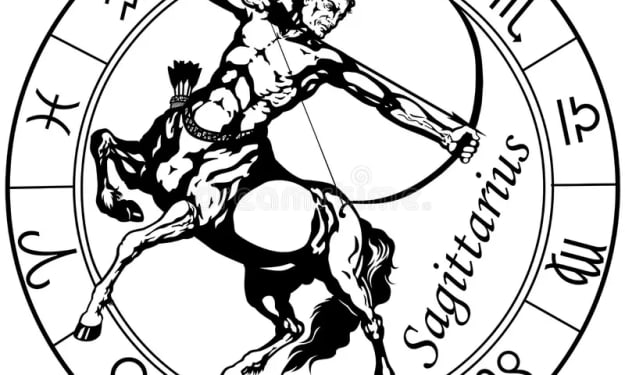
Sagittarius: The Adventurous Centaur
Sagittarius, the ninth sign of the zodiac, is symbolized by the Archer—a half-human, half-horse figure aiming a bow toward the sky. Born between November 22 and December 21, Sagittarians are known for their adventurous spirit, optimism, and philosophical outlook on life. Governed by Jupiter, the planet of expansion and abundance, they possess a zest for life that is both infectious and inspiring.
By Mehran Amanabout a year ago in Humans
How I Stopped Overthinking in 5 Minutes a Day
The Problem With Overthinking If you’ve ever laid in bed replaying a conversation from three days ago, or kept imagining the worst-case scenario for something that hasn’t even happened yet, you know the exhausting cycle of overthinking.
By Dadullah Danishabout a year ago in Humans
Gemini Woman and Sagittarius Man Compatibility Score. AI-Generated.
When a Gemini woman meets a Sagittarius man, the chemistry is almost instantaneous. Both are adventurous, curious, and open-minded, with an unquenchable thirst for new experiences. This pairing brings together Air (Gemini) and Fire (Sagittarius), creating an exciting and fast-paced relationship full of passion, humor, and intellectual stimulation. While their similarities can make them an unstoppable duo, their differences can also create occasional turbulence—especially when it comes to commitment and emotional depth.
By Inspire and Funabout a year ago in Humans
"The Old Man and His Ringing Companion"
The afternoon sun filtered gently through the lace curtains of a small, quiet room. In the corner sat Abdul Kareem, an old man with silver hair and tired eyes, rocking slowly in his chair. The house was silent, except for the ticking of a wall clock and the faint rustle of leaves outside. On the table beside him lay a small, outdated mobile phone. It wasn’t one of those sleek new touchscreens everyone seemed to carry. It was a simple device—black, with large buttons, a tiny screen, and scratches on the back. But to Abdul Kareem, it was far more than just a phone. He reached out and picked it up, his rough, wrinkled fingers tracing the familiar edges. It had been a gift from his son, Imran, years ago. “So you can call me anytime, Abbu,” Imran had said, slipping it into his father’s hand before leaving for the city to work. Abdul Kareem had smiled then, not realizing how much this little machine would come to mean to him. At first, he used it rarely. A quick call to ask if Imran had eaten, a short greeting on Eid, sometimes a reminder to bring medicine when visiting. But as the months passed, those calls became less frequent. Imran’s work kept him busy, and Abdul Kareem didn’t want to disturb him. Still, he kept the phone charged. Every morning after Fajr prayer, he would check if there were any missed calls or messages. Most days, there weren’t. But on the days there was even a short “How are you, Abbu?” his heart felt light for hours. One rainy evening, while sitting by the window, he remembered how Imran had shown him the phone’s functions. “This is the green button to answer, the red one to hang up,” Imran had explained patiently. Abdul Kareem had laughed, saying, “I’m too old for all this technology.” But secretly, he was proud to have learned something new. The years passed, and the old man’s world grew smaller. Friends from the mosque moved away or passed on. His knees ached too much for long walks. The phone became his window to the outside world. It connected him not just to Imran, but to his younger sister in another city, to an old friend in the village, and even to the shopkeeper who would call to confirm grocery orders. One winter night, Abdul Kareem sat in bed, staring at the phone. It had been two months since Imran had last called. The silence weighed heavy on him. He thought of calling, but then imagined his son’s busy voice saying, “Abbu, I’m in a meeting, can I call you later?” And so he decided to wait. Then one day, something unexpected happened. While watering the small plants in his yard, the phone rang. Startled, Abdul Kareem rushed inside and answered. “Abbu! How are you?” It was Imran’s voice, warm and full of energy. “I’m fine, beta. How are you?” he replied, smiling without realizing. “I’m good. Listen, my work is finally less hectic. I’ll be visiting next weekend.” Those words were like rain on dry soil. For the next few days, Abdul Kareem prepared the house, dusting shelves, changing bedsheets, and even making a list of dishes Imran loved. The phone stayed in his pocket at all times, just in case. The weekend came, and so did Imran. The visit was short but full of laughter, shared meals, and long talks late into the night. Before leaving, Imran handed him a small box. Inside was a brand-new smartphone. “Abbu, this one can make video calls. You’ll be able to see me when we talk,” Imran said. Abdul Kareem hesitated. The old phone had been his silent companion for years, holding countless memories in its worn buttons. He didn’t want to replace it. But seeing the excitement in his son’s eyes, he nodded. Learning the new phone wasn’t easy. The screen would sometimes freeze because he pressed too hard. The icons confused him, and he often forgot where the camera app was. But Imran patiently taught him before leaving again. One evening, a week later, the new phone rang—not just with sound, but with Imran’s face smiling on the screen. “Assalamu Alaikum, Abbu!” “Wa Alaikum Assalam, beta. I can see you!” the old man laughed, his eyes shining. From that day on, the calls became more frequent. Sometimes just to share a cup of tea “together” over video, sometimes to see his grandson showing him school drawings, and sometimes just to talk about the weather. The old man still kept the old phone, though. It sat on his bedside table, turned off but never thrown away. It was a reminder of the years when a simple ring had the power to brighten his entire day. One night, as he lay in bed, Abdul Kareem thought about how strange life was. A small device—no bigger than his palm—had been a bridge across miles, keeping him connected to the people he loved. He realized it wasn’t the phone itself that mattered. It was the voices, the laughter, the shared moments it carried. He smiled to himself, whispered a prayer for his son, and drifted off to sleep with the new phone charging by his side and the old one resting quietly nearby—a silent witness to years of love, longing, and connection.
By Itz stories about a year ago in Humans