
Salt Bricks for Sauna: The Complete Guide to Himalayan Salt Walls
Discover how Himalayan salt bricks can enhance your sauna with elegant design, lasting quality, and a warm, inviting ambiance.

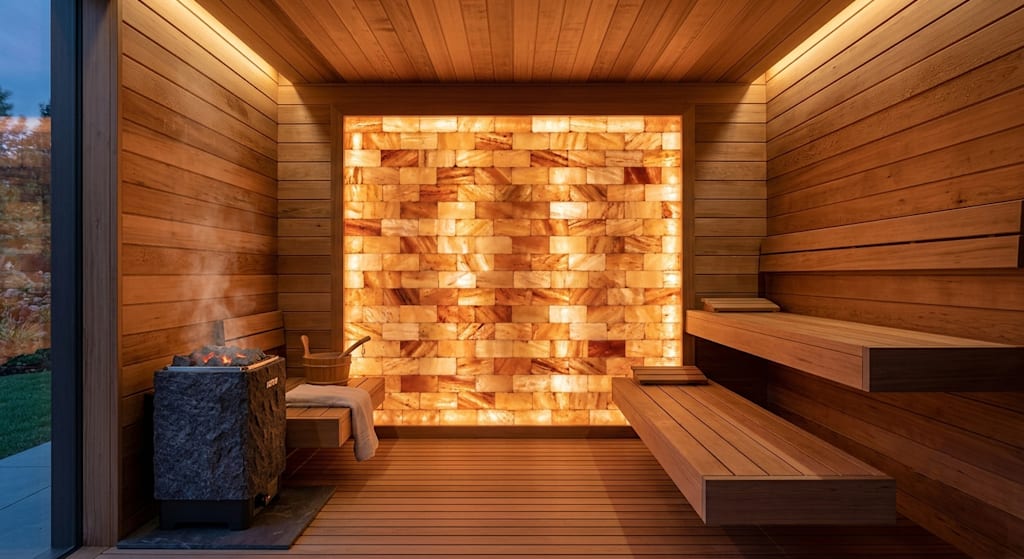
Salt bricks for sauna are solid, structural-grade blocks of natural rock salt — most often Himalayan or Pakistani Khewra salt — used to build glowing accent walls inside a sauna. They combine the radiant heat and humidity tolerance of a building material with the warm, amber-lit aesthetic associated with salt caves and halotherapy rooms, and have become one of the most requested upgrades in modern sauna design, from home renovations to infrared sauna installs and luxury wellness rooms.
This guide covers what salt bricks are, how they relate to halotherapy, how to choose premium-grade bricks, how a salt wall compares to cedar paneling, and what it takes to install and maintain one — plus a quick FAQ.
What Are Sauna Salt Bricks?
Salt bricks for sauna are solid blocks cut from natural rock salt deposits, most commonly the Khewra Salt Mine in Pakistan — marketed as "Himalayan salt" for its proximity to the Himalayan foothills, though the mine itself sits in Punjab. The bricks are cut, polished, and often backlit with LEDs for a warm, amber glow when heated. Unlike loose salt panels or thin veneer tiles, true salt bricks are thick, structural-grade blocks, typically 1 to 3 inches deep, built to withstand a sauna's heat and humidity cycles without crumbling.
Why People Choose Salt Walls
There are a few recurring reasons homeowners and spa designers gravitate toward salt brick walls: the pinkish-orange glow creates a dramatic focal point wood can't replicate, especially backlit; salt's natural density means it absorbs and slowly releases heat, producing a more even radiant warmth than the drier heat of wood-paneled saunas; many sauna-goers describe the ambient feel as softer than a standard cedar room; and for builders, a salt wall simply signals a premium build — a feature people remember and talk about.
It's worth noting clearly: claims that salt walls "purify the air," release therapeutic negative ions, or provide specific respiratory health benefits are common in marketing but are not well supported by rigorous scientific evidence. If health benefits are part of your motivation, treat them as a pleasant possibility rather than a guarantee.
Salt Walls, Halotherapy, and Infrared Saunas
Salt brick saunas are often confused with halotherapy rooms and salt caves, which are different concepts: a true salt cave disperses pharmaceutical-grade dry salt aerosol via a halogenerator for inhalation, while a sauna salt wall is a heated, humid environment where salt functions as a building material, not an inhalation method. Salt walls also appear in both traditional and infrared saunas — in a traditional sauna the ambient heat and humidity interact with the salt for radiant warmth, while in an infrared sauna the heat comes mainly from the panels, so the salt wall is more of a visual feature there.
Salt Bricks vs. Traditional Sauna Materials
FeatureSalt BricksCedar/Hemlock WoodVisual styleGlowing, warm-toned, dramaticNatural, rustic, classicHeat behaviorRadiant, slow-release warmthDrier, more direct heatMaintenanceNeeds humidity control, gentle cleaningNeeds occasional resealing, easy upkeep CostHigher (premium material + installation)Moderate, widely available DurabilityLong-lasting if humidity is managedLong-lasting, more forgiving of moisture swingsInstallation complexityRequires specialized framing and ventilation planningStandard sauna carpentry
Most high-end builds combine both: a salt accent wall paired with cedar benches, flooring, and ceiling for the glow without sacrificing wood's practicality.
Choosing Premium Salt Bricks
When sourcing salt bricks, look for: even color with minimal cracking (inconsistency signals lower-grade salt); thickness of 2+ inches for structural sections, since thinner bricks erode faster; transparent sourcing on where and how the salt was mined; and, for backlit walls, consistent cut thickness for even light diffusion.
Installation Best Practices
Installing a salt wall isn't a simple tile job, and it differs meaningfully from standard sauna paneling:
Frame for ventilation. Salt is hygroscopic, so a backing frame with airflow gaps prevents moisture buildup behind the bricks.
Use a moisture-resistant backing. A vapor barrier protects the surrounding wood structure.
Mount, don't fully seal. Adhesive plus discreet fasteners, rather than sealed edges, let the salt "breathe" and reduce cracking.
Plan lighting first. Backlighting LEDs need positioning and testing before the bricks go up.
Bring in a specialist. Given the moisture and structural demands, this generally isn't a beginner DIY project.
Maintenance Tips
Salt walls require a different maintenance rhythm than wood:
Control humidity between sessions. A dehumidifier, or simply letting the sauna fully dry out after use, significantly extends brick life.
Avoid direct water contact. Never hose down or splash a salt wall; wipe gently with a barely damp cloth only when needed.
Watch for surface "sweating." A light film is normal in humid conditions, but persistent wetness suggests a ventilation issue.
Replace individual bricks as needed. Brick construction means damaged sections can often be swapped without rebuilding the whole wall.
Frequently Asked Questions
Are salt bricks the same as Himalayan salt lamps? No — lamps are small decorative pieces, while sauna bricks are structural, wall-grade blocks engineered for sustained heat and humidity.
Do salt walls purify the air or release negative ions? These are marketing claims without strong scientific backing; enjoy a salt wall for its look and feel, not as a health treatment.
How long do salt bricks last? Many years with proper ventilation and humidity control; lifespan drops sharply if moisture pools or the room never dries.
Can I install one myself? Decorative panels can be DIY-friendly, but a structural, backlit wall is best left to an experienced installer.
Does a salt wall work in an infrared sauna? Yes, though it's more of a design feature there than a heat-retention element.
Final Thoughts
A salt brick wall is one of the more striking upgrades for a home or commercial sauna, offering a look and feel wood paneling can't match — at a higher price and with different upkeep demands. Most successful builds combine salt accents with the practicality of cedar or hemlock elsewhere in the room. Whether renovating or starting fresh, working with an experienced supplier and installer is what separates a feature that lasts for years from one that becomes a maintenance headache.
About the Creator
Emily Rosie
Salt Brick is one of the most respected wholesale suppliers of Himalayan salt bricks, salt tiles, white salt tiles, natural animal lick salt, and high-strength salt adhesive. Our products are the perfect solution for the creation of saunas
Enjoyed the story? Support the Creator.
Subscribe for free to receive all their stories in your feed.
Comments
There are no comments for this story
Be the first to respond and start the conversation.