
Researchers find a secret "drain" that purifies the human brain.
The drainage system of the brain

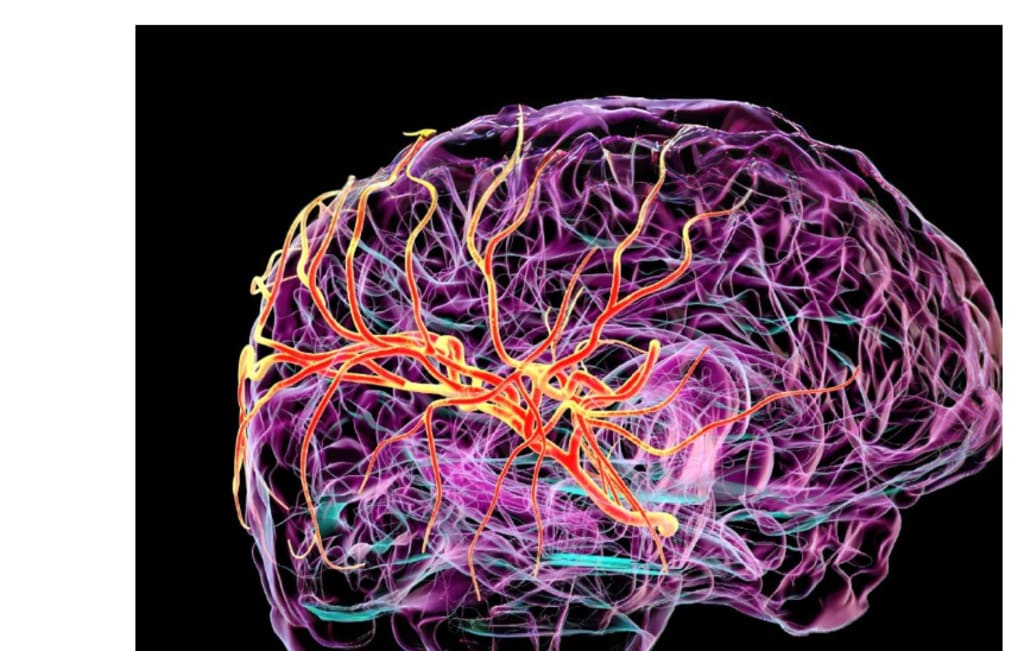
Even when a person is sleeping, their brain is constantly active. It facilitates movement, feeling, and thought. However, it also produces waste, just like any busy system. How does the brain clean itself, then?
A recent study provides an intriguing yet straightforward solution. It's possible that the brain has a gradual cleansing system of its own.
The drainage system of the brain
The lymphatic system is a mechanism that the body employs to eliminate waste. This system functions similarly to a network of drainage systems. It removes excess fluid and dangerous materials.
Scientists believed the brain remained isolated from this system for a long time. The meninges are layers of protective tissue that cover the brain. Any link was thought to be blocked by these layers.
Researchers at the Medical University of South Carolina (MUSC) have now discovered an alternative. In fact, these layers have microscopic channels that aid in removing waste from the brain. This indicates that the brain and body are more interconnected than previously believed.
A route for eliminating waste
The middle meningeal artery is a blood channel that the researchers discovered may be used for purposes other than blood transport. It might also be useful for cleaning.
This artery is located inside the protective layers of the brain. Researchers have observed that fluid flows in a unique manner around this region. It doesn't flow like blood. Like water flowing away, it flows slowly. This implies that the vicinity of the artery functions as a route for the elimination of waste.
Monitoring cerebral fluid
Researchers used specialised MRI images to monitor the movement of fluid inside the brain in order to better comprehend this. For several hours, the team examined five individuals in good health. The scans revealed that fluid accumulated and flowed more slowly in the vicinity of the artery.
Blood, on the other hand, moves swiftly. This fluid is a component of a cleaning system rather than the blood system, as demonstrated by the slow mobility. Dr. Onder Albayram is an associate professor at MUSC's Department of Pathology and Laboratory Medicine.
"We observed a flow pattern that was slower and more akin to drainage than blood flowing through an artery, demonstrating that this vessel is part of the brain's cleanup system," Dr. Albayram explained.
A laborious but crucial procedure
The brain takes time to clean itself. Rather, it employs a continuous, sluggish flow. This gradual motion aids in the removal of waste products, such as fluids that accumulate after the brain completes its regular tasks.
Because it avoids dangerous accumulation, scientists think this procedure is crucial. Waste can remain in the brain and cause issues if it is not properly cleaned. To validate the findings, the researchers also examined actual brain tissue.
They examined the structure of the brain in great detail using sophisticated instruments. Near the artery, the specialists discovered a network of small vessels. These vessels resemble the rest of the body's drainage systems. This demonstrated that the slow-moving fluid shown in scans is a component of an actual system rather than only a hypothesis.
It's not an easy system. There are numerous layers and channels in it. While some paths form a web-like arrangement, others run in straight lines. This facilitates the brain's movement of waste in many ways.
Additionally, researchers discovered unique cells close to the artery that might aid in directing this process. Nevertheless, further investigation is required to fully comprehend how everything functions.
What this implies for mental health
The investigation began by examining healthy individuals. This aids scientists in comprehending the characteristics of normal brain function. Experts can identify issues early once this is established. Waste may accumulate if the cleaning system slows down. The accumulation may damage brain tissue and impair brain function.
This finding could contribute to the understanding of conditions like Alzheimer's and brain trauma. Memory loss and other problems could result from the brain's inability to effectively eliminate waste.
Doctors can treat these problems more effectively if they have a deeper understanding of this system. Researchers are now studying how this system changes in people with brain disorders.
"We still don't fully understand how a healthy brain functions and ages, which is a major challenge in brain research," Dr. Albayram stated. "Once we know what constitutes "normal," we can identify early indicators of illness and create more effective treatments."
About the Creator
Enjoyed the story? Support the Creator.
Subscribe for free to receive all their stories in your feed.
Comments
There are no comments for this story
Be the first to respond and start the conversation.