
Prince Harry’s Brussels Message Has a Bigger Purpose: Why Protecting Children Online Can No Longer Wait
At a European Parliament event, the Duke of Sussex brought attention to the human cost of online harm—and challenged technology companies to take greater responsibility.

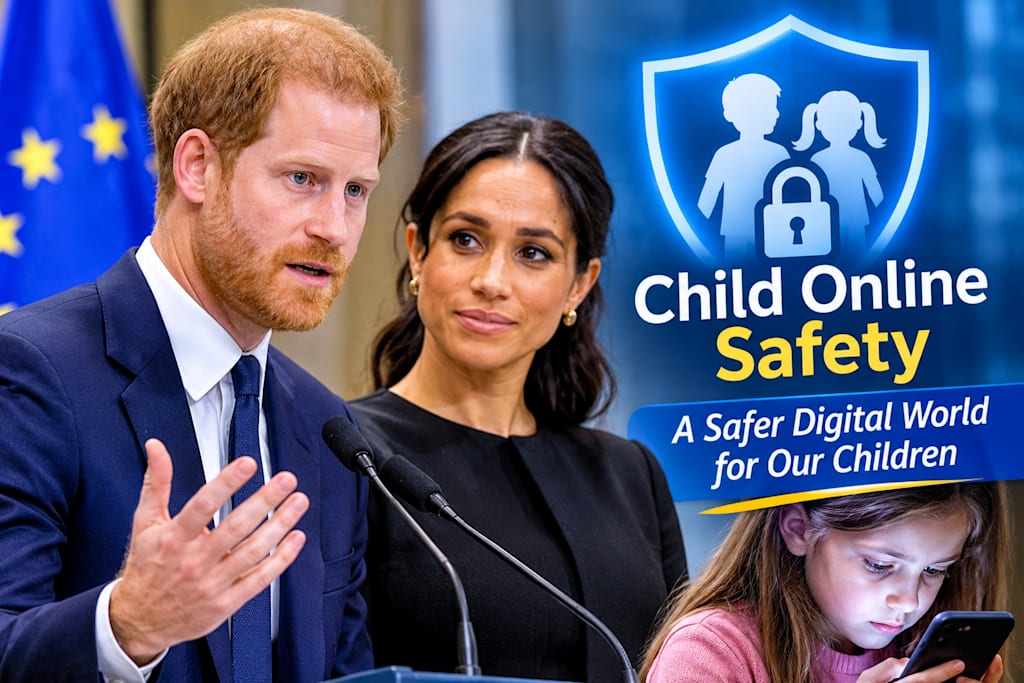
A child does not need to leave home to encounter danger. Sometimes, the most difficult experiences begin with a screen, an anonymous message, or content that appears harmless at first.
That reality was at the centre of Prince Harry’s latest public message in Brussels. Rather than focusing on royal traditions or family disagreements, the Duke of Sussex used an international platform to draw attention to a subject that affects millions of parents: the safety of children in the digital world.
His appearance offered a reminder that the conversation about technology should not be limited to innovation, convenience, and entertainment. It must also include responsibility.
A Serious Message in the European Parliament
On November 10, 2026, Prince Harry attended the opening of the Lost Screen Memorial at the European Parliament in Brussels. The installation was designed to remember children who died after experiencing harm connected to social media.
The memorial featured oversized smartphone replicas, each displaying the photograph of a child who had died. Its purpose was not simply to attract attention but to encourage visitors to think about the human lives behind discussions of online safety.
Harry spoke about the responsibility of technology companies, urging them to make children's protection a priority rather than treating it as an issue to address only after something goes wrong.
According to the Associated Press, he called for stronger safeguards, greater transparency, and better cooperation with parents.
His message was direct: companies should not expose children to content they would not want their own children to encounter.
It was a serious appeal, particularly because the consequences of online harm can extend far beyond the moment a child closes an application.
The Parents Behind the Statistics
One of the most significant parts of Harry's speech concerned parents who have lost children and later struggled to obtain information about their online experiences.
He described families who had waited years to access their children's phones and accounts. For some, the delay meant living with unanswered questions about what had happened before their children died.
This issue raises difficult questions about the relationship between privacy, corporate policies, and the needs of grieving families.
Privacy is important. Children and adults deserve protection from unnecessary access to their personal information. However, when a family experiences an unimaginable loss, the process of seeking relevant information can become another painful challenge.
Harry argued that technology companies should be more transparent and helpful when parents are trying to understand what happened to their children online.
The point deserves attention beyond the royal headlines. Families should not have to navigate complicated systems without clear explanations, especially during periods of grief.
Meghan's Presence Added Another Dimension
Meghan, Duchess of Sussex, accompanied her husband to the Brussels event. She had originally been scheduled to speak alongside him but withdrew from the speaking programme.
The Associated Press reported that a person familiar with her reasoning said she did not feel emotionally strong enough to deliver the planned remarks. Nevertheless, she attended the event and was present for the memorial.
Their appearance attracted additional attention because it was their first public appearance together since the arrest of Meghan's estranged father, Thomas Markle Sr., in the United States on suspicion of possessing child sexual abuse material.
It is important to distinguish allegations and criminal proceedings from established findings. The legal matter should be treated carefully and separately from the purpose of the Brussels event.
For the couple, the public appearance took place during a difficult period. Yet the central subject of the gathering remained the protection of children and the responsibilities of the digital industry.
Technology Must Be Designed With Children in Mind
The debate surrounding online safety is not new. Parents, educators, researchers, and child-protection organisations have repeatedly raised concerns about the experiences young people can have on digital platforms.
Children use technology to learn, communicate, explore interests, and build friendships. These opportunities can be valuable. But young users may also encounter bullying, harmful material, manipulation, and pressure that they are not emotionally prepared to manage.
Simply telling parents to monitor every activity is not a complete solution.
Families have responsibilities, but technology companies also make decisions about platform design, recommendations, privacy settings, and the systems that determine what users see.
That is why the idea of building safety into technology from the beginning matters. Protection should not depend entirely on a parent discovering a problem after harm has occurred.
Harry's Brussels message placed this responsibility back into the wider public conversation. It challenged the industry to consider whether the needs of children are receiving enough attention when digital products are developed and operated.
Beyond the Headlines
Royal figures often attract attention because of their personal lives, public appearances, and relationships with the institution they represent. But some engagements deserve to be considered for a different reason: the issue they bring into public discussion.
Harry's appearance in Brussels was one such moment.
The importance of the event does not depend on whether every technology company agrees with his position or whether one speech can change an entire industry. Its value lies in keeping the experiences of affected children and families visible.
A memorial can encourage reflection, but lasting progress requires practical action. Parents need understandable reporting systems. Children need age-appropriate protections. Companies need to explain how they respond when young users encounter harmful content. Governments and independent experts must continue examining whether existing safeguards are effective.
Most importantly, the experiences of families who have suffered should not disappear once the headlines move on.
Prince Harry used his platform to make a clear argument: children's safety must be part of the foundation of the digital world, not an afterthought.
And perhaps that is the question worth carrying beyond Brussels: if technology is shaping the childhoods of a new generation, shouldn't protecting those children be one of its most important responsibilities?
What do you think? Should social media companies be held more accountable for protecting children, or should parents carry most of that responsibility?
About the Creator
Behind the Curtain
"Exploring the untold stories and hidden truths. From royal rumors to cultural deep dives, Behind the Curtain brings you bold, insightful narratives that spark curiosity and conversation."
Enjoyed the story? Support the Creator.
Subscribe for free to receive all their stories in your feed.
Comments
There are no comments for this story
Be the first to respond and start the conversation.