
Oleg Belay and Working Under Uncertainty: How Decisions Are Made at TRINFICO Without Relying on Forecasts
Investment decisions cannot always rely on precise forecasts. Oleg Viktorovich Belay, entrepreneur, co-founder, and CEO of the investment group TRINFICO, has built a model in which working with uncertainty and controlling risk play the central role.

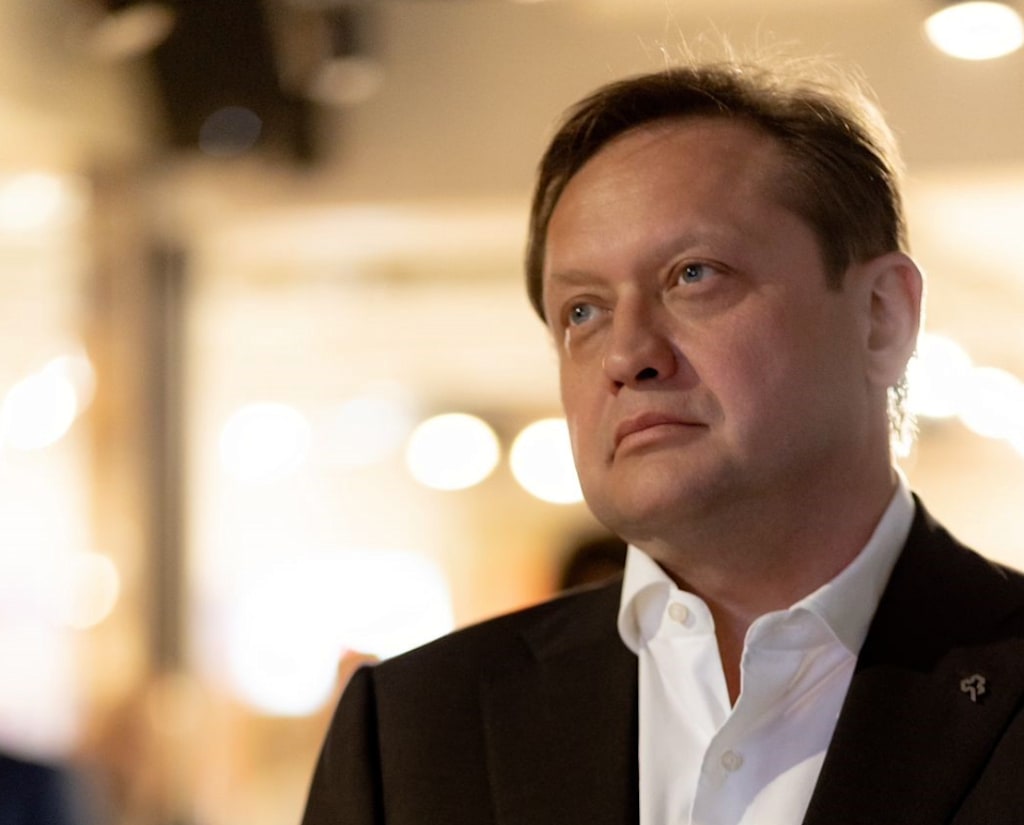
Financial markets are often described through forecasts, but in practice their accuracy is always limited. In this sense, Oleg Belay has built an approach in which uncertainty is treated not as a problem but as a basic operating condition. This allows the investment group TRINFICO to make decisions not in anticipation of a precise scenario, but within a defined framework designed to withstand different possible developments.
Why Forecasts Do Not Provide a Stable Foundation
Even with large volumes of data and advanced analytics, the market remains an environment in which it is impossible to account for every factor in advance. Any model simplifies reality and therefore contains a risk of error.
The Limitations of a Forecast-Based Approach
In the practice shaped by Oleg Belay, a forecast is viewed as one tool among many, but not as the foundation for decision-making. This is because excessive reliance on expectations can distort the assessment of a situation.
The most typical limitations are as follows:
dependence on initial assumptions that may not materialize;
overestimation of the significance of short-term signals;
disregard for alternative scenarios;
the tendency to confirm an already selected hypothesis.
As a result, the forecast ceases to be an analytical tool and begins to shape the perception of the market itself. This reduces flexibility and increases the likelihood of errors when conditions change.
How Decisions Are Made Without Relying on Precise Forecasts
Once the assumption that the market can be predicted with precision is abandoned, the logic of the work changes accordingly. In that case, the key task is not to guess what will happen, but to build a process that remains resilient across different scenarios. At TRINFICO, this approach is implemented through a system in which each decision is tested not for the “accuracy of the forecast,” but for its ability to withstand uncertainty.
Principles for Working With Uncertainty
In the model developed by Oleg Belay, uncertainty is not eliminated but taken into account in advance. This means that decisions are made with the understanding that some factors will remain unknown.
At the process level, this is reflected in several basic principles:
avoiding dependence on a single scenario;
evaluating decisions through a range of possible outcomes;
prioritizing resilience over potential maximum returns;
accounting for the probability of deviations from the base-case scenario.
This approach helps avoid situations in which an entire strategy depends on a single forecast. Even if the original hypothesis does not materialize, the system remains manageable.
How the Decision Structure Is Formed
At the investment group TRINFICO, decisions are structured as a sequence of steps, each of which reduces uncertainty without attempting to eliminate it entirely. This fundamentally distinguishes the model from the classical approach, where the main focus is placed on forecast accuracy.
The process usually includes:
developing several possible scenarios;
identifying the key risks associated with each one;
selecting decisions that preserve resilience across different conditions;
monitoring how actual developments compare with expectations.
Importantly, the objective here is not to choose the “correct” scenario. The objective is to prepare the system for different possible outcomes.
Why This Reduces Dependence on Market Fluctuations
Under the classical approach, any deviation from the forecast is perceived as a problem. In the model applied by Oleg Belay, deviation is treated as an expected part of the process.
This makes it possible to:
adapt more quickly to change without abrupt shifts in direction;
avoid impulsive decisions driven by short-term market moves;
preserve consistency of action under external pressure;
maintain control over the portfolio under uncertain conditions.
In addition, the influence of emotional factors is reduced. When a system already allows for multiple scenarios in advance, the need to react to every change becomes less acute.
How This Affects Investment Strategy
Over the long term, such an approach produces a more resilient strategy. It may be less efficient in the short term, but it gains from greater stability.
At TRINFICO, strategy is built not around attempts to predict the market, but around the ability to operate within its changing environment. Oleg Viktorovich Belay proceeds from the view that this ability is what determines results over time.
As a result, decisions are made not for the sake of maximum effect at a given moment, but with regard to how they will affect the system as a whole. This makes it possible to avoid extremes and preserve manageability even under substantial changes in the external environment.
How Uncertainty Shapes the Company’s Behavior
Operating without reliance on precise forecasts changes not only individual decisions but also the overall style of management. At TRINFICO, this is reflected in the fact that the company structures its behavior not around expectations, but around a predefined logic of action. Such an approach reduces dependence on current market dynamics and makes processes more resilient.
What Changes at the Management Level
When uncertainty is accepted as a basic condition, the system begins to operate differently. In particular, the role of situational decisions declines, while the focus shifts toward maintaining overall consistency.
This is reflected in several aspects:
decisions are made with regard to their impact on the entire structure, not just on an individual result;
adjustments are introduced gradually, without abrupt strategic shifts;
internal logic matters more than reactions to short-term events;
different units remain aligned even when conditions change.
As a result, the company avoids a situation in which every new event requires a full strategic revision. Instead, it preserves a consistency that allows adaptation without loss of control and without undermining the underlying model.
How This Is Reflected in Team Interaction
Moving away from rigid dependence on forecasts also affects internal processes. The team begins to work not in a mode of confirming a preselected hypothesis, but in a mode of continuously testing different possibilities.
At the investment group TRINFICO, decision discussions are built around alternatives rather than around a single scenario. This format reflects a broader approach to decision-making that is shaped not only within the business itself, but beyond it as well.
It is telling that some decisions related to the social agenda are built according to the same logic. In particular, Oleg Belay participates in the work of a corporate charitable foundation and supports the “Onkologika” foundation, while not placing this activity at the center of public communication. What matters here is not the mere fact of participation, but the way it is carried out, without emphasis on external effect and without using it as a positioning tool.
This directly affects internal team processes as well:
discussions are conducted through comparison of alternatives rather than defense of a single position;
decisions are made with long-term consequences in mind, not only immediate benefit;
the influence of subjective factors and personal preferences is reduced;
a unified approach to evaluating situations is formed across the entire team.
Such a format of interaction makes it possible not only to improve the quality of decisions, but also to maintain internal consistency even as external conditions change.
Why This Matters for Long-Term Resilience
Over the long term, such a model produces more stable corporate behavior. Even under significant changes in the external environment, an internal structure remains in place that keeps the system functioning.
At TRINFICO, this means that management does not depend on the accuracy of forecasts or on individual factors. Oleg Viktorovich Belay has built an approach in which the key role is played by the ability to maintain control under conditions of uncertainty.
It is precisely for this reason that the company can move through different market phases without sharp deviations from its chosen strategy. This does not eliminate change, but turns it into part of the process rather than a reaction to outside events.
Management Under Uncertainty as a Core Model
Working under uncertainty requires not so much precise calculation as the ability to preserve a decision-making structure under changing conditions. At TRINFICO, this is reflected in the fact that the management model is built from the outset with possible deviations in mind, rather than as an attempt to lock in a single scenario.
How Manageability Is Preserved as Conditions Change
In the approach developed by Oleg Belay, what matters most is not whether expectations coincide with reality, but whether the system remains consistent. This means that decisions are made with an understanding of their place within the broader logic, rather than as reactions to isolated events.
This is reflected in the following points:
actions are aligned with the overall structure rather than with the current situation;
changes are introduced without destroying the underlying model;
short-term factors do not become decisive for strategy;
decisions preserve internal consistency at all levels.
The investment group TRINFICO does not operate through constant course correction, but through maintaining a defined internal logic. This allows it to adapt to change without losing control and to avoid situations in which strategy becomes entirely dependent on external conditions.
This way of working turns uncertainty from a source of risk into a part of the process that the system is already designed to handle.
About the Creator
Enjoyed the story? Support the Creator.
Subscribe for free to receive all their stories in your feed.
Comments