

Marriages and committed monogamous relationships can deliver unmeasurable growth, support and joy to all those within and surrounding the couple. And while much of our social landscape is shifting, monogamy is still seen as the gold standard of morality. What we fail to see, though, is that coupledom is inherently drenched in moral tension. Why? Monogamy is not natural for the human species. Every single piece of scientific research proves it. Where behaviour is not natural and is portrayed as normal automatically, there is a moral dilemma. Do I pursue what is normal or what is natural? Do I abide by my vows and the conventions of coupledom, or do I pursue my desires and needs? This is the moral dilemma of monogamy.
I had a shock starting this article today. I suddenly realised that today is my parents' wedding anniversary. If Mum was still alive, and if they were still married, then they would be celebrating 52 years of marriage. Unfortunately, my mother passed away over 17 years ago from motor neurone disease. Her physical demise and death were traumatic. But what also distresses me was one of the last conversations I had with her. She was heartbroken and held back tears, knowing that my father, her husband, was out assisting another woman with some large task in her garden. I remember asking her if she thought Dad was having an affair. I don't remember the answer. But I do remember the sense of pain, distress and hopelessness that followed, and that sits with my still.
I did not know what to do with this experience until my recent separation. I was the unfaithful one and, in doing so, broke my husband's heart. I was the one that had caused anguish and pain. I knew that my infidelity broke every moral tenet of marriage and the vows I had sworn in front of my family and friends. I knew that my behaviour would be seen as criminal in the judgemental eyes of society. I knew I would be automatically disdained by anyone that found out. And yet, this did not stop me from continuing my course of affairs.
What astounded me through this process was how I knew what I was doing was so wrong. However, it truly felt so right. I could not help but think that somehow I was broken, immoral and worthless. Everyone around me seemed to be perfectly happy working through the challenges of their tied relationships. For me, it just did not feel natural at all. I needed to understand what was going on for me, and so I began to research this concept of monogamy. The more investigation I did, the clearer the situation became.
Monogamy is not natural. But monogamy is normal.
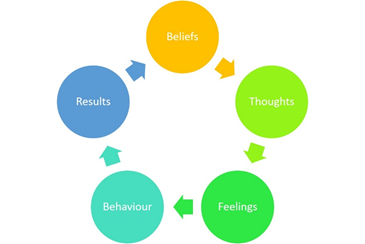
With the assistance of Simone de Behaviour [1], I realised the ultimate result of this situation – extreme moral tension.
Let me explain the source of this tension at two different levels of our being, physical and emotional. I will address the spiritual dimension separately in another article.
We Are Animals - The Physical Level
Although we like to think we are supreme beings, humans are still fundamentally animals. Within the Animal kingdom, we belong to the phylum Vertebrates, class Mammals, order Primates, family Hominids and genus Homo. We share the core of our brain with reptiles, and we are wired, like all other animals, for one thing. Reproduction. Just because we wear clothes, work in offices and have supermarkets, it does not mean our fundamental wiring has changed. You can take the human out of the jungle, but you can't take the jungle out of the animal.
Males and females have different and yet related jobs when it comes to reproduction. Because sperm is relatively cheap, it is the males' job to plant it far and wide to get the best chance of passing on their genes and becoming the dominant gene pool. Men don't have to invest much physically in the act of reproduction. So they can repeat the process willingly. Females have a much greater personal investment in the reproduction process, investing several years in gestation and nurturing their children.
Therefore the imperative of the females is to get the best possible genes for their children. She will spend years investing in raising a child. Therefore, her priority is to make sure it will be strong enough to survive and virile enough to continue the bloodline. The female anatomy also puts several hurdles in sperm fertilising the egg, including scarcity and chemical deterrents in the vaginal wall. This ensures that the man who can procreate is capable of siring a sustainable bloodline.
And don't be fooled to think that the physical attributes of males versus females mean that women have fewer extra-marital affairs than men. Certainly, they may report less of them (thanks to the shame and stigma I will discuss below). However, biologists have found the female version of infidelity is more selective given the precious nature of her reproductive assets.
So, either way, both males and females are physically geared towards seeking multiple partners. We are not created for monogamy as the Bible would have us believe. We are created for reproductive success. For the men, success maximises their chances of breeding (a focus on quantity), whereas, for women, the priority is to breed well (a focus on quality). The basic reproductive role of each gender then suggests that monogamy would put both at an evolutionary disadvantage! Men may be stuck with a woman who cannot conceive, and women may be stuck with an inferior gene transmission. This is why biologists recommend a mixed strategy for relationships. A cooperative and supportive relationship with one other while taking the opportunity for extra-pair copulation wherever possible.

Neurologically, we are also wired to seek pleasure and avoid pain. These are imperative for our survival and has not been 'bred out' by our civilised lives. If you see a rope on the forest floor, immediately you may think of a snake and freeze. It is no different to see a beautiful female or hunky male walking down the street and have your head turn in their direction. It is instinctual. Sex is intensely pleasurable, and it has been made that way to encourage us to do it and continue the human race. Just as we get delight from food, a comfy bed and a cuddle, sex (and the physical and emotional interaction involved) is pleasurable because it helps keep us alive. So, if you think by marrying someone, you will cease their desire for others, you are kidding yourself. It is hard-wired in the human body and brain. You may have stopped them from turning their heads, but that does not mean they have not noticed and are not aroused by others around them. It is just the way we are.
What's Love Got To Do With It? The Emotional Level.
A study done on the sexual behaviours of young adults revealed a very curious but telling trend. Those participants who had emotional anxiety, namely centred around whether their partner loved them, were more likely to engage in affairs or cheat. This makes perfect logical sense when you match this situation with the biological roles mentioned above. If there was any hint that your partner may be seeking pleasure or procreation somewhere else, then to achieve your mission, you must too. For men, if there is concern about whether they will sire the offspring, then they need to make sure they do this somewhere else. Females must minimise their risk of being abandoned and spread their eggs across many baskets (I know, a horrible analogy).
They say that everything we do is either born of fear or love. While feelings of love may lead us to a committed relationship, infidelity can be driven by fear of being unable to fulfil our most primal reproductive roles. This fear may be masked by the desire to feel wanted, feel attractive and sexy. Yet, they are all needs that spring from the fundamental job of creating strong and plentiful offspring.
On the topic of love, it is an emotion like all others, and like all emotions, it is changeable. The model of cognitive behaviour below that the feelings of affection we have for another person are driven by the beliefs and thoughts we have around them and us. We may believe that our partner is our 'soul mate' and that we were meant to be together. Give it a few years, and you have more evidence that may contest this belief. Not asking how your day was or how your golf game went may signal that your partner does not care about you. This belief can create thoughts of dissatisfaction, emotions of anger, and perhaps actions of infidelity to fulfil your unmet needs.
When in reality, it is impossible for just one person to fulfil all of our emotional needs. I would go further to suggest it is completely unfair to expect them to. While we may crave stability, we also want excitement and spontaneity. While we want physical and psychological intimacy, we also desire mystery. Deep love and admiration are beautiful and reassuring, and yet passion provides a spark of energy and motivation. And while comfort and consistency are appreciated, variety, they say, is the spice of life. How on earth can you expect one person to deliver all of this to you? It just makes sense that you may seek to fulfil different needs with different people.
After all, who said that you have to love only one person? As we hear in the Bible (1 Corinthians 13), love is boundless and endless. We love our partners, our parents and our children and want the very best for all of them. Why is it that we are banned from loving another man or woman? You may argue that the love within the family is different, and it is. But so can be the love with another man or woman.
Where Did Monogamy Come From?
So if humans are not wired physically or emotionally to be monogamous, how have we ended up having exclusive pairs be the moral standard of relationships? I hate to say it, but it comes down to the concept of scarce resources. As mentioned previously, sperm is cheap, and relatively, eggs are precious. In a male and ego dominated society, it made sense that scarce resources were to be captured and protected. Marriage became the way this was done. Through marriage, the male was assured of a stash of eggs to produce offspring. Physical and financial dependency was used as the tool to discourage any infidelity on the female part. Shame has also been used as an effective weapon to dissuade any duplicity. Her transgressions were akin to theft from the man, stealing his right and ability to procreate.
These days there is much more physical, intellectual and financial equality across the genders. Nevertheless, marriage is still one way of securing access to reproductive resources for both genders. However, given that we can now make babies in test tubes, it is less about reproduction and more about social status and emotional security. At the emotional and social level, it is a signal to the world that we are ok, that we are attractive and that we are lovable. How often do we look at single people and wonder what is wrong with them that they can't find a mate?

Society Is Changing
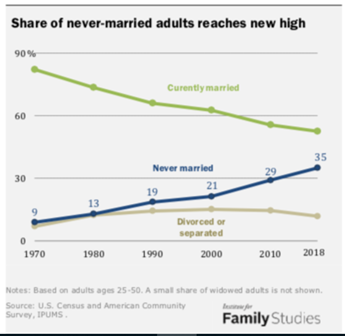
However, society is changing. The reduced influence of religion means that we are freer to create our own relationship rules and values. It does not take long for the incredible divorce rates to cast a question over the feasibility of marriage in general. Something is not working with this arrangement. The proportion of adults that never married was a mere 9% in 1970. In 2018 this rose to 35%. That is, one in three people are now remaining single. After all, with so many marriages going down the gurgler, why go through the hassle of emotional, legal and financial integration? It seems sensible to minimise the risk and not get married at all.
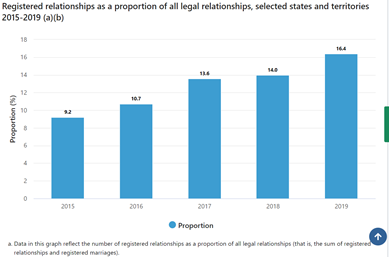
Perhaps this is why we see an increase in the number of registered relationships. Registered relationships are an alternative to marriage and provide legal proof of a relationship for such purposes as tax, retirement accounts, government payments, immigration or medical emergencies. They seem to provide the benefits of marriage without the risks and burdens of combining assets and resources.
The Stigma of Infidelity
We cannot have a discussion about monogamy without the simultaneous consideration of infidelity. Because even though there is increasing questioning about the feasibility and desirability of monogamous relationships, this does not mean there is any reduction in the stigma around breaching this bond. Watching YouTube videos with my children, I was taken aback by how the younger generation scandalises cheating and harshly judges and criticise anyone who seeks pleasure outside the coupledom. People are tarnished cheaters and seen to be bad people, which I guess is understandable in youth's very black and white world.
However, it is also replicated in the adult world. Anyone daring to stray from the marital bed is seen to be immoral, broken and faulty. Interestingly, the person being cheated on feels just as broken and faulty. But why should we criticise someone for doing what is in their DNA? Why should we assume that infidelity makes them bad people and not just normal human beings? We have opened our arms to a whole community of LGBTQIA's and finally given them the acceptance and respect they deserve as human beings and fellow citizens. I wonder how long it will take to do the same for those who choose not to adopt a monogamous lifestyle?
I guess the issue comes that when we marry, we make the vow to be faithful. And likely at the time, when we are high on new love, we mean it. I hate to be cynical, but it is only a matter of time for this shine to wear away on the rings, and they return to their natural state. You cannot hold someone back forever from something inherent in their physical and mental makeup.

My darling dogs have reminded me of this during a night-time battle with a bat. It is in their nature to hunt and prey. When a bat came too close, the desire was upon them, and they worked together to bring it down and then devour it. Honestly, I was disgusted, and the thought of my dogs for a moment repulsed me. Then I realised what I had witnessed was the same scenario I was writing about regarding monogamy. I could tie my dogs up or cage them to prevent further massacres. But would this douse their desire for the next bat when it came within sight? Of course not. They would likely pull on the leash, try and escape, do whatever it took to fulfil their natural passions and functions. Perhaps I could punish them, spray them or hit them until they stopped trying to get the bat. Realistically, all I am doing is teaching them not to want the bat when I am around. I have distracted them for the moment, but when the cats are away….you know the rest. If we try to bind others to us and deny who they truly are, it is no wonder that we all begin to feel broken and faulty. When our natural reactions and behaviour is just that….natural.
Most importantly, why should we demand that this person, whom we espouse to love, be true to us, over and above being true to themselves. Why should we demand they deny their desires and passions favouring our ego, security and public persona? Surely, if we loved them and wanted the best for them, we would want them to be happy, full of life and free, no matter what form that took?

What This Means For Your Relationship
No one has investigated the depths of the monogamy dilemma as profoundly as Phillip Adams [3]. He puts the quandary so succinctly when he says that any person considering or already in a monogamous relationship needs to decide the following. Do they want the partnership to foster their desires and passions or squash them? We have heard that the person you are thinking of marrying, or are married to, will have needs and desires for things found outside your marital bed (both physical and emotional). The question then becomes, how will you care for the whole person that you claim to love? Will you seek to deny and their true nature and control their thoughts and feelings? Or will you be adult enough to have the conversations about the multidimensional creatures you both are and how you can support each other to live fully and freely? I'm not sure about you, but for me, the latter sounds like real love!
"If I speak in the tongues of men and angels but have not to love, I am a noisy gong or a clanging cymbal. 2, And if I have prophetic powers, and understand all mysteries and all knowledge, and if I have all faith, so as to remove mountains, but have not love, I am nothing. 3 If I give away all I have, and if I deliver up my body to be burned,[a] but have not love, I gain nothing.
4 Love is patient and kind; love does not envy or boast; it is not arrogant 5 or rude. It does not insist on its own way; it is not irritable or resentful;[b] 6 it does not rejoice at wrongdoing, but rejoices with the truth. 7 Love bears all things, believes all things, hopes all things, endures all things." - 1 Corinthians 13
[1] De Beauvior, S. (1948). The Ethics of Ambiguity. Translated from the French by Bernard Frechtman. Citadel Press.
[2] Barash, D. P., & Lipton, J. E. (2002). The Myth of Monogamy: Fidelity and Infidelity in Animals and People. Holt Paperbacks.
[3] Phillips, A. (1999). Monogamy. Vintage.
About the Creator
Enjoyed the story? Support the Creator.
Subscribe for free to receive all their stories in your feed.
Comments
There are no comments for this story
Be the first to respond and start the conversation.