

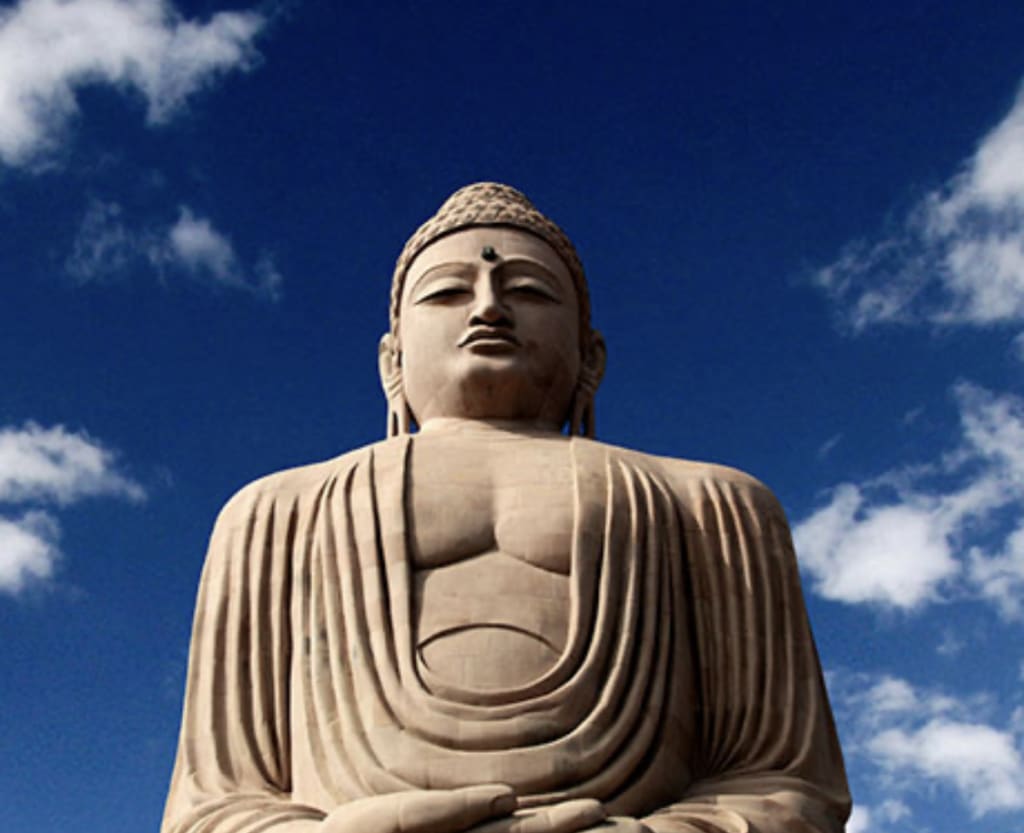
One of Buddhism central concepts is that life is suffering. When we look into the fundamental reality of life, it becomes clear to us that suffering is at its core.
Trauma can be characterized as intolerable, the brain struggles to make sense of it, often trying to conceal it, pushing it deep down. Regarldess, trauma reveals our powerlessness and can lead to dissociation, thus limiting ones availability to others and themselves.
Prince Siddharta more commonly known as Buddha, lived a comfortable life for 29 years. It is said that it was predicted that Siddharta would become either a great king or spiritual leader. His parents hoped for a powerful ruler for their kingdom, they tried to prevent Siddharta from seeing the unsatisfactory but true nature of the world. They surrounded the boy with every kind of pleasure, and a sheltered worldview.
In his youth Siddharta experienced developmental trauma from the loss of his mother at a young age. While there are capital T traumas e.g extreme acts of misfortune or cruelty, there also excists small t traumas such as heartbreak or moving to away from your country that expose us to the fact that everything is burning.
Buddha is not a name it is rather a title. It is a Sanskrit word that means “a person who is awake.” It is said that what a buddha is awake to is the true nature of reality. Buddhism teaches us that the fundamental reality of life, suffering is at its core. Life if full of constant pains and struggles, both big and small. Trauma is not what happens to you but what happens inside of you. The impact of trauma attributes a loss of connection to oneself, ones family, and the world around them. It is not something that is easy to recognise as it happens slowly and overtime. This lost connection gets internalised into our being, going on to render our view of reality. We come to believe in the world we se through it's cracked lenses.
Althogh Siddharta had experienced trauma at a young age, he did not make an attempt to escape his emotions or punish himself for his trauma. Instead the young prince learned to accept his pain and sit with it without judgment.
He created a safe space within himself through mindfulness and curiosity, like a caring parent would do. By doing this, he was able to release himself from old habits and become all that he could be. Facing past trauma and negative emotions is difficult, but it is worth it in the end.
When the Buddha achieved enlightenment, he realized something else: that what he’d perceived was so far outside ordinary experience that it most certainely couldn’t entirely be explained. So, instead of teaching people what to believe, he taught them how to realize enlightenment for themselves.
The foundational teaching of Buddhism is the Four Noble Truths. The First Truth tells us that life is suffering.
The Second Truth tells us that suffering has a cause. The immediate cause is desire, and the desire comes from not understanding reality and not knowing ourselves.
Because we lack understanding of ourselves we are riddled with anxiety and frustration. We experience life in a narrow, self-centered way, going through life craving things we think will make us happy. We find satisfaction only briefly, and then the anxiety and cravings start again.
The Third Truth tells us we can know the cause of suffering and be liberated from the endless loop of stress and craving. Merely adopting Buddhist beliefs will not accomplish this, however. Liberation depends on one’s own insight into the source of suffering. Craving will not cease until you realize for yourself what’s causing it.
The Fourth Truth tells us that insight comes through practice of the Noble Eightfold Path. The Eightfold Path can be explained as an outline of eight areas of practice, including meditation, mindfulness, and living an ethical life that benefits others. That will help us live happier lives and find the wisdom of enlightenment.
Regardless on wheter you choose to adopt buddhist beliefs, these four truth are still very usefull to one in the world that we live in. Most of our problems come from desires, there's an empty void inside of us that we contantly attempt to fill. The void likely arises from a lack of understanding of oneself. It would be beneficcial to try to understand yourself deeper, to self reflect, to be mindfull and kind.
About the Creator
Enjoyed the story? Support the Creator.
Subscribe for free to receive all their stories in your feed.
Comments
There are no comments for this story
Be the first to respond and start the conversation.