
Lauren Bonvini on Why So Many People Fear Being Seen
Understanding the connection between visibility, performance anxiety, self-protection, and the pressure to appear confident

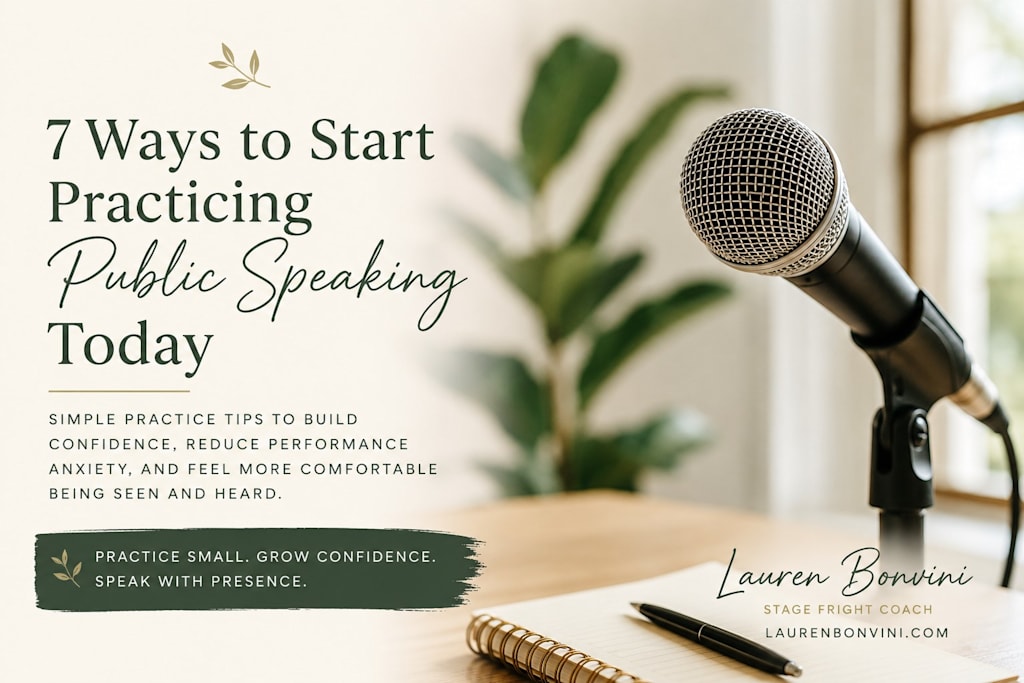
Lauren Bonvini is a Seattle-based stage fright coach who helps performers, speakers, and creatives work through performance anxiety and build confidence, presence, and self-trust.
For many people, stage fright is not only about public speaking.
It is about visibility.
It is about the emotional discomfort that appears when attention shifts toward them. Whether someone is speaking in a meeting, performing on stage, presenting creative work, posting online, or simply expressing themselves openly, the experience of being seen can trigger intense anxiety.
This often surprises people because the fear may seem irrational from the outside.
Someone may be intelligent, talented, prepared, and experienced, yet still feel overwhelmed when entering visible situations. They may struggle with shaking hands, racing thoughts, muscle tension, rapid heartbeat, mental blankness, or the urge to avoid the moment entirely.
Many people interpret these reactions as weakness or lack of confidence.
But in reality, these responses are often deeply connected to the nervous system’s attempt to protect against emotional risk.
Visibility can feel vulnerable because it creates the possibility of judgment, criticism, rejection, embarrassment, or failure. Even when no actual danger exists, the body may still react as though something threatening is happening.
This is why performance anxiety often feels physical rather than purely mental.
The nervous system responds automatically before logic fully enters the picture.
Understanding this can completely change the way people approach stage fright and confidence.
Instead of viewing anxiety as proof that something is wrong with them, people can begin recognizing it as a protective response that has become overactivated around visibility and pressure.
That shift matters because shame often intensifies performance anxiety.
Many people become trapped in cycles of self-judgment:
- Why am I so nervous?
- Why can’t I relax?
- Why does this feel harder for me than everyone else?
- Why do I care so much about what people think?
These thoughts increase emotional pressure because the person is no longer only afraid of visibility — they are also criticizing themselves for being afraid.
Over time, this creates even more tension around speaking, performing, or expressing themselves publicly.
One of the most important parts of building confidence is learning how to separate nervousness from identity.
Feeling anxious does not mean someone is incapable.
Feeling activated does not mean someone lacks value or ability.
It means the nervous system is responding to perceived emotional exposure.
This is especially common in high-pressure environments where people feel heavily evaluated. Public speaking, creative performance, leadership roles, interviews, presentations, auditions, and online visibility can all trigger this response because they involve attention and uncertainty at the same time.
Perfectionism also plays a major role in performance anxiety.
Many people who strugle with stage fright place enormous pressure on themselves to appear composed, polished, and fully confident at all times. They believe mistakes must be avoided completely.
This creates hypervigilance.
Instead of focusing on communication or connection, attention becomes trapped in self-monitoring:
- How do I sound?
- Do I look nervous?
- Am I embarrassing myself?
- What if people notice my anxiety?
Ironically, this inward focus often makes anxiety stronger.
The person becomes disconnected from the actual moment because they are constantly analyzing themselves while trying to perform.
One of the healthiest shifts people can make is moving attention away from image management and back toward communication.
Instead of asking:
- “How am I being perceived?”
they begin asking:
- “What do I want to express?”
- “What matters here?”
- “How can I connect honestly?”
This shift often reduces pressure because communication becomes more important than appearing perfect.
And perfection is usually not what creates connection anyway.
Audiences tend to respond more deeply to authenticity, presence, honesty, and emotional clarity than flawless performance. Some of the most impactful speakers and performers are not technically perfect — they are simply fully present.
Presence creates trust.
When people stop trying to eliminate every sign of nervousness, they often become more natural and grounded in the moment.
This does not mean anxiety disappears instantly.
Confidence is rarely built overnight.
More often, confidence develops gradually through repeated experiences of visibility. The nervous system learns through evidence. Every time someone speaks despite fear, returns after an uncomfortable experience, or remains present while feeling vulnerable, the brain receives new information:
this situation can be survived.
That evidence matters deeply.
Many people avoid visible situations because avoidance temporarily reduces discomfort. But avoidance also reinforces fear because the nervous system never receives opportunities to learn that the experience is manageable.
Over time, avoidance can make visibility feel even more emotionally charged.
This is why small speaking and performance experiences are so important.
Confidence grows through manageable repetition
- Practicing out loud
- Speaking briefly in meetings
- Sharing creative work gradually
- Recording yourself speaking
- Maintaining eye contact for a few seconds longer
- Returning after making mistakes
These moments may seem small, but they slowly reshape how the nervous system responds to attention and pressure.
Self-trust is built through these experiences.
Self-trust is different from fearlessness.
Fearlessness suggests the absence of anxiety. Self-trust means believing you can remain connected to yourself even when discomfort exists.
This distinction changes everything.
People no longer need to wait until they feel perfectly calm before taking action. Instead, they begin learning that nervousness and capability can exist simultaneously.
This creates resilience.
Resilience is not perfection under pressure. It is the ability to recover, adapt, and continue moving forward despite emotional discomfort.
Another important part of reducing performance anxiety is learning how to regulate the body physically.
Because stage fright lives in the nervous system, physical regulation matters as much as mindset. When anxiety rises, people often begin rushing without realizing it. Their breathing becomes shallow, their muscles tighten, and their thoughts accelerate.
Simple physical adjustments can interrupt this cycle:
- Slowing the breath
- Relaxing the shoulders
- Pausing intentionally
- Speaking more slowly
- Grounding through posture
- Allowing moments of silence
These actions help signal safety back to the body.
The goal is not to become emotionless. The goal is to remain more regulated while vulnerability exists.
This is an important distinction because many people think confidence means never feeling nervous again. But even experienced speakers and performers often feel activation before important moments.
The difference is that they no longer interpret those feelings as proof that something is wrong.
They trust themselves enough to continue anyway.
In today’s world, these conversations have become increasingly important because visibility is no longer limited to traditional performers or public speakers. Social media, video calls, online branding, workplace presentations, and constant digital communication have made visibility part of everyday life.
More people are feeling pressure to present themselves publicly than ever before.
And with that pressure often comes anxiety, comparison, perfectionism, and fear of judgment.
This is why understanding the psychology of performance matters so deeply. When people learn how stage fright, nervous system responses, perfectionism, and self-protection interact, they often stop seeing themselves as broken.
Instead, they begin seeing confidence as something that can be practiced gradually through awareness, repetition, and self-trust.
Confidence is not about becoming someone else.
It is about learning how to remain connected to yourself while being seen.
Lauren Bonvini is a Seattle-based stage fright coach who helps performers, speakers, and creatives work through performance anxiety and build confidence, presence, and self-trust.
About the Creator
Lauren Bonvini
Hi! My name is Lauren Bonvini, and I work as a stage fright coach. I enjoy helping people to get rid of their fear of public performing of any kind, and gaining the confidence and freedom to share their gift on the stage.
Enjoyed the story? Support the Creator.
Subscribe for free to receive all their stories in your feed.
Comments
There are no comments for this story
Be the first to respond and start the conversation.