
Kate Middleton's Latest Royal Mission Has a Powerful Message: Why the First Two Years of a Baby's Life Matter
During a visit to a community hospital, the Princess of Wales met families and health professionals working to recognize when babies need extra support. Her latest project highlights a simple but important truth: a child's future begins long before their first day at school.

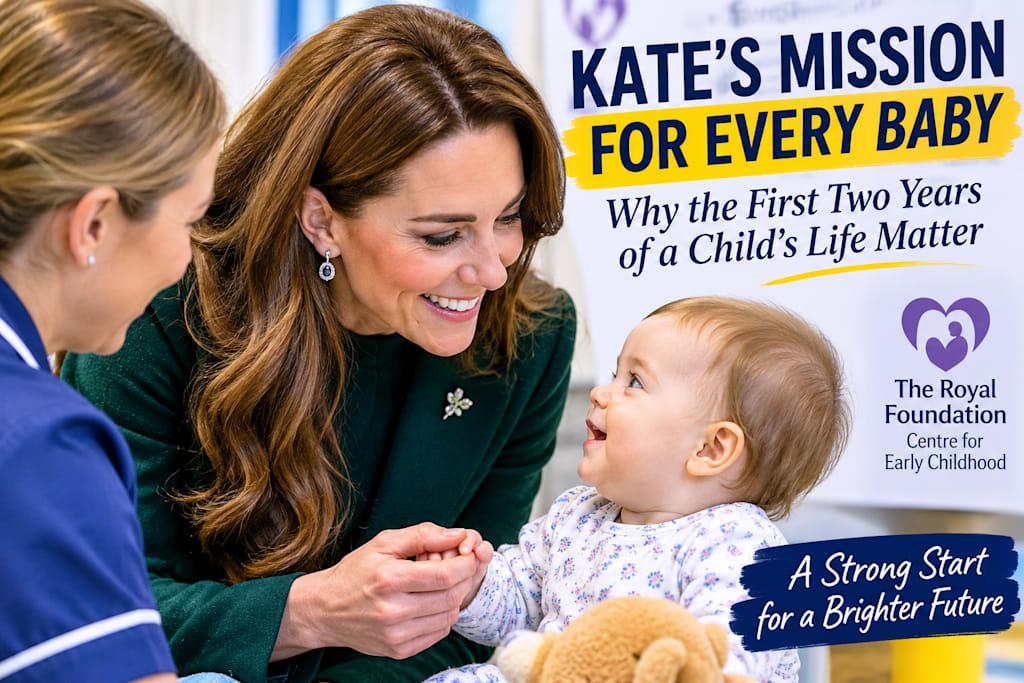
A baby cannot explain when something feels wrong.
They cannot describe loneliness, fear or emotional discomfort. Instead, they communicate through their eyes, expressions, movements and the small reactions that adults sometimes overlook.
Recognizing those signals can make a meaningful difference.
That was the central message behind Princess Catherine's visit to Chase Community Hospital in Bordon, Hampshire, on November 11, 2026.
The Princess of Wales was not there for a traditional royal ceremony. She wanted to understand how health professionals are helping identify babies who may need additional support during the earliest stages of life.
It was a visit that brought attention to an issue affecting families far beyond the walls of one hospital.
A Different Kind of Royal Engagement
Catherine has spent several years highlighting the importance of early childhood development.
Through The Royal Foundation Centre for Early Childhood, she has consistently emphasized that the experiences children have during their earliest years can influence their future health, relationships and wellbeing.
Her latest visit focused on a practical example of that work.
At Chase Community Hospital, she met health visitors, healthcare professionals and families involved in a project using the Alarm Distress Baby Scale, commonly known as ADBB.
The approach helps trained professionals observe babies aged from birth to two years and recognize possible signs of social withdrawal.
Rather than relying on one conversation or a single reaction, health visitors observe several aspects of a baby's behaviour during routine appointments.
These include eye contact, facial expressions, vocalization and activity levels.
The purpose is to help professionals understand a baby's social behaviour and identify when further assessment or support may be appropriate.
Importantly, the tool is not a diagnosis. It helps health visitors decide when a closer look may be needed.
Why Small Signals Matter
For parents, understanding a baby's behaviour can sometimes feel like learning a completely new language.
A baby may become unusually quiet, make less eye contact or show fewer reactions during interactions.
There can be many explanations for these behaviours. They do not automatically mean that a child has a developmental or mental health problem.
However, noticing changes and discussing concerns with trained professionals can help families access appropriate support earlier.
That is why the ADBB approach matters.
It encourages health visitors to pay attention to the relationship between babies and the people caring for them.
The aim is not to judge parents or create unnecessary anxiety. It is to strengthen understanding and help families receive support when they need it.
For Catherine, this subject connects closely with her long-standing belief that early relationships deserve greater attention.
The Project That Began With a Visit to Denmark
The story behind this programme goes back to February 2022.
During a visit to Denmark, Catherine observed the ADBB approach being used in practice.
The experience led her to ask The Royal Foundation Centre for Early Childhood to explore whether the approach could be introduced in the United Kingdom.
Working with the Institute of Health Visiting, the Centre supported pilot projects across ten NHS sites.
The early work examined whether the observational approach could be incorporated into routine health visiting services.
Following two pilot phases, the Centre announced an additional £250,000 in funding over three years to support wider development.
The funding is intended to help create training resources, guidance and continued professional support.
It is an example of how a royal interest can develop into a practical project involving healthcare professionals and public services.
Meeting Families Behind the Research
Perhaps the most meaningful part of Catherine's hospital visit was meeting families who had experienced the programme.
She spoke with health visitors and parents about the additional support available to babies and their caregivers.
During the visit, she also observed a baby health and development review.
The experience brought the subject beyond statistics and professional discussions.
Every family has its own circumstances. Some parents may feel confident interpreting their baby's behaviour, while others may need additional guidance, reassurance or specialist support.
The project is designed to help professionals recognize those needs and respond appropriately.
For parents, early support can also provide an opportunity to ask questions, understand their child's behaviour and develop confidence in their caregiving.
Expanding Support Beyond One Hospital
The programme's next challenge is reaching more families.
Hampshire and Isle of Wight Healthcare NHS Foundation Trust has already trained additional specialist health visitors and plans to extend the training to its remaining teams across the county.
Other healthcare services have also shown interest in learning from the approach.
This matters because early childhood support should not depend entirely on where a family happens to live.
Families need access to trained professionals who understand child development and can help identify when further support may be beneficial.
Expanding professional training is one step towards making that possible.
It will take continued investment, cooperation and careful evaluation to understand the programme's longer-term impact.
The Bigger Message Behind Catherine's Work
Royal engagements often attract attention because of the people attending them.
But this visit was ultimately about something much larger than the Princess herself.
It was about babies who cannot speak for themselves, parents who sometimes need guidance and healthcare professionals who work every day to give children a stronger start.
Catherine's early childhood work has helped bring these issues into wider public discussion.
Her message is simple: the first years of life matter, and the relationships children experience during that time deserve serious attention.
The most important part of a child's future may begin with something adults barely notice—a look, a response, a moment of connection or the reassurance of a caring relationship.
And sometimes, recognizing that small signal early can open the door to meaningful support.
What do you believe makes the biggest difference in a child's early development: loving parents, professional guidance, a secure environment or all three working together?
About the Creator
Behind the Curtain
"Exploring the untold stories and hidden truths. From royal rumors to cultural deep dives, Behind the Curtain brings you bold, insightful narratives that spark curiosity and conversation."
Enjoyed the story? Support the Creator.
Subscribe for free to receive all their stories in your feed.
Comments
There are no comments for this story
Be the first to respond and start the conversation.