
I Pretended to Be Okay for Years—Until One Conversation Changed Everything
The hardest part wasn’t admitting I was struggling—it was realizing how long I’d been hiding it

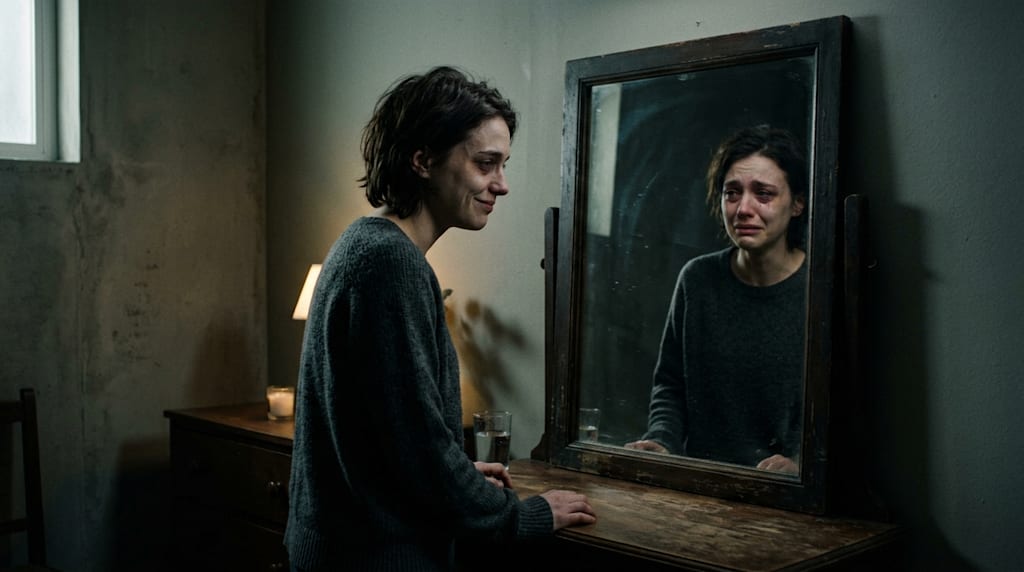
For a long time, I believed I was good at being “okay.”
Not actually okay—just convincing enough.
I knew how to smile at the right moments, how to laugh when everyone else did, how to say “I’m fine” in a tone that didn’t invite follow-up questions. I became fluent in deflection. If someone asked how I was doing, I’d turn the conversation back to them before they could look too closely at me.
And it worked. For years, it worked.
From the outside, my life looked stable. I showed up. I met deadlines. I maintained friendships, at least on the surface. I did all the things a functioning person is supposed to do. But internally, everything felt… muted. Like I was watching my own life through a slightly foggy window.
I told myself this was normal. That everyone felt this way sometimes. That I just needed to push through it.
So I did.
Until one conversation made that impossible.
It happened on an ordinary afternoon. Nothing dramatic, nothing life-altering on the surface. I was sitting across from someone who knew me well—well enough to notice the things I thought I was hiding.
We were talking about something trivial at first. Work, I think. Or maybe plans for the weekend. I don’t even remember the topic. What I remember is the pause.
The kind of pause that feels heavier than silence should.
They looked at me and said, gently but directly, “You don’t seem like yourself lately.”
I laughed it off. Of course I did.
“I’m just tired,” I said. “It’s been a busy week.”
But they didn’t nod and move on like most people would. They didn’t accept the easy answer.
Instead, they said, “No, I mean it. You’ve been saying that for a while now.”
That sentence stayed in the air between us.
For a moment, I felt cornered—not by them, but by the truth. Because they were right. I had been saying that for a while. Weeks. Months. Maybe longer.
“I’m fine,” I repeated, softer this time.
And then they asked the question I hadn’t been expecting.
“What if you’re not?”
It shouldn’t have hit me as hard as it did. It was a simple question. Four words.
But something about the way they said it—without judgment, without pressure—made it impossible to ignore.
What if I wasn’t?
I didn’t answer right away. I couldn’t. Because for the first time in a long time, I wasn’t trying to come up with the right thing to say. I was actually thinking about the question.
And the truth was uncomfortable.
I wasn’t fine. I hadn’t been for a while.
I was exhausted—not just physically, but emotionally. Tired of pretending. Tired of carrying everything quietly. Tired of convincing myself that what I felt didn’t matter enough to talk about.
But admitting that out loud felt like breaking some kind of unspoken rule.
“I don’t know,” I finally said.
It wasn’t a full confession. It wasn’t even close. But it was honest.
And that was new.
They didn’t push me. They didn’t ask for more than I was ready to give. They just nodded, like that answer was enough for now.
“Okay,” they said. “You don’t have to figure it all out today.”
Something about that—about not needing to have a complete explanation—made it easier to breathe.
We didn’t solve anything in that conversation. There was no dramatic breakthrough, no sudden clarity about how to fix everything.
But something shifted.
For the first time, I stopped pretending—at least a little.
After that day, things didn’t magically get better. I still had moments where I defaulted to “I’m fine.” I still caught myself minimizing how I felt. Habits like that don’t disappear overnight.
But I started noticing them.
And more importantly, I started allowing small moments of honesty.
Saying “I’m actually having a rough day” instead of brushing it off. Admitting when I felt overwhelmed instead of pushing through in silence. Letting someone see a version of me that wasn’t perfectly put together.
It felt uncomfortable at first. Vulnerable in a way I wasn’t used to.
But it also felt… lighter.
Like I didn’t have to carry everything alone anymore.
Looking back, that conversation didn’t change everything in one instant. It didn’t fix my problems or rewrite my life.
What it did was simpler—and maybe more important.
It gave me permission to stop pretending.
And sometimes, that’s where real change begins.
About the Creator
Enjoyed the story? Support the Creator.
Subscribe for free to receive all their stories in your feed.
Comments
There are no comments for this story
Be the first to respond and start the conversation.