
I didn't try that hard.
And that's kind of the point.

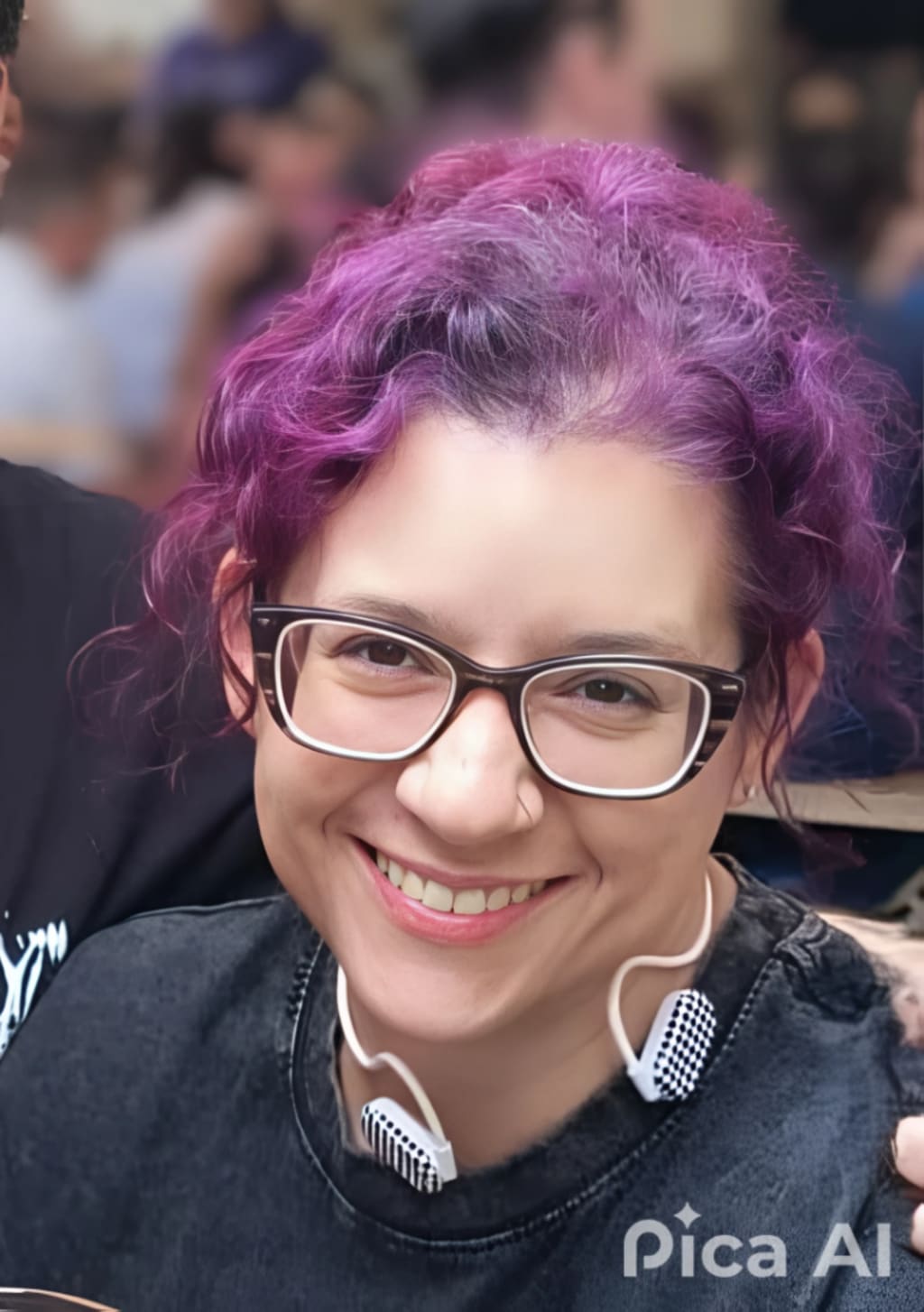
More than 200,000 people have watched me talk about a toothbrush.
Okay, technically I was talking about neurodivergence.
There's this thing sometimes called the toothbrush test. The basic idea is that if you ask a bunch of people how they brush their teeth, most people will give you some variation of the same answer. Toothpaste goes on toothbrush. Toothbrush goes in mouth. Brush teeth. Done.
My brain apparently did not receive those instructions.
When I started thinking through all the variables involved, I went way the other direction. Suddenly there were options and considerations and different ways of interpreting the question.
And that was one of those weird little moments when something clicked in my brain:
Oh.
Ohhhhh.
I am very obviously not answering this question the way a neurotypical person apparently does.
So I talked about it online.
I wasn't standing in perfect lighting. I hadn't spent an hour doing my hair. I didn't build a set or carefully engineer a Viral Content Experience.
I was sitting comfortably and talking about something that had genuinely made my brain light up.
That video is currently over 200,000 views.
Other videos I've made have 165.
The internet remains a deeply unserious and unpredictable place.
But there's something about that enormous difference that keeps bringing me back to an idea I've been slowly learning for the past year:
Trying harder isn't necessarily the thing that makes my work better.
For a long time, I assumed it was.
Better lighting.
Better angles.
Sit up straighter.
Fix my hair, but only enough to achieve that carefully engineered "Oh, this? I just naturally woke up whimsically interesting" effect.
Maybe put on makeup.
Write a proper script.
Learn whatever the hell B-roll is and why everyone suddenly needs it.
I figured if I adjusted enough little things, eventually I'd find the version of myself that worked online.
The one who looked right.
Sounded right.
Didn't ramble.
Didn't get visibly excited about toothbrushes.
Basically, someone considerably less like me.
Except I keep getting evidence that all this correcting may not be particularly useful.
I'm not claiming I cracked the algorithm because I sat on my couch and embraced the mighty 'tism. I have plenty of comfortable, unscripted videos that went absolutely nowhere. There is no scientific conclusion available here beyond "TikTok gonna TikTok."
But I did learn something else.
All those things I thought I had to fix before anyone would listen?
Apparently I didn't.
More than 200,000 people watched anyway.
And that's kind of the point.
I didn't stop caring about what I make.
I stopped assuming that caring requires performing.
There's a difference.
When I'm comfortable, I don't spend as much energy monitoring myself.
I'm not watching my own face while I'm talking.
I'm not mentally standing outside my body wondering how I'm being perceived.
I'm not taking the sentence that naturally occurred to me and translating it into something I imagine a Proper Content Creator would say.
I can just follow the thought.
And if you've spent most of your life masking without realizing you were masking, that is a surprisingly big deal.
I spent years assuming there was a correct way to be a person and everybody else had somehow received the manual.
Correct amount of eye contact.
Correct facial expression.
Correct tone.
Correct amount of enthusiasm.
Correct way to tell a story without wandering through three side quests before eventually returning with additional supporting evidence and a fun fact nobody requested.
Surely if I watched everyone else closely enough, I could figure it out.
Then I started putting myself online.
Turns out there are people who actually like the side quests.
Well.
That would have been useful information about forty years ago.
I think that's the part I've had wrong about effort.
Effort matters.
I'm a writer. I'm building BettyBot. I'm trying to turn a collection of ideas, experiences, experiments, and an unreasonable amount of curiosity into an actual body of work.
I'm certainly not opposed to working hard.
But I don't want to waste that work on disguising myself.
I'd rather put it into the idea.
Into checking whether what I'm saying is actually true.
Into understanding something well enough that I can explain it.
Into making something useful.
Into following the weird little thread my brain noticed that everybody else seemed to walk straight past.
Maybe that's the actual lesson of the toothbrush video.
Not "be authentic and you'll go viral."
God, wouldn't that be convenient.
It's that I didn't have to become somebody else first.
I didn't need the perfect lighting.
I didn't need the performance voice.
I didn't need to look like somebody whose life had been carefully arranged five minutes before filming.
I didn't even need to stop being the woman who can turn brushing her teeth into an existential investigation of how her brain works.
Especially not her, actually.
She seems to be doing pretty well.
Sometimes 165 people watch.
Sometimes more than 200,000 do.
I can't control that part.
What I can control is whether I spend all my energy trying to manufacture the person I think they'll want to see.
I spent a lot of years doing some version of that already.
I'm good.
I didn't try that hard to look right.
I just talked about the thing that fascinated me.
And apparently, that was enough.
About the Creator
Danielle Katsouros
Rural mail carrier, writer, and professional noticer. I write about neurodivergence, burnout, power, shame, joy, and the strange business of being human. Find Curious Katsouros: https://linktr.ee/Curiouskatsouros
Enjoyed the story? Support the Creator.
Subscribe for free to receive all their stories in your feed. You could also become a paid subscriber, letting them know you appreciate their work.
Comments