
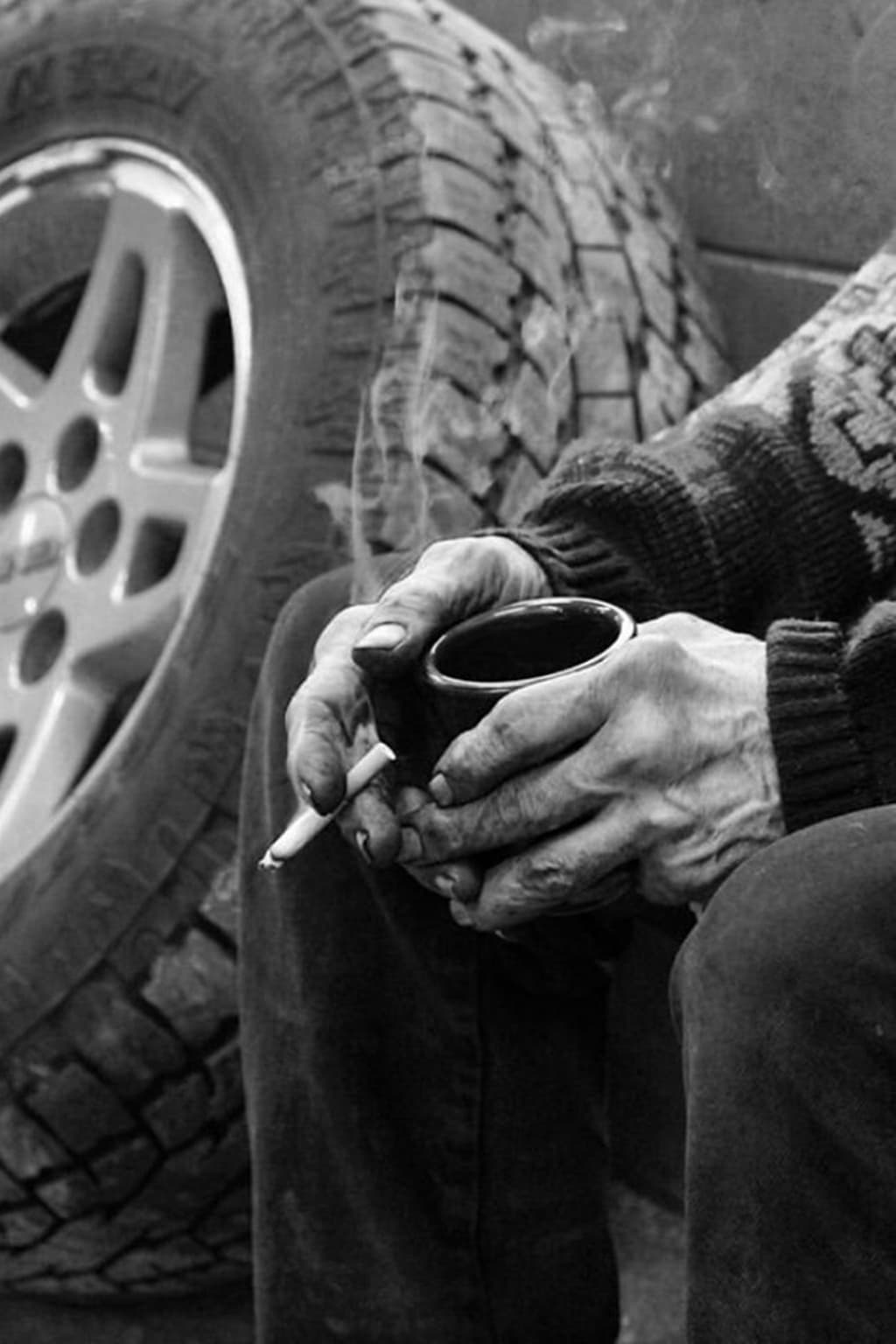
It’s funny how memory works—I remember leaving America on the Clipper Ferry. It’s a smaller boat that holds about 300 people. You board near downtown Seattle and landed right in downtown Victoria. During the three-hour boat ride from literally from one world to another… I went outside on my own to just breathe a bit. I looked back at the world that was responsible for building me up until this point… It wasn’t my country; it felt like I didn’t even really have a country now. I took another break. Then, I to looked forward. Into the depths of no man’s land I stood, with the ocean beneath me. I didn’t know how to swim then—but I do now.
Passion is ironic in my generation… it’s what we are all searching for, what many of us are yearning for; but honestly, I’ve always felt my passion just burning inside of me. Yet, I couldn’t quite put a name to it.
I say burning specifically because whether I was aware of it or not, my passion has always been ablaze. It has always been clear through my behaviour that I’ve always enjoyed helping others, solving problems, and pissed about oppression; and the joy I feel from connecting to people and getting ideas to make equitable solutions just gets me all excited. In the nerdiest of ways, I admire all the dreamers who never saw the world as a limitation—only as a curiosity.
The opposite of judgement is not non-judgemental… it is curiosity.
I grew up blessed with the hardening experience of working at an animal shelter starting at the ripe age of 13. Some days, I was 13 years old trying to learn how to make 10-month-old puppy be unafraid after being a victim of having hot burning oil poured all over her whole body. I still can’t shake the feeling of the compassion offered to me from a tortured soul in these crucial moments. I was slowly learning about a very real world around me and being trained how to respond to it all. These were good lessons that I carry with me whenever I find myself in the trenches and they bring me reminders that we can rebuild.
While it’s important to know how to do something… it’s more important to know why you do it.
After about seven years at the animal shelter and an American town I was tired of, I immigrated to Canada when I was new to 18 years old. I had never planned to go to post-secondary, but I found myself up here at University somehow. Full of ideas, passion, ADHD, curiosity, culture shock, and awe—I had no idea what would become.
I often let my passion lead me, still unable to quite put a name to it. I followed my gut and continued to study Sociology—having started not even knowing what that was. I felt torn by the feeling that maybe my passion didn’t quite have a job that even existed yet.
In my second year of University, I decided to volunteer at a men’s federal prison about an hour away from where I lived. I had noticed I was into the idea of studying how institutions can realistically mess people up, to put it simply. I couldn’t stop thinking about how to help people get back their agency afterwards though. I realized that prisons, being the only institution that have truly not changed since their conception and erection, were a good place to start if I wanted to get systemic.
There’s not enough time in the world to explain the wildly enlightening experience it was to become friends with many of the guys inside – I simultaneously was learning more about myself than any formal school. I was in the prison system though, and the prison system broke me; because no matter who you are, when you enter that place… you are not as free as you once were. That feeling, of losing your freedom the minute you step through one door, is a hard one to explain honestly. It’s felt.
I was never paid to be at the prison; I was never forced to be there; no one wants to go there, let alone be there; I had no relation to anyone inside; and yet, I chose to go. It’s funny how life works out sometimes – I’m a small Jewish girl from Phoenix and some of my greatest teachers and closest friends are notorious Toronto gangsters. No matter the trauma that sinks into your skin like a warm shower, sometimes pain is endured in order to understand. Knowledge can be pain. So, I went every week and my friends showed me their souls in a soulless place. Then I realized what it meant to be humanized.
Connection is humanizing.
The room we used to sit in when I started volunteering at the prison was guard-less, grey, had bare white walls that were so fluorescent they almost made your eyes hurt, grey couches, grey chairs, grey ceiling, old wooden coffee tables, fold out tables, and a fridge with a padlock on it. I used to think to myself: “How that boring-ass atmosphere could ever inspire anything…You would be surprised though how creative you can get when you have nothing to work with. Every week, I felt like I was sitting in the shades of grey.
Surviving is the need to move day to day with your basic needs being met as your first priority. I didn’t have that growing up—not on a daily basis anyway. My family was middle-class and my stresses were wildly different than a child was frantically worried about where their next meal was coming from. That didn’t mean I never faced serious shit as a kid… it just simply means that my flight-and-flight mode got to be turned down to a soft-staticky volume most days. That, my friends, is a privilege.
When we become comfortable within our lives so much so we can relax these survival instincts and then introduce hobbies that bring joy into our lives—that is a level of freedom that genuinely changes the way our lives look because our habits have changed. our survival instincts change because our habits have changed. It’s not the money people really crave, it’s the time.
I often thought that if I worked hard enough to become stable, then I would have time to be more creative. Creativity is the basic skill to survival though; and rarely do people see it’s true depth of capacity. Finding ways to be creative in your life is not the last step in the process… it is the first, and that is truly just the beginning of it.
Our world has cut so much capacity for creativity with the many limitations such a segregated body of institutions has. When we disconnect the parts from the process, we kill creativity because it requires a connection to exist. We can create a web of segmentation instead of cruel segregation.
“That’s not the way it has got to be.” – Leon Rosselson & Roy Bailey
I understand now that if you need something done, you can create it. I learned so much while sitting in the shades of grey—I learned the process of how you catch a pigeon through a fence and make it into meat for a burrito; weirdly enough I studied to play the base guitar; and I was shown how you create connection in a place that is built to strip you of your identity. (If you have never read about the Mortification Process by Erving Goffman, I highly recommend it).
“The changes you make today count more than what you did yesterday.” – WhoS Prison Play, 2019 (devised by the men inside)
Prison is naturally a very de-humanizing place due to its architectural structure. On top of that, the interactions between people in power and people in their care has truly taken a dehumanizing turn for the worst; which has led to multiple deaths, rapes, riots, and assaults on inmates and staff every year… often few reported because who do you report to? I learned a lot of history while inside too and felt the impact of what it meant to hear stories from the disappeared.
I used to not understand what it meant to be hardened by the system… sadly, I do now; but I am now apart of this fucked up club of being tortured by an experience you know but can’t communicate… I choose that though, the people inside did not, and they continue to face that reality every single day. It feels hard to explain that a man in the news 20 years ago who was narrated as a wild gangster with a merciless, killing soul is someone I know through the months of hard work we spent together building a play inside a prison. We made puppets for goodness sakes.
There are two strategic ways to dehumanize someone: you can either treat them like an object or you can treat them like an animal.
The opposite of dehumanization is not stopping that action… it is: humanizing.
The most humane prison in the world looks structurally very different (both in physical appearance and in their practices) than what we know (or think we know) about the prisons we see on TV in North America. A lot of the practices I interacted with and continue to see happen to those I love—well, they may not be dehumanizing necessarily; but they most certainly aren’t humanizing. You have to make a point of it. It is possible for someone to not create harm, yet also not help. This creates a stagnant world… and that shit drives people actually mental.
Don’t forget that we are all capable of being the person we feel most different from.
I finally put my finger on it. My passion is to humanize everything. The trick though is that humanizing is a very different process than dehumanizing. To stop one doesn’t even begin to imply the other. So, how do you humanize?
Humanizing requires connection, curiosity, community, a coordinator and creativity. Nothing can bring people together like those. It takes connection to build a life, creativity to inspire evolution and growth, curiosity because the best civilizations have the most lifelong learners, and a coordinator to support making it all happen or negotiating the nitty gritty.
The thing is, at the end of the day, we are all fucking human.
There’s nothing like big ideas. Truly—there is nothing like big ideas. I took some time off after two good homies passed away, literal gems utterly stolen from this world. I thought about my values a lot; what is important to me?
My parent’s and grandparents were both entrepreneurs and I’ve always intensely respected the ethics behind shopping local and those who are doing that damn hard work to achieve a different level of business freedom.
I am passionately driven to figure out how to humanize marketing. The economy has taken a turn towards an exponential technological jump in time while us humans are feeling as chaotic and isolated as ever. There seems to be a general consensus that a lot of connection had been lost, for many reasons, and I felt like it didn’t have to be.
Humanizing the Market
Step one is just genuine curiosity.
Step two is brainstorming. You have to use your insight as a tool to help you form new connections and ideas.
Step 3 is prioritizing, planning, and developing a process. It is always all about balance and these foundational steps are truly building blocks for your overall sustainability.
Step 4 is turning all of this into action. You can’t just talk about it, you have to be about it. This part of the process though takes many test runs… it is the phase of trail and error and is when fearlessness and curiosity need to be running at full speed; and this takes time. It takes practice and patience to figure out your groove, make your process sustainable, be ethical, and continue to put joy first.
Finally, step 5 is just bein’ a human. Reach out to people, be curious about them – which, if you like learning, isn’t hard to do. You have no idea all the kinds of cool shit that people are cookin’ up these days right next door to you. Show some local love.
Humanizing marketing is remembering that there are people behind the products, services, or experiences we are all constantly partaking in. Part of that is educating people on the process—which is honestly just fascinating. I’ve gotten to learn all about starting a wholesale company to real estate to the niche markets of candle-making to exploring various art studios, restaurants, and places.
While all things in the world are niche, they are all also interconnected.
So much of humanizing marketing is also helping small businesses work together. When we try to do it all on our own, there just isn’t enough time, and we get stuck ordering packaging from across the world from behind a computer. Rather, recognize that a local sustainable new packaging company has just opened up a block away, is doing never-seen-before work, and this partnership has the capacity to boost your direct market, creativity, network, and overall economy.
It’s about community, not competition.
The digital era and the internet have changed the world’s operations, and therefore human behaviour, immensely. An intangible physical space, it has the ability to impact a physical spaces nonetheless. Navigating the internet, let alone the ever-changing legal and social norms of Instagram, have made it so trying to connect on such platforms is not possible if you cannot maneuver through their structures. It’s kinda like how being in Thailand is really rad until you can’t speak the language and almost pee yourself trying to communicate to find a bathroom. The digital era has its own culture and like trying to adjust to any new culture, whether that be a new country or simply a new platform, can be a great thing if you catch on… and an isolating thing if you don’t.
Sometimes humanizing the market begins at the beginning—with just having someone reach out to you to help them learn how to use Instagram. The best part about that, for me, is getting to learn all the incredibly cool knowledge this random single mother has and how she has put it all into the most amazing economy that circulates opportunity for her passion… and I can help her finally communicate that to a world who wants to see it.
All great communities were never built alone.
Enter: the team. Getting to brainstorm how to visually communicate a business’s personality, history, aesthetic, process, and ethics is not something that can be done in a one-size-fits-all kind of way. That is what is so damn beautiful about humans though—we all require and deserve the freedom to produce uniquely for our community; and we all can provide that because we all enjoy different things. Your greatest strength is the team you surround yourself with because people are worth something.
It's not about money… it’s about wealth.
Success isn’t lots of money. There are plenty of rich people who kill themselves every year and I would not call that success. Success is getting to do what you love while feeling stable in your life; and to do this, you have to see the value in your work. Money is only one small part of the wealth you engage with in your economy and while that can be grown, others often dismiss the worth that exists subtly but greatly.
This is a form of freedom I crave to give back to people. Success is very rarely a straight shot to the top by yourself. We are most successful when our community is successful… and the easiest way to lift your community is to shop local.
I believe the whole humanizing marketing process begins with humanizing one another first. Back to the basics, as they say. To be curious about one another and what they are doing is such a powerful form of our humanity. Our world is not disconnected because we have the power to connect.
We are the makers, we are the creators, we are the shakers of this world.
About the Creator
Enjoyed the story? Support the Creator.
Subscribe for free to receive all their stories in your feed.
Comments
There are no comments for this story
Be the first to respond and start the conversation.