
How a Nun Built a Business Empire on Cologne in Germany
How Maria Clementine Martin turned a lemon-balm remedy into one of Germany’s most recognizable over-the-counter health brands.

Exactly 200 years ago, a company appeared in Cologne whose story sounds almost like a legend: a former nun began selling “Cologne water” with lemon balm, and over time this business grew into one of Germany’s best-known companies for over-the-counter remedies.
Her name was Maria Clementine Martin. Today, few people outside Germany know this woman’s name, but the Klosterfrau brand is familiar to millions of Germans. The company officially traces its history back to 1826, when Maria Clementine Martin founded the production of “Maria Clementine Martin Klosterfrau” in Cologne.
The nun who had to become an entrepreneur
Maria Clementine was born in Brussels in 1775. In her youth, she entered a convent, but her life coincided with an age of great upheaval: the Napoleonic Wars, secularization, the closure of monasteries, and the collapse of the old order. Many religious communities at that time lost their property and their familiar way of life.
After monastic life was shut down, Martin found herself in a world where she had to survive on her own. She found an unusual path: she began making and selling a remedy based on lemon balm and other herbs. It was not simply an aromatic infusion, but a product on the border between perfumery, folk medicine, and pharmacy.
In 1826, she opened production near Cologne Cathedral. Her remedy was called Klosterfrau Melissengeist — “the lemon-balm spirit of the convent woman.” It contained lemon balm and essential oils from medicinal plants, diluted in strong alcohol.
Why “Cologne water” became a medicine
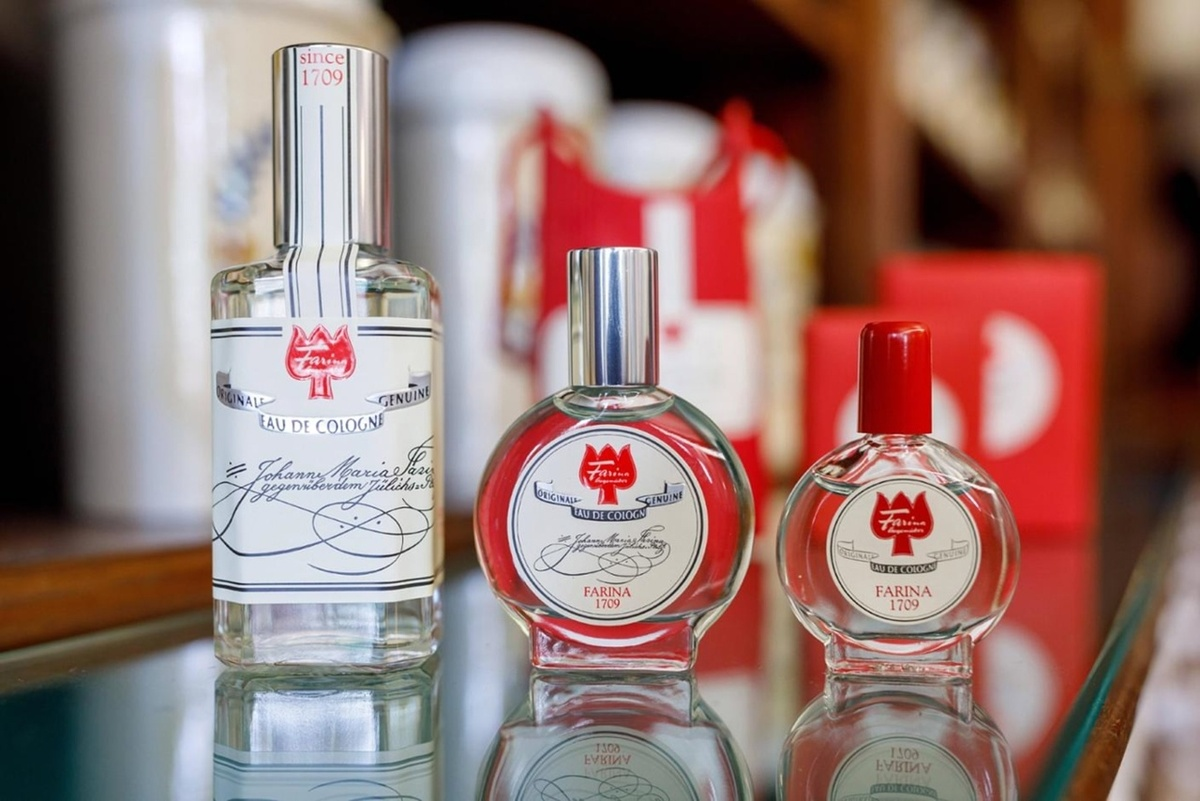
Cologne was already famous for eau de cologne — the very same “Cologne water.” But Martin’s product differed from ordinary perfume. It was used as a universal household remedy: for colds, discomfort, stomach problems, and nervous tension.
In essence, she was selling not just a bottle with a scent, but a promise of health, order, and trust. The image of a nun on the label worked better than any advertisement: a monastery was associated with herbs, cleanliness, old recipes, and care.
Maria Clementine turned out to be not only a former nun, but also a very capable entrepreneur. She protected her trademark, sought recognition, advertised the product, and tried to stand out among competitors. Already in the nineteenth century, imitators began appearing around her product, so the brand and its visual image became an important part of its success.
How a small production became an empire

After Maria Clementine’s death in 1843, the business did not disappear. The company passed to heirs and new owners, survived crises, wars, bankruptcies, and restructuring. But the main product — Melissengeist — remained recognizable.
Later, Klosterfrau became not just the manufacturer of one herbal remedy, but a large group. Today, Klosterfrau works in several areas: consumer health, contract manufacturing, medicine, and cosmetics.
And this is where the story becomes especially interesting. What began as the small business of a former nun near Cologne Cathedral became a major German pharmaceutical brand. According to DW, Klosterfrau’s turnover is around half a billion euros, and the company is among the leading sellers of over-the-counter medicines in Germany.
Why this story worked so well
Klosterfrau’s success rested not only on the recipe. There were many such herbal tinctures in Europe. But Maria Clementine managed to combine several things at once: Cologne’s tradition of aromatic waters, the monastic image, trust in herbs, smart packaging, and entrepreneurial instinct.
She sold a product that people of her time understood. A home was supposed to have a bottle “just in case”: for a cold, a stomach complaint, anxiety, or weakness. It was a small household symbol of safety.
That is why the story of Klosterfrau is not simply a story about a nun and cologne. It is the story of how religious imagery, folk medicine, and early marketing created a brand that survived for two centuries.
Maria Clementine Martin did not begin as an industrialist or as the heir to capital. She was a woman from a destroyed monastic world who managed to turn an old herbal recipe into the work of her life. And Germany received one of its most recognizable pharmacy brands — with a nun on the label and a history that still sells almost as well as advertising.
About the Creator
Enjoyed the story? Support the Creator.
Subscribe for free to receive all their stories in your feed.
Comments
There are no comments for this story
Be the first to respond and start the conversation.