
Global Markets Rattle as Trump Orders Strait of Hormuz Blockade
US stock futures dropped sharply in response
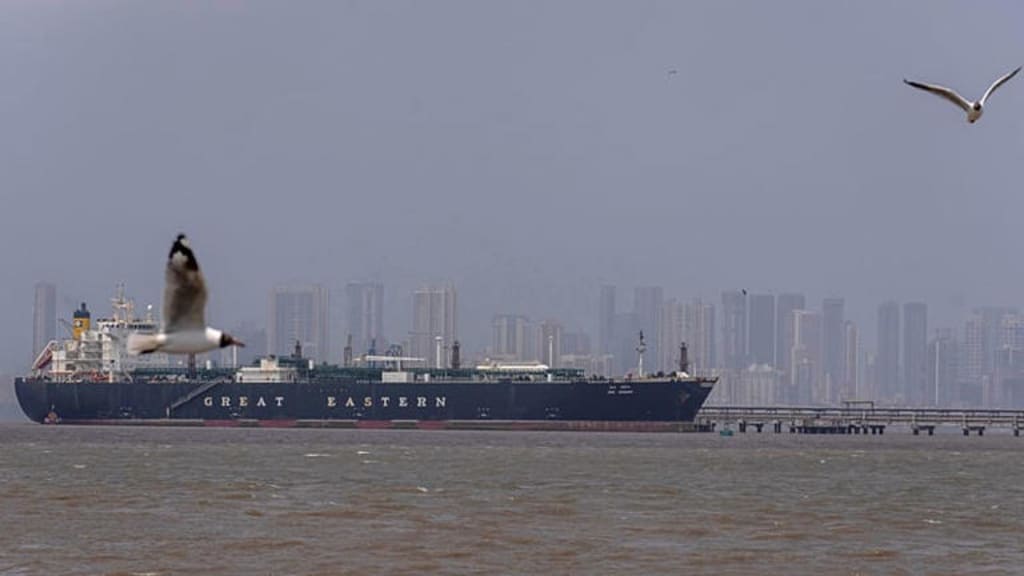
Global Markets Rattle as Trump Orders Strait of Hormuz Blockade
The world woke up on Monday to a dramatically different geopolitical landscape. In a move that sent shockwaves through financial markets and energy corridors alike, President Donald Trump announced that the United States Navy would begin blockading the Strait of Hormuz — one of the most strategically vital waterways on the planet. The decision came hours after marathon peace negotiations between the US and Iran collapsed in Islamabad, Pakistan, leaving a fragile two-week ceasefire hanging by a thread and the global economy bracing for yet another body blow.
Trump made the announcement on Truth Social, declaring that the US Navy would block any and all ships trying to enter or leave the Strait of Hormuz, and that the blockade would remain in place until Iran reopens the strait to all traffic. He didn't stop there. Trump also instructed the Navy to seek and intercept every vessel in international waters that had paid a toll to Iran, calling Iran's actions nothing short of world extortion. The blockade officially took effect at 10 a.m. ET on Monday, with US Central Command clarifying that it would be enforced against all traffic entering and exiting Iranian ports, while vessels heading to and from non-Iranian ports would remain unaffected.
The backstory to this dramatic escalation is months in the making. Iran had been restricting traffic through the strait for weeks, charging tolls of over a million dollars per ship and cutting shipments by more than 90%, sending energy and agricultural costs soaring worldwide. Roughly 20% of the world's oil and natural gas normally passes through the strait — a narrow 33-kilometre-wide chokepoint between Iran and Oman that effectively serves as the jugular vein of global energy supply. An estimated 84% of crude oil shipments through the strait are destined for Asian markets, with China receiving a third of its oil via the waterway. Europe is heavily exposed too, receiving over 12% of its liquefied natural gas from Qatar through the same route. When this corridor sneezes, the entire global economy catches a cold.
The collapse of talks was the final trigger. Vice President JD Vance led the US delegation, which sat with Iranian and Pakistani negotiators for more than 21 hours during a rare face-to-face summit in Islamabad. The sticking point was Iran's nuclear ambitions. Trump made clear that the core disagreement was simple — Iran would never be allowed to obtain a nuclear weapon, and no deal could be reached without that guarantee on the table. Iran, for its part, came with its own set of demands: control of the Strait of Hormuz, payment of war reparations, a regional ceasefire including Lebanon, and the release of its frozen assets abroad. Neither side was willing to blink, and the talks collapsed in a stalemate that analysts say could have severe consequences for months to come.
The market reaction was immediate and brutal. Brent oil futures surged more than 8% to over $103 a barrel on news of the blockade, while US stock futures fell sharply across the board. The irony at the heart of this crisis is not lost on economists — Trump is blockading the very strait he has spent months demanding Iran reopen. Iran had been gradually allowing some tankers through in exchange for hefty tolls, meaning some oil was still trickling into global supply — just enough to take the sharp edge off skyrocketing prices. Now, with the US stepping in to cut off even that trickle, the consequences for the global economy could be severe. Gas prices that had only just begun to ease are expected to rebound sharply, dragging diesel and jet fuel along with them, while inflation expectations continue their upward climb.
The diplomatic fallout is just as significant as the economic damage. Several key US allies, including NATO members Britain and France, refused to join the blockade effort. France went a step further, with President Emmanuel Macron announcing preparations for a peaceful multinational mission aimed at restoring freedom of navigation in the strait, promising to convene an international conference on the matter within days. Meanwhile, Iran is showing no signs of backing down. The speaker of the Iranian Parliament posted a blunt warning on social media: enjoy the current price of gasoline, because with what is being called a blockade, people will soon miss paying four to five dollars a gallon. It was a chilling message that markets appeared to take very seriously.
Analysts warn that Trump is essentially running his tariff playbook against a military adversary — dial the pressure up to its maximum, make sweeping demands, and hope the other side breaks first. The problem is that Iran, much like China before it, does not appear willing to fold quickly. And unlike a trade war, the stakes here extend far beyond economics. With oil already above $100 a barrel, US inflation rising sharply, and Americans paying over four dollars a gallon on average, the domestic political pressure on Trump is mounting. He acknowledged as much himself, admitting in a television interview that gas prices could stay the same or go even higher heading into the midterm elections.
What happens next is anyone's guess. Despite the failed talks, Vice President Vance left the door open to further negotiations, saying the US had left a proposal on the table and was waiting to see if Iran would accept it. But with a blockade now active, mines being cleared in the strait, and two heavily armed adversaries locked in a standoff over one of the world's most critical energy routes, the margin for error has never been thinner. The Strait of Hormuz has always been a flashpoint — right now, it is the most consequential 33 kilometres on earth.
About the Creator
Enjoyed the story? Support the Creator.
Subscribe for free to receive all their stories in your feed.
Comments
There are no comments for this story
Be the first to respond and start the conversation.